Short direct answer
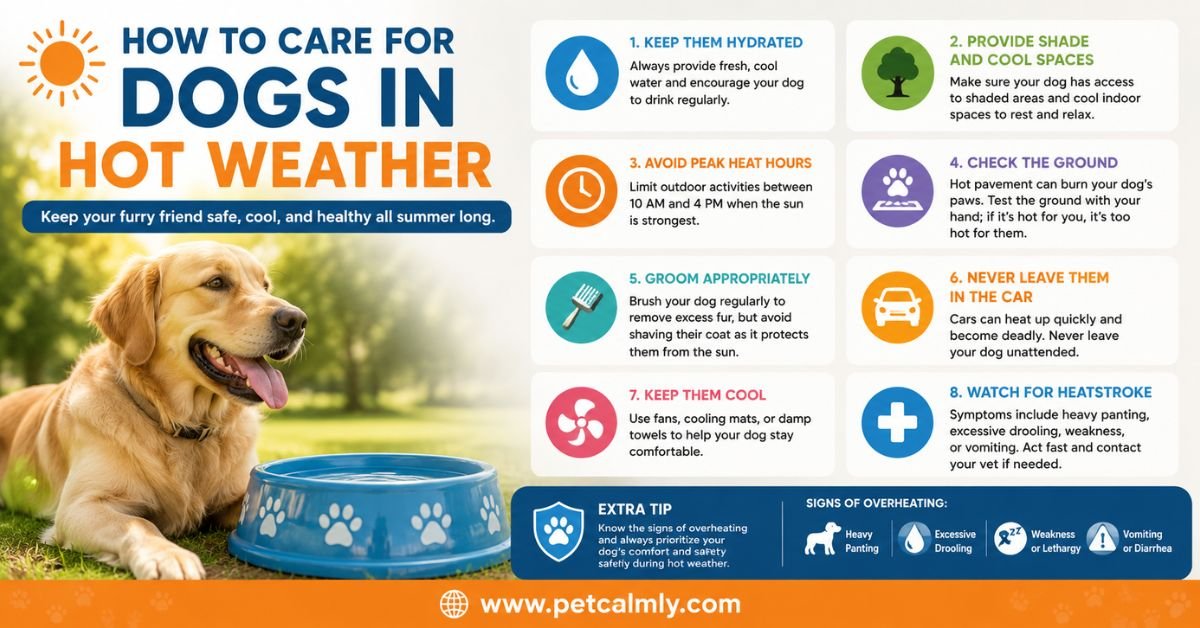
If you’re wondering how to care for dogs in hot weather, the most important steps are providing constant access to fresh water, limiting outdoor activity during peak heat, offering shade and cooling areas, protecting paws from hot surfaces, and watching closely for signs of overheating.
Dogs cannot cool themselves as efficiently as humans. Because they primarily regulate body temperature through panting and limited sweating through their paw pads, hot weather can quickly become dangerous. With the right daily routine and precautions, you can help your dog stay comfortable and avoid heat-related illnesses throughout the summer.
Why Hot Weather Can Be Dangerous for Dogs
Many pet owners underestimate how quickly dogs can become overheated.
Even on a warm day that feels manageable to you, your dog’s body may be working much harder to stay cool.
Unlike people, dogs do not sweat through most of their skin. Their cooling system relies mainly on:
- Panting
- Small amounts of sweat from paw pads
- Releasing heat through blood vessels near the skin
When temperatures rise, especially alongside high humidity, these cooling mechanisms become less effective.
The result can range from mild discomfort to life-threatening heatstroke.
Some dogs are particularly vulnerable, including:
- Puppies
- Senior dogs
- Overweight dogs
- Flat-faced breeds
- Dogs with heart or respiratory conditions
- Thick-coated breeds
Understanding these risks is the first step toward keeping your pet safe.
Signs Your Dog Is Too Hot
In Short
Heavy panting, excessive drooling, weakness, and lethargy are early warning signs that your dog may be overheating.
Recognizing these symptoms early can prevent a serious emergency.
Mild Overheating Signs
Watch for:
- Rapid panting
- Increased thirst
- Seeking cool surfaces
- Excessive drooling
- Reduced activity
- Bright red gums
More Serious Symptoms
If overheating progresses, you may notice:
- Vomiting
- Diarrhea
- Disorientation
- Weakness
- Staggering
- Collapse
Emergency Signs of Heatstroke
Heatstroke is a medical emergency.
Seek veterinary care immediately if your dog experiences:
- Difficulty breathing
- Seizures
- Loss of consciousness
- Extremely high body temperature
- Unresponsiveness
Heatstroke can cause organ damage within a short period of time.
Understanding Why Dogs Overheat So Quickly
The main reason is that dogs generate body heat faster than they can release it during extreme temperatures.
Several environmental factors contribute:
High Air Temperatures
The hotter the environment, the harder it becomes for a dog to cool down.
Humidity
Many owners focus only on temperature.
Humidity is often the bigger problem.
When humidity is high, panting becomes less effective because moisture in the air slows evaporation.
Lack of Airflow
Even shaded areas can become dangerous if there is little ventilation.
Hot Surfaces
Pavement, concrete, asphalt, and artificial turf can become significantly hotter than the surrounding air.
These surfaces can burn paw pads and increase body temperature.
How to Care for Dogs in Hot Weather Every Day
Creating a summer routine is one of the best ways to protect your dog.
1. Always Provide Fresh Water
Hydration is your dog’s first defense against overheating.
Helpful tips:
- Keep multiple water bowls available
- Refill bowls frequently
- Use larger bowls outdoors
- Add ice cubes on particularly hot days
- Bring water during walks
Many dogs drink more often when water is easily accessible.
2. Walk During Cooler Hours
Avoid exercising your dog during the hottest part of the day.
The safest times are usually:
- Early morning
- Late evening
Try to avoid vigorous activity between:
- 10 AM and 5 PM
These hours often combine intense sun exposure with high ground temperatures.
3. Create Shaded Rest Areas
Shade dramatically reduces heat exposure.
Good options include:
- Trees
- Covered patios
- Shade sails
- Covered dog runs
Remember that shade moves throughout the day.
Check regularly to ensure your dog still has protection from direct sunlight.
4. Keep Indoor Spaces Cool
When temperatures climb, indoor cooling becomes important.
You can help by:
- Running air conditioning
- Using fans
- Closing blinds during peak sunlight
- Providing cooling mats
- Offering tiled flooring access
Many dogs naturally seek out cooler surfaces to regulate body temperature.
5. Use Cooling Products Safely
Some products can help dogs stay comfortable.
Examples include:
| Product | Benefits |
|---|---|
| Cooling mats | Provide cool resting surfaces |
| Cooling vests | Help during walks |
| Elevated beds | Improve airflow |
| Portable water bottles | Prevent dehydration outdoors |
| Cooling bandanas | Mild cooling support |
Avoid products that become excessively cold, as sudden temperature extremes can be uncomfortable.
Protecting Your Dog’s Paws in Summer
Many owners focus on air temperature but forget about the ground.
Pavement can become hot enough to cause burns.
The Seven-Second Test
Place the back of your hand on the pavement.
If you cannot comfortably hold it there for seven seconds, it is too hot for your dog’s paws.
Safer Walking Surfaces
Choose:
- Grass
- Dirt trails
- Shaded paths
- Woodland routes
Avoid:
- Asphalt parking lots
- Sun-exposed sidewalks
- Artificial turf during peak heat
How Much Exercise Is Safe in Hot Weather?
Exercise is still important during summer, but adjustments are necessary.
Good Warm-Weather Activities
- Early morning walks
- Evening strolls
- Indoor games
- Scent work
- Puzzle toys
- Training sessions
- Swimming (when safe)
Activities to Limit
- Long-distance running
- Midday hikes
- High-intensity fetch sessions
- Agility training in direct sun
Watch your dog’s body language.
If they slow down, seek shade frequently, or pant excessively, it’s time to stop.
Which Dogs Are Most Sensitive to Heat?
Not all dogs handle heat equally.
Flat-Faced Breeds
These dogs often struggle most because their shortened airways reduce efficient cooling.
Examples include:
- French Bulldog
- Pug
- Boston Terrier
- English Bulldog
Thick-Coated Breeds
Heavy coats can trap heat.
Examples include:
- Alaskan Malamute
- Siberian Husky
- Newfoundland
Senior Dogs
Older dogs often have reduced heat tolerance and slower recovery.
Puppies
Young dogs may not recognize when they need to rest or cool down.
Overweight Dogs
Excess body fat increases heat retention and places additional strain on the cardiovascular system.
4 Common Mistakes Dog Owners Make During Hot Weather
Avoiding these mistakes can significantly reduce risk.
1: Leaving Dogs in Parked Cars
This is one of the most dangerous errors.
Even with cracked windows, temperatures inside vehicles can rise rapidly.
A parked car can become deadly within minutes.
2: Assuming Cloudy Days Are Safe
Cloud cover does not eliminate heat risk.
Humidity and warm air temperatures can still cause overheating.
3: Over-Exercising Enthusiastic Dogs
Some dogs will keep playing despite becoming dangerously hot.
Many retrievers, herding breeds, and working breeds are especially prone to this.
Owners must often decide when it’s time to stop.
4: Shaving Double-Coated Dogs Completely
Many people believe shaving thick-coated dogs will keep them cooler.
In reality, double coats often help regulate body temperature and protect against sun exposure.
Consult your veterinarian or groomer before making major coat changes.
A Simple Summer Care Checklist
Use this daily checklist during hot weather.
Morning
Fresh water available
Cool walk completed
Outdoor shade checked
Indoor cooling available
Afternoon
Outdoor time limited
Water refreshed
Signs of overheating monitored
Pavement temperature checked
Evening
Exercise during cooler temperatures
Coat inspected
Hydration monitored
Comfortable sleeping area prepared
Fun Ways to Keep Dogs Cool
Summer safety does not mean summer boredom.
Many dogs enjoy cooling activities.
Ideas include:
Frozen Treats
Try:
- Frozen dog-safe broth cubes
- Frozen banana slices
- Frozen watermelon pieces (seedless)
Splash Play
Some dogs enjoy:
- Kiddie pools
- Gentle sprinklers
- Shallow water games
Always supervise water activities.
Indoor Enrichment
Mental stimulation can tire dogs without raising body temperature.
Try:
- Puzzle feeders
- Nose work games
- Training sessions
- Hide-and-seek
What to Do if Your Dog Gets Too Hot
Most Importantly
Act quickly but calmly.
Move Your Dog to a Cooler Area
Take them indoors or into shade immediately.
Offer Cool Water
Allow drinking in small amounts.
Avoid forcing water.
Apply Cool (Not Ice-Cold) Water
Focus on:
- Belly
- Groin
- Paws
- Neck
Extremely cold water can sometimes make cooling less effective.
Increase Airflow
Use fans or air conditioning.
Contact a Veterinarian
If symptoms are severe or do not improve quickly, seek veterinary care immediately.
When Should You Worry?
Some heat-related symptoms require urgent attention.
Contact your veterinarian immediately if your dog:
- Cannot stop panting
- Appears confused
- Vomits repeatedly
- Has pale or dark red gums
- Struggles to stand
- Collapses
- Experiences seizures
Heatstroke should never be treated as a wait-and-see situation.
Prompt veterinary care can save a dog’s life.
What Should Pet Owners Do?
If you’re trying to protect your dog during hot weather, focus on prevention rather than treatment.
A practical approach includes:
- Walk early or late.
- Keep water available at all times.
- Provide shade and ventilation.
- Limit strenuous exercise.
- Monitor for overheating signs.
- Protect paws from hot surfaces.
- Adjust routines for age, breed, and health status.
Small daily habits often make the biggest difference.
Summer Dog Care Dos and Don’ts
| Do | Don’t |
|---|---|
| Provide fresh water | Leave dogs in parked cars |
| Walk during cooler hours | Exercise heavily at midday |
| Check pavement temperature | Assume shade alone is enough |
| Monitor panting levels | Ignore excessive drooling |
| Use cooling aids safely | Force intense activity |
| Provide indoor cooling | Wait too long to seek veterinary help |
Internal Resources You May Also Find Helpful
As part of your dog’s overall summer wellness routine, consider exploring related topics such as:
- Dog anxiety during storms
- Signs of dehydration in dogs
- Safe summer dog treats
- Mental enrichment activities for indoor days
- First-aid basics for pet emergencies
- Weight management for overweight dogs
These topics can help build a complete warm-weather care plan.
Frequently Asked Questions
1: How hot is too hot for dogs outside?
Many dogs begin experiencing discomfort when temperatures rise above 85°F (29°C), especially when humidity is high. Breed, age, health, and activity level all influence heat tolerance.
2: Can dogs get heatstroke in the shade?
Yes. Shade helps, but dogs can still overheat if temperatures and humidity are high or if airflow is poor.
3: Should dogs drink ice water in hot weather?
Cool water is generally safe for most healthy dogs. The key is encouraging hydration rather than preventing access to cool drinking water.
4: Is it safe to walk my dog on a hot sidewalk?
Only if the surface is cool enough. Use the seven-second hand test before walking. If it feels too hot for your skin, it is too hot for your dog’s paws.
5: Do fans help dogs stay cool?
Fans can improve comfort and airflow, but they are most effective when combined with shade, hydration, and cooler indoor temperatures.
6: Are some dog breeds naturally better in hot weather?
Yes. Dogs with shorter coats and longer muzzles often tolerate heat better than brachycephalic or heavily coated breeds. However, all dogs can overheat under the wrong conditions.
More Information About Pets, Please Visit Our Website: How to Introduce Pets to New Baby
How to Choose the Right Pet for Your Family
Conclusion
Learning how to care for dogs in hot weather is largely about paying attention to your dog’s environment, behavior, and daily routine. Most heat-related problems are preventable when owners provide water, shade, cooling opportunities, and sensible exercise schedules.
Every dog is different. A young, healthy dog may handle warm weather reasonably well, while a senior dog or flat-faced breed may struggle much sooner. Watching for subtle signs of discomfort and making small adjustments throughout the day can go a long way toward keeping your companion safe.
With a little planning, summer can still be a season full of enjoyable walks, outdoor adventures, and happy memories without putting your dog’s health at risk.