Short direct answer
Choosing the right pet for your family comes down to matching a pet’s needs with your lifestyle, time, space, budget, and emotional readiness. The “best” pet isn’t the most popular one it’s the one you can properly care for long-term without stress for either side.
Start by asking: How active is your family? How much daily time can you give? Do you want low-maintenance companionship or hands-on bonding? Dogs need time, training, and attention; cats are more independent but still social; small pets and fish require less interaction but still need consistent care. The right choice feels natural, not forced.
Introduction
Bringing a pet into a family is often exciting sometimes even impulsive. A cute puppy, a calm kitten, or a small cage animal can feel like an instant emotional match. But after the excitement fades, real life begins: feeding schedules, cleaning, training, vet visits, and emotional responsibility.
Many families don’t struggle because they don’t love their pet. They struggle because the pet they chose doesn’t match their lifestyle.
A high-energy dog in a quiet apartment. A needy pet in a busy household. A low-maintenance expectation paired with a high-care animal. These mismatches are where problems usually start.
This guide is written to help you avoid that gap between expectation and reality. You’ll learn how to evaluate your family’s lifestyle, compare pet types honestly, understand behavior needs, and choose a companion that truly fits your home—not just your emotions in the moment.
Understanding What “Right Pet for Your Family” Really Means
The “right pet” isn’t universal. It’s personal.
For one family, it might be a playful Labrador Retriever who joins every outdoor activity. For another, it might be a quiet cat that prefers windowsill naps. For someone else, it might be fish or a small hamster that brings calm without heavy responsibility.
The real meaning behind “right pet” includes:
- Compatibility with daily routine
- Emotional expectations (companionship vs independence)
- Financial readiness (food, vet care, grooming)
- Space availability (apartment vs house)
- Time commitment (training, play, cleaning)
- Long-term responsibility (10–20 years for some pets)
Most importantly, the right pet should reduce stress in your home not add to it.
Start With Your Family’s Lifestyle (This Step Is Non-Negotiable)
Before thinking about breeds or species, look at your daily life honestly.
Ask yourself:
- How many hours are you home daily?
- Are children involved?
- Do you travel frequently?
- Do you prefer quiet or active environments?
- Who will be the primary caregiver?
Quick lifestyle match guide:
Busy working family
- Best fit: Cats, fish, small rodents
- Avoid: High-energy dogs
Active outdoor family
- Best fit: Dogs like retrievers or collies
- Also good: Active breeds of cats
Small apartment living
- Best fit: Cats, small dogs, fish
- Be cautious with large, active breeds
Families with young children
- Best fit: Gentle, patient pets (certain dogs and cats)
- Avoid: Fragile or easily stressed pets
Comparing Popular Family Pets (Honest Breakdown)
Let’s go beyond stereotypes and look at real-world needs.
Dogs: Loyal, Social, but High Commitment
Dogs are deeply rewarding but require structure.
Best suited for:
- Families with time for daily walks
- People willing to train and socialize regularly
Common needs:
- 1–2 walks daily (minimum)
- Training and consistency
- Social interaction
- Grooming depending on breed
Popular family-friendly breeds:
- Labrador Retriever
- Golden Retriever
- Beagle
- Cavalier King Charles Spaniel
Dogs thrive on attention. Without it, they may develop barking, chewing, or separation anxiety.
Cats: Independent but Emotionally Complex
Cats are often misunderstood as “low maintenance,” but they still need care and emotional engagement.
Best suited for:
- Working families
- Apartments
- People who want companionship without constant activity demands
Common needs:
- Clean litter box daily
- Playtime (yes, they need it)
- Scratching posts and enrichment
Popular family-friendly cats:
- Persian (calm, indoor lifestyle)
- Ragdoll (very gentle temperament)
- British Shorthair (independent but affectionate)
Cats bond deeply but on their own terms.
Rabbits: Quiet, Sensitive, and Surprisingly Social
Rabbits are often underestimated.
Best suited for:
- Calm households
- Families with older children
Needs:
- Spacious enclosure or safe roaming area
- High-fiber diet (hay-based)
- Gentle handling
They can become affectionate but are easily stressed by loud environments.
Fish: Low Interaction, High Visual Comfort
Fish are ideal for beginners wanting minimal daily interaction.
Best suited for:
- Busy households
- Small spaces
- First-time pet owners
Needs:
- Tank maintenance
- Water quality control
- Proper feeding schedule
They don’t offer physical bonding but bring calm presence.
Small Pets (Hamsters, Guinea Pigs, etc.)
These pets are often chosen for children but still require responsibility.
Key reality:
They are small, but not “easy.”
Needs:
- Clean cages
- Proper diet
- Gentle handling
- Night/day cycle awareness (some are nocturnal)
Emotional Fit: The Most Overlooked Factor
Many families focus only on practical needs but emotional compatibility matters just as much.
Ask yourself:
- Do you want a “companion” or a “presence”?
- Are you comfortable with noise, mess, or unpredictability?
- Do you enjoy training and interaction?
Example:
A highly affectionate dog may feel overwhelming to someone who prefers quiet space. Meanwhile, a calm cat may feel “too distant” for someone expecting constant interaction.
Pets have emotional personalities too not just physical needs.
5 Common Mistakes Families Make When Choosing a Pet
Many issues begin before the pet even arrives home.
1. Choosing based on appearance only
Cute puppies grow into large, energetic dogs.
2. Underestimating time commitment
Even “low maintenance” pets require daily care.
3. Ignoring long-term responsibility
Dogs and cats can live over a decade.
4. Not considering children’s behavior
Young kids may unintentionally stress sensitive animals.
5. Skipping research on breed temperament
Different breeds behave very differently.
What Each Pet Actually Needs (Simple Comparison Table)
| Pet Type | Daily Time | Space Needed | Cost Level | Interaction |
|---|---|---|---|---|
| Dog | High | Medium–Large | Medium–High | Very High |
| Cat | Medium | Small–Medium | Medium | Medium |
| Rabbit | Medium | Medium | Medium | Medium |
| Fish | Low | Small | Low–Medium | Low |
| Hamster | Low–Medium | Small | Low | Low |
Step-by-Step Guide: How to Choose the Right Pet for Your Family
Step 1: Evaluate your time honestly
Not ideal time real time.
Step 2: Decide your interaction level
Do you want cuddles, observation, or independence?
Step 3: Set a realistic budget
Include food, vet care, grooming, and emergency costs.
Step 4: Match space to species
Apartments vs houses make a big difference.
Step 5: Research temperament, not just species
Even within one species, behavior varies widely.
Step 6: Visit or observe before deciding
If possible, spend time with the animal first.
Daily Care Reality (What Life Looks Like After Adoption)
This is where expectations meet reality.
Dogs:
- Morning walk
- Feeding schedule
- Training reinforcement
- Evening exercise or play
Cats:
- Litter cleaning
- Feeding routine
- Short play sessions
- Grooming (depending on coat)
Small pets:
- Cage cleaning
- Feeding
- Environmental maintenance
Fish:
- Tank checks
- Feeding control
- Water changes
Pets don’t require perfection but they do require consistency.
When Should You Reconsider Your Choice?
A pet may not be the right fit if:
- You feel overwhelmed within the first few days
- The pet’s needs exceed your time capacity
- There is ongoing stress or fear in the animal
- Family members are unable to cooperate in care
Rehoming should always be a last but responsible option if welfare is at risk.
What Should Families Do Before Bringing a Pet Home?
Practical preparation checklist:
- Prepare feeding and sleeping area
- Buy basic supplies (food, bedding, litter, toys)
- Plan veterinary visit
- Set household rules (especially for children)
- Assign responsibilities clearly
Most problems come from lack of preparation not lack of love.
Conclusion
The right pet doesn’t overwhelm your lifestyle it blends into it.
It doesn’t feel like a burden or a “task list.” Instead, it becomes a steady presence that fits your family’s rhythm naturally.
Whether you choose a dog, cat, rabbit, or even fish, the goal is the same: a healthy, respectful, and lasting bond where both sides feel secure.
A well-matched pet doesn’t just bring joy it brings stability to a home.
More Information About Pets, Please Visit Our Website: Can I Use First Aid Antiseptic on My Dog?
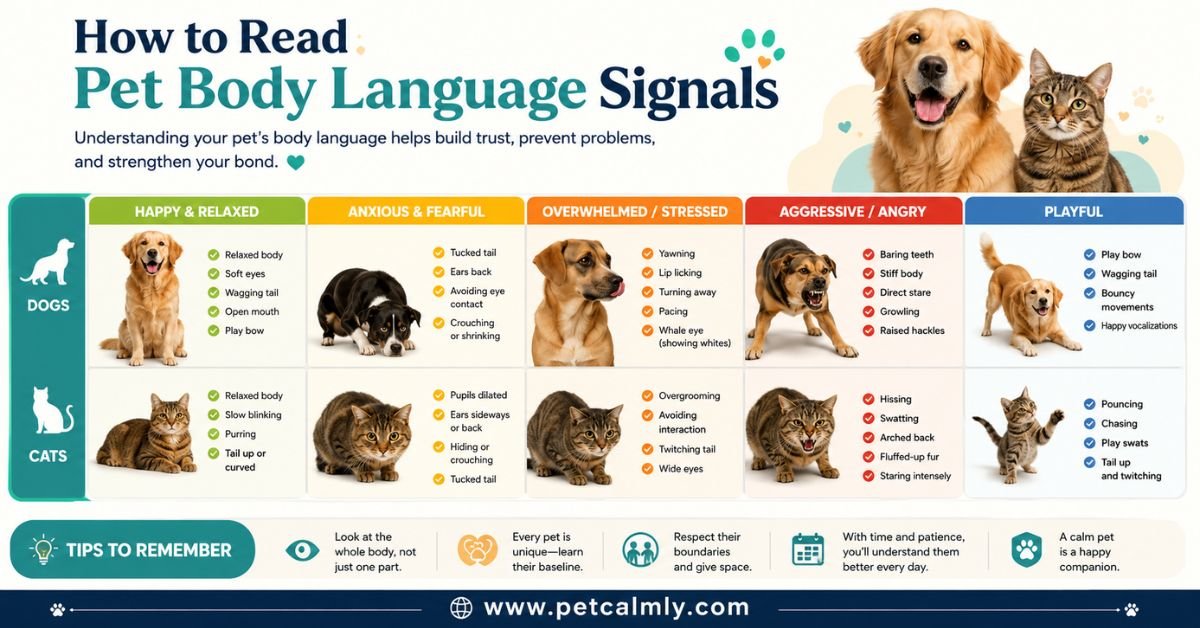
How to Read Pet Body Language Signals
Frequently Asked Questions
1. What is the easiest pet for a beginner family?
Fish, hamsters, and some cat breeds are often easier for beginners. They require less daily training and supervision compared to dogs.
2. How do I know if my child is ready for a pet?
If your child can follow simple responsibilities like feeding or cleaning, they may be ready but adult supervision is always essential.
3. Should I choose a dog or a cat for my family?
Choose a dog if your family is active and home often. Choose a cat if you prefer independence and lower daily time commitment.
4. What is the biggest mistake when choosing a pet?
Choosing based on appearance or emotion without understanding long-term care needs is the most common mistake.
5. How much time should I spend with a new pet daily?
Dogs may need 2–4 hours of attention. Cats need shorter but consistent interaction. Small pets require daily maintenance but less direct interaction.
6. Can different pets live together in one house?
Yes, but introductions must be slow and supervised. Some species naturally coexist better than others, depending on temperament.