Short direct answer
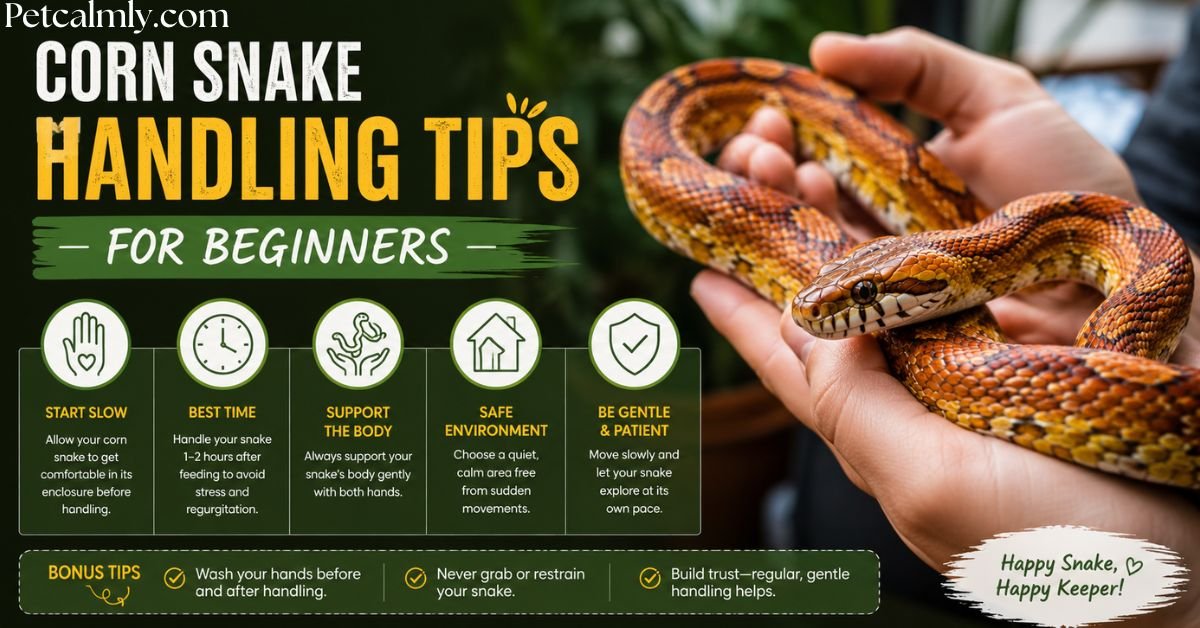
Handling a corn snake for beginners should be slow, calm, and consistent. Start only after the snake has settled in its enclosure for about a week. Use gentle movements, support its full body, and avoid grabbing from above. Keep sessions short (5–10 minutes) and handle 2–3 times weekly to build trust safely.
Why Proper Handling Matters for Corn Snakes
Corn snakes are one of the most popular beginner pet snakes because they are generally calm, manageable in size, and not aggressive. Still, even a well-tempered snake can become stressed or defensive if handled incorrectly.
Many new owners expect instant “pet-like” behavior, but snakes don’t bond like dogs or cats. Instead, trust is built through repetition, calm energy, and predictable handling routines.
In this guide, you’ll learn practical, real-world handling tips that help your corn snake stay relaxed while keeping you safe and confident.
We’ll also cover common beginner mistakes, warning signs of stress, and step-by-step handling methods that actually work in everyday situations.
Understanding Your Corn Snake’s Behavior First
Before handling, it helps to understand what your snake is “thinking” through behavior.
Corn snakes (Corn snake) are naturally shy, non-venomous constrictors. In the wild, they avoid confrontation rather than attack.
Common natural behaviors you may see:
- Hiding most of the day (completely normal)
- Slow tongue flicking (exploring environment)
- Freezing when startled
- Slight pulling away when first touched
These are not signs of aggression. They are signs of caution.
When beginners misread these behaviors, they often handle too quickly or too frequently this is where stress starts.
Before You Handle: Setting the Right Conditions
Good handling starts before you even touch the snake.
1. Give your snake time to settle
After bringing your corn snake home:
- Wait 5–7 days before first handling
- Let it adjust to temperature, humidity, and hiding spots
2. Make sure it has eaten and digested
Avoid handling:
- 48 hours before feeding
- 48–72 hours after feeding (digestion time)
Handling too soon after meals can cause stress or regurgitation.
3. Check the enclosure first
Your snake should feel secure in its home:
- At least one tight hiding spot
- Stable temperature gradient
- Clean water bowl
- Minimal disturbance
A stressed snake in its tank will not tolerate handling well.
Step-by-Step Corn Snake Handling Method for Beginners
This is the safest, most beginner-friendly approach.
Step 1: Approach slowly and confidently
Never rush or grab suddenly.
- Move from the side, not from above
- Let the snake see your hand
- Pause for a moment before touching
Step 2: Gently touch the mid-body first
Start with a light touch in the middle of the body.
Avoid:
- Head grabbing
- Tail lifting first
- Sudden scooping
Step 3: Scoop, don’t grab
Slide your hand underneath and lift slowly.
Think of it like supporting, not picking up.
Step 4: Support the full body
Always use both hands if needed:
- One hand supports front half
- Other supports middle or rear
Never let the snake dangle unsupported for long.
Step 5: Keep movements slow and steady
Fast movement makes snakes nervous.
- Walk slowly
- Keep your hands stable
- Avoid sudden direction changes
How Long Should Handling Sessions Be?
For beginners, less is more.
Recommended duration:
- Start: 3–5 minutes
- After trust builds: 10–15 minutes
Frequency:
- 2–3 times per week is ideal
- Avoid daily handling in the beginning
Over-handling is one of the most common beginner mistakes.
Signs Your Corn Snake Is Comfortable
A relaxed snake will show:
- Slow, steady movement
- Gentle tongue flicking
- Smooth body posture
- Exploring your hands calmly
A comfortable snake may even rest across your arms without trying to escape immediately.
Warning Signs Your Snake Is Stressed
Stop handling immediately if you notice:
- Rapid movement or frantic escaping
- Tight coiling or defensive posture
- Repeated striking attempts
- Loud hissing
- Tail vibration (warning behavior in some snakes)
- Refusing to calm down after a few minutes
If stress continues consistently, reduce handling frequency.
5 Common Beginner Mistakes (And How to Avoid Them)
1. Handling too soon after bringing it home
Give your snake time to adjust first.
2. Grabbing from above
This mimics predator behavior in the wild.
3. Handling after feeding
This can lead to vomiting and stress.
4. Moving too fast
Slow movements build trust.
5. Forcing handling during defensive behavior
If the snake resists strongly, stop and try later.
Building Trust Over Time (The Real Secret)
Corn snakes don’t “bond” emotionally like mammals, but they do learn patterns.
Trust-building routine:
Week 1–2:
- Minimal handling
- Focus on observation
Week 3–4:
- Short handling sessions (3–5 minutes)
After 1 month:
- Gradually increase time if calm
Consistency matters more than duration.
Beginner Handling Checklist
Before picking up your corn snake:
- ✔ Snake has been in enclosure for 5–7 days
- ✔ Not recently fed (48–72 hours buffer)
- ✔ Room is quiet and calm
- ✔ Hands are clean (no strong scents)
- ✔ Movements are slow and predictable
- ✔ You are ready to support full body
When Should You Be Concerned?
While most handling issues are normal beginner adjustment behavior, you should pay attention if:
- The snake refuses handling consistently for weeks
- It shows extreme stress every time you touch it
- It stops eating regularly
- It remains defensive even after long acclimation
In such cases, review husbandry conditions first (temperature, hiding spots, stress levels). If issues continue, consulting an exotic reptile veterinarian is a good idea.
What Should Pet Owners Do for Safe Handling Success?
Here’s a simple routine that works for most beginners:
Daily care focus:
- Keep enclosure stable and clean
- Avoid unnecessary disturbance
- Observe behavior without handling too often
Handling routine:
- Start small (few minutes)
- Stay consistent (2–3 times weekly)
- Increase slowly only if snake is calm
Mindset shift:
Instead of trying to “tame” your snake quickly, focus on:
- Predictability
- Calm environment
- Gentle repetition
That’s what builds real trust.
Conclusion
Handling a corn snake is not about control it’s about communication through calm, consistent behavior. When you move slowly, respect its comfort level, and avoid common beginner mistakes, your snake becomes noticeably more relaxed over time.
Patience is the real skill here. Once trust develops, handling becomes smooth, safe, and stress-free for both you and your snake.
More Information About Pets, Please Visit Our Website: My Female Dog Is Hiding and Acting Strange
Frequently Asked Questions
1. How soon can I handle my new corn snake?
Most experts recommend waiting about a week after bringing it home. This gives the snake time to adjust to its new environment and reduces stress during early interactions.
2. Why does my corn snake try to escape when I hold it?
This is normal beginner behavior. It usually means the snake is still learning to trust handling and feels unsure, not aggressive or dangerous.
3. Can I handle my corn snake every day?
Daily handling is not recommended for beginners. Two to three times per week is enough to build trust without overwhelming the snake.
4. What is the safest way to pick up a corn snake?
Slide your hand gently under its body and support it fully with both hands. Avoid grabbing from above or holding only the tail or head.
5. Why does my corn snake hiss when I touch it?
Hissing is a defensive warning, often caused by fear or stress. It usually decreases once the snake becomes familiar with gentle handling routines.
6. How do I know if my corn snake trusts me?
A trusting corn snake moves calmly in your hands, shows relaxed body language, and does not try to escape immediately during handling sessions.