Short direct answer
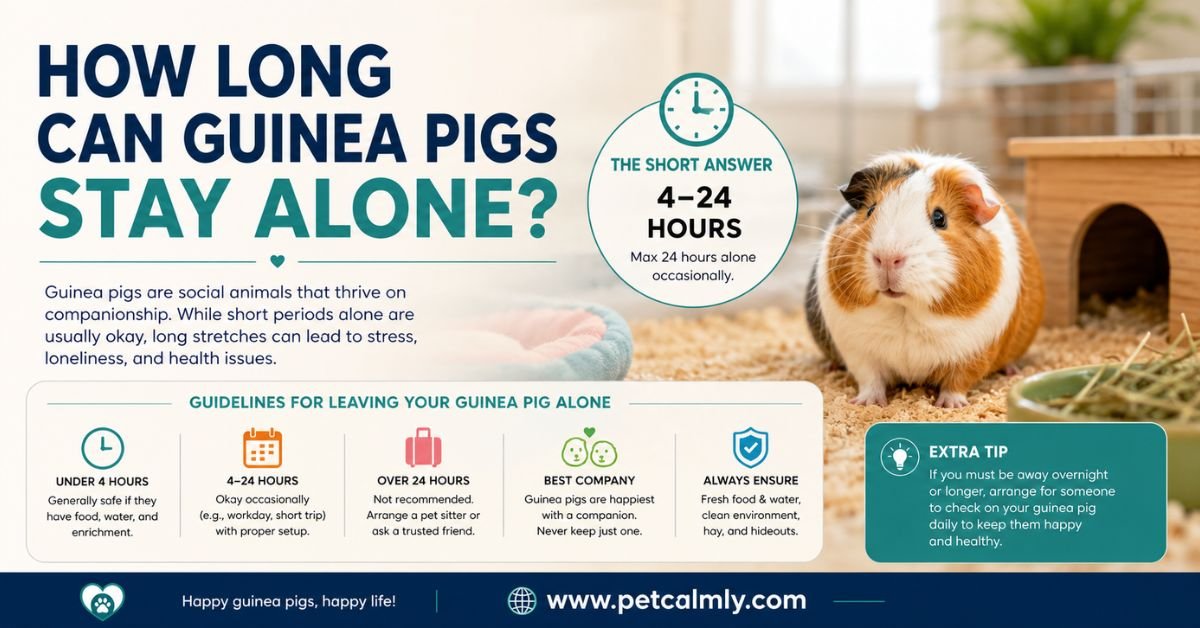
Guinea pigs should not be left completely alone for more than 24 hours, and even that should only happen in exceptional situations. Because they are highly social animals that depend on regular feeding, fresh water, companionship, and daily health monitoring, most guinea pig experts recommend arranging care if you’ll be away overnight. For trips lasting more than one day, a trusted pet sitter, family member, or experienced guinea pig caretaker is the safest option.
Introduction
Many guinea pig owners eventually face the same question: how long can guinea pigs stay alone?
Whether you’re planning a weekend trip, staying overnight elsewhere, or dealing with an unexpected emergency, it’s natural to wonder if your guinea pigs will be okay without you.
The answer isn’t as simple as leaving extra food in the cage and hoping for the best. Guinea pigs have unique needs that make them different from many other small pets. They eat frequently throughout the day, rely on a constant supply of hay, and can become sick surprisingly fast if something goes wrong.
Understanding how long guinea pigs can safely be left alone helps prevent health emergencies, stress, and unnecessary risks.
In this guide, you’ll learn:
- How long guinea pigs can safely stay alone
- What happens when they’re left unattended too long
- How to prepare for short absences
- When to hire a pet sitter
- Common mistakes owners make
- Warning signs that require immediate attention
Why Guinea Pigs Should Not Be Left Alone for Long Periods
Guinea pigs may seem independent because they spend much of their day eating, resting, and exploring their enclosure. However, they are actually quite dependent on consistent daily care.
Unlike some pets that can comfortably go a day or two with minimal supervision, guinea pigs require:
- Unlimited hay
- Fresh drinking water
- Daily health observation
- Clean living conditions
- Social interaction
- Protection from environmental hazards
A water bottle can leak. A hay rack can become empty. A guinea pig can develop digestive issues unexpectedly.
Without someone checking on them, a minor problem can become a serious emergency within hours.
Exactly How Long Can Guinea Pigs Stay Alone?
The safest answer depends on the amount of time involved.
Up to 8 Hours
Most healthy guinea pigs can comfortably stay alone during a normal workday.
As long as they have:
- Unlimited hay
- Fresh water
- A safe environment
- A companion guinea pig
they typically do fine.
This is similar to what many owners do while at work or school.
Up to 24 Hours
A healthy pair or group of guinea pigs may manage for a single day if thoroughly prepared beforehand.
You’ll need:
- Multiple water sources
- Plenty of hay
- Extra pellets
- Safe vegetables provided shortly before leaving
Even then, many experienced owners prefer having someone check on them.
More Than 24 Hours
This is where risk increases significantly.
For absences longer than a day, you should arrange:
- A pet sitter
- A knowledgeable friend
- A family member
- A boarding facility experienced with guinea pigs
Daily supervision becomes essential because problems can develop quickly.
More Than 48 Hours
Guinea pigs should never be left completely unattended for two days or longer.
At this point, the risk of:
- Dehydration
- Empty hay supplies
- Water bottle failures
- Illness
- Injury
becomes too high.
A Quick Safety Guide
| Time Alone | Risk Level | Recommendation |
|---|---|---|
| 4–8 hours | Very low | Generally safe |
| 8–24 hours | Low to moderate | Careful preparation required |
| 24–48 hours | Moderate to high | Daily caretaker recommended |
| Over 48 hours | High | Do not leave unattended |
Why Guinea Pigs Need Daily Monitoring
One reason guinea pigs shouldn’t be left alone for long periods is that they often hide signs of illness.
In the wild, prey animals conceal weakness to avoid predators. Domestic guinea pigs still have this instinct.
A guinea pig can appear normal one day and become seriously ill the next.
Daily observation helps owners notice:
- Reduced appetite
- Weight loss
- Lethargy
- Diarrhea
- Breathing problems
- Injuries
Early detection often makes treatment easier and more successful.
What Happens If a Guinea Pig Is Left Alone Too Long?
Many owners assume a large pile of hay and an extra water bottle solve the problem.
Unfortunately, several risks remain.
Running Out of Water
Water bottle failures happen more often than people realize.
Common issues include:
- Clogged spouts
- Leaks
- Broken holders
- Empty bottles
A guinea pig without water can become dehydrated quickly.
Digestive Problems
Guinea pigs require constant access to hay because their digestive systems depend on regular food intake.
Without sufficient fiber:
- Gut movement slows
- Digestion becomes disrupted
- Serious gastrointestinal problems can develop
Illness Going Unnoticed
A guinea pig that stops eating can become critically ill much faster than many pet owners expect.
Without someone checking daily, warning signs may be missed entirely.
Environmental Hazards
Unexpected events can occur, including:
- Power outages
- Extreme temperatures
- Cage accidents
- Escaped guinea pigs
Human supervision provides an important layer of protection.
Can a Single Guinea Pig Stay Alone Longer?
No.
In fact, a guinea pig living alone may experience even more stress during your absence.
Guinea pigs are social animals that generally thrive when housed with compatible companions.
A bonded pair can:
- Comfort one another
- Reduce boredom
- Maintain social interaction
A solitary guinea pig has no companionship when you’re away.
This is one reason many welfare organizations encourage keeping guinea pigs in pairs whenever possible.
How Guinea Pig Companionship Affects Time Alone
People sometimes confuse two different questions:
- Can a guinea pig be left without humans?
- Can a guinea pig be left completely alone?
These are not the same thing.
A guinea pig with a bonded cage mate still receives social interaction while you’re away.
A guinea pig living by itself experiences complete isolation.
Companionship doesn’t eliminate the need for daily care, but it can reduce stress during short absences.
How to Prepare Guinea Pigs for an Overnight Absence
If you’ll be gone less than 24 hours, preparation becomes especially important.
Provide Extra Hay
Hay should never run out.
Fill:
- Hay racks
- Hay bags
- Additional hay piles
Use more than you think they’ll need.
Add Multiple Water Sources
Use:
- Two water bottles
- Or a bottle and a water bowl
This creates a backup if one fails.
Clean the Cage Before Leaving
A clean environment helps reduce:
- Odors
- Moisture buildup
- Bacterial growth
Fresh bedding can also keep guinea pigs more comfortable.
Check Room Temperature
Guinea pigs are sensitive to temperature extremes.
Aim for a stable, comfortable indoor environment.
Avoid:
- Direct sunlight
- Hot rooms
- Drafty locations
Remove Potential Hazards
Double-check:
- Cage doors
- Ramps
- Hideouts
- Water bottle mounts
A quick safety inspection can prevent accidents.
What Should a Guinea Pig Sitter Do?
For trips lasting more than one day, a caretaker should ideally perform daily checks.
Essential Daily Tasks
A sitter should:
- Refill hay
- Refresh water
- Offer vegetables
- Remove obvious waste
- Observe behavior
Health Monitoring
Ask the sitter to contact you if they notice:
- Refusal to eat
- Difficulty breathing
- Lethargy
- Bleeding
- Diarrhea
- Unusual posture
Providing written instructions is helpful, especially if the sitter has never cared for guinea pigs before.
Signs Your Guinea Pig Struggles When Left Alone
Some guinea pigs cope well with short absences.
Others show signs of stress.
Watch for:
- Reduced appetite
- Excessive hiding
- Less vocalization
- Weight loss
- Nervous behavior
- Decreased activity
These signs may indicate that your guinea pig needs more interaction or environmental enrichment.
Ways to Keep Guinea Pigs Occupied While You’re Away
Mental stimulation can make short absences easier.
Safe Enrichment Ideas
Consider providing:
- Hay-filled cardboard tubes
- Paper bags stuffed with hay
- Foraging toys
- Safe chew toys
- Additional hideouts
- Tunnels
These encourage natural behaviors and help reduce boredom.
Common Mistakes Owners Make
Even caring owners sometimes underestimate guinea pig needs.
1: Leaving Too Much Fresh Produce
Vegetables spoil quickly.
Rotting produce can attract insects and create unsanitary conditions.
2: Assuming Water Bottles Never Fail
Mechanical failures happen.
Always provide backups.
3: Waiting Until the Last Minute
Finding a qualified sitter becomes harder when travel plans are rushed.
4: Leaving a Sick Guinea Pig Unattended
Any guinea pig showing illness symptoms should be monitored closely and evaluated by a veterinarian when necessary.
5: Forgetting Daily Health Checks Matter
Food and water aren’t the only concerns.
Observation is equally important.
Emergency Situations: What If You Must Leave Unexpectedly?
Life happens.
Medical emergencies, family obligations, and sudden travel can occur with little warning.
If you must leave unexpectedly:
- Fill multiple hay stations.
- Provide backup water sources.
- Ask a trusted person to visit.
- Leave written instructions.
- Share veterinarian contact information.
- Request photo updates if possible.
Even a brief daily check can dramatically improve safety.
When Should You Worry About Leaving Guinea Pigs Alone?
Certain situations require extra caution.
Your Guinea Pig Is Elderly
Senior guinea pigs may develop health problems more quickly.
Your Guinea Pig Has a Medical Condition
Conditions requiring medication or monitoring make daily supervision essential.
Recent Illness or Surgery
Recently recovered guinea pigs should not be left unattended for extended periods.
Appetite Changes
Any guinea pig eating less than normal should be observed closely.
Because guinea pigs depend on constant food intake, appetite changes are never something to ignore.
What Should Pet Owners Do Before Every Trip?
Use this simple checklist.
Guinea Pig Travel Absence Checklist
✔ Clean cage thoroughly
✔ Refill hay supplies
✔ Add extra hay stations
✔ Test water bottles
✔ Provide backup water source
✔ Secure cage doors
✔ Remove hazards
✔ Arrange caretaker if gone over 24 hours
✔ Leave feeding instructions
✔ Share emergency veterinary contacts
✔ Check room temperature
✔ Confirm caretaker visit schedule
This checklist helps reduce many of the common risks associated with leaving guinea pigs alone.
Frequently Asked Questions
Can guinea pigs stay alone for a weekend?
No. Guinea pigs should not be left completely unattended for an entire weekend. Arrange for someone to check on them daily and replenish food and water.
Can guinea pigs stay alone for 12 hours?
Yes. Healthy guinea pigs can usually stay alone for 12 hours when they have unlimited hay, fresh water, and a safe environment.
Is it okay to leave guinea pigs alone overnight?
Generally yes, if it’s less than 24 hours and you’ve prepared properly with sufficient hay and water.
Can guinea pigs stay alone for three days?
No. Three days without supervision is unsafe. A caretaker should check on guinea pigs every day.
Will guinea pigs get sad if I leave?
Some guinea pigs may miss their normal routine, but bonded guinea pigs usually cope better because they still have social companionship.
Do guinea pigs need someone to check on them every day?
Yes. Daily checks are strongly recommended to ensure food, water, health, and safety needs are being met.
More Information About Pets, Please Visit Our Website:
To build topical authority and improve user navigation, consider linking this article to:
- Guinea pig squeaking meaning
- Guinea pig cage setup ideas for 2
- Fleece vs paper bedding for guinea pigs
- Guinea pig pregnancy signs
- How much does a guinea pig cost?
- Can guinea pigs eat carrots?
- Guinea pig vet costs
- Signs of a sick guinea pig
Conclusion
So, how long can guinea pigs stay alone? For most healthy guinea pigs, a normal workday is perfectly manageable, and an overnight absence may be safe with careful preparation. However, once you exceed 24 hours, arranging daily care becomes increasingly important.
Guinea pigs rely on consistent access to hay, water, companionship, and health monitoring. Because they can become seriously ill surprisingly quickly, regular observation is just as important as providing food and water.
If you’re planning a trip, the safest approach is simple: prepare thoroughly, arrange a trusted caretaker when needed, and make sure someone can spot potential problems before they become emergencies. Your guinea pigs will be safer, healthier, and far less stressed while you’re away.