Short direct answer
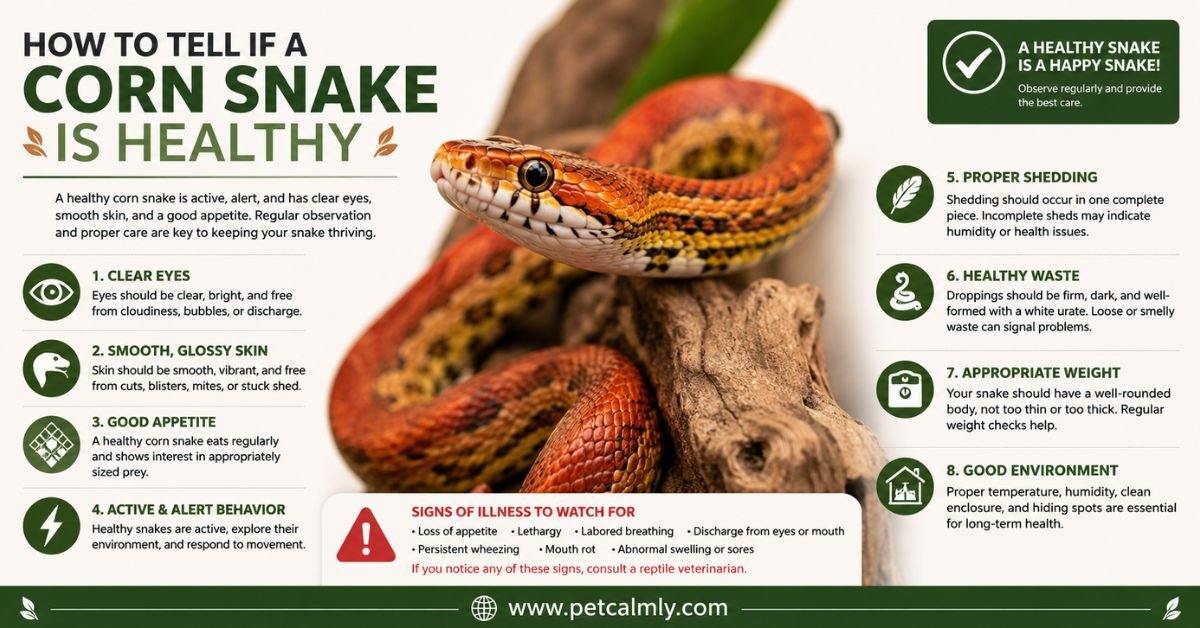
A healthy corn snake has clear eyes, smooth skin, a well-rounded body, regular tongue flicking, a strong feeding response, normal shedding, and calm, alert behavior. Most healthy corn snakes maintain a steady body condition, breathe quietly, move smoothly, and show interest in their surroundings without appearing lethargic or distressed.
If your corn snake is eating consistently, shedding in one complete piece, maintaining a healthy weight, and showing no signs of respiratory issues, swelling, discharge, or unusual behavior, those are all strong indicators of good health.
Introduction
Corn snakes are often recommended as beginner-friendly pet snakes, but many owners still wonder whether their snake is truly healthy or simply acting like a snake. Unlike dogs and cats, reptiles can hide illness remarkably well. By the time obvious symptoms appear, a problem may already be advanced.
That’s why learning the subtle signs of health is one of the most valuable skills a corn snake owner can develop.
Maybe your snake spends most of the day hidden and you’re wondering if that’s normal. Perhaps you’re concerned about shedding, feeding habits, or body condition. These concerns are common, especially for new reptile keepers.
This guide will help you understand what a healthy corn snake looks like, how healthy behavior differs from warning signs, and when it’s time to seek veterinary advice.
What Does a Healthy Corn Snake Look Like?
The easiest way to assess your corn snake’s health is to observe its appearance and daily behavior.
Healthy corn snakes generally display:
- Bright, clear eyes (except during shed cycles)
- Smooth, clean skin
- A rounded, muscular body
- Regular tongue flicking
- Strong grip when handled
- Consistent feeding habits
- Quiet breathing
- Alert but calm behavior
No single sign tells the whole story. Instead, look at the overall picture.
A snake that misses one meal may still be perfectly healthy. A snake with slightly dull colors may simply be preparing to shed.
The goal is to recognize patterns rather than focusing on one isolated observation.
Healthy Body Condition: What to Look For
One of the best indicators of overall health is body shape.
A Healthy Corn Snake Should Look Rounded
A healthy corn snake has a gently rounded body without obvious protruding bones or a sharp backbone.
From above, the body should appear:
- Smooth
- Symmetrical
- Evenly proportioned
- Slightly rounded along the sides
The spine should not be sharply visible.
Likewise, the snake should not appear excessively thick or overweight.
Signs of a Healthy Weight
Healthy corn snakes usually have:
- Good muscle tone
- Consistent body thickness
- Smooth body contours
- Gradual tapering toward the tail
Young snakes naturally appear more slender than adults.
Healthy vs Unhealthy Body Shape
| Healthy Corn Snake | Potential Concern |
|---|---|
| Rounded body | Sharp triangular shape |
| Smooth contours | Visible ribs or spine |
| Even muscle tone | Sunken sides |
| Consistent thickness | Severe weight loss |
| Gradual tail taper | Thin, weak tail |
A sudden change in body condition often deserves closer attention.
Clear Eyes Are Usually a Good Sign
Healthy corn snake eyes should appear:
- Bright
- Clear
- Symmetrical
- Free from discharge
However, there’s one important exception.
During Shedding
Before shedding, a corn snake’s eyes often become cloudy or bluish.
This is completely normal.
Many owners mistakenly assume their snake is sick when the eyes suddenly appear milky.
The cloudy appearance usually lasts several days before the snake sheds.
Once shedding is complete, the eyes should return to their normal clear appearance.
Healthy Skin and Scales
The skin can reveal a surprising amount about a corn snake’s overall condition.
Healthy scales should be:
- Smooth
- Clean
- Intact
- Free from wounds
- Free from retained shed
The skin should not appear:
- Cracked
- Ulcerated
- Swollen
- Discolored unexpectedly
Minor scars can occur throughout a snake’s life and are not always a sign of illness.
What matters more is whether new injuries continue to appear.
A Healthy Corn Snake Sheds Properly
One of the clearest indicators of good health is a successful shed.
What Normal Shedding Looks Like
Healthy corn snakes usually shed:
- In one complete piece
- Every few weeks to months depending on age
- Without assistance
Young corn snakes shed more frequently because they grow rapidly.
Adults typically shed less often.
Signs of a Good Shed
Look for:
- Complete skin removal
- Shed eye caps present
- Minimal retained skin
- Bright colors afterward
A fresh shed often leaves the snake looking noticeably more vibrant.
Feeding Behavior: A Major Health Indicator
Corn snakes are usually enthusiastic eaters.
While occasional fasting can occur, especially during seasonal changes, healthy snakes generally maintain a reliable feeding response.
Signs of Healthy Feeding Behavior
A healthy corn snake often:
- Notices prey quickly
- Shows interest in food
- Strikes accurately
- Swallows normally
- Digests without issues
Most owners become familiar with their snake’s normal feeding routine.
Changes from that routine are often more important than comparing your snake to others.
How Active Should a Healthy Corn Snake Be?
Many new owners worry because they rarely see their snake moving.
In reality, corn snakes are often most active:
- During dawn
- During dusk
- At night
A healthy snake may spend much of the day hidden.
That alone is not a reason for concern.
Normal Activity Patterns
Healthy corn snakes commonly:
- Explore their enclosure
- Climb branches
- Investigate new objects
- Tongue flick regularly
- Move smoothly and confidently
Some individuals are naturally more active than others.
Tongue Flicking: A Positive Sign
Snakes use tongue flicking to gather information about their environment.
Frequent tongue flicking generally indicates:
- Alertness
- Environmental awareness
- Curiosity
- Normal sensory function
A healthy corn snake often flicks its tongue while exploring.
This behavior helps it detect scents and navigate its surroundings.
Healthy Breathing Should Be Quiet
Breathing is another useful health indicator.
Normally, you should barely notice your snake breathing.
Healthy breathing is:
- Quiet
- Smooth
- Effortless
You should not hear:
- Wheezing
- Clicking
- Popping sounds
Nor should you see:
- Open-mouth breathing
- Excessive stretching of the neck while breathing
These can indicate respiratory problems requiring veterinary attention.
Healthy Waste and Digestion
A healthy digestive system is reflected in your snake’s waste.
Normal feces generally contain:
- Dark solid waste
- White urates
The exact appearance varies based on diet and hydration.
Good Signs
Healthy digestion includes:
- Regular bowel movements
- No persistent diarrhea
- No blood
- No unusual odors
Changes should be monitored, especially when accompanied by other symptoms.
How a Healthy Corn Snake Behaves During Handling
Behavior during handling can reveal a lot about a snake’s well-being.
Healthy corn snakes are often:
- Curious
- Calm
- Alert
- Responsive
Individual personalities vary.
Some snakes tolerate handling immediately, while others remain cautious.
What Healthy Movement Looks Like
When handled, a healthy snake generally:
- Grips securely
- Moves smoothly
- Maintains coordination
- Shows normal muscle strength
Weakness or poor coordination should not be ignored.
Environmental Conditions Affect Health
Even a healthy snake can begin showing problems if husbandry conditions are incorrect.
Temperature Matters
Corn snakes depend on external heat to regulate body functions.
Proper temperature gradients support:
- Digestion
- Immunity
- Activity levels
- Appetite
Inadequate temperatures often lead to:
- Refusal to eat
- Lethargy
- Poor digestion
Humidity Matters Too
Appropriate humidity helps support:
- Healthy sheds
- Hydration
- Respiratory health
Many shedding problems are linked to environmental conditions rather than disease.
Daily Health Check Checklist
A quick daily observation can help identify issues early.
Healthy Corn Snake Checklist
✓ Eyes look normal
✓ Skin appears clean
✓ Body condition remains stable
✓ Breathing is quiet
✓ No discharge from nose or mouth
✓ Normal activity levels
✓ Tongue flicking regularly
✓ Good feeding response
✓ No swelling or injuries
✓ Enclosure conditions are appropriate
You can complete this assessment in just a few minutes.
4 Common Mistakes Owners Make When Assessing Health
Many health concerns arise from misunderstandings rather than actual illness.
Mistake 1: Assuming Hiding Means Sickness
Corn snakes naturally spend significant time hiding.
A hidden snake is often simply feeling secure.
Mistake 2: Panicking During Shed Cycles
Cloudy eyes, dull coloration, and reduced appetite are common before shedding.
These changes are often normal.
Mistake 3: Comparing Every Snake to Social Media
Individual snakes vary.
Some eat aggressively.
Others are more cautious.
Healthy behavior exists within a range.
Mistake 4: Ignoring Small Changes
While overreacting is common, underreacting can be equally problematic.
Gradual weight loss or subtle breathing changes deserve attention.
Signs Your Corn Snake May Not Be Healthy
Several symptoms should prompt closer observation.
Potential warning signs include:
- Significant weight loss
- Persistent refusal to eat
- Wheezing
- Open-mouth breathing
- Swelling
- Discharge from eyes or nose
- Retained shed
- Lethargy
- Unusual lumps
- Difficulty moving
One symptom alone may not always indicate serious illness, but multiple symptoms together increase concern.
When Should You Worry?
Seek Veterinary Advice If You Notice:
- Rapid weight loss
- Repeated feeding refusal in a growing snake
- Difficulty breathing
- Mouth discharge
- Blood in stool
- Persistent retained shed
- Severe lethargy
- Unexplained swelling
- Neurological symptoms
The earlier a reptile health problem is identified, the better the chances of successful treatment.
Emergency Situations
Contact a reptile veterinarian immediately if your corn snake shows:
- Severe respiratory distress
- Inability to right itself
- Significant injuries
- Prolapse
- Major burns
- Continuous open-mouth breathing
These situations should not be monitored at home without professional guidance.
What Should Pet Owners Do?
If you’re trying to determine whether your corn snake is healthy, follow a structured approach.
Step 1: Observe Daily
Look for changes in:
- Appetite
- Activity
- Appearance
- Breathing
Step 2: Monitor Weight
Regular weight tracking often reveals health issues before visible symptoms appear.
A small digital kitchen scale works well.
Step 3: Maintain Proper Husbandry
Verify:
- Temperatures
- Humidity
- Hide availability
- Clean water
- Enclosure cleanliness
Step 4: Keep Records
Track:
- Feeding dates
- Shed cycles
- Weight
- Behavioral changes
Patterns become much easier to identify over time.
Step 5: Seek Expert Help When Needed
If something seems consistently abnormal, consult a qualified reptile veterinarian rather than relying solely on online advice.
Health Monitoring by Life Stage
Hatchlings
Young snakes should:
- Shed regularly
- Feed consistently
- Gain weight steadily
Growth is a key indicator of health.
Juveniles
Juveniles remain active growers and should maintain healthy body condition and appetite.
Adults
Adult corn snakes often become more predictable in behavior and feeding patterns.
Subtle changes may be easier to spot because their routines are well established.
Myths About Healthy Corn Snakes
Myth: A Healthy Snake Eats Every Time Food Is Offered
Not always.
Seasonal changes, breeding cycles, and shedding can temporarily affect appetite.
Myth: Active Snakes Are Always Healthier
Some healthy corn snakes are naturally relaxed and spend considerable time hidden.
Myth: Shedding Problems Always Mean Disease
Environmental humidity issues are a much more common cause.
Myth: A Snake That Hisses Is Aggressive
Hissing is often defensive rather than aggressive and does not automatically indicate poor health.
Helpful Supplies for Monitoring Health
Several tools can make health tracking easier.
Useful items include:
- Digital scale
- Infrared temperature gun
- Hygrometer
- Thermometer
- Feeding log
- Reptile-safe cleaning supplies
Many experienced keepers use these tools routinely to prevent problems before they develop.
Related Topics Worth Learning About
As you become more confident with corn snake care, you may also want to explore:
- Corn snake feeding schedules
- Corn snake shedding problems
- Corn snake habitat setup
- Signs of stress in reptiles
- Safe handling techniques
- Reptile hydration and humidity management
These topics help build a broader understanding of your snake’s overall well-being.
Frequently Asked Questions
1: How can I tell if my corn snake is happy?
While snakes do not express happiness like dogs or cats, a healthy corn snake typically eats well, explores occasionally, sheds properly, and shows normal alert behavior.
2: Is it normal for a healthy corn snake to hide all day?
Yes. Corn snakes naturally spend much of their time hidden. Hiding alone is usually not a sign of illness.
3: How often should a healthy corn snake eat?
The schedule varies by age. Hatchlings often eat every 5–7 days, while adults commonly eat every 7–14 days depending on size and feeding plans.
4: What should a healthy corn snake’s eyes look like?
They should be clear, bright, and free of discharge. Cloudy eyes are usually normal during the shedding process.
5: Can a healthy corn snake refuse food?
Yes. Shedding, seasonal changes, stress, and environmental adjustments can sometimes cause temporary feeding refusals.
6: What is the most common sign of illness in corn snakes?
Changes in appetite, weight loss, respiratory symptoms, lethargy, and abnormal shedding are among the most commonly noticed warning signs.
More Information About Pets, Please Visit Our Website: Corn Snake Temperature and Humidity
Conclusion
Learning how to tell if a corn snake is healthy comes down to understanding what is normal for your individual snake. Clear eyes, healthy skin, regular shedding, steady weight, normal feeding habits, smooth movement, and quiet breathing are all encouraging signs that your pet is doing well.
Most importantly, focus on patterns rather than isolated behaviors. A corn snake that skips a meal or spends a few extra days hiding is not necessarily sick. Consistent changes in appetite, body condition, breathing, or behavior are far more meaningful.
By performing quick daily observations, maintaining proper habitat conditions, and tracking feeding and shedding cycles, you’ll be able to spot potential problems early and provide the best possible care for your snake. Over time, you’ll become familiar with your corn snake’s unique habits, making it much easier to recognize the difference between normal reptile behavior and a genuine health concern.