Short direct answer
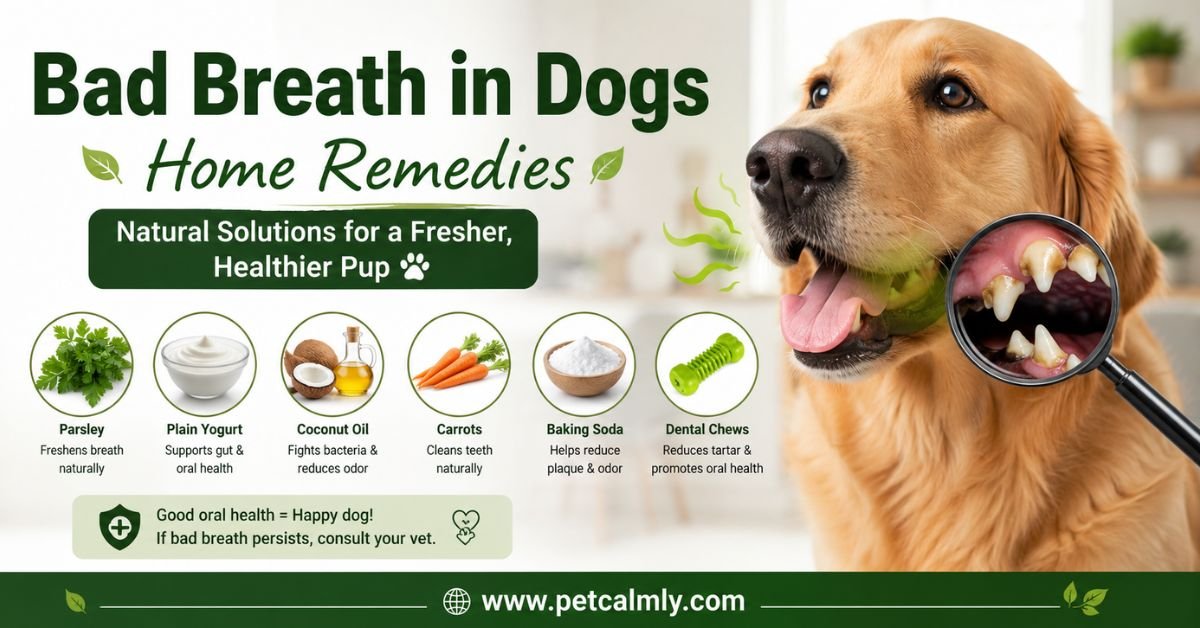
Bad Breath in Dogs Home Remedies by focusing on oral hygiene, diet, and safe natural cleaning habits. Common home remedies include regular tooth brushing with dog-safe toothpaste, adding dental chews, offering crunchy foods like carrots, and using water additives recommended for pets. Mild bad breath is usually caused by plaque buildup or food debris, but it can also signal deeper dental or digestive issues. If the smell is strong, persistent, or sudden, a veterinary check is important before relying only on home remedies.
Introduction
If you’ve ever leaned in to pet your dog and suddenly pulled back because of that strong, unpleasant breath, you’re not alone. Many dog owners first notice dental issues through smell long before they see anything wrong.
Bad breath in dogs isn’t just a “dog thing.” It’s usually a sign that something is happening in the mouth, diet, or even internal health. Sometimes it’s simple like plaque buildup. Other times, it can point to gum disease, infection, or digestive imbalance.
The good news? In many mild cases, you can improve your dog’s breath at home with safe, consistent care. And even better, these habits also support your dog’s long-term health not just fresher kisses.
In this guide, you’ll learn:
- What causes bad breath in dogs
- Safe and effective home remedies
- Daily routines that actually work
- Mistakes most owners don’t realize they’re making
- When bad breath becomes a warning sign
Let’s start with the real reason behind the smell.
What Causes Bad Breath in Dogs?
Quick Answer: The Main Reason Behind Bad Breath
Most bad breath in dogs comes from bacteria buildup in the mouth. When food particles stay on teeth, bacteria break them down and produce foul-smelling compounds. Over time, this leads to plaque, tartar, gum irritation, and stronger odors.
But there’s more to it than just “dirty teeth.”
1. Plaque and Tartar Build-Up (Most Common Cause)
This is the number one reason dogs develop bad breath.
Here’s what happens:
- Food sticks to teeth
- Bacteria feed on it
- Plaque forms
- It hardens into tartar
- Gums become inflamed
- Breath becomes noticeably foul
Small breeds like Chihuahuas, Shih Tzus, and Yorkies are especially prone because their teeth are crowded.
2. Gum Disease (Periodontal Issues)
When plaque isn’t removed, it spreads below the gum line. This leads to:
- Red or swollen gums
- Bleeding when chewing
- Strong, persistent odor
At this stage, home remedies alone may not be enough.
3. Diet and Food Choices
Some foods naturally contribute to bad breath:
- Low-quality kibble with fillers
- Strong-smelling wet food
- Leftover food stuck in teeth
Dogs that eat soft food only are more likely to develop plaque faster because they don’t get natural teeth-cleaning friction.
4. Digestive Issues
Sometimes the smell comes from inside the body, not just the mouth.
Possible causes include:
- Poor digestion
- Gas buildup
- Imbalanced gut bacteria
This type of breath often smells sour or slightly rotten.
5. Foreign Objects or Infection
Dogs sometimes chew things they shouldn’t:
- Sticks
- Fabric
- Bones that splinter
If something gets stuck, it can lead to infection and sudden bad breath.
6. Serious Health Conditions (Less Common but Important)
Persistent foul breath can sometimes signal:
- Kidney disease (ammonia-like smell)
- Liver issues (musty or strong odor)
- Diabetes (sweet or fruity smell)
This is why sudden or unusual breath changes should never be ignored.
Signs Your Dog Has Dental-Related Bad Breath
Before jumping into remedies, it helps to confirm the source.
Look for these signs:
- Strong smell when your dog pants
- Yellow or brown teeth
- Red or bleeding gums
- Excess drooling
- Chewing on one side only
- Pawing at the mouth
- Loss of appetite for hard food
If you notice more than two of these, dental issues are likely involved.
Bad Breath in Dogs Home Remedies That Actually Work
Now let’s get into the practical part what you can safely do at home.
These methods are simple but effective when done consistently.
1. Brushing Your Dog’s Teeth (Most Effective Home Remedy)
Why it works:
Brushing physically removes plaque before it hardens.
How to do it:
- Use a soft dog toothbrush or finger brush
- Only use dog-safe toothpaste (never human toothpaste)
- Start slowly—just a few teeth at first
- Aim for 3–5 times per week
Beginner tip:
Let your dog taste the toothpaste first so it feels familiar.
2. Dental Chews (Natural Cleaning Support)
Dental chews help scrape plaque as your dog chews.
Look for:
- Vet-approved dental sticks
- Chews with natural enzymes
- Size-appropriate treats
Avoid overly hard bones that may crack teeth.
3. Carrots and Crunchy Vegetables
Raw carrots act like natural toothbrushes.
They:
- Help clean teeth surfaces
- Stimulate gums
- Reduce plaque buildup
Other safe options:
- Cucumber slices
- Apple pieces (no seeds)
4. Coconut Oil (Natural Antibacterial Support)
Coconut oil has mild antibacterial properties.
You can:
- Rub a small amount on gums
- Add a tiny amount to food (if your dog tolerates it)
Start with very small quantities to avoid stomach upset.
5. Water Additives (Easy Daily Support)
Some pet-safe water additives help reduce bacteria in the mouth.
They work by:
- Neutralizing odor
- Reducing plaque formation
- Supporting oral hygiene between brushings
Always choose vet-recommended brands.
6. Probiotics for Digestive Freshness
If bad breath is linked to digestion, probiotics may help balance gut bacteria.
Benefits include:
- Better digestion
- Reduced gas-related odor
- Improved overall gut health
7. Regular Play and Chewing Behavior
Natural chewing helps reduce plaque.
Safe chew options:
- Rubber chew toys
- Rope toys
- Dental balls
Chewing keeps teeth cleaner naturally between brushing sessions.
Simple Daily Routine for Fresher Dog Breath
Here’s a realistic routine most pet owners can follow:
Daily:
- Fresh water available all day
- 10–20 minutes of chewing activity
- Optional water additive
3–5 times per week:
- Tooth brushing
- Dental chew
Weekly:
- Quick mouth check (gums, teeth color)
- Replace old chew toys if dirty
Consistency matters more than intensity.
Common Mistakes Dog Owners Make
Many owners accidentally worsen bad breath without realizing it.
Avoid these:
- Using human toothpaste (toxic for dogs)
- Ignoring early tartar signs
- Relying only on treats instead of brushing
- Giving hard bones that damage teeth
- Waiting too long for vet care
- Masking smell with sprays instead of treating cause
Bad breath is a symptom not the actual problem.
When Should You Worry About Your Dog’s Bad Breath?
Seek veterinary help if you notice:
- Sudden strong odor change
- Bleeding or swollen gums
- Loose teeth
- Refusal to eat
- Excess drooling
- Smell like ammonia or rot
- Weight loss with bad breath
These signs may indicate infection or internal disease, not just dental buildup.
Home remedies are helpful but not a substitute for diagnosis in these cases.
What Should Pet Owners Do First?
If your dog’s breath is bothering you, here’s a simple action plan:
Step 1: Check the mouth
Look for tartar, redness, or swelling.
Step 2: Start brushing gently
Even 1–2 teeth at a time is progress.
Step 3: Add chewing support
Introduce dental chews or safe toys.
Step 4: Improve diet quality
Avoid overly soft or sugary treats.
Step 5: Monitor changes
If no improvement in 1–2 weeks, consult a vet.
Realistic Expectations: How Fast Will Home Remedies Work?
This is important many owners expect instant results.
- Mild cases: improvement in 7–14 days
- Moderate plaque: 2–4 weeks of consistent care
- Advanced dental disease: needs professional cleaning
Think of home care as maintenance, not a quick fix.
Prevention Tips for Long-Term Fresh Breath
Once your dog’s breath improves, keep it that way:
- Brush regularly
- Avoid sticky treats
- Schedule annual dental checks
- Encourage chewing toys
- Feed balanced, high-quality food
- Keep water clean and fresh
Prevention is always easier than treatment.
Conclusion
Bad breath in dogs is extremely common, but it’s also something you can often improve at home with consistent care. Most cases come from plaque buildup and can be managed with brushing, dental chews, and simple diet adjustments.
Still, persistent or unusual odors should never be ignored, because sometimes they point to deeper dental or health issues.
The most important thing is not perfection it’s routine. Small daily habits can make a big difference in your dog’s comfort, health, and even your bonding moments together.
A fresher breath often means a healthier dog overall.
More Information About Pets, Please Visit Our Website: Dog Itchy Skin Treatment at Home
Frequently Asked Questions
1. What is the fastest home remedy for dog bad breath?
Brushing your dog’s teeth with dog-safe toothpaste is the fastest effective method. It removes bacteria directly and reduces odor quickly.
2. Can I use baking soda for my dog’s teeth?
No, baking soda is not recommended for dogs. It can upset their stomach and is not safe for regular oral use.
3. Why does my dog’s breath smell like fish?
Fishy odor often comes from dental infection or gum disease. It may also be linked to diet or oral bacteria buildup.
4. Do dental chews really help bad breath?
Yes, dental chews help reduce plaque and freshen breath, but they work best when combined with brushing.
5. Is bad breath in dogs always a dental problem?
Not always. It can also come from digestion issues, kidney disease, or other internal health conditions.
6. When should I take my dog to the vet for bad breath?
If the smell is sudden, very strong, or comes with symptoms like bleeding gums, loss of appetite, or weight loss, visit a vet immediately.