Short direct answer
Corn snake shedding problems usually occur when a snake cannot remove its old skin completely, resulting in patches of retained shed, stuck eye caps, or skin that comes off in pieces. The most common causes are low humidity, dehydration, improper enclosure conditions, illness, stress, or nutritional issues. Most shedding problems can be improved by correcting humidity levels, providing proper hydration, and creating a suitable shedding environment. However, persistent retained shed, eye issues, wounds, or signs of illness should be evaluated by a reptile veterinarian.
Introduction
Finding pieces of old skin stuck to your corn snake can be worrying, especially if you’re a new snake owner.
Many keepers expect a shed to slide off perfectly in one long piece. When that doesn’t happen, it’s easy to wonder whether something is seriously wrong.
The good news is that most corn snake shedding problems are manageable once you understand why they happen. In many cases, the issue comes down to enclosure humidity, hydration, or environmental setup rather than a serious health condition.
Understanding how shedding works can help you spot problems early and support your snake through the process safely.
In this guide, you’ll learn:
- Why corn snakes shed
- Common shedding problems
- Signs something isn’t right
- How to help a snake with stuck shed
- Mistakes owners often make
- Prevention strategies
- When veterinary care is necessary
By the end, you’ll know exactly what to do if your corn snake has trouble shedding and how to encourage healthy sheds in the future.
Understanding Normal Corn Snake Shedding
Before discussing shedding problems, it helps to know what a healthy shed looks like.
Corn snakes grow throughout their lives. As they grow, their outer skin layer becomes too small and must be replaced.
This process is called ecdysis.
A healthy shedding cycle usually follows this pattern:
1. Skin Appears Dull
The snake’s colors may look faded or dusty.
2. Eyes Turn Blue or Milky
Many owners call this the “blue phase.”
The eyes become cloudy because fluid builds between the old and new skin layers.
3. Eyes Clear Again
The eyes return to normal appearance a few days later.
4. Shedding Occurs
The snake rubs against rough surfaces and removes the old skin.
5. Fresh Skin Appears
Colors often look brighter and more vibrant after shedding.
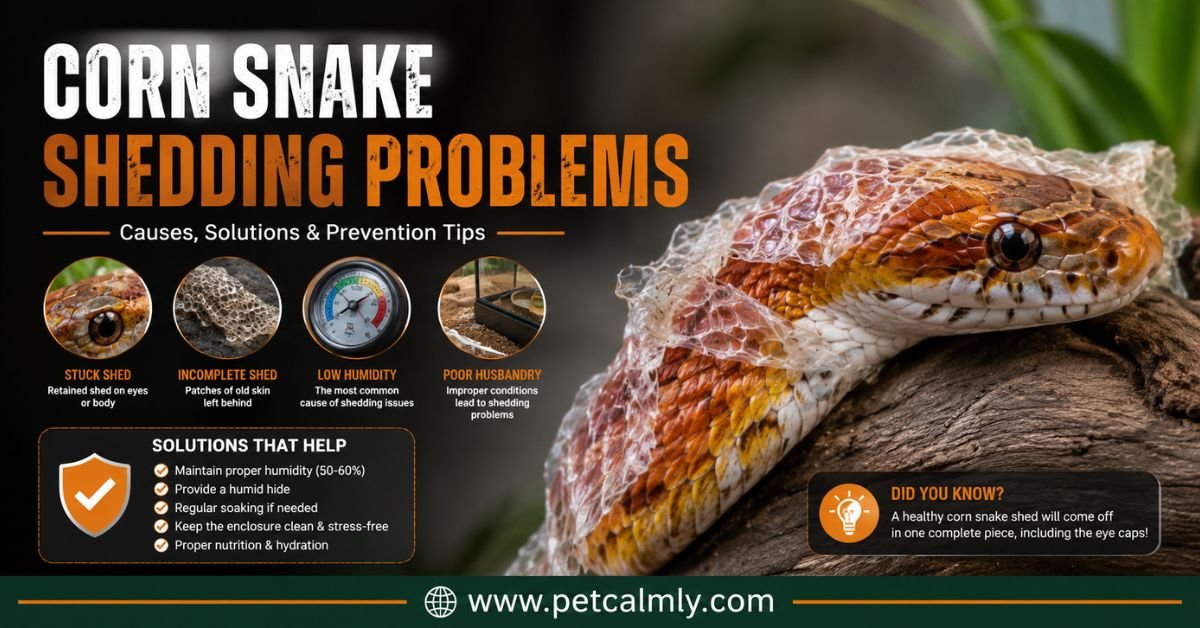
In an ideal shed, the skin comes off in one continuous piece, including the eye caps.
What Are Corn Snake Shedding Problems?
Quick Answer
Corn snake shedding problems occur when part or all of the old skin remains attached after the shedding process.
This condition is often called retained shed or dysecdysis.
Problems can range from small patches of stuck skin to severe retained layers that affect circulation, movement, or vision.
Common examples include:
- Shed coming off in pieces
- Stuck eye caps
- Skin remaining on the tail
- Retained shed around toes
- Multiple layers of old skin
- Incomplete shedding
Not every imperfect shed indicates a serious problem, but repeated shedding issues deserve attention.
Common Causes of Corn Snake Shedding Problems
Low Humidity
The most frequent cause is insufficient humidity.
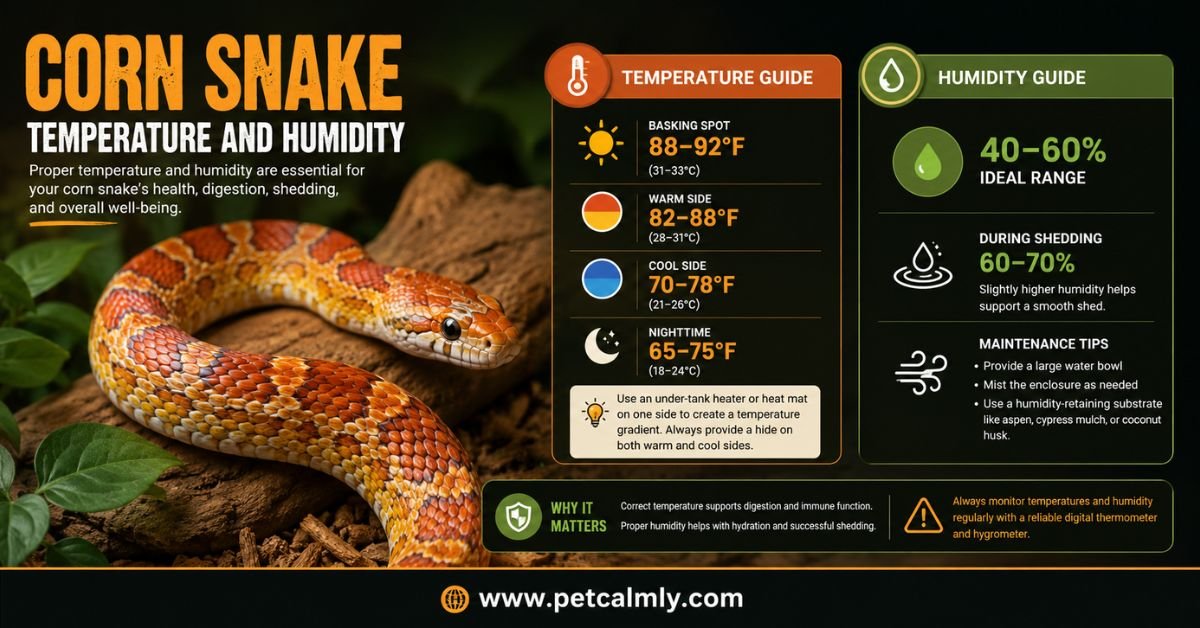
Corn snakes generally thrive in moderate humidity, but levels that are too low can dry the skin and make shedding difficult.
When the old skin loses flexibility, it may tear apart instead of sliding off smoothly.
Signs humidity may be too low include:
- Repeated incomplete sheds
- Dry-looking skin
- Retained eye caps
- Shed breaking into small pieces
Dehydration
Even if enclosure humidity is acceptable, a dehydrated snake may still struggle to shed properly.
Snakes need adequate internal hydration for healthy skin separation.
Potential causes include:
- Dirty water bowls
- Infrequent drinking
- Chronic low humidity
- Underlying illness
A dehydrated snake may show:
- Wrinkled skin
- Poor sheds
- Lethargy
- Reduced appetite
Improper Enclosure Setup
A snake needs surfaces to help start the shedding process.
Without appropriate enrichment, removing old skin becomes more difficult.
Helpful enclosure items include:
- Cork bark
- Rough branches
- Climbing structures
- Natural hides
Smooth enclosures with few textured surfaces can contribute to retained shed.
Stress
Stress affects nearly every aspect of reptile health.
Stressors may include:
- Excessive handling
- Frequent enclosure changes
- Vibrations
- Improper temperatures
- Predator exposure
- Lack of hiding spaces
A stressed snake may experience poor sheds even when humidity appears normal.
Incorrect Temperatures
Temperature influences metabolism, hydration, and overall health.
Corn snakes require a proper thermal gradient to support normal bodily functions.
If temperatures are too low:
- Digestion slows
- Hydration may suffer
- Shedding quality may decline
Nutritional Issues
While less common in captive corn snakes receiving appropriately sized prey, nutritional imbalances can contribute to skin health problems.
Long-term feeding issues may affect overall condition and shedding quality.
Illness or Parasites
Recurring shedding problems can sometimes signal a health issue.
Potential medical causes include:
- Skin infections
- Internal disease
- External parasites
- Chronic dehydration
- Organ dysfunction
This is especially important if shedding problems occur repeatedly despite proper husbandry.
Signs Your Corn Snake Is Having Shedding Problems
Some signs are obvious, while others can be easy to miss.
Watch for:
- Shed skin coming off in patches
- Multiple retained layers
- Pieces remaining around the neck
- Old skin stuck to the tail tip
- Retained eye caps
- Skin rings around the body
- Difficulty moving
- Irritation or rubbing
- Swelling beneath retained skin
The sooner retained shed is addressed, the easier it is to resolve.
Stuck Eye Caps: One of the Most Common Problems
What Are Eye Caps?
Corn snakes do not have eyelids.
Instead, each eye is covered by a transparent scale called a spectacle.
During shedding, this covering should come off with the rest of the skin.
When it remains attached, it is called a retained eye cap.
Signs of Retained Eye Caps
- Eyes look cloudy after shedding
- One eye appears dull
- Uneven eye appearance
- Persistent gray film
Repeated retained eye caps can eventually cause irritation and vision issues.
Never attempt to peel an eye cap off with your fingers or tweezers.
Tail Tip Retained Shed: Why It Matters
Many owners focus on the body and overlook the tail.
Unfortunately, retained shed around the tail tip can become serious.
As old skin dries, it may act like a tight band.
Over time this can:
- Restrict circulation
- Damage tissue
- Cause tail loss
Always inspect the entire tail after shedding.
Even a tiny ring of retained skin deserves attention.
What Should You Do If Your Corn Snake Has Stuck Shed?
Quick Answer
Increase humidity, provide hydration, and create a safe shedding environment before attempting any intervention.
Avoid forcefully removing skin.
Step 1: Evaluate Husbandry Conditions
Start by reviewing:
- Humidity levels
- Temperature gradient
- Water availability
- Enclosure cleanliness
- Hiding spots
Many shedding problems improve once environmental issues are corrected.
Step 2: Add a Humid Hide
A humid hide is one of the safest and most effective tools.
You can make one using:
- Plastic container
- Entrance hole
- Damp sphagnum moss
- Moist paper towels
The environment should be humid but not soaking wet.
Many snakes resolve mild retained shed naturally after spending time inside.
Step 3: Encourage Hydration
Fresh water should always be available.
Some snakes drink more frequently before shedding.
Ensure:
- Water bowl is clean
- Bowl is large enough
- Water is changed regularly
Hydration supports future sheds as well as current recovery.
Step 4: Allow Time
Owners sometimes intervene too quickly.
Minor retained shed often loosens after humidity improves.
Observe your snake carefully over several days before taking additional steps.
How to Safely Help Remove Stuck Shed
If the shed remains after environmental corrections, gentle assistance may help.
Damp Towel Method
Place a warm, damp towel inside a secure container.
Allow the snake to move through the towel naturally.
The moisture can soften retained skin.
This method is generally safer than attempting manual removal.
What to Avoid
Never:
- Pull skin forcefully
- Use fingernails
- Use tweezers on eye caps
- Peel dry skin
- Soak for excessively long periods
- Use oils without veterinary guidance
Forceful removal can damage healthy skin underneath.
5 Common Mistakes Corn Snake Owners Make
Many shedding issues become worse because of well-intentioned mistakes.
Mistake 1: Humidity Guessing
Many owners estimate humidity rather than measuring it.
A reliable hygrometer provides accurate readings.
Mistake 2: Handling During Blue Phase
Some snakes become defensive before shedding.
Excessive handling may increase stress.
Reducing handling during this period is often beneficial.
Mistake 3: Ignoring Small Retained Patches
Tiny pieces of retained shed can accumulate over time.
Addressing issues early prevents larger problems later.
Mistake 4: Removing Eye Caps Yourself
This is one of the riskiest mistakes.
Eye injuries can occur quickly.
Veterinary assistance is much safer.
Mistake 5: Waiting Through Multiple Bad Sheds
A single imperfect shed may not be concerning.
Several poor sheds in a row suggest something needs attention.
Environmental Conditions That Support Healthy Shedding
The enclosure plays a major role in shedding success.
Essential Factors
Stable Humidity
Avoid dramatic humidity swings.
Consistency matters more than occasional spikes.
Fresh Water
Clean water should always be available.
Proper Heating
A correct thermal gradient supports healthy bodily functions.
Security
Snakes that feel secure often shed more successfully.
Rough Surfaces
Natural textures help remove old skin.
Corn Snake Shedding Problems by Age
Baby Corn Snakes
Young snakes shed more frequently because they grow rapidly.
Common concerns include:
- First sheds after purchase
- Stress-related shedding issues
- Humidity fluctuations
New owners often worry unnecessarily about slight imperfections.
Juvenile Corn Snakes
Growth remains relatively fast.
Most shedding issues at this stage stem from husbandry errors rather than disease.
Adult Corn Snakes
Adults shed less frequently.
Repeated problems in a mature snake deserve closer investigation because underlying health conditions become more likely.
Shedding Problem Severity Table
| Situation | Usually Minor | Monitor Closely | Veterinary Help |
|---|---|---|---|
| Small patch of retained shed | ✓ | ||
| Shed comes off in pieces | ✓ | ✓ | |
| Single mild bad shed | ✓ | ||
| Multiple poor sheds | ✓ | ||
| Retained eye cap | ✓ | ✓ | |
| Tail constriction | ✓ | ✓ | |
| Swelling or wounds | ✓ | ||
| Repeated dehydration signs | ✓ | ||
| Lethargy with shedding issues | ✓ |
Daily Checklist During Shedding Season
Use this simple routine:
Every Day
- Check humidity
- Replace water if needed
- Observe behavior
- Avoid unnecessary handling
- Inspect skin condition
After Shedding
- Examine shed skin
- Check eye caps
- Inspect tail tip
- Look for retained patches
- Monitor activity levels
This takes only a few minutes but can prevent bigger problems.
Can Stress Cause Shedding Problems?
Yes.
Stress doesn’t always cause poor sheds directly, but it can contribute significantly.
Common stress triggers include:
- Relocation
- New enclosure setup
- Frequent disturbances
- Improper temperatures
- Lack of hiding spaces
A snake that feels secure generally sheds more effectively.
Do Corn Snake Shedding Problems Hurt?
Mild retained shed may cause little discomfort.
More severe cases can become painful when:
- Skin tightens around body parts
- Circulation becomes restricted
- Infections develop
- Eye caps accumulate
Prompt attention helps prevent complications.
When Should You Worry?
Most Importantly
Seek veterinary advice if shedding problems become frequent, severe, or occur alongside other symptoms.
Warning signs include:
- Multiple retained eye caps
- Swollen areas
- Open wounds
- Tail discoloration
- Loss of appetite
- Weight loss
- Lethargy
- Breathing abnormalities
- Repeated incomplete sheds despite proper care
These signs suggest a problem beyond simple humidity issues.
What Should Pet Owners Do?
If your corn snake has shedding problems:
- Verify humidity levels.
- Ensure constant access to fresh water.
- Provide a humid hide.
- Maintain proper temperatures.
- Reduce stress and handling.
- Monitor eye caps and tail tips carefully.
- Avoid forceful skin removal.
- Contact a reptile veterinarian if problems persist.
Small adjustments often make a significant difference.
Myths About Corn Snake Shedding Problems
Myth: Every Shed Must Be Perfect
Reality: Minor imperfections occasionally happen.
Myth: Pulling Off Stuck Skin Helps
Reality: Forceful removal can cause injury.
Myth: Eye Caps Always Fall Off Eventually
Reality: Retained eye caps may require veterinary attention.
Myth: Shedding Problems Only Happen in Dry Climates
Reality: Poor husbandry can cause issues anywhere.
Prevention Tips for Future Healthy Sheds
The best treatment is prevention.
Focus on:
- Consistent enclosure maintenance
- Proper humidity monitoring
- Fresh water availability
- Appropriate temperatures
- Quality nutrition
- Stress reduction
- Regular health checks
Many experienced snake keepers find that once husbandry is optimized, shedding problems become rare.
Related Topics Pet Owners Often Find Helpful
If you’re caring for a corn snake, you may also benefit from learning about:
- Corn snake feeding schedules
- Signs of dehydration in reptiles
- Humidity management for snake enclosures
- Corn snake habitat setup
- Safe snake handling techniques
- Common reptile health problems
These topics often connect directly with shedding success.
Frequently Asked Questions
1: Why is my corn snake shedding in pieces?
The most common causes are low humidity, dehydration, or environmental stress. A shed that comes off in pieces usually indicates the skin was not properly hydrated before shedding began.
2: How long can stuck shed stay on a corn snake?
Small retained patches may loosen within days after humidity improves. However, retained eye caps or tight skin around the tail should not be ignored for long because complications can develop.
3: Can I soak my corn snake to remove stuck shed?
A short, carefully supervised soak may sometimes help soften retained skin, but many reptile keepers prefer humid hides and damp towel methods because they are generally less stressful.
4: Is a bad shed an emergency?
Usually not. One incomplete shed is often manageable at home. It becomes more concerning when shedding problems are severe, recurring, or accompanied by illness signs.
5: Why are my corn snake’s eyes still cloudy after shedding?
Persistent cloudiness may indicate retained eye caps. A reptile veterinarian should evaluate the situation rather than attempting removal at home.
6: How can I prevent future shedding problems?
Maintain proper humidity, provide fresh water, ensure correct temperatures, offer rough surfaces, and monitor your snake closely before and after each shed.
More Information About Pets, Please Visit Our Website: Corn Snake Diet Feeding Schedule
Conclusion
Corn snake shedding problems are among the most common concerns snake owners face, but they’re also among the most preventable. In most cases, incomplete sheds result from humidity issues, dehydration, stress, or enclosure conditions that can be corrected with careful husbandry adjustments.
The key is paying attention before, during, and after each shed. Checking humidity, providing a humid hide, maintaining fresh water, and inspecting eye caps and tail tips can prevent small issues from becoming serious complications.
If your corn snake experiences occasional minor shedding difficulties, don’t panic. Many snakes recover quickly once environmental conditions improve. However, recurring problems, retained eye caps, wounds, swelling, or signs of illness should always be discussed with a qualified reptile veterinarian.
With proper care and observation, most corn snakes enjoy smooth, healthy sheds throughout their lives, allowing them to remain active, comfortable, and thriving.