Short direct answer
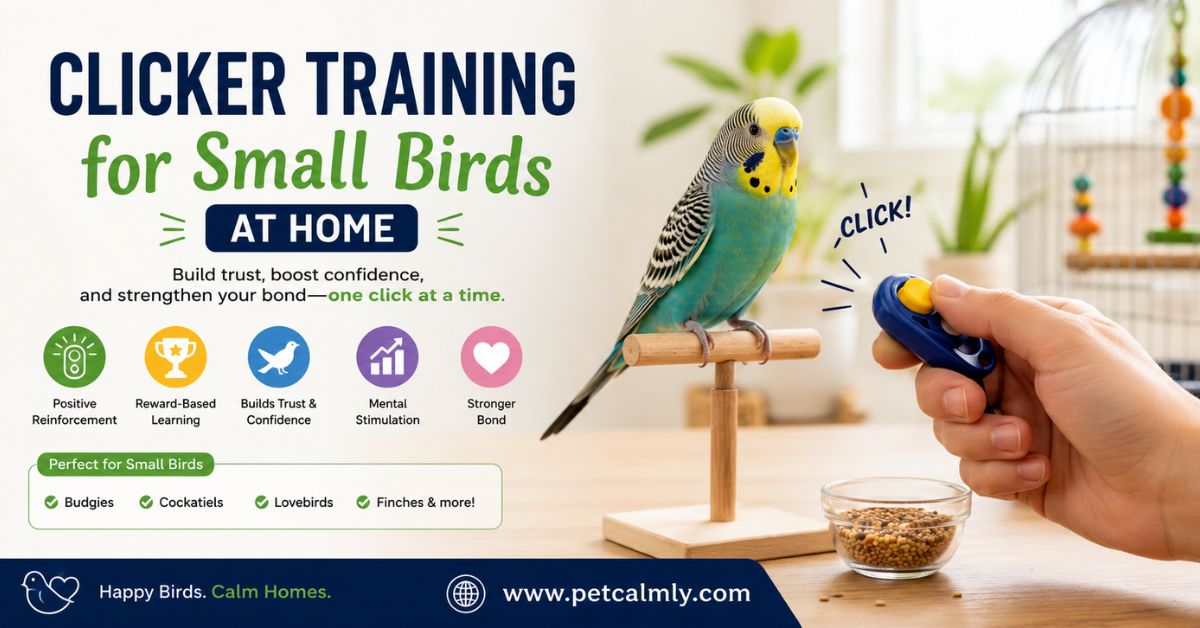
Clicker training for small birds at home is a positive reinforcement method that uses a small clicking sound to mark good behavior instantly, followed by a reward such as a treat. It helps birds like budgies, cockatiels, and lovebirds understand exactly what you want without fear or pressure. In short, the click becomes a “yes” signal that bridges communication between you and your bird. With consistency, short sessions, and patience, even nervous or untamed birds can learn basic behaviors, trust their owner more, and enjoy interactive training in a calm, stress-free way.
Introduction
If you’ve ever tried to train a small bird at home, you already know how unpredictable it can feel. One day your bird steps onto your finger calmly, and the next day it refuses to come near you. That confusion often leads owners to assume birds are “stubborn” or “too sensitive to train.”
But the truth is much simpler.
Small birds don’t respond to dominance or repetition the way dogs sometimes do. They respond to clarity, timing, and trust. That’s exactly where clicker training becomes powerful.
Clicker training for small birds at home is not about teaching tricks alone. It’s about communication. It helps your bird understand what exactly it did right, in a way that words or gestures alone cannot express.
In this guide, you’ll learn:
- How clicker training actually works for small birds
- How to start from zero, even with a scared or untamed bird
- What treats work best without harming nutrition
- Common mistakes that slow progress
- How to build trust step-by-step without stress
- And how to fix problems like biting, fear of hands, or lack of response
This is a calm, practical approach based on real bird behavior not rushed training myths.
What Is Clicker Training for Small Birds?
Clicker training is a form of positive reinforcement training where a small handheld device makes a consistent clicking sound to “mark” a behavior the bird did correctly.
In simple terms:
- Bird does something good
- You click instantly
- Bird gets a reward
That “click” becomes a clear message: “Yes, that exact behavior is what I wanted.”
For small birds such as budgies, cockatiels, lovebirds, and parrotlets, this clarity is extremely important. Birds don’t naturally understand human intentions, so timing is everything.
The click removes confusion. Instead of guessing what earned a treat, the bird learns to connect behavior → click → reward.
Why Clicker Training Works So Well for Small Birds
Small birds are intelligent, social, and highly observant. In the wild, they learn through association and repetition rather than punishment or force.
Clicker training works because it matches their natural learning style.
1. It gives instant feedback
Birds live in fast moments. If reward comes even a few seconds late, they may not connect it to behavior. The click bridges that gap.
2. It removes fear from training
There is no punishment, no pressure. Only clarity and reward.
3. It builds trust naturally
Birds begin to associate you with safety and positive outcomes.
4. It strengthens communication
Over time, your bird starts trying behaviors intentionally to “earn” the click.
Understanding Small Bird Behavior Before You Start
Before jumping into training, it helps to understand how small birds think.
Most beginner owners struggle not because the bird “can’t learn,” but because expectations don’t match bird psychology.
Key behavior traits:
- Birds are prey animals → they are naturally cautious
- They rely heavily on routine and repetition
- They learn faster through association than correction
- Stress blocks learning completely
- Trust must come before training
If your bird is flapping away or refusing interaction, it is not disobedience. It is usually uncertainty or lack of trust.
Getting Started: What You Need for Clicker Training
You don’t need expensive tools. Simplicity works best.
Basic setup:
- A small animal clicker (soft sound preferred)
- Tiny bird-safe treats
- A quiet training space
- 5–10 minutes of uninterrupted time
Optional but helpful:
- A perch or training stand
- Target stick (like a chopstick or skewer without sharp ends)
- Treat pouch for quick access
Choosing the Right Treats for Small Birds
Treat selection can make or break your training progress.
Birds should not be overfed during training sessions, so treats must be:
- Small
- High-value (something they LOVE)
- Safe for regular consumption in small amounts
Good treat options:
- Millet spray (especially for budgies and finches)
- Small seed pieces
- Tiny fruit bits (apple, banana, papaya)
- Cooked grain bits (rice or quinoa in tiny amounts)
Avoid:
- Chocolate (toxic)
- Avocado (toxic)
- Sugary human food
- Large portions of sunflower seeds (too fatty if overused)
Think of treats as “training currency,” not meals.
Step-by-Step Clicker Training for Small Birds at Home
This is where most owners need clarity. Keep it slow and simple.
Step 1: Build click association (no behavior yet)
Before training anything, you must teach one thing:
Click = reward
- Click once
- Immediately give a treat
- Repeat 10–15 times per session
- Do this for 2–3 short sessions daily
Your bird is not learning tricks yet only meaning.
Step 2: Observe simple natural behavior
Now wait for easy behaviors like:
- Looking at you
- Turning head toward you
- Moving closer
- Touching perch
Click immediately when these happen, then reward.
Step 3: Introduce target training
This is one of the easiest and most useful skills.
- Show a stick or object
- Bird looks or moves toward it
- Click + reward
- Gradually encourage touching the target
This builds confidence and focus.
Step 4: Step-up training (very important)
- Place finger or perch near bird’s chest
- Wait for a step onto hand
- Click the moment foot lifts or lands
- Reward instantly
Never push or chase the bird.
Step 5: Add simple commands over time
Once trust is built, you can add:
- “Step up”
- “Come here”
- “Stay” (short duration)
Always keep sessions short.
5 Common Mistakes in Clicker Training Small Birds
Many training failures come from small timing or handling errors.
1. Clicking too late
Even a 2-second delay confuses the bird.
2. Overtraining sessions
Birds lose focus quickly. Long sessions cause stress.
3. Using low-value treats
If reward isn’t exciting, motivation drops.
4. Training when bird is stressed
A scared bird cannot learn effectively.
5. Repeating commands too much
Birds respond better to action than repetition.
Understanding Emotional Behavior During Training
Training is not just physical it’s emotional.
Small birds often show these emotional signals:
Signs of comfort:
- Preening during sessions
- Gentle chirping
- Moving closer voluntarily
Signs of stress:
- Rapid breathing
- Feather flattening
- Avoiding eye contact
- Flying away repeatedly
If stress appears, stop immediately and return later.
Training Different Small Birds
Budgies (Parakeets)
Highly trainable and curious. They respond quickly to millet-based rewards.
Cockatiels
More sensitive emotionally. Need slower trust-building but learn steadily.
Lovebirds
Strong personalities. Require consistency and patience.
Finches
Less interactive with humans. Focus more on environmental conditioning than hand training.
Daily Clicker Training Routine (Simple Plan)
Consistency matters more than duration.
Ideal routine:
- 2–3 sessions per day
- 5–10 minutes each session
- Same time daily if possible
Example schedule:
- Morning: basic click association
- Afternoon: target training
- Evening: step-up practice
Short + consistent = fastest results.
Troubleshooting Common Problems
My bird is scared of the clicker
Start with softer clicks or click inside a cloth or pocket. You can also use a pen click first.
My bird ignores treats
Try different rewards. Birds can be surprisingly picky.
My bird bites during training
Stop immediately. Biting usually signals fear or overstimulation.
My bird was trained before but regressed
Rebuild trust from Step 1. Regression is normal.
When Should You Worry?
Clicker training should never cause distress. If you notice:
- Constant panic or freezing
- Loss of appetite
- Feather plucking
- Aggressive fear responses
Stop training and allow recovery time. If behavior continues, consult an avian vet or bird behavior specialist.
Safety Tips for Bird Clicker Training
- Never force physical contact
- Avoid loud environments
- Do not train during molting stress or illness
- Always supervise out-of-cage sessions
- Keep treats minimal
Safety builds long-term success.
What Should Bird Owners Do for Best Results?
If you want steady progress:
- Focus on trust before tricks
- Keep sessions short and predictable
- Reward every small success
- Stay calm even when progress is slow
- Observe your bird’s mood daily
Training is not a race. It is a relationship-building process.
Advanced Training Ideas (Once Basics Are Mastered)
When your bird understands clicker basics, you can move forward:
- Recall training (flying to you on command)
- Spin or turn tricks
- Wave behavior
- Station training (staying on perch)
Each new skill builds mental stimulation and reduces boredom-related behaviors.
Conclusion
Clicker training for small birds at home is one of the most effective and gentle ways to build communication and trust. It replaces confusion with clarity and fear with understanding. Instead of forcing behavior, you guide your bird through positive reinforcement, allowing learning to happen naturally.
Progress may feel slow at first, but small birds remember consistency. With patience, short sessions, and the right rewards, even shy or nervous birds can become confident, interactive companions.
What matters most is not perfection but calm repetition and mutual trust.
More Information About Pets, Please Visit Our Website: How to Train African Grey Parrot to Sit on Hand
Frequently Asked Questions
1. How long does clicker training take for small birds?
It depends on the bird’s personality and trust level. Some learn basic association in a few days, while others may take a couple of weeks.
2. Can I train a scared or untamed bird with a clicker?
Yes, but you must start with trust-building first. Do not jump into tricks before the bird feels safe around you.
3. What age is best for clicker training birds?
Young birds learn faster, but adult birds can also be trained successfully with patience and consistency.
4. How many times a day should I train my bird?
Two to three short sessions per day (5–10 minutes each) is ideal for most small birds.
5. What if my bird doesn’t respond to the clicker?
It usually means the bird hasn’t associated the sound with rewards yet. Go back to basic click-reward pairing.
6. Can clicker training reduce biting behavior?
Yes, in many cases. It helps redirect behavior into positive actions and reduces fear-based reactions over time.