Short direct answer
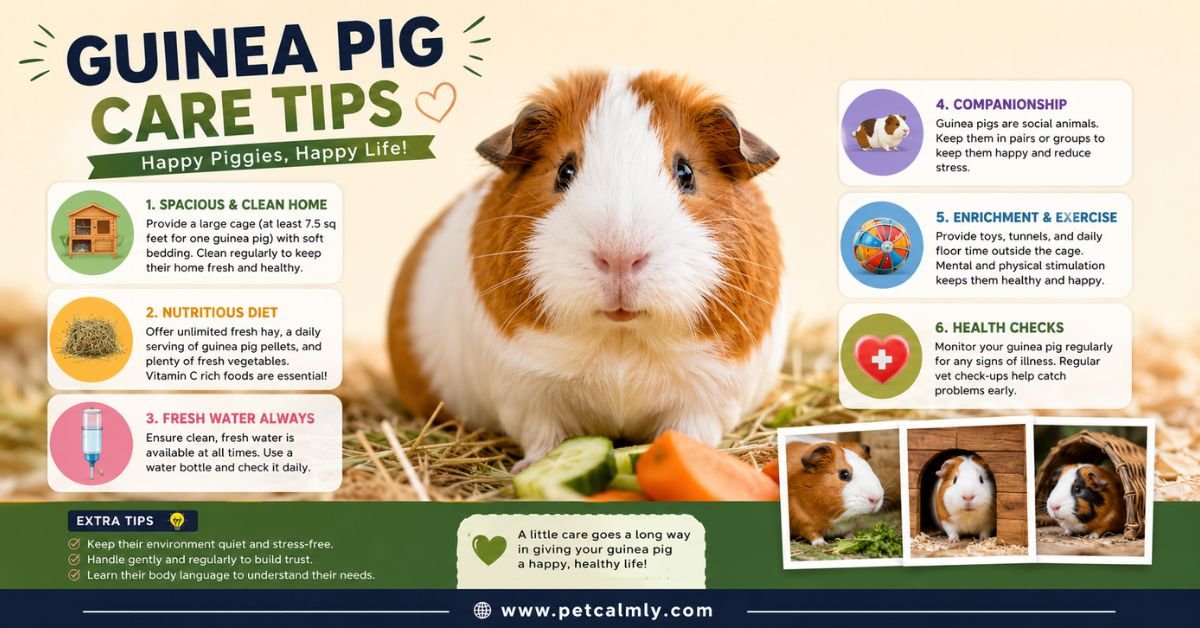
The most important guinea pig care tips are providing unlimited hay, a spacious cage, daily fresh vegetables, clean water, social interaction, regular health checks, and a stress-free environment. Guinea pigs thrive when they have enough room to exercise, proper nutrition rich in vitamin C, companionship, and consistent daily care. Small improvements in housing, diet, and handling can significantly improve your guinea pig’s health, happiness, and lifespan.
Guinea Pig Care Tips Every Owner Should Know
Bringing home a guinea pig is exciting, but many new owners quickly realize these small pets require more care than they expected.
Guinea pigs are gentle, intelligent, social animals that depend entirely on their owners for proper nutrition, housing, and emotional well-being. When cared for correctly, they often live between 5 and 8 years and can develop strong bonds with their families.
Many common health problems seen in guinea pigs are preventable. Issues such as obesity, dental disease, vitamin C deficiency, respiratory infections, and stress-related behaviors often result from simple care mistakes.
This guide covers practical guinea pig care tips that help owners create a healthy, enriching environment from day one.
Why Proper Guinea Pig Care Matters
Guinea pigs are prey animals by nature. In the wild, survival depends on staying alert, avoiding predators, and living within social groups.
Even domesticated guinea pigs retain many of these instincts.
When their physical and emotional needs are met, guinea pigs typically:
- Become more confident
- Interact more with owners
- Show curiosity and playfulness
- Maintain a healthy weight
- Experience fewer health issues
- Live longer lives
Poor care often leads to stress, illness, and behavioral problems that could have been avoided.
Choose the Right Guinea Pig Housing Setup
One of the most overlooked guinea pig care tips is providing enough living space.
Many commercial pet store cages are simply too small.
Recommended Cage Size
| Number of Guinea Pigs | Minimum Cage Size |
|---|---|
| One guinea pig | 7.5 square feet |
| Two guinea pigs | 10.5 square feet |
| Three guinea pigs | 13 square feet or more |
Bigger is always better.
A larger enclosure allows guinea pigs to:
- Exercise naturally
- Explore their environment
- Avoid territorial conflicts
- Stay mentally stimulated
Essential Cage Items
Every guinea pig enclosure should include:
- Hay rack
- Water bottle
- Food dish
- Hideouts
- Soft bedding
- Chew toys
- Tunnels
- Sleeping areas
Avoid wire flooring because it can injure sensitive feet.
Provide Unlimited Hay Every Day
If there is one rule every guinea pig owner should remember, it is this:
Hay should never run out.
Hay supports:
- Dental health
- Digestion
- Natural chewing behavior
- Gut function
Best Hay Types
Timothy Hay
The most popular option for adult guinea pigs.
Orchard Grass
Good for picky eaters and owners with hay allergies.
Meadow Hay
Provides variety and enrichment.
Alfalfa Hay
Suitable for young guinea pigs, pregnant females, and specific veterinary situations.
Adult guinea pigs generally should not eat large amounts of alfalfa because of its higher calcium content.
Feed a Balanced Guinea Pig Diet
Nutrition plays a huge role in overall health.
Daily Diet Breakdown
A healthy guinea pig diet should consist of:
- 80% hay
- Fresh vegetables daily
- Limited pellets
- Fresh water at all times
Safe Vegetables for Guinea Pigs
Excellent options include:
- Romaine lettuce
- Bell peppers
- Cilantro
- Parsley
- Cucumber
- Zucchini
- Celery leaves
Rotate vegetables regularly to provide variety.
Foods to Limit
Offer occasionally:
- Carrots
- Fruit
- Sweet vegetables
Too much sugar can contribute to obesity and digestive issues.
Understand the Importance of Vitamin C
Unlike many animals, guinea pigs cannot produce their own vitamin C.
This makes vitamin C one of the most important aspects of guinea pig care.
Signs of Vitamin C Deficiency
Watch for:
- Weakness
- Joint pain
- Poor appetite
- Weight loss
- Rough coat
- Lethargy
Natural Vitamin C Sources
Good choices include:
- Bell peppers
- Parsley
- Kale
- Small amounts of broccoli
Fresh foods are usually the safest and most reliable source.
Keep Fresh Water Available at All Times
Hydration is essential for digestion and overall health.
Check water bottles daily.
Common problems include:
- Blocked drinking tubes
- Leaks
- Empty bottles
Many owners are surprised to discover their guinea pig has gone hours without water because a bottle malfunctioned.
Daily checks prevent this issue.
Why Guinea Pigs Need Companionship
Guinea pigs are highly social animals.
In many countries, keeping a guinea pig completely alone is discouraged because companionship is such an important part of their welfare.
Benefits of Keeping a Pair
Companionship helps guinea pigs:
- Feel safer
- Stay active
- Reduce boredom
- Display natural behaviors
Bonded guinea pigs often sleep, eat, and explore together.
If possible, consider adopting a compatible pair rather than a single guinea pig.
Handle Your Guinea Pig Properly
Many guinea pigs initially fear being picked up.
This is normal because prey animals naturally avoid being lifted off the ground.
Safe Handling Technique
- Place one hand under the chest.
- Support the hindquarters.
- Hold close to your body.
- Move slowly and calmly.
Avoid sudden grabbing motions.
Building Trust
Trust develops through:
- Gentle handling
- Consistent routines
- Hand-feeding vegetables
- Quiet interaction
Patience is often more effective than frequent forced handling.
Create Daily Enrichment Opportunities
Mental stimulation is just as important as physical care.
Bored guinea pigs may become inactive or withdrawn.
Easy Enrichment Ideas
Try offering:
- Cardboard tunnels
- Paper bags stuffed with hay
- Safe chew toys
- Foraging activities
- Rearranged cage layouts
- Hide-and-seek treats
Simple changes can make a cage feel exciting again.
Maintain a Clean Living Environment
Cleanliness helps prevent illness.
Daily Cleaning Tasks
Remove:
- Wet bedding
- Food scraps
- Soiled areas
Weekly Cleaning Tasks
Perform a full cage cleaning:
- Replace bedding
- Wash food dishes
- Clean water bottles
- Disinfect safe cage surfaces
A clean cage reduces odors and supports respiratory health.
Monitor Your Guinea Pig’s Weight Regularly
Weight changes are often the earliest sign of illness.
Many guinea pigs hide symptoms until a condition becomes serious.
Weekly Weighing Routine
Use a digital kitchen scale and record:
- Current weight
- Weekly changes
- Appetite observations
Sudden weight loss deserves prompt attention.
Even a guinea pig that appears normal may be developing a health issue.
Learn Common Guinea Pig Health Warning Signs
Early intervention can save lives.
Contact a Veterinarian If You Notice
- Refusing food
- Difficulty breathing
- Weight loss
- Diarrhea
- Excessive drooling
- Eye discharge
- Unusual lumps
- Reduced activity
Guinea pigs can decline quickly when sick.
Waiting too long often makes treatment more difficult.
Protect Your Guinea Pig From Heat Stress
Guinea pigs handle heat poorly.
Temperatures above comfortable indoor ranges can become dangerous.
Signs of Overheating
Look for:
- Panting
- Lethargy
- Drooling
- Rapid breathing
- Weakness
Ways to Keep Guinea Pigs Cool
- Provide shade
- Improve ventilation
- Offer cool ceramic tiles
- Keep cages away from direct sunlight
Never leave guinea pigs outdoors in extreme temperatures.
6 Common Guinea Pig Care Mistakes to Avoid
Even caring owners can make mistakes.
1. Buying a Cage That Is Too Small
Lack of space contributes to stress and inactivity.
2. Feeding Too Many Treats
Excess sugar can lead to obesity.
3. Ignoring Weight Changes
Weight loss is often an early illness warning.
4. Not Providing Enough Hay
This can cause serious dental and digestive problems.
5. Keeping a Guinea Pig Alone Without Adequate Social Interaction
Loneliness can negatively affect welfare.
6. Delaying Veterinary Care
Guinea pigs often hide symptoms until illness becomes severe.
Daily Guinea Pig Care Checklist
Use this simple routine:
Every Morning
- Refill hay
- Refresh water
- Check health and behavior
- Remove dirty bedding
Throughout the Day
- Provide interaction
- Observe eating habits
- Offer fresh vegetables
Every Evening
- Quick cage inspection
- Refill hay if needed
- Ensure water bottle functions properly
Consistency helps guinea pigs feel secure.
Weekly Guinea Pig Care Checklist
Once per week:
- Deep-clean the enclosure
- Weigh your guinea pig
- Check nails
- Inspect teeth
- Examine skin and coat
- Rotate toys and enrichment items
Small weekly checks often catch problems early.
When Should You Worry About Your Guinea Pig?
Certain situations deserve immediate attention.
Seek veterinary advice if your guinea pig:
- Stops eating
- Has labored breathing
- Experiences severe diarrhea
- Cannot stand properly
- Loses weight rapidly
- Shows signs of pain
Because guinea pigs are skilled at hiding illness, even subtle changes can be significant.
Trust your observations.
If something feels unusual, it is worth investigating.
What Should Pet Owners Do to Keep Guinea Pigs Healthy Long-Term?
Long-term guinea pig health comes down to consistency.
Focus on:
- Unlimited hay
- Fresh vegetables
- Vitamin C-rich foods
- Spacious housing
- Social interaction
- Regular cleaning
- Routine health checks
- Prompt veterinary care when needed
Most guinea pig health issues become easier to prevent when these basics are maintained every day.
More Information About Pets, Please Visit Our Website:
To strengthen topical authority, consider linking naturally to:
- Guinea pig cage setup ideas for 2
- Fleece vs paper bedding for guinea pigs
- Can guinea pigs eat carrots?
- Guinea pig squeaking meaning
- Guinea pig pregnancy signs
- How much does a guinea pig cost?
These topics help readers build a complete understanding of guinea pig ownership.
Conclusion
The best guinea pig care tips are often the simplest. Provide unlimited hay, a spacious and clean habitat, daily fresh vegetables, companionship, enrichment, and regular health monitoring.
Guinea pigs rely entirely on their owners to meet their physical and emotional needs. Small daily habits such as checking water bottles, weighing your pet weekly, and offering fresh hay can make a tremendous difference over the course of their lives.
When owners focus on prevention rather than reacting to problems later, guinea pigs are more likely to stay healthy, active, and content for years to come.
Frequently Asked Questions
1: What is the most important part of guinea pig care?
Unlimited hay is one of the most important aspects of guinea pig care because it supports digestion, dental health, and natural chewing behavior.
2: How often should I clean my guinea pig’s cage?
Spot-clean daily and perform a full cage cleaning at least once each week. Larger cages may stay cleaner longer but still require routine maintenance.
3: Can guinea pigs live alone?
While a guinea pig can live alone, most benefit greatly from companionship. A compatible pair often displays more natural social behaviors and confidence.
4: How much fresh food should a guinea pig eat daily?
Most guinea pigs should receive a variety of fresh vegetables daily alongside unlimited hay and a measured amount of quality pellets.
5: How do I know if my guinea pig is sick?
Common warning signs include weight loss, reduced appetite, breathing difficulties, diarrhea, lethargy, drooling, or changes in behavior.
6: How long do guinea pigs live with proper care?
With proper nutrition, housing, veterinary attention, and daily care, many guinea pigs live between 5 and 8 years, and some may live even longer.