Short direct answer
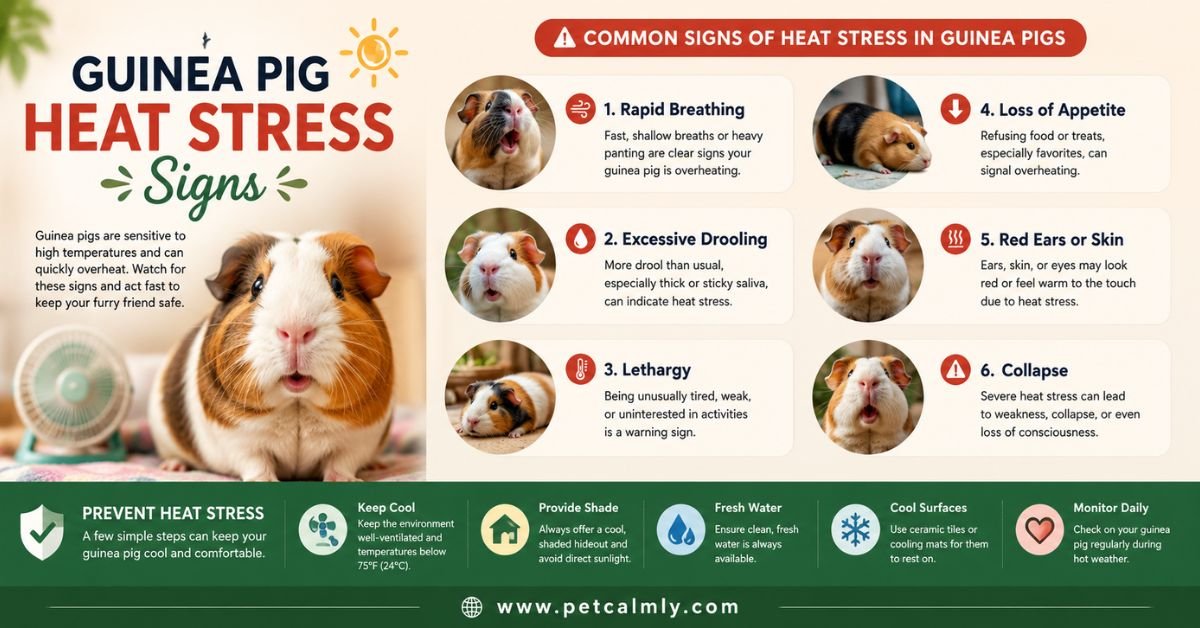
Guinea pig heat stress signs include heavy breathing, lethargy, drooling, weakness, lying stretched out, loss of appetite, red ears, and reduced activity. In severe cases, guinea pigs may become unresponsive, suffer seizures, or experience heat stroke, which is a life-threatening emergency. Because guinea pigs tolerate heat poorly, owners should act immediately if they notice signs of overheating and move their pet to a cooler environment.
Introduction
Many guinea pig owners worry when their pet suddenly becomes quiet, refuses food, or starts breathing faster than normal during warm weather. While these changes can have several causes, heat stress is one of the most serious.
Unlike humans, guinea pigs cannot sweat efficiently to cool themselves down. Their compact bodies, thick fur, and limited ability to regulate body temperature make them especially vulnerable to overheating. What may feel like a comfortable summer day to you can become dangerous for a guinea pig.
Recognizing guinea pig heat stress signs early can make the difference between a quick recovery and a veterinary emergency. This guide explains exactly what to watch for, why it happens, what to do immediately, and how to prevent heat-related problems before they start.
Why Guinea Pigs Are Sensitive to Heat
Guinea pigs evolved in cooler mountainous regions and are naturally better adapted to mild temperatures than hot climates.
Several factors make them prone to overheating:
- They do not sweat like humans.
- Their bodies retain heat easily.
- Thick fur traps warmth.
- Small enclosures can heat up quickly.
- High humidity reduces cooling ability.
- They depend on their environment to stay comfortable.
Most guinea pigs are happiest when temperatures remain between 65°F and 75°F (18°C to 24°C).
Once temperatures rise above about 80°F (27°C), the risk of heat stress increases significantly, especially if humidity is high.
7 Common Guinea Pig Heat Stress Signs to Watch For
The earliest symptoms are often subtle.
Many owners notice behavioral changes before obvious physical symptoms appear.
1: Fast or Labored Breathing
One of the first signs of overheating is unusual breathing.
You may notice:
- Rapid breaths
- Open-mouth breathing
- Heavier chest movement
- Audible breathing sounds
Healthy guinea pigs usually breathe quietly. If breathing becomes noticeably faster during hot weather, heat stress should be considered immediately.
2: Lethargy and Reduced Activity
An overheated guinea pig often becomes inactive.
You might observe:
- Less exploring
- Reduced play
- Staying in one spot
- Sleeping more than usual
While resting is normal, excessive inactivity during warm temperatures can signal overheating.
3: Loss of Appetite
Guinea pigs experiencing heat stress frequently eat less.
This is particularly concerning because guinea pigs need a constant intake of hay to maintain healthy digestion.
Watch for:
- Ignoring hay
- Refusing pellets
- Eating fewer vegetables
- Reduced water intake
Even a short period without eating can lead to digestive complications.
4: Drooling or Excessive Salivation
Drooling is never considered normal in guinea pigs.
When combined with hot weather, it may indicate severe heat stress.
Owners sometimes notice:
- Wet fur around the mouth
- Damp chin
- Excessive saliva
This symptom deserves immediate attention.
5: Red or Hot Ears
The ears help release excess body heat.
When a guinea pig overheats, blood vessels may expand, causing:
- Bright pink ears
- Red ears
- Warm ears to the touch
Although not always dangerous by itself, this can be an early warning sign.
6: Lying Flat or Stretched Out
A guinea pig trying to cool down may spread its body across a cool surface.
You may notice:
- Legs stretched behind them
- Flattened body posture
- Resting against cool objects
This behavior often occurs before more severe symptoms develop.
7: Weakness or Poor Coordination
As heat stress progresses, weakness becomes more noticeable.
Your guinea pig may:
- Struggle to walk
- Stumble
- Move slowly
- Have difficulty standing
At this stage, immediate intervention is necessary.
Signs of Severe Heat Stroke in Guinea Pigs
Heat stress can rapidly become heat stroke.
Heat stroke is a medical emergency requiring urgent veterinary care.
Emergency Symptoms Include:
- Collapse
- Unresponsiveness
- Seizures
- Extreme weakness
- Blue or pale gums
- Very rapid breathing
- Loss of consciousness
If any of these symptoms appear, contact an exotic animal veterinarian immediately.
Do not wait to see if your guinea pig improves on its own.
What Causes Heat Stress in Guinea Pigs?
Understanding the causes helps owners prevent dangerous situations.
High Room Temperatures
Indoor temperatures can rise quickly during summer.
Even homes that feel comfortable to people may become too warm for guinea pigs.
Common risks include:
- Rooms without air conditioning
- Poor airflow
- Sun-facing windows
- Attics and upper floors
Direct Sunlight
A cage placed near a sunny window can become dangerously hot.
Glass creates a greenhouse effect that traps heat.
Always provide shaded areas throughout the day.
Poor Ventilation
Fresh air circulation helps prevent heat buildup.
Warning signs of poor ventilation include:
- Stuffy rooms
- Enclosed cage covers
- Limited airflow
- Humid conditions
Outdoor Housing During Hot Weather
Outdoor hutches can become dangerous surprisingly fast.
Risk factors include:
- Direct sunlight
- High humidity
- Lack of shade
- Insufficient water access
Many heat-related emergencies occur in outdoor enclosures.
Travel and Transportation
Car rides are a common but overlooked cause of overheating.
Temperatures inside parked vehicles can rise rapidly, even with partially open windows.
Never leave a guinea pig unattended inside a vehicle.
How to Check If Your Guinea Pig Is Overheating
If you suspect heat stress, perform a quick assessment.
Observe Their Breathing
Look for:
- Rapid breaths
- Open-mouth breathing
- Heavy chest movement
Feel Their Ears
Warm ears alone are not always concerning.
However, extremely hot ears combined with lethargy or heavy breathing may indicate overheating.
Monitor Activity Levels
Ask yourself:
- Are they moving normally?
- Are they interested in food?
- Are they responding to sounds?
Changes in normal behavior are often the first clue.
Check Food and Water Intake
Reduced eating is one of the most important warning signs.
Monitor:
- Hay consumption
- Vegetable intake
- Drinking habits
What to Do Immediately if Your Guinea Pig Shows Heat Stress Signs
Quick action can prevent a medical emergency.
Move Your Guinea Pig to a Cooler Area
Immediately relocate them to:
- An air-conditioned room
- A shaded indoor area
- A well-ventilated space
Avoid sudden exposure to extremely cold temperatures.
Offer Fresh Water
Provide cool, fresh drinking water.
Do not force water into your guinea pig’s mouth because aspiration can occur.
Use Cool Surfaces
Helpful cooling options include:
- Ceramic tiles
- Chilled water bottles wrapped in towels
- Cooling pads designed for pets
Allow your guinea pig to choose whether to rest on them.
Increase Airflow
Use fans to circulate room air.
Never point a strong fan directly at your guinea pig for prolonged periods.
Contact a Veterinarian
If symptoms are moderate or severe, veterinary guidance is recommended even if your guinea pig appears to improve.
What Not to Do During Guinea Pig Heat Stress
Well-meaning owners sometimes make mistakes that worsen the situation.
Avoid:
- Ice baths
- Freezing cold water
- Direct ice contact
- Force-feeding water
- Leaving them outdoors to cool naturally
- Delaying veterinary care
Rapid temperature changes can create additional stress.
How to Prevent Heat Stress in Guinea Pigs
Prevention is much easier than treatment.
Keep Indoor Temperatures Stable
Aim for:
- 65°F–75°F (18°C–24°C)
- Good ventilation
- Consistent airflow
Air conditioning is often the safest solution during heat waves.
Provide Constant Fresh Water
Check water bottles frequently.
In hot weather:
- Refill more often
- Test bottle function daily
- Offer additional water sources if needed
Create Cool Resting Areas
Excellent cooling options include:
- Ceramic tiles
- Marble slabs
- Wrapped frozen water bottles
- Shaded hideouts
These give guinea pigs choices throughout the day.
Avoid Direct Sunlight
Place cages away from:
- Sunny windows
- Glass doors
- Conservatories
- Outdoor heat exposure
Shade alone may not be enough during extreme temperatures.
Groom Long-Haired Guinea Pigs
Long-haired breeds can retain additional heat.
Regular grooming may improve comfort during warmer months.
Never shave a guinea pig completely unless advised by a veterinarian.
Which Guinea Pigs Are Most at Risk?
Some guinea pigs are more vulnerable than others.
Senior Guinea Pigs
Older pets often have reduced tolerance to environmental stress.
Young Guinea Pigs
Young guinea pigs can become dehydrated more quickly.
Overweight Guinea Pigs
Excess body weight can make temperature regulation more difficult.
Long-Haired Breeds
Breeds with abundant fur may struggle more during hot weather.
Guinea Pigs With Existing Health Conditions
Heart disease, respiratory issues, and other illnesses may increase risk.
Real-Life Example of Early Heat Stress
Imagine a summer afternoon when the room temperature slowly rises throughout the day.
Your guinea pig normally runs to the cage door for vegetables but remains lying flat in a corner. Their ears look red, breathing seems faster, and they ignore treats.
These subtle changes often represent the earliest stage of heat stress.
Acting immediately at this point can prevent progression to a medical emergency.
When Should You Worry About Guinea Pig Heat Stress?
Seek veterinary attention if you notice:
- Persistent rapid breathing
- Refusal to eat
- Severe lethargy
- Weakness
- Drooling
- Collapse
- Seizures
- Unresponsiveness
Guinea pigs can deteriorate quickly once heat stroke develops.
When in doubt, contact a veterinarian.
A Simple Heat Stress Prevention Checklist
Before hot weather arrives, ask yourself:
✔ Is the room below 75°F (24°C)?
✔ Does the cage receive direct sunlight?
✔ Is fresh water always available?
✔ Are cooling surfaces provided?
✔ Is airflow adequate?
✔ Can someone monitor the guinea pig during heat waves?
✔ Do you know the nearest exotic veterinarian?
Completing this checklist greatly reduces risk.
Frequently Asked Questions
1: How do I know if my guinea pig is too hot?
Common signs include rapid breathing, lethargy, lying stretched out, loss of appetite, red ears, and reduced activity. Severe symptoms require immediate veterinary care.
2: Can guinea pigs get heat stroke indoors?
Yes. Indoor guinea pigs can develop heat stroke if room temperatures become too high or ventilation is poor.
3: What temperature is dangerous for guinea pigs?
Temperatures above 80°F (27°C) increase risk, especially when humidity levels are high.
4: Why is my guinea pig lying flat during hot weather?
A flattened or stretched-out posture is often an attempt to release body heat and cool down.
5: Should I spray my guinea pig with water to cool them?
Light misting may be tolerated by some guinea pigs, but soaking them is not recommended. Focus on providing a cool environment instead.
6: How quickly can heat stress become dangerous?
Heat stress can progress rapidly, sometimes within hours during extreme temperatures. Early intervention is essential.
More Information About Pets, Please Visit Our Website: Guinea Pig Care Tips
Conclusion
Recognizing guinea pig heat stress signs early can protect your pet from a potentially life-threatening emergency. Fast breathing, lethargy, loss of appetite, red ears, drooling, and unusual behavior should never be ignored during warm weather.
Most cases can be prevented through proper temperature control, fresh water, good airflow, and careful observation. The key is knowing your guinea pig’s normal behavior so that small changes stand out quickly.
If symptoms appear severe or your guinea pig stops eating, collapses, or struggles to breathe, seek veterinary care immediately. Acting early is one of the most effective ways to keep your guinea pig safe, comfortable, and healthy throughout the warmer months.