Short direct answer
A dog pheromone diffuser for peeing in house is a plug-in calming device that releases synthetic “calming pheromones” similar to what mother dogs naturally produce. These pheromones don’t directly stop urination, but they reduce anxiety one of the most common hidden causes of indoor peeing. When stress drops, many dogs naturally regain better bladder control and training response.
However, if your dog is peeing indoors, pheromone diffusers should be seen as a support tool not a standalone fix. They work best alongside training, routine correction, and medical rule-outs like urinary infections or bladder issues.
Introduction
Few things frustrate dog owners more than stepping into a “surprise accident” at home. It feels confusing, especially if your dog was already potty trained.
But here’s what most owners miss:
Indoor peeing is rarely just a “bad behavior.” It’s usually a signal.
Dogs may pee inside due to:
- Anxiety or stress
- Territorial marking
- Medical issues
- Changes in environment
- Lack of consistent routine
- Separation anxiety
A dog pheromone diffuser for peeing in house becomes relevant when anxiety is part of the problem. It helps calm the nervous system so your dog can respond better to training and routine again.
Let’s break it down in a way that actually helps you fix it.
Understanding the Real Cause of Indoor Peeing in Dogs
Before using any product, it’s important to understand why it’s happening. Without this, even the best tools won’t work.
Anxiety-Based Urination (Most Common Hidden Cause)
Dogs don’t always show anxiety in obvious ways. Some simply:
- Pee when left alone
- Pee after loud noises
- Pee when visitors arrive
- Pee in new environments
This is where pheromone diffusers can help reduce emotional stress.
Territorial Marking vs. Potty Accidents
Marking is different from not being trained:
- Small amounts of urine
- Usually on vertical surfaces (walls, furniture legs)
- Happens when new pets or people arrive
Accidents are more:
- Full bladder emptying
- Random indoor locations
- Often linked with missed potty breaks
Medical Causes You Should Never Ignore
Sometimes indoor peeing is not behavioral at all.
Possible issues include:
- Urinary tract infections (UTI)
- Bladder stones
- Diabetes
- Kidney issues
- Hormonal imbalance
If peeing is sudden, frequent, or painful, a vet check is necessary before relying on pheromones.
What Is a Dog Pheromone Diffuser for Peeing in House?
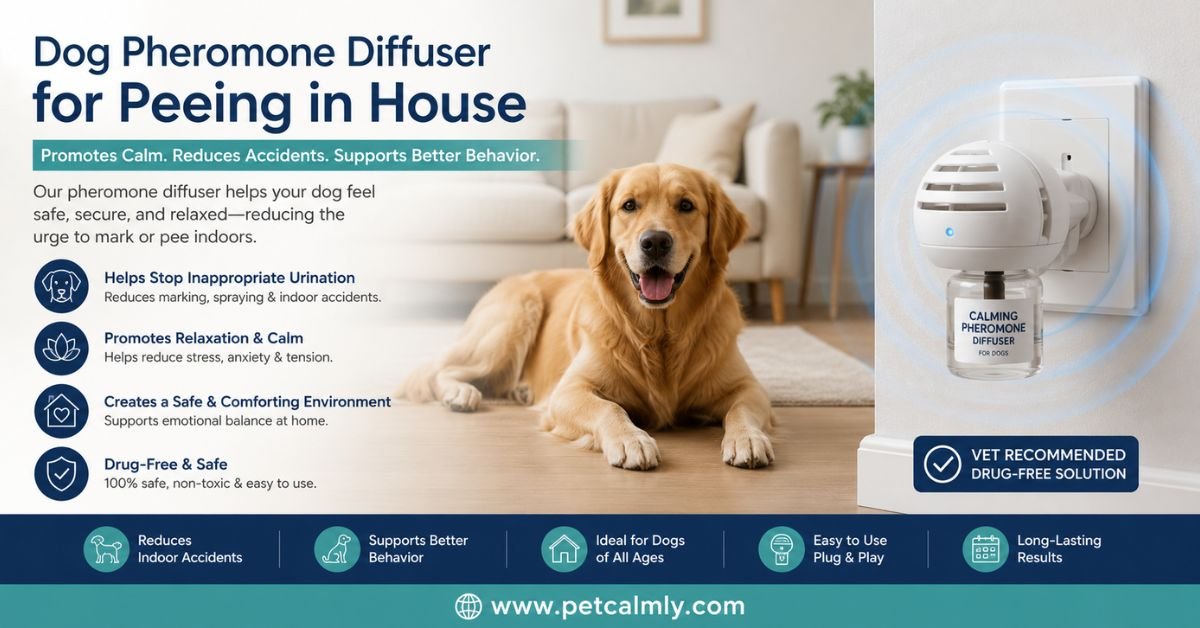
A dog pheromone diffuser for peeing in house is a plug-in device that releases synthetic versions of natural dog calming pheromones.
These pheromones are similar to:
- Mother dog calming signals
- Comfort scents puppies recognize from nursing
- Environmental “safe zone” signals
How It Works in Simple Terms
Think of it like this:
- Dog smells calming signal → feels safe
- Feels safe → anxiety reduces
- Anxiety reduces → fewer stress accidents
It does NOT “train” your dog directly. Instead, it creates a calmer emotional baseline so training becomes more effective.
Do Dog Pheromone Diffusers Actually Stop Peeing Indoors?
This is where expectations matter.
What It CAN Do:
- Reduce anxiety-related accidents
- Calm dogs during separation
- Lower stress marking behavior
- Improve response to potty training
What It CANNOT Do:
- Replace potty training
- Fix medical problems
- Instantly stop marking behavior
- Work alone without routine changes
Most owners see results when they combine it with:
- Consistent potty schedule
- Positive reinforcement training
- Environmental management
Types of Dog Pheromone Products You’ll See
Not all pheromone products are the same.
1. Plug-in Diffusers (Best for Indoor Peeing Issues)
These are the most commonly used for house training problems.
- Continuous release
- Covers a room or area
- Best for long-term anxiety reduction
2. Spray Pheromones
Useful for:
- Car rides
- New environments
- Temporary stress situations
But they don’t last long enough for daily indoor peeing issues.
3. Collars with Pheromones
- Portable calming effect
- Useful for multi-room homes or outdoor stress
Where to Place a Dog Pheromone Diffuser for Best Results
Placement matters more than most owners realize.
Best locations:
- Near the dog’s sleeping area
- Close to where accidents happen (but not directly above urine spots)
- Central room where dog spends most time
Avoid:
- Behind furniture
- Near windows or airflow vents
- Bathrooms or isolated rooms
Proper placement ensures even scent distribution.
4 Common Mistakes Dog Owners Make
Many people try pheromone diffusers but think “they don’t work.” In reality, these mistakes are usually the problem:
Mistake 1: Expecting instant results
Behavior change takes time usually 1–3 weeks.
Mistake 2: Not cleaning urine properly
If smell remains, dogs will continue marking.
Use enzymatic cleaners, not regular detergents.
Mistake 3: No potty schedule
Even calm dogs need routine:
- Morning potty
- After meals
- Before bed
- After playtime
Mistake 4: Using diffuser alone without training
It’s a support tool, not a full solution.
How to Combine Pheromone Diffusers With Training
This is where real improvement happens.
Step-by-Step Routine:
- Install diffuser in main living area
- Clean all old urine spots properly
- Set strict potty schedule
- Reward outdoor urination immediately
- Limit unsupervised indoor access initially
- Observe stress triggers (noise, visitors, separation)
Over time, your dog learns:
calm environment = safe potty behavior
Signs the Pheromone Diffuser Is Working
You may notice:
- Fewer indoor accidents
- More relaxed behavior at home
- Reduced pacing or whining
- Better sleep patterns
- Improved response to commands
Improvement is usually gradual, not sudden.
When Should You Worry About Indoor Peeing?
You should not rely on pheromone diffusers alone if you notice:
- Blood in urine
- Excessive thirst
- Pain while urinating
- Sudden loss of house training
- Frequent small urinations
These signs require veterinary evaluation immediately.
What Should Pet Owners Do Step-by-Step?
If your dog is peeing indoors, follow this practical plan:
Step 1: Rule out medical issues
Visit a vet if symptoms are sudden or severe.
Step 2: Deep clean accident areas
Use enzyme-based cleaners only.
Step 3: Start pheromone diffuser support
Place it in main living space.
Step 4: Rebuild potty routine
Consistency is more powerful than correction.
Step 5: Manage environment
Limit stress triggers and supervise behavior.
Why Dogs Pee Indoors Even After Being Trained
This is one of the most searched emotional concerns.
Common reasons include:
- New home or furniture changes
- Owner schedule changes
- New pet or baby in home
- Emotional stress or loneliness
- Aging or cognitive decline in senior dogs
Understanding the cause prevents punishment-based responses, which often worsen anxiety.
Can Pheromone Diffusers Help with Separation Anxiety Peeing?
Yes this is one of their strongest uses.
Dogs with separation anxiety often:
- Pee shortly after owner leaves
- Show vocal distress
- Destroy objects near exits
A diffuser helps reduce emotional intensity, making training more effective.
But long-term success usually requires:
- Gradual separation training
- Safe crate training (if appropriate)
- Routine predictability
Practical Real-Life Example (Common Scenario)
A dog starts peeing near the door whenever the owner leaves.
What’s really happening:
- Dog associates door with separation stress
- Anxiety builds before owner leaves
- Urination becomes a stress release behavior
What helps:
- Pheromone diffuser reduces baseline stress
- Owner practices short departures
- Dog receives calm reinforcement after independence
Over time, accidents decrease as anxiety fades.
Conclusion
A dog pheromone diffuser for peeing in house can be a helpful part of solving indoor accidents—but only when used correctly and realistically. It works by reducing anxiety, not by directly controlling bladder behavior.
If your dog is peeing indoors, the most effective approach is always a combination of:
- Medical check (if needed)
- Consistent potty training routine
- Proper cleaning of accident areas
- Environmental stress reduction
- Pheromone diffuser support
When all these elements come together, most dogs gradually regain stable, confident bathroom habits.
More Information About Pets, Please Visit Our Website: Vet Recommended Joint Supplement for Dogs
Most Effective Calming Chews for Dogs
Best Natural Dog Calming Treats
Frequently Asked Questions
1. Do pheromone diffusers really stop dogs from peeing indoors?
They help reduce anxiety-related peeing, but they don’t replace training or medical treatment.
2. How long does it take for pheromone diffusers to work?
Most dogs show improvement within 1–3 weeks of continuous use.
3. Can I use a pheromone diffuser for a puppy potty training problem?
Yes, especially if the puppy is anxious, but consistent training is still essential.
4. Where should I plug in a dog pheromone diffuser?
Place it in the main room where your dog spends most time, not hidden corners.
5. Are pheromone diffusers safe for all dogs?
Yes, they are generally safe, but always consult a vet if your dog has medical conditions.
6. Why is my dog still peeing even after using a diffuser?
Because underlying issues like training gaps or medical problems may still be present.