Short direct answer
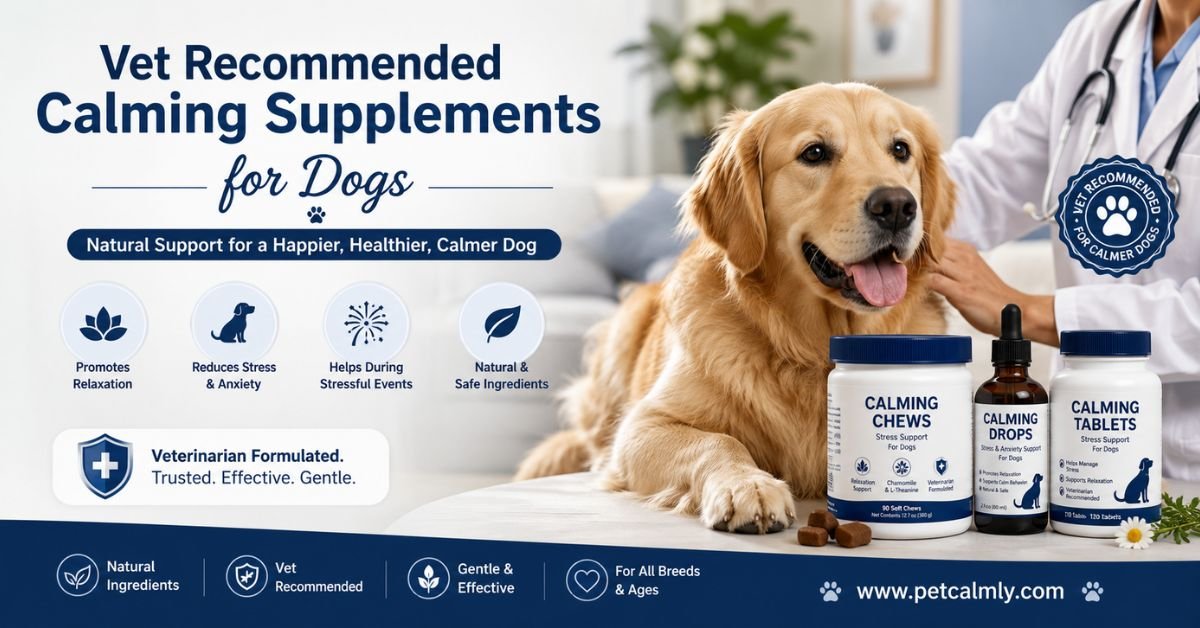
Vet recommended calming supplements for dogs can help reduce mild to moderate stress, nervousness, and anxiety when combined with proper training and environmental support. Many veterinarians recommend supplements containing ingredients such as L-theanine, alpha-casozepine, chamomile, passionflower, melatonin (when appropriate), probiotics, and specific calming pheromone-supporting nutrients. While these products aren’t a cure for severe anxiety, they can be a safe option for dogs dealing with thunderstorms, fireworks, travel, separation-related stress, or changes in routine. Always choose products made by reputable manufacturers and consult your veterinarian before starting any supplement, especially if your dog has a medical condition or takes prescription medication.
Introduction
Every dog experiences stress differently.
Some hide under the bed during thunderstorms. Others pace around the house, bark nonstop, shake, drool, or refuse food when left alone. Even confident dogs can become anxious after moving to a new home, welcoming a new baby, or recovering from illness.
If you’ve started looking for vet recommended calming supplements for dogs, you’re probably hoping for something gentle that helps your dog feel more relaxed without making them overly sleepy.
The good news is that many calming supplements can be useful when they’re chosen carefully and used alongside positive behavior management. These products often support the body’s natural calming processes rather than acting like prescription sedatives.
However, not every supplement is backed by the same level of research. Some contain well-studied ingredients, while others rely on blends with limited evidence. Understanding what actually works—and what doesn’t—can help you make safer decisions for your dog’s health.
In this guide, you’ll learn:
- Which calming ingredients veterinarians commonly recommend
- How calming supplements work inside the body
- When they can help and when they probably won’t
- How to choose a high-quality supplement
- Possible side effects and safety considerations
- Common mistakes dog owners make
- When anxiety requires veterinary attention instead of supplements alone
By the end, you’ll have a clear understanding of how calming supplements fit into an overall anxiety-management plan, allowing you to choose the safest option for your dog’s individual needs.
What Are Vet Recommended Calming Supplements for Dogs?
Calming supplements are non-prescription products designed to support relaxation and reduce stress-related behaviors in dogs. Unlike prescription anti-anxiety medications, these supplements generally contain naturally derived ingredients or nutrients that influence the nervous system more gently.
Many veterinarians recommend them for dogs experiencing:
- Mild anxiety
- Temporary stress
- Environmental changes
- Travel nervousness
- Fireworks
- Thunderstorms
- Veterinary visits
- Grooming appointments
- Mild separation-related stress
Rather than forcing a dog to become sleepy, quality supplements aim to help the brain regulate stress signals more effectively.
Think of them as one part of a larger anxiety management plan not a standalone solution.
Do Calming Supplements Really Work?
The answer depends on why your dog is anxious and which ingredients are used.
Some supplements contain ingredients supported by veterinary research, while others rely mostly on anecdotal reports.
Dogs with occasional stress often respond better than dogs with severe anxiety disorders.
For example:
A dog that becomes nervous during fireworks may become noticeably calmer after taking a supplement before the event.
On the other hand, a dog with severe separation anxiety that destroys furniture and injures itself when left alone usually needs a more comprehensive treatment plan involving behavioral therapy and, in some cases, prescription medication.
That’s why veterinarians often view calming supplements as supportive tools rather than miracle cures.
How Calming Supplements Help Reduce Anxiety in Dogs
To understand why some supplements work, it helps to know what happens inside a stressed dog’s body.
When dogs become frightened or anxious, the brain activates the body’s “fight or flight” response.
This causes the release of stress hormones such as cortisol and adrenaline, leading to behaviors like:
- Panting
- Trembling
- Restlessness
- Whining
- Barking
- Hiding
- Excessive licking
- Pacing
- Digestive upset
- Increased heart rate
Certain calming ingredients may help regulate this response by supporting neurotransmitters involved in relaxation.
Depending on the formula, a supplement may:
- Encourage relaxation without heavy sedation
- Support balanced brain chemistry
- Promote restful sleep
- Reduce overreaction to stressful events
- Help dogs remain more receptive to training
- Improve recovery after stressful situations
Most supplements work gradually or are most effective when given before a known stressful event.
Signs Your Dog May Benefit from a Calming Supplement
Not every nervous moment requires treatment.
However, recurring stress can affect your dog’s overall well-being.
Some common signs include:
Excessive Barking
Dogs experiencing anxiety often vocalize more than usual, especially when left alone or exposed to unfamiliar sounds.
Constant Pacing
Walking back and forth without settling may indicate nervous energy rather than boredom.
Trembling or Shaking
Fear-related trembling commonly appears during thunderstorms, fireworks, or veterinary visits.
Hiding
Some dogs seek closets, bathrooms, or spaces beneath furniture when they feel overwhelmed.
Panting Without Exercise
Heavy panting during cool temperatures or while resting may indicate emotional stress.
Destructive Behavior
Chewing furniture, scratching doors, digging carpets, or damaging crates may stem from anxiety instead of disobedience.
Digestive Changes
Stress can sometimes contribute to:
- Loose stools
- Reduced appetite
- Vomiting
- Excessive drooling
These signs should always be discussed with a veterinarian to rule out medical causes.
Difficulty Sleeping
An anxious dog may struggle to settle at night or wake repeatedly after hearing minor noises.
Common Situations Where Calming Supplements Can Help
Understanding the trigger is just as important as choosing the supplement.
Fireworks and Thunderstorms
Loud noises are among the most common causes of canine anxiety.
Many owners begin calming supplements several hours before expected fireworks or storms to help reduce fear.
Traveling by Car
Motion, unfamiliar environments, and long trips can all increase stress.
Supplements may help dogs remain calmer during travel, especially when introduced before shorter practice trips.
Veterinary Visits
Many dogs become anxious as soon as they recognize the clinic parking lot.
Using a veterinarian-approved calming supplement before appointments may make examinations less stressful for both the dog and veterinary staff.
Grooming Appointments
Nail trims, bathing, drying, and clipping can overwhelm sensitive dogs.
When paired with gradual desensitization training, calming supplements may improve tolerance over time.
Separation from Family Members
Some dogs become distressed whenever their owners leave.
While supplements may reduce emotional intensity, successful treatment usually includes behavior modification and structured independence training.
Moving to a New Home
New smells, unfamiliar rooms, and disrupted routines can temporarily increase anxiety.
Providing predictable routines alongside calming support often helps dogs adjust more comfortably.
Welcoming a New Baby or Pet
Household changes can be confusing.
Calming supplements may help some dogs adapt while owners gradually introduce new routines and positive associations.
Key Ingredients Found in Vet Recommended Calming Supplements for Dogs
Not all calming supplements contain the same ingredients. Understanding what’s inside the label can help you choose products with evidence-based formulations rather than relying on marketing claims alone.
| Ingredient | How It May Help | Best Used For |
|---|---|---|
| L-Theanine | Supports relaxation without heavy sedation | General anxiety, travel, visitors |
| Alpha-Casozepine | Milk-derived protein that promotes calm behavior | Daily anxiety management |
| Chamomile | Mild calming herb | Temporary stress |
| Passionflower | Traditionally used to encourage relaxation | Situational anxiety |
| Melatonin | Supports sleep and relaxation when appropriate | Nighttime stress, fireworks |
| Probiotics | Supports the gut-brain connection | Dogs with stress-related digestive issues |
| Ginger | Helps reduce nausea during travel | Motion sickness and car rides |
While these ingredients are commonly used, effectiveness varies from dog to dog. A supplement containing multiple well-researched ingredients may work better than one relying heavily on fillers or proprietary blends.
What Veterinarians Look for in a Calming Supplement
Veterinarians typically recommend choosing products based on quality, safety, and transparency rather than attractive packaging or online reviews alone.
Here are some qualities professionals often consider:
Clearly Listed Ingredients
The label should state exactly what’s included and how much of each active ingredient is present.
Appropriate Dosage Instructions
Reliable manufacturers provide dosing based on your dog’s weight, making it easier to use the product safely.
Third-Party Quality Testing
Independent testing helps verify that the product contains what the label claims and is free from harmful contaminants.
Manufactured Under High Quality Standards
Look for companies that follow recognized manufacturing practices and maintain consistent quality control.
Veterinary Formulation or Recommendation
Some products are developed with input from veterinary nutritionists or behavior specialists, which can add confidence in their formulation.
PetCalmly Tip: Be cautious of supplements that promise instant results or claim to “cure” anxiety. Fear and anxiety are complex behaviors, and no supplement can replace proper training, environmental management, or veterinary care when those are needed.
Can Calming Supplements Replace Behavioral Training?
In most cases, no.
Calming supplements work best as part of a broader plan that addresses the underlying cause of your dog’s anxiety.
For example:
- A dog frightened by fireworks benefits from gradual noise desensitization alongside calming support.
- A puppy nervous around strangers gains confidence through positive socialization not supplements alone.
- A dog with separation anxiety usually needs a structured behavior modification program in addition to any calming aid.
Supplements may help lower a dog’s stress level enough to make learning easier, but they don’t teach coping skills or change emotional responses by themselves.
How to Choose the Best Vet Recommended Calming Supplements for Dogs
Walking down the pet aisle or browsing online can quickly become overwhelming. You’ll find dozens of products claiming to calm anxious dogs, but the labels often look similar.
Instead of focusing on flashy marketing, evaluate supplements using a few practical criteria.
Look for Evidence-Based Ingredients
Start by checking the active ingredients. Products containing well-studied calming compounds are generally a better choice than those relying on long proprietary herbal blends with undisclosed amounts.
A quality supplement should clearly list:
- Active ingredients
- Amount of each ingredient
- Feeding instructions
- Dog weight recommendations
- Manufacturer contact information
- Expiration date
Transparency is usually a good sign that the company stands behind its product.
Match the Supplement to Your Dog’s Situation
Different dogs have different needs.
| Situation | What Often Works Best |
|---|---|
| Fireworks | Fast-acting calming chew given before the event |
| Thunderstorms | Daily support during storm season or before expected storms |
| Travel | Supplement given before leaving home |
| Mild daily anxiety | Daily calming supplement with consistent use |
| Senior dogs with occasional confusion | Vet-approved calming support after medical evaluation |
| Grooming visits | Short-term calming aid combined with positive reinforcement |
Choosing the right timing is just as important as choosing the right product.
Consider Your Dog’s Age and Health
Puppies, senior dogs, pregnant dogs, and pets with chronic medical conditions may have different nutritional and medical needs.
Always tell your veterinarian if your dog has:
- Liver disease
- Kidney disease
- Heart disease
- Diabetes
- Seizure disorders
- Hormonal conditions
- Food allergies
- Digestive disorders
Some supplements may not be appropriate for every dog.
Check for Independent Quality Standards
Although pet supplements are not regulated the same way as prescription medications, reputable manufacturers often invest in quality testing.
Look for companies that:
- Follow Good Manufacturing Practices (GMP)
- Perform third-party testing
- Use clearly identified ingredients
- Avoid unnecessary fillers
- Provide customer support
These steps can increase confidence in product quality and consistency.
Different Types of Calming Supplements for Dogs
Calming supplements come in several forms. The best option often depends on your dog’s preferences and lifestyle.
Soft Chews
Soft chews are among the most popular choices because many dogs see them as treats.
Advantages
- Easy to give
- Convenient for travel
- Often highly palatable
- Good for daily use
Possible drawbacks
- Some contain added calories
- Flavorings may not suit dogs with food sensitivities
Capsules
Capsules allow for more concentrated ingredients.
They may work well for:
- Large dogs
- Dogs already taking medications
- Owners who prefer precise dosing
Capsules can often be hidden inside food.
Powders
Powders mix easily into meals.
They’re useful for dogs that refuse tablets or chews.
They also allow gradual adjustments in serving size when recommended by a veterinarian.
Liquid Supplements
Liquids are often easier for:
- Small breeds
- Puppies (when veterinarian-approved)
- Dogs with dental problems
- Dogs recovering from surgery
They can usually be mixed into food or administered directly.
Natural Ingredients Commonly Found in Calming Supplements
Many owners prefer natural ingredients, but “natural” does not automatically mean “safe” or “effective.”
Understanding what each ingredient does helps you make informed choices.
L-Theanine
L-theanine is an amino acid originally identified in green tea.
It may help promote relaxation without causing heavy drowsiness.
Dogs using L-theanine often remain alert while appearing less reactive to stressful situations.
This ingredient is commonly recommended for:
- Visitors
- Car rides
- Mild separation anxiety
- Everyday nervousness
Alpha-Casozepine
Alpha-casozepine is a milk-derived protein that may support calm behavior.
Research suggests it can help some dogs cope with environmental stress while maintaining normal activity levels.
It is frequently included in veterinary behavioral nutrition products.
Chamomile
Chamomile has traditionally been used for its calming properties.
While scientific evidence in dogs remains limited, some supplements include small amounts alongside other active ingredients.
Passionflower
Passionflower is another botanical ingredient sometimes used to support relaxation.
Rather than acting alone, it is often combined with amino acids and other calming compounds.
Melatonin
Melatonin is best known for regulating sleep cycles.
Veterinarians sometimes recommend it for specific situations, such as:
- Fireworks
- Overnight travel
- Temporary sleep disruption
- Certain anxiety-related conditions
Melatonin should only be used under veterinary guidance because dosing varies by dog.
Probiotics and the Gut-Brain Connection
Research continues to explore how digestive health influences behavior.
A healthy gut microbiome may support:
- Better digestion
- Immune function
- Stress resilience
Some calming supplements include probiotics as part of a broader wellness approach.
Ingredients That Deserve Extra Caution
Not every calming ingredient is suitable for every dog.
Speak with your veterinarian before using supplements containing:
- High-dose melatonin
- CBD products (quality and legal status vary by location)
- Multiple sedative herbs combined together
- Ingredients your dog has never consumed before
- Artificial sweeteners or unknown proprietary blends
Avoid giving dogs human supplements unless your veterinarian specifically approves them.
Some human products contain ingredients that are unsafe for dogs.
How Long Do Calming Supplements Take to Work?
The answer depends on the ingredient and the individual dog.
Here’s a general guide.
| Supplement Type | Typical Time to Notice Effects |
|---|---|
| Fast-acting calming chew | 30–90 minutes |
| L-theanine supplement | Several days to a few weeks with regular use |
| Alpha-casozepine | Often within several days of consistent use |
| Probiotic-based supplements | Several weeks |
| Melatonin | Usually within 30–90 minutes when appropriate |
Every dog responds differently.
Some improve quickly, while others show only subtle changes over time.
How to Introduce a New Calming Supplement
Changing too many things at once makes it difficult to know what’s helping.
A gradual approach works best.
Step 1: Discuss It with Your Veterinarian
This is especially important if your dog:
- Takes medication
- Has chronic illness
- Is elderly
- Is pregnant
- Has experienced allergic reactions before
Step 2: Follow Weight-Based Directions
Never assume that more supplement equals better results.
Giving extra doses may increase the risk of side effects without improving effectiveness.
Step 3: Monitor Your Dog Carefully
Over the next several days, watch for changes such as:
Positive signs:
- Settles more easily
- Less pacing
- Improved sleep
- More relaxed body language
- Better focus during training
Potential concerns:
- Vomiting
- Diarrhea
- Excessive sleepiness
- Restlessness
- Loss of appetite
- Skin irritation
If unusual symptoms develop, stop using the supplement and contact your veterinarian.
Can You Combine Calming Supplements with Training?
Absolutelyand this is often where the greatest benefit comes from.
Supplements may help reduce your dog’s stress level enough to make learning easier, but lasting improvement depends on behavior modification.
Helpful strategies include:
Positive Reinforcement
Reward calm behavior with treats, praise, toys, or play instead of punishing fearful reactions.
Gradual Desensitization
Introduce anxiety triggers slowly and at a level your dog can handle.
For example, if thunderstorms are frightening, you might play recorded storm sounds at a very low volume while offering rewards. Increase the volume gradually over several sessions only if your dog stays relaxed.
Counterconditioning
Pair a stressful situation with something your dog loves.
Examples include:
- Special treats
- Favorite toy
- Interactive food puzzle
- Play session
Over time, the dog may begin to associate the once-scary event with positive experiences.
Consistent Daily Routine
Dogs thrive on predictability.
Keeping feeding, walks, playtime, and bedtime on a regular schedule can reduce background stress and help anxious dogs feel more secure.
Common Mistakes Dog Owners Make
Even with good intentions, a few common errors can reduce the effectiveness of calming supplements.
Expecting Immediate Results
Some products need days or even weeks of consistent use before noticeable improvements appear.
Using Supplements Instead of Veterinary Care
If anxiety is severe or develops suddenly, don’t rely solely on over-the-counter products. A veterinary examination can rule out pain, illness, or cognitive changes that may be contributing to the behavior.
Ignoring the Trigger
A supplement won’t solve the underlying problem if the source of fear remains unaddressed. Identifying and managing triggers is an essential part of treatment.
Switching Products Too Quickly
Changing supplements every few days makes it difficult to know which, if any, is helping. Give a veterinarian-approved product enough time to work as directed before deciding whether it is effective.
Inconsistent Use
Many calming supplements are designed to be given on a regular schedule. Skipping doses or using them only occasionally may limit their benefits.
When Calming Supplements May Not Be Enough
Some dogs need more than nutritional support.
Schedule a veterinary evaluation if your dog:
- Injures themselves during anxious episodes
- Damages doors, windows, or crates trying to escape
- Stops eating because of fear
- Shows aggressive behavior linked to anxiety
- Has panic attacks that are becoming more frequent
- Suddenly develops anxiety without an obvious cause
- Doesn’t improve after several weeks of appropriate supplement use and behavior modification
In these cases, your veterinarian may recommend a more comprehensive plan that includes medical evaluation, behavior therapy, environmental changes, or prescription medication if necessary.
When Should You Worry About Your Dog’s Anxiety?
Occasional nervousness is a normal part of life for many dogs. A puppy may feel uncertain in a new environment, or an adult dog might become uneasy during a thunderstorm. In these situations, calming supplements and positive training may provide enough support.
However, persistent or intense anxiety can affect your dog’s physical health, emotional well-being, and quality of life. If your dog’s fear is becoming more frequent or severe, it’s important to look beyond over-the-counter supplements.
Warning Signs That Need Veterinary Attention
Contact your veterinarian if your dog:
- Panics even in familiar environments
- Refuses food for more than 24 hours due to stress
- Loses weight because of ongoing anxiety
- Becomes aggressive when frightened
- Damages doors, windows, or crates while trying to escape
- Hurts themselves by chewing, scratching, or biting
- Pants excessively when there is no heat or exercise
- Has repeated vomiting or diarrhea during stressful events
- Suddenly develops anxiety without an obvious trigger
- Experiences personality changes, especially as a senior dog
These signs may indicate an underlying medical issue, chronic pain, cognitive decline, or a behavioral disorder that requires professional treatment.
Could Anxiety Be Caused by Another Health Problem?
Yes. Anxiety-like behavior isn’t always caused by emotional stress.
Several medical conditions can make a dog appear nervous or restless, including:
- Chronic pain from arthritis or injury
- Hearing or vision loss
- Thyroid disorders
- Neurological conditions
- Cognitive dysfunction in senior dogs
- Urinary discomfort
- Digestive illness
- Hormonal imbalances
For example, a senior dog that suddenly paces at night may not simply be anxious. They could be experiencing discomfort or age-related cognitive changes.
That’s why a veterinary examination is an important first step if anxiety appears suddenly or worsens over time.
What Should Pet Owners Do if Their Dog Is Anxious?
Supporting an anxious dog usually requires a combination of patience, observation, and consistency.
1. Identify the Trigger
Ask yourself:
- Does the anxiety happen during storms?
- Only when you’re away?
- Around strangers?
- During car rides?
- At bedtime?
- During grooming?
Keeping a simple journal can help you notice patterns.
Include details such as:
- Date and time
- Situation
- Your dog’s behavior
- How long it lasted
- Anything that seemed to help
This information can be extremely useful for your veterinarian or a qualified behavior professional.
2. Create a Safe Space
Many dogs feel calmer when they have a predictable place to retreat.
A safe space may include:
- A quiet room
- A comfortable bed
- Favorite toys
- Soft lighting
- White noise or calming music
- Access to fresh water
Allow your dog to choose this space rather than forcing them into it.
3. Keep Daily Routines Consistent
Dogs generally thrive on routine.
Try to keep:
- Feeding times consistent
- Walk schedules predictable
- Exercise regular
- Bedtime similar each night
Predictability can reduce uncertainty, which is a common contributor to anxiety.
4. Provide Appropriate Physical Exercise
Exercise helps many dogs release excess energy and supports overall emotional well-being.
Depending on your dog’s age and health, activities may include:
- Daily walks
- Fetch
- Swimming
- Hiking
- Scent games
- Interactive play
Avoid overly intense exercise immediately before stressful events, as it may increase excitement rather than promote relaxation.
5. Add Mental Enrichment
Mental stimulation can reduce boredom and help anxious dogs focus on positive activities.
Ideas include:
- Puzzle feeders
- Snuffle mats
- Food-dispensing toys
- Nose work games
- Basic obedience practice
- Trick training
Even 10–15 minutes of enrichment each day can make a noticeable difference for many dogs.
6. Use Calming Supplements as Part of the Plan
If your veterinarian recommends a calming supplement, use it consistently and according to the label.
Remember:
- Supplements support relaxation.
- They don’t replace training.
- They aren’t a cure for severe anxiety.
- Results often improve when combined with behavior modification.
Can Puppies Take Calming Supplements?
Puppies experience many new situations during their first year, including travel, veterinary visits, socialization, and changes in routine.
However, not every calming supplement is appropriate for young dogs.
Never assume a product labeled “natural” is safe for puppies.
Instead:
- Ask your veterinarian before introducing supplements.
- Focus on positive socialization.
- Build confidence through reward-based training.
- Avoid overwhelming experiences during early development.
In many cases, good training and gradual exposure provide more long-term benefits than supplements alone.
Are Calming Supplements Safe for Senior Dogs?
Many senior dogs benefit from additional emotional support, but aging also increases the likelihood of underlying medical conditions.
Older dogs may experience:
- Cognitive decline
- Arthritis pain
- Hearing loss
- Vision changes
- Sleep disturbances
A veterinarian can determine whether a calming supplement is appropriate or whether another health issue needs treatment first.
Tips for Preventing Anxiety Before It Starts
While not every cause of anxiety can be prevented, healthy habits can reduce the risk of long-term stress.
Socialize Early
Introduce puppies to new people, places, sounds, and experiences in a positive, controlled way.
Reward Calm Behavior
Notice and reinforce relaxed behavior instead of only reacting when your dog becomes anxious.
Avoid Punishment
Punishing a frightened dog can increase fear and damage trust.
Instead, focus on reassurance, management, and positive reinforcement.
Prepare for Known Stressful Events
If fireworks or travel are predictable, plan ahead.
This may include:
- Exercise earlier in the day
- Preparing a quiet room
- Using a veterinarian-approved calming supplement
- Offering enrichment toys
- Playing calming background noise
Planning ahead is often more effective than responding after your dog becomes distressed.
Vet Recommended Calming Supplements for Dogs: Key Takeaways
Here’s a quick summary of the most important points.
| Topic | What to Remember |
|---|---|
| Mild anxiety | Calming supplements may provide helpful support |
| Severe anxiety | Veterinary evaluation is recommended |
| Best approach | Combine supplements with training and environmental management |
| Fast results | Some products work within an hour, while others require consistent daily use |
| Safety | Follow weight-based dosing and consult your veterinarian |
| Quality | Choose transparent manufacturers with evidence-based ingredients |
Frequently Asked Questions
1. What are the best vet recommended calming supplements for dogs?
Many veterinarians recommend supplements containing ingredients such as L-theanine, alpha-casozepine, melatonin (when appropriate), probiotics, and selected calming herbs. The best option depends on your dog’s age, health, anxiety trigger, and medical history, so it’s always wise to ask your veterinarian before starting a new supplement.
2. Can calming supplements make my dog sleepy?
Some products may cause mild drowsiness, especially those containing melatonin or multiple calming ingredients. However, many evidence-based supplements are formulated to promote relaxation without significant sedation.
3. How long should my dog stay on a calming supplement?
This depends on the reason for use. Some dogs only need support during specific events like fireworks or travel, while others benefit from longer-term use under veterinary guidance. Your veterinarian can recommend the safest duration for your dog’s situation.
4. Are natural calming supplements always safe?
No. Natural ingredients can still interact with medications or cause side effects in some dogs. Always read the label carefully and consult your veterinarian before introducing a new supplement.
5. Can I give my dog human calming supplements?
No. Human supplements may contain ingredients, flavorings, sweeteners, or dosages that are unsafe for dogs. Only use products specifically formulated for canine use unless your veterinarian instructs otherwise.
6. What if calming supplements don’t help my dog?
If your dog’s anxiety doesn’t improve after consistent use of a veterinarian-approved supplement and behavior training, schedule a veterinary appointment. Severe anxiety may require additional behavioral support, medical evaluation, or prescription treatment.
More Information About Pets, Please Visit Our Website: Are Calming Collars Safe for Dogs?
Conclusion
Finding the right vet recommended calming supplements for dogs isn’t about choosing the product with the most appealing label it’s about understanding your dog’s unique needs and using supplements as one part of a thoughtful care plan.
For many dogs, ingredients such as L-theanine, alpha-casozepine, probiotics, and carefully selected calming botanicals can help reduce mild stress related to travel, fireworks, grooming, or changes in routine. When paired with positive reinforcement training, a predictable daily schedule, regular exercise, and mental enrichment, these supplements may help dogs feel more confident and comfortable.
At the same time, it’s important to recognize their limits. Calming supplements are not a substitute for veterinary care when a dog shows severe anxiety, sudden behavioral changes, self-injury, or aggression. In those situations, identifying the underlying cause is the safest path toward lasting improvement.
Every dog responds differently, so patience is essential. Introduce one product at a time, monitor your dog’s behavior, and work closely with your veterinarian to determine what provides the greatest benefit.
With the right combination of veterinary guidance, compassionate training, and evidence-based support, many anxious dogs can learn to cope with stressful situations more comfortably and enjoy a happier, more relaxed life.