
Short direct answer
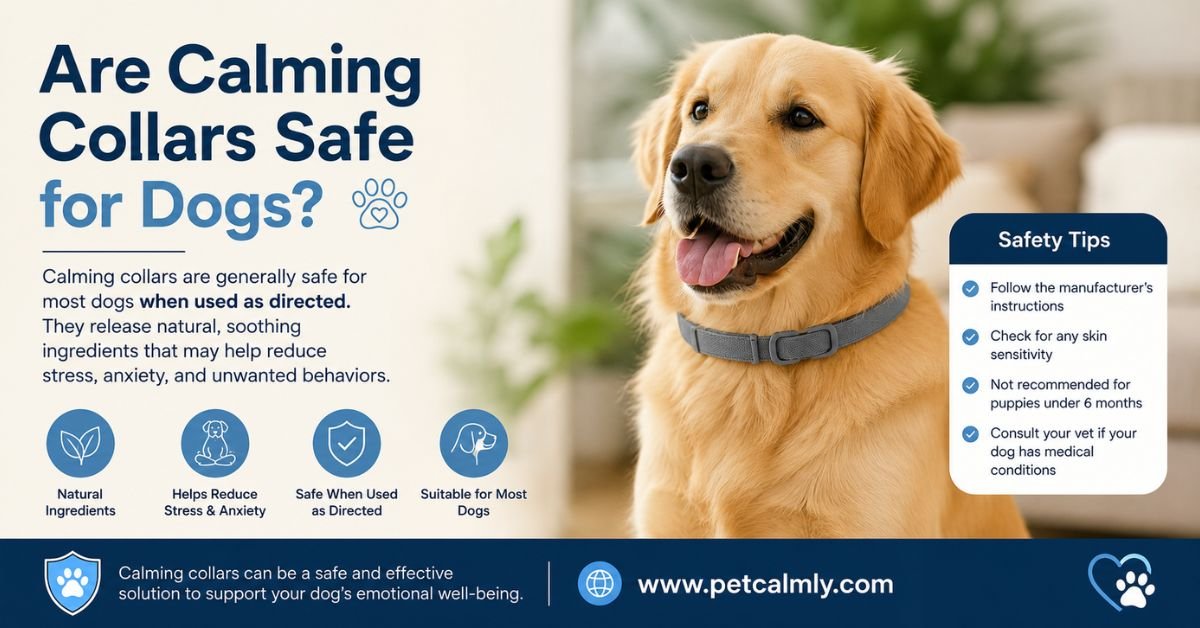
Yes calming collars are generally safe for most healthy dogs when used exactly as directed by the manufacturer. Most work by slowly releasing calming pheromones or natural ingredients designed to help reduce stress-related behaviors. They are not sedatives and should not make your dog sleepy or change their personality.
However, no product is completely risk-free. Some dogs may develop mild skin irritation, allergic reactions, or show little improvement if anxiety is severe. A calming collar works best as part of a broader behavior plan that may include positive reinforcement training, environmental management, and veterinary guidance for more serious anxiety.
Introduction
Watching your dog pace through the house during a thunderstorm or tremble whenever you leave for work can be heartbreaking. Many owners want a gentle solution before considering medication, which is why calming collars have become increasingly popular.
But popularity doesn’t always equal safety. Before placing any collar around your dog’s neck, it’s natural to wonder whether it truly helps or if it could cause unwanted side effects.
The reassuring news is that most quality calming collars have a good safety profile when used correctly. Still, they aren’t a perfect solution for every dog, and understanding how they work can help you decide whether they’re the right choice for your pet.
In this guide, you’ll learn:
- How calming collars work
- Whether they’re safe for puppies and senior dogs
- Possible side effects
- Dogs that may benefit the most
- Situations where a calming collar isn’t enough
- Practical tips for safe and effective use
By the end, you’ll have a realistic understanding of what calming collars can and cannot do, helping you make an informed decision with your dog’s well-being in mind.
How Do Calming Collars Work for Dogs?
Many people assume calming collars contain medication, but that’s usually not the case.
Instead, most collars work by continuously releasing substances that encourage a feeling of relaxation while your dog wears them.
The exact mechanism depends on the type of collar.
Pheromone Calming Collars
The most widely recommended calming collars use dog-appeasing pheromones (DAP).
These are synthetic versions of naturally occurring pheromones produced by mother dogs while nursing puppies. Although humans can’t smell them, dogs can detect these chemical signals through a specialized sensory system.
The idea is simple:
- The pheromone sends a familiar, reassuring message.
- Your dog may feel calmer in stressful situations.
- It supports emotional comfort without affecting alertness.
Because the pheromones are species-specific, they are generally considered safe around people, cats, and other household pets.
Herbal Calming Collars
Some collars use naturally scented essential oils or plant extracts instead of pheromones.
Common ingredients may include:
- Lavender
- Chamomile
- Valerian
- Passionflower
- Eucalyptus (in some formulations)
While many owners appreciate natural ingredients, they should still be used carefully. Dogs can be sensitive to strong fragrances, and not every essential oil is appropriate for canine use.
Quality matters significantly, which is why choosing products made specifically for dogs is important.
Combination Collars
Some manufacturers combine:
- Pheromones
- Herbal extracts
- Aromatherapy ingredients
These products aim to provide multiple calming pathways, although research supporting combination formulas is generally more limited than evidence for pheromone-based collars.
Are Calming Collars Actually Safe for Dogs?
For most healthy adult dogs, the answer is yes, provided the collar is used according to the manufacturer’s instructions.
Unlike anti-anxiety medications that affect the brain chemically, calming collars are designed to provide continuous exposure to gentle calming compounds.
Most dogs tolerate them very well.
That said, “safe” doesn’t mean every dog will respond the same way.
Several factors influence safety:
- Your dog’s age
- Skin sensitivity
- Existing allergies
- Overall health
- Product quality
- Proper collar fit
When these factors are considered, calming collars are generally viewed as a low-risk option for mild to moderate stress.
What Ingredients Are Commonly Found in Calming Collars?
Understanding the ingredients helps you evaluate whether a product is suitable for your dog.
| Ingredient | Purpose | Safety Notes |
|---|---|---|
| Dog-appeasing pheromone (DAP) | Mimics natural calming signals | Generally very safe for most dogs |
| Lavender | Relaxation support | Should be used in pet-safe concentrations |
| Chamomile | Gentle calming effect | Usually well tolerated |
| Valerian | May promote relaxation | Can have a strong odor; some dogs dislike it |
| Passionflower | Herbal calming support | Research in dogs remains limited |
| Essential oil blends | Aromatherapy | Only pet-specific formulations should be used |
Whenever possible, choose products from reputable manufacturers that clearly list their ingredients and provide usage instructions.
Benefits of Calming Collars for Dogs
A calming collar isn’t a miracle cure, but it may provide meaningful support in the right situations.
Many owners notice improvements during predictable stressful events rather than dramatic personality changes.
Potential benefits include:
Reduced Separation Stress
Some dogs become anxious when left alone.
You may notice:
- Less pacing
- Reduced whining
- Fewer stress-related behaviors
A collar won’t teach independence on its own, but it may help lower emotional arousal while you work on separation training.
Less Noise Anxiety
Thunderstorms, fireworks, and loud household noises can trigger fear in sensitive dogs.
A calming collar may help take the edge off these situations, especially when paired with:
- A quiet safe room
- White noise
- Positive reinforcement
- Anxiety-reducing routines
Easier Travel
Travel introduces unfamiliar sights, sounds, and smells.
Some owners report calmer behavior during:
- Car rides
- Hotel stays
- Family visits
- Boarding
While results vary, the collar may help create a more relaxed experience.
Support During Life Changes
Dogs can become unsettled by major routine changes, including:
- Moving to a new home
- Welcoming a baby
- Adopting another pet
- Renovation noise
- Changes in work schedules
A calming collar may provide temporary support while your dog adjusts.
Better Adjustment for Newly Adopted Dogs
Rescue dogs often experience uncertainty during the first few weeks in a new home.
A calming collar won’t erase past experiences, but it may help reduce environmental stress while trust develops through consistent care and gentle training.
Possible Side Effects of Calming Collars
Although uncommon, side effects can happen.
Knowing what to watch for helps you respond quickly if your dog doesn’t tolerate the collar well.
Mild Skin Irritation
This is the most frequently reported issue.
Signs include:
- Redness
- Hair loss beneath the collar
- Scratching
- Mild rash
Removing the collar usually resolves the problem, but persistent irritation should be evaluated by a veterinarian.
Allergic Reactions
Some dogs are sensitive to certain materials or fragrance ingredients.
Watch for:
- Swelling
- Hives
- Severe itching
- Facial rubbing
- Persistent discomfort
Stop using the collar immediately if these signs appear.
Strong Fragrance Sensitivity
Some herbal collars have noticeable scents.
A sensitive dog may respond by:
- Sneezing
- Avoiding the collar
- Pawing at the neck
- Appearing uncomfortable
Choosing a pheromone-based collar may be a better option for dogs that dislike strong smells.
Collar Fit Problems
Sometimes the issue isn’t the calming ingredients at all.
A poorly fitted collar can cause:
- Chafing
- Pressure sores
- Hair breakage
- Difficulty swallowing if too tight
Always follow the manufacturer’s sizing recommendations and regularly check the fit as your dog grows or gains weight.
Which Dogs Are Most Likely to Benefit from a Calming Collar?
Calming collars tend to work best for dogs experiencing mild to moderate stress, especially when anxiety is linked to specific situations rather than severe behavioral disorders.
They may be helpful for dogs that:
- Become nervous during thunderstorms or fireworks
- Feel uneasy during car rides
- Are adjusting to a new home
- Experience mild separation-related stress
- Seem anxious during veterinary visits or grooming appointments
- Show temporary stress after changes in routine
These collars are generally most effective when combined with patient training, predictable routines, mental enrichment, and a supportive environment rather than being relied on as the only solution.
Which Dogs May Need More Than a Calming Collar?
While calming collars can be useful, they have limits. Dogs with severe anxiety or complex behavioral issues often require a more comprehensive approach.
A collar alone is unlikely to resolve problems such as:
- Panic that leads to self-injury
- Aggression linked to fear
- Destructive behavior whenever left alone
- Constant barking caused by intense anxiety
- Repeated escape attempts
- Anxiety that continues to worsen over time
In these situations, it’s important to identify the underlying cause. Pain, illness, cognitive changes in older dogs, or deeply rooted behavioral problems can all contribute to anxiety-like behaviors.
Working with your veterinarian and, when appropriate, a qualified behavior professional can help determine whether your dog would benefit from behavior modification, environmental changes, medication, or a combination of therapies
How to Choose a Safe and Effective Calming Collar for Your Dog
Not all calming collars are made to the same standard. While many are safe, the quality of ingredients, manufacturing, and instructions can vary. Taking a few minutes to compare products can help you avoid disappointment and reduce the chance of skin irritation or poor results.
Look for Dog-Specific Products
A collar designed for dogs should never be replaced with one intended for another species. Dogs have unique sensitivities, and products formulated for cats or other animals may not work as intended.
Choose a collar that clearly states:
- It is designed specifically for dogs.
- The recommended weight or neck size.
- The active ingredients.
- How long the calming effect is expected to last.
- Clear safety and usage instructions.
Check the Ingredient List
Before buying, review the label carefully.
A trustworthy calming collar should:
- List all active ingredients.
- Explain how the collar works.
- Avoid vague claims like “secret calming formula.”
- Include manufacturer contact information.
If your dog has known skin allergies or fragrance sensitivities, discuss the ingredients with your veterinarian before use.
Consider Your Dog’s Lifestyle
A collar that works well for one dog may not suit another.
Think about:
- Does your dog swim often?
- Does your dog spend hours outdoors?
- Does your dog wear a harness most of the time?
- Is your dog very active?
Some calming collars lose effectiveness more quickly after repeated exposure to water, while others are designed to tolerate occasional baths or rainy walks. Always follow the manufacturer’s recommendations.
Buy From Reputable Brands
Although inexpensive products can be tempting, quality control matters when a product stays in contact with your dog’s skin for weeks.
Look for brands that:
- Clearly explain their ingredients.
- Provide customer support.
- Offer sizing guidance.
- Have transparent safety information.
Avoid collars that make unrealistic promises such as:
- “Stops anxiety instantly.”
- “Works on every dog.”
- “Guaranteed cure for aggression.”
Responsible manufacturers understand that every dog responds differently.
How to Use a Calming Collar Safely
Even the safest collar won’t help if it’s used incorrectly.
Following a few simple steps can improve both comfort and effectiveness.
Step 1: Check the Fit
A calming collar should fit securely without being tight.
A good rule is the “two-finger test.” You should be able to slide two fingers comfortably between the collar and your dog’s neck.
A collar that is too loose may not stay in proper contact with the skin, while one that is too tight can cause rubbing or discomfort.
Step 2: Trim Excess Length
Many collars are adjustable.
After fitting:
- Trim any excess material if recommended by the manufacturer.
- Leave enough length so the collar doesn’t loosen unexpectedly.
- Dispose of trimmed pieces safely to prevent chewing.
Step 3: Monitor Your Dog During the First Few Days
The first 48 to 72 hours are a good time to observe your dog’s response.
Watch for:
- Scratching around the neck
- Redness
- Hair loss
- Excessive licking
- Restlessness
- Any unusual behavior
If your dog seems comfortable, continue checking the collar during regular grooming sessions.
Step 4: Replace the Collar as Directed
Most calming collars remain effective for about one month, though this varies by product.
Waiting too long to replace an expired collar may reduce its calming effect.
Likewise, replacing it too early usually doesn’t provide extra benefits.
How Long Does It Take for a Calming Collar to Work?
Many owners expect immediate results, but calming collars usually work gradually.
Some dogs appear more relaxed within a few hours, while others may take several days to show noticeable changes.
The timeline depends on factors such as:
- The type of calming ingredients
- Your dog’s personality
- The cause of the anxiety
- The severity of the stress
- Consistency of use
For example, a dog that becomes mildly nervous during car rides may settle more quickly than a dog with long-standing separation anxiety.
If you notice small improvements such as less pacing, fewer stress signals, or quicker recovery after a trigger—that may indicate the collar is helping.
Signs a Calming Collar May Be Helping
Instead of expecting dramatic changes, look for subtle improvements in your dog’s daily behavior.
Positive signs include:
- Relaxing more quickly after a stressful event
- Sleeping more comfortably
- Less whining
- Reduced pacing
- Fewer stress-related behaviors
- More willingness to play or eat
- Improved focus during training sessions
Remember that the goal isn’t to change your dog’s personality. A successful calming collar helps your dog feel more comfortable while remaining alert and engaged.
Signs the Collar May Not Be Working
Not every dog responds to calming collars.
If several weeks pass with no noticeable improvement, it may be time to reassess.
Possible signs include:
- Anxiety remains unchanged.
- Fear continues to escalate.
- Destructive behaviors persist.
- Panic during separation stays severe.
- Barking becomes worse.
- Your dog seems increasingly distressed.
This doesn’t necessarily mean the collar is poor quality. It may simply mean your dog’s anxiety requires additional support beyond what a collar can provide.
4 Common Mistakes Dog Owners Make
Small mistakes can reduce a calming collar’s effectiveness or cause unnecessary discomfort.
1: Expecting a Miracle Cure
A calming collar is a supportive tool, not a complete treatment for anxiety.
Dogs with behavioral challenges usually improve most when collars are combined with:
- Positive reinforcement training
- Predictable routines
- Physical exercise
- Mental enrichment
- Veterinary care when needed
2: Ignoring Underlying Medical Problems
Behavior changes aren’t always caused by anxiety.
Pain, hearing loss, vision changes, thyroid disorders, or cognitive decline can all make a dog appear anxious.
If your dog’s behavior changes suddenly, a veterinary examination is the safest first step.
3: Using the Wrong Collar Size
A poorly fitted collar can:
- Rub the skin
- Slip off
- Reduce contact with the neck
- Cause discomfort
Always measure your dog’s neck rather than guessing.
4: Forgetting to Check the Skin
Because calming collars stay on for weeks, it’s easy to overlook the skin underneath.
During grooming or bathing:
- Remove the collar briefly if appropriate.
- Check for redness or irritation.
- Clean the neck if needed.
- Replace the collar correctly.
Regular checks help catch minor problems before they become more serious.
Can Puppies Wear Calming Collars?
Many calming collars are marketed for puppies, but the minimum recommended age varies by manufacturer.
Young puppies are still developing physically and behaviorally, so it’s important to read the product label carefully before use.
A calming collar may be appropriate for puppies that are:
- Adjusting to a new home
- Beginning crate training
- Learning to spend short periods alone
- Experiencing mild stress during socialization
However, puppies also benefit greatly from:
- Gentle positive reinforcement
- Consistent daily routines
- Safe social experiences
- Interactive play
- Plenty of rest
These experiences help build confidence and should remain the foundation of any anxiety-prevention plan.
Are Calming Collars Safe for Senior Dogs?
Older dogs can experience anxiety for many reasons, including:
- Hearing loss
- Vision changes
- Joint discomfort
- Cognitive decline
- Changes in routine
For many healthy senior dogs, calming collars are still considered safe when used correctly.
However, if an older dog suddenly becomes anxious, confused, restless, or starts pacing at night, it’s wise to schedule a veterinary visit before assuming anxiety is the only cause.
Treating an underlying medical condition may provide greater relief than a calming collar alone.
Calming Collar vs Other Anxiety Solutions
Each anxiety-management tool has strengths and limitations. The best choice depends on your dog’s individual needs.
| Option | Best For | Advantages | Limitations |
|---|---|---|---|
| Calming collar | Mild to moderate stress | Easy to use, continuous support | May not help severe anxiety |
| Positive reinforcement training | Long-term behavior improvement | Addresses the root cause | Requires time and consistency |
| Environmental management | Trigger avoidance | Immediate reduction in stress | Doesn’t change emotional response |
| Puzzle toys and enrichment | Boredom-related stress | Provides mental stimulation | Not enough for intense anxiety |
| Compression wraps | Noise fears and travel | Some dogs find gentle pressure comforting | Doesn’t work for every dog |
| Prescription medication | Severe anxiety disorders | Can significantly improve quality of life | Requires veterinary supervision |
For many dogs, combining several approaches provides better results than relying on just one.
Practical Tips to Help Your Dog Feel Calmer Every Day
A calming collar works best as part of a supportive daily routine.
Simple habits that often make a difference include:
- Providing regular exercise suited to your dog’s age and breed.
- Keeping feeding and walking schedules consistent.
- Offering puzzle feeders or scent games for mental stimulation.
- Creating a quiet, comfortable resting area.
- Rewarding calm behavior with praise or treats.
- Avoiding punishment for fear-based behaviors.
- Introducing new experiences gradually rather than all at once.
These small, consistent actions can help build confidence over time and may reduce your dog’s reliance on calming aids.
When Should You Worry About Your Dog’s Anxiety?
Occasional nervousness is a normal part of life for many dogs. A brief reaction to fireworks, a thunderstorm, or a trip to the veterinarian doesn’t always mean something is wrong.
However, anxiety becomes a concern when it is frequent, severe, or starts affecting your dog’s health, safety, or quality of life.
A calming collar can be a helpful part of your dog’s care plan, but it should never delay appropriate veterinary attention if your dog is struggling.
Contact Your Veterinarian If Your Dog:
- Panics every time they’re left alone.
- Injures themselves trying to escape.
- Stops eating because of stress.
- Suddenly becomes fearful without an obvious reason.
- Shows aggressive behavior linked to fear.
- Pants, drools, or trembles excessively even in calm situations.
- Develops new anxiety later in life.
- Experiences repeated skin irritation from wearing any collar.
- Has anxiety that continues despite training and environmental changes.
These signs may point to a medical condition, chronic pain, age-related cognitive changes, or a behavioral issue that requires a more comprehensive treatment plan.
The earlier the underlying cause is identified, the better the chances of improving your dog’s comfort and confidence.
What Should Pet Owners Do Before Trying a Calming Collar?
If you’re considering a calming collar, taking a thoughtful approach can improve the chances of success.
1. Identify Your Dog’s Triggers
Pay attention to when your dog becomes anxious.
Common triggers include:
- Thunderstorms
- Fireworks
- Visitors
- Being left alone
- Car rides
- Veterinary appointments
- Grooming
- Moving to a new home
- Loud household noises
Keeping a simple journal of your dog’s behavior can help you recognize patterns and determine whether the collar is making a difference over time.
2. Rule Out Medical Problems
Pain and illness can sometimes look like anxiety.
Schedule a veterinary checkup if your dog:
- Suddenly becomes fearful.
- Starts pacing at night.
- Changes eating habits.
- Seems unusually restless.
- Shows personality changes.
Treating the underlying health issue may reduce anxious behavior without additional calming products.
3. Set Realistic Expectations
A calming collar is designed to provide gentle support not eliminate anxiety overnight.
Many owners notice gradual improvements such as:
- Easier settling after stressful events
- Less pacing
- More relaxed body language
- Better sleep
- Improved focus during training
Even small positive changes can make daily life more comfortable for both you and your dog.
4. Combine the Collar With Positive Training
Dogs learn best through consistency and positive reinforcement.
Instead of relying solely on a collar, pair it with:
- Reward-based training
- Predictable daily routines
- Regular exercise
- Mental enrichment
- Calm handling
- Safe exposure to triggers at your dog’s pace
This combination often provides better long-term results than any single product alone.
How to Help Prevent Anxiety in Dogs
While some causes of anxiety are beyond your control, healthy daily habits can reduce stress and build resilience.
Build a Predictable Routine
Dogs thrive on consistency.
Try to keep:
- Feeding times similar each day.
- Walks on a regular schedule.
- Bedtime predictable.
- Training sessions short and enjoyable.
Routine helps many dogs feel secure because they know what to expect.
Provide Daily Mental Enrichment
Mental stimulation can be just as important as physical exercise.
Ideas include:
- Food puzzle toys
- Snuffle mats
- Scent games
- Basic obedience practice
- Learning new tricks
- Rotating favorite toys
Keeping your dog’s mind engaged may reduce boredom-related stress and destructive behaviors.
Encourage Positive Social Experiences
Gentle exposure to new people, places, and sounds can help many dogs become more confident.
Always allow your dog to move at their own pace. Forcing interactions may increase fear rather than reduce it.
Create a Safe Resting Area
Every dog benefits from having a quiet place to relax.
A safe space might include:
- A comfortable bed
- Favorite toys
- Fresh water
- Soft lighting
- Reduced noise
During stressful events such as fireworks or thunderstorms, this area can become an important source of comfort.
Frequently Asked Questions
1: Are calming collars safe for dogs to wear all the time?
Most calming collars are designed to be worn continuously for the period recommended by the manufacturer, often around 30 days. Remove the collar periodically to inspect your dog’s skin and replace it according to the product instructions.
2: Can a calming collar make my dog sleepy?
Generally, no. Most calming collars are not sedatives. Their goal is to help reduce stress while allowing your dog to remain alert, active, and engaged in normal daily activities.
3: Are calming collars safe for puppies?
Many are, but the recommended minimum age varies between products. Always read the label carefully and consult your veterinarian if your puppy is very young or has existing health concerns.
4: What should I do if my dog develops a rash from a calming collar?
Remove the collar immediately and inspect the affected area. Mild irritation often improves once the collar is removed, but persistent redness, swelling, or discomfort should be evaluated by your veterinarian before trying another product.
5: How long does it take to notice results from a calming collar?
Some dogs show signs of relaxation within hours, while others may need several days or even a couple of weeks. The response depends on the cause and severity of the anxiety, as well as the individual dog’s temperament.
6: Can a calming collar replace anxiety medication?
No. A calming collar may help dogs with mild or situational stress, but it is not a substitute for veterinary-prescribed medication when anxiety is severe. If your dog’s fear significantly affects daily life, speak with your veterinarian about the most appropriate treatment plan.
More Information About Pets, Please Visit Our Website: Dog Pheromone Diffuser for Peeing in House
Vet Recommended Joint Supplement for Dogs
Most Effective Calming Chews for Dogs
Conclusion
So, are calming collars safe for dogs? In most cases, yes. When you choose a quality product, ensure it fits correctly, and follow the manufacturer’s instructions, calming collars are generally considered a safe, low-risk option for helping dogs cope with everyday stress.
That said, it’s important to remember that every dog experiences anxiety differently. A collar may ease mild nervousness during travel, fireworks, or changes in routine, but it isn’t a cure for severe behavioral problems or medical conditions.
The most successful approach combines gentle calming aids with positive reinforcement training, mental enrichment, regular exercise, and a stable daily routine. By addressing both your dog’s emotional needs and any underlying health concerns, you’ll give them the best opportunity to feel secure and confident.
If your dog’s anxiety is intense, suddenly worsens, or begins affecting their health or safety, don’t rely on a calming collar alone. Seeking veterinary advice early can make a meaningful difference and help your dog receive the care they truly need.