Short direct answer
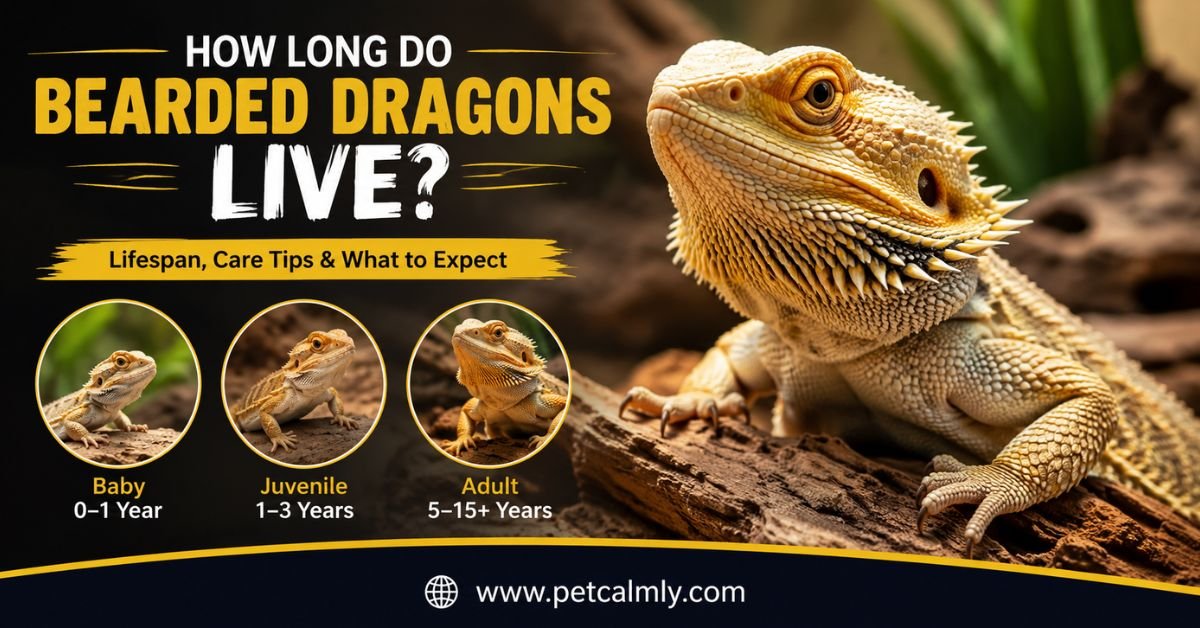
Most pet bearded dragons live between 10 and 15 years when they receive proper care, a balanced diet, the right enclosure setup, and regular veterinary checkups. Some well-cared-for dragons even reach 16 to 18 years or more, although this is less common. In contrast, wild bearded dragons typically live only 5 to 8 years because they face predators, harsh weather, food shortages, and disease.
The biggest factors that influence a bearded dragon’s lifespan include nutrition, UVB lighting, temperature, genetics, stress levels, and access to veterinary care. By understanding these needs early, you can give your dragon the best chance of living a long, healthy life.
Introduction
Bringing home a bearded dragon is exciting, especially for first-time reptile owners. These gentle lizards are known for their calm personalities, curious behavior, and relatively easy care compared to many other reptiles. But one question almost every new owner asks is:
“How long do bearded dragons live?”
The answer is encouraging. Unlike many small pets that live only a few years, a healthy bearded dragon can be part of your family for over a decade. However, reaching that age isn’t simply a matter of luck. Their lifespan depends heavily on the care they receive every day.
Many health problems that shorten a bearded dragon’s life such as metabolic bone disease, obesity, dehydration, and chronic stress are preventable with proper husbandry. Small daily habits, like maintaining the correct basking temperature, replacing UVB bulbs on schedule, feeding a varied diet, and keeping the enclosure clean, can make a significant difference over the years.
In this guide, you’ll learn:
- How long bearded dragons usually live
- Why some dragons live much longer than others
- The difference between wild and pet lifespans
- The biggest factors that affect longevity
- Common myths about bearded dragon lifespan
- Practical ways to help your dragon enjoy a long, healthy life
Whether you’re planning to adopt your first bearded dragon or already care for one, this guide will help you understand what it takes to support a long and happy life.
How Long Do Bearded Dragons Live on Average?
The average lifespan of a bearded dragon depends largely on whether it lives in the wild or in captivity.
| Environment | Average Lifespan |
|---|---|
| Wild bearded dragons | 5–8 years |
| Pet bearded dragons | 10–15 years |
| Exceptionally well cared-for pets | 16–18+ years |
Most healthy captive bearded dragons comfortably reach their early teens when provided with excellent care from a young age.
Although genetics play a role, husbandry has a much greater impact. Even dragons with strong genetics can develop serious health problems if they receive poor nutrition or inadequate UVB lighting.
Likewise, dragons with average genetics often enjoy long, healthy lives because their owners consistently meet their needs.
Why Do Pet Bearded Dragons Live Longer?
Captive dragons avoid many of the dangers their wild relatives face every day.
Pet dragons benefit from:
- Consistent access to nutritious food
- Clean drinking water
- Stable temperatures
- Safe housing
- Protection from predators
- Veterinary treatment when needed
- Reduced exposure to parasites
- Lower risk of injuries
These advantages significantly increase life expectancy compared to life in the Australian wilderness.
What Is the Oldest Bearded Dragon?
There have been reports of captive bearded dragons living close to 18–20 years. While these exceptional cases receive attention online, they are not typical.
Most dragons live shorter lives because:
- Minor husbandry mistakes accumulate over time.
- Obesity develops gradually.
- UVB lighting isn’t replaced regularly.
- Chronic dehydration goes unnoticed.
- Age-related diseases become more common in senior dragons.
Instead of focusing on record-breaking ages, owners should aim to provide consistent, high-quality care throughout their dragon’s life.
Bearded Dragon Lifespan by Life Stage
Understanding each stage of your dragon’s life helps you provide the right care at the right time.
| Life Stage | Approximate Age | Main Focus |
|---|---|---|
| Hatchling | 0–3 months | Rapid growth and frequent feeding |
| Juvenile | 3–12 months | Continued growth and bone development |
| Young Adult | 1–3 years | Healthy weight and muscle maintenance |
| Adult | 3–8 years | Prevent obesity and monitor overall health |
| Senior | 8–15+ years | Joint support, regular health checks, and monitoring for age-related changes |
Every stage brings different nutritional and environmental needs. Meeting those needs consistently helps reduce the risk of preventable health problems later in life.
What Factors Affect How Long Bearded Dragons Live?
No single factor determines lifespan. Instead, several aspects of daily care work together to influence long-term health.
Proper Nutrition
Nutrition is one of the biggest influences on longevity.
Young dragons need more insects because they are growing rapidly. Adults require a larger proportion of leafy greens while still receiving appropriate insects for protein.
A healthy diet typically includes:
- Collard greens
- Mustard greens
- Dandelion greens
- Squash
- Bell peppers
- Dubia roaches
- Crickets
- Black soldier fly larvae
- Occasional hornworms as treats
Foods that are too fatty or sugary can contribute to obesity and liver problems over time.
UVB Lighting
UVB lighting is essential for calcium metabolism.
Without proper UVB exposure, bearded dragons cannot produce enough vitamin D3 to absorb calcium effectively.
Poor UVB lighting may eventually lead to:
- Weak bones
- Tremors
- Fractures
- Metabolic bone disease
- Reduced mobility
- Chronic pain
One common mistake is assuming a UVB bulb still works because it emits visible light. In reality, UVB output declines over time, so bulbs should be replaced according to the manufacturer’s recommendations, even if they still appear bright.
Correct Temperatures
Bearded dragons rely on external heat to regulate digestion, metabolism, and immune function.
A healthy enclosure should provide a temperature gradient so your dragon can move between warmer and cooler areas as needed.
Proper heating supports:
- Digestion
- Appetite
- Activity
- Immune health
- Normal metabolism
Temperatures that remain too low for extended periods may contribute to digestive problems, reduced appetite, and chronic stress.
Hydration
Although bearded dragons come from dry environments, they still need water.
Hydration comes from:
- Fresh vegetables
- Drinking water
- Occasional soaking when appropriate
Mild dehydration often develops slowly and can affect kidney function over time if left unaddressed.
Enclosure Size
A cramped enclosure limits natural movement and exercise.
Adult bearded dragons generally thrive in spacious enclosures that allow climbing, basking, exploring, and thermoregulation.
A well-designed habitat includes:
- Multiple basking spots
- Hiding places
- Branches or rocks
- Safe climbing opportunities
- Separate warm and cool zones
A stimulating environment also reduces boredom and stress.
Cleanliness
Poor enclosure hygiene increases exposure to bacteria, parasites, and fungi.
Routine maintenance includes:
- Removing waste daily
- Washing food bowls
- Cleaning water dishes
- Disinfecting surfaces regularly
- Replacing dirty substrate when needed
Good hygiene supports long-term health and reduces the risk of infections.
Stress Levels
Chronic stress affects reptiles just as it affects mammals.
Common stressors include:
- Constant handling
- Loud environments
- Incorrect temperatures
- Inadequate hiding places
- Aggressive tank mates
- Frequent enclosure changes
A relaxed dragon typically eats well, explores confidently, and maintains a healthy weight.
Veterinary Care
Routine veterinary visits help identify problems before they become severe.
An experienced reptile veterinarian can detect:
- Parasites
- Mouth infections
- Nutritional deficiencies
- Early metabolic bone disease
- Reproductive issues
- Weight changes
Preventive care often leads to better long-term outcomes than waiting until obvious symptoms appear.
Wild vs. Pet Bearded Dragon Lifespan
Many new owners wonder why pet dragons can live almost twice as long as those in the wild.
The answer comes down to survival challenges.
Life in the Wild
Wild bearded dragons live in Australia’s arid woodlands and deserts.
Every day, they must avoid predators such as:
- Birds of prey
- Snakes
- Large lizards
- Wild mammals
They also face:
- Extreme heat
- Drought
- Food shortages
- Parasites
- Injuries
- Disease
- Competition for territory
Even healthy dragons may die young simply because survival is difficult.
Life in Captivity
A properly cared-for pet dragon enjoys many advantages.
These include:
- Reliable food
- Stable temperatures
- Consistent lighting
- Protection from predators
- Prompt treatment for illness
- Reduced exposure to parasites
- Lower risk of injury
As long as owners meet their environmental and nutritional needs, captive dragons have a much greater opportunity to reach old age.
Does Species Affect Lifespan?
Several species belong to the bearded dragon group, but the central bearded dragon (Pogona vitticeps) is by far the most common pet worldwide.
This species is also the one most lifespan estimates refer to when experts say pet bearded dragons typically live 10 to 15 years.
Other species may have slightly different average lifespans, but husbandry quality remains far more important than species alone. A well-cared-for dragon of any commonly kept species generally has a better chance of living a long life than one with poor housing, nutrition, or lighting.
Common Myths About Bearded Dragon Lifespan
Myth 1: Bearded Dragons Only Live a Few Years
This misconception often comes from comparing reptiles to hamsters or other small pets. In reality, healthy pet bearded dragons commonly live for a decade or longer.
Myth 2: Genetics Are the Only Thing That Matters
Genetics influence health, but everyday care has a much greater impact. Proper UVB lighting, nutrition, heating, and routine veterinary care can significantly improve a dragon’s quality of life and longevity.
Myth 3: Older Dragons Stop Needing Special Care
Senior dragons may become less active, but they still require appropriate lighting, balanced nutrition, regular health checks, and careful monitoring for age-related changes. Growing older doesn’t mean their care becomes less important.
How to Help Your Bearded Dragon Live a Long, Healthy Life
While no one can guarantee exactly how long a bearded dragon will live, the choices you make every day have a major impact on its health and quality of life. Most long-lived dragons don’t reach old age because of luck—they do so because their owners consistently provide the right environment, nutrition, and preventive care.
Instead of searching for a single “secret” to a long lifespan, focus on getting the basics right every day.
Create the Right Habitat for Long-Term Health
A bearded dragon spends its entire life inside the environment you provide. If the enclosure doesn’t meet its physical and behavioral needs, health problems often develop over time.
Choose a Spacious Enclosure
A larger enclosure encourages movement, climbing, and natural behaviors.
For an adult bearded dragon, many reptile experts recommend an enclosure that is at least 120 gallons (4 ft × 2 ft × 2 ft) or larger. More space allows for a proper temperature gradient and environmental enrichment.
A suitable enclosure should include:
- A basking platform
- A cooler resting area
- Hides for security
- Climbing branches or sturdy rocks
- Safe decorations for exploration
- Easy access to food and water
A cramped enclosure can contribute to inactivity, obesity, and chronic stress.
Maintain Proper Heating
Because bearded dragons are ectothermic (cold-blooded), they rely on external heat to regulate nearly every body function.
Correct temperatures help support:
- Digestion
- Appetite
- Immune function
- Energy levels
- Normal metabolism
Always monitor temperatures using reliable digital thermometers rather than guessing by touch.
Consistency matters more than occasional adjustments.
Replace UVB Bulbs on Schedule
One of the most common husbandry mistakes is keeping the same UVB bulb for too long.
Even when a bulb still produces visible light, its UVB output gradually decreases.
Without adequate UVB exposure, a dragon may struggle to absorb calcium properly, increasing the risk of:
- Metabolic bone disease
- Weak bones
- Muscle tremors
- Deformities
- Poor growth
Follow the bulb manufacturer’s replacement schedule and position the light according to the manufacturer’s recommended distance.
Feed a Balanced Diet Throughout Every Life Stage
Diet changes as a bearded dragon grows.
Young dragons need more protein to support rapid development, while adults require more plant matter to maintain a healthy weight.
What Should Baby Bearded Dragons Eat?
Growing dragons generally need:
- Appropriately sized feeder insects
- Daily leafy greens
- Calcium supplementation as recommended
- Fresh water
Frequent feeding supports healthy growth during the first year of life.
What Should Adult Bearded Dragons Eat?
Healthy adults usually thrive on a diet rich in vegetables with moderate amounts of insects.
Excellent staple vegetables include:
- Collard greens
- Mustard greens
- Turnip greens
- Dandelion greens
- Endive
- Squash
- Bell peppers
Suitable feeder insects include:
- Dubia roaches
- Crickets
- Black soldier fly larvae
- Silkworms
Treat insects such as waxworms should be offered only occasionally because they’re high in fat.
Avoid Overfeeding
Many owners unintentionally shorten their dragon’s lifespan through excessive feeding.
An overweight bearded dragon may develop:
- Fatty liver disease
- Joint strain
- Reduced activity
- Heart stress
- Lower overall fitness
A healthy dragon should have a well-rounded body without excessive fat around the tail base or abdomen.
Support Healthy Hydration
Although bearded dragons come from dry climates, dehydration is still a common concern.
Signs of poor hydration may include:
- Wrinkled skin
- Sunken eyes
- Thick saliva
- Lethargy
- Difficulty shedding
You can encourage hydration by:
- Offering fresh vegetables daily
- Providing clean water
- Maintaining appropriate enclosure humidity
- Consulting a reptile veterinarian if dehydration is suspected
Reduce Everyday Stress
Stress doesn’t just affect behavior it can also weaken the immune system over time.
Common Causes of Stress
A bearded dragon may become stressed because of:
- Incorrect temperatures
- Poor lighting
- Frequent enclosure changes
- Loud household activity
- Lack of hiding places
- Overhandling
- Seeing another dragon nearby
Reducing these stressors helps your pet feel secure and encourages normal eating, basking, and exploring.
Learn to Read Body Language
Healthy dragons usually display relaxed behavior.
Signs of comfort include:
- Regular basking
- Curious exploration
- Strong appetite
- Bright, alert eyes
- Calm handling
Possible signs of stress include:
- Constant glass surfing
- Persistent dark beard
- Loss of appetite
- Hiding all day
- Defensive posture
- Repeated attempts to escape
Occasional stress is normal, but ongoing behavioral changes deserve investigation.
Schedule Preventive Veterinary Care
Many illnesses begin gradually and aren’t obvious during the early stages.
Routine checkups with a reptile veterinarian can help identify issues before they become serious.
Preventive visits may include:
- Physical examination
- Weight monitoring
- Parasite testing when appropriate
- Nutritional assessment
- Husbandry review
Early intervention often improves long-term outcomes.
Common Health Problems That Can Shorten a Bearded Dragon’s Lifespan
Some diseases develop quickly, while others progress slowly over months or years.
Recognizing early warning signs gives your dragon the best chance of recovery.
Metabolic Bone Disease (MBD)
Metabolic bone disease is one of the most common preventable illnesses in captive reptiles.
It usually results from problems such as:
- Inadequate UVB exposure
- Calcium deficiency
- Improper supplementation
- Poor diet
Symptoms may include:
- Soft jaw
- Swollen limbs
- Tremors
- Weakness
- Difficulty climbing
- Bone fractures
With prompt veterinary care and corrected husbandry, some dragons improve, but advanced cases can cause permanent damage.
Parasites
Internal parasites can reduce nutrient absorption and weaken overall health.
Possible signs include:
- Weight loss
- Diarrhea
- Poor appetite
- Lethargy
Not every dragon with parasites shows obvious symptoms, which is why fecal testing is valuable when recommended by a reptile veterinarian.
Respiratory Infections
Respiratory illness often develops when environmental conditions are unsuitable.
Possible warning signs include:
- Wheezing
- Open-mouth breathing while not basking
- Mucus around the mouth or nose
- Frequent gaping unrelated to thermoregulation
- Low activity
Respiratory infections require prompt veterinary attention.
Mouth Rot (Infectious Stomatitis)
Mouth rot is a bacterial infection affecting the mouth and gums.
Symptoms may include:
- Swollen gums
- Yellow or white material inside the mouth
- Difficulty eating
- Bad odor
- Drooling
Early treatment greatly improves recovery.
Kidney Disease
Chronic dehydration and poor husbandry may contribute to kidney problems in older dragons.
Possible signs include:
- Reduced appetite
- Weight loss
- Weakness
- Increased lethargy
Because these signs are nonspecific, veterinary evaluation is important.
Obesity
Obesity develops gradually and is often overlooked.
An overweight dragon may:
- Move less
- Struggle to climb
- Tire easily
- Develop fatty liver disease
- Experience reduced lifespan
Healthy weight management is one of the easiest ways to support longevity.
Signs Your Bearded Dragon Is Getting Older
Just like other pets, bearded dragons slow down as they age.
Normal aging doesn’t necessarily mean your dragon is sick.
Common Signs of Senior Bearded Dragons
Older dragons may:
- Sleep more
- Move more slowly
- Climb less often
- Eat smaller meals
- Spend more time basking
- Shed less frequently
- Lose some muscle tone
These changes often happen gradually over several years.
Age-Related Health Changes
Senior dragons are more likely to develop:
- Arthritis
- Vision changes
- Dental problems
- Organ disease
- Reduced mobility
Regular veterinary examinations become increasingly important as your dragon ages.
6 Common Care Mistakes That Reduce Lifespan
Many health problems result from small husbandry errors repeated over months or years.
Avoid these common mistakes.
1. Using Poor UVB Lighting
Inadequate UVB remains one of the leading causes of preventable disease.
2. Feeding Too Many Fatty Insects
Treat insects are enjoyable but should never become the main diet.
3. Keeping Incorrect Temperatures
Cold enclosures interfere with digestion and immune function.
4. Ignoring Weight Changes
Unexpected weight gain or weight loss deserves attention.
Regular weighing helps detect problems early.
5. Delaying Veterinary Care
Many reptile illnesses are easier to treat when caught early.
Waiting until a dragon stops eating or becomes severely lethargic often makes treatment more difficult.
6. Housing Multiple Adult Bearded Dragons Together
Bearded dragons are generally solitary animals.
Keeping adults together may lead to:
- Territorial aggression
- Competition for food
- Chronic stress
- Bite injuries
- Unequal access to heat and UVB
Even if fighting isn’t obvious, one dragon may quietly dominate resources, affecting the other’s long-term health.
When Should You Worry About Your Bearded Dragon?
Not every change in behavior is an emergency, but some signs should never be ignored.
Contact a reptile veterinarian promptly if your dragon:
- Stops eating for an extended period outside of normal brumation
- Loses noticeable weight
- Has difficulty walking or climbing
- Develops swollen limbs or a soft jaw
- Shows wheezing or labored breathing
- Has persistent diarrhea
- Vomits repeatedly
- Has blood in the stool
- Appears severely dehydrated
- Becomes unusually weak or unresponsive
Early treatment can prevent minor problems from becoming life-threatening.
What Should Pet Owners Do to Help Their Dragon Live Longer?
Focus on consistency rather than perfection.
Daily Checklist
- ✓ Offer fresh food
- ✓ Check temperatures
- ✓ Ensure UVB lighting is working
- ✓ Remove waste
- ✓ Observe normal behavior
- ✓ Provide clean water
Weekly Checklist
- ✓ Deep-clean food and water dishes
- ✓ Inspect lighting and heating equipment
- ✓ Monitor body condition
- ✓ Weigh your dragon if practical
- ✓ Check for shedding issues or injuries
Small routine habits often have the greatest impact over the course of a bearded dragon’s life.
Bearded Dragon Lifespan Comparison
Understanding how a bearded dragon’s lifespan compares with other popular pet reptiles can help you prepare for the long-term commitment of reptile ownership.
| Pet Reptile | Average Lifespan in Captivity |
|---|---|
| Bearded Dragon | 10–15 years (sometimes 16–18+ years) |
| Leopard Gecko | 15–20 years |
| Corn Snake | 15–20+ years |
| Crested Gecko | 15–20 years |
| Blue-Tongued Skink | 15–20 years |
| Ball Python | 20–30 years |
Although bearded dragons don’t live as long as some snakes, they still require a commitment that can last well over a decade.
Bearded Dragon Lifespan at a Glance
Use this quick reference whenever you need a reminder of the key facts.
| Question | Answer |
|---|---|
| How long do pet bearded dragons live? | Usually 10–15 years |
| How long do wild bearded dragons live? | Around 5–8 years |
| Can a bearded dragon live longer than 15 years? | Yes, with excellent care some reach 16–18+ years |
| What affects lifespan the most? | Diet, UVB lighting, heating, enclosure quality, genetics, stress, and veterinary care |
| Is lifespan mostly genetic? | Genetics matter, but proper husbandry has a greater influence for most dragons. |
| Can poor care shorten lifespan? | Yes. Inadequate UVB, poor nutrition, obesity, dehydration, and untreated illness can significantly reduce longevity. |
Long-Life Care Checklist
If you remember only one section from this guide, let it be this checklist. These habits give your bearded dragon the best chance of living a long, healthy life.
Every Day
- ✔ Offer fresh leafy greens.
- ✔ Feed appropriate insects based on your dragon’s age.
- ✔ Check basking and cool-side temperatures.
- ✔ Make sure UVB and heat lights are functioning.
- ✔ Replace drinking water with clean, fresh water.
- ✔ Remove feces and leftover food.
- ✔ Watch for changes in appetite or behavior.
Every Week
- ✔ Clean food and water dishes thoroughly.
- ✔ Inspect the enclosure for worn or unsafe equipment.
- ✔ Check your dragon’s body condition.
- ✔ Observe its eyes, skin, mouth, and claws.
- ✔ Wipe down enclosure surfaces as needed.
Every Month
- ✔ Perform a more thorough enclosure cleaning.
- ✔ Review your feeding routine to avoid overfeeding.
- ✔ Check UVB bulb installation and fixture condition.
- ✔ Weigh your dragon if possible to monitor gradual changes.
Throughout the Year
- ✔ Replace UVB bulbs according to the manufacturer’s recommendations.
- ✔ Schedule routine wellness examinations with a reptile veterinarian, especially for older dragons.
- ✔ Update your enclosure if your dragon has outgrown its current setup.
Consistent care is far more important than expensive equipment. Small, correct habits repeated every day often have the biggest impact on lifespan.
When Aging Is Normal and When It Isn’t
Many owners become concerned when an older bearded dragon starts slowing down. Some changes are expected with age, while others may indicate an underlying medical problem.
Normal Signs of Aging
These changes often occur gradually in healthy senior dragons:
- Sleeping a little longer
- Moving more slowly
- Climbing less often
- Eating slightly smaller meals
- Spending more time basking
- Shedding less frequently
These changes alone don’t necessarily mean something is wrong.
Signs That Need Veterinary Attention
Contact a reptile veterinarian if your dragon develops:
- Sudden weight loss
- Persistent refusal to eat outside of normal brumation
- Swollen joints or limbs
- Difficulty walking
- Frequent falls
- Labored breathing
- Bloody stool
- Persistent diarrhea
- Severe lethargy
- Noticeable swelling of the abdomen
- Signs of pain when handled
Older dragons can develop age-related diseases, but many conditions respond better when diagnosed early.
Frequently Asked Questions
1. Can a bearded dragon live for 20 years?
It’s possible but uncommon. Most healthy pet bearded dragons live between 10 and 15 years, while exceptionally well-cared-for individuals may reach 16 to 18 years or occasionally longer.
2. What is the average lifespan of a pet bearded dragon?
With proper husbandry, most captive bearded dragons live around 10–15 years. Good nutrition, correct UVB lighting, appropriate temperatures, and regular veterinary care all contribute to a longer lifespan.
3. Why do wild bearded dragons live shorer lives?
Wild dragons face many challenges that pets do not, including predators, drought, food shortages, parasites, injuries, and harsh weather. These natural risks often reduce their lifespan to 5–8 years.
4. Does brumation affect a bearded dragon’s lifespan?
Brumation is a natural seasonal dormancy seen in many healthy adult bearded dragons. When it occurs under appropriate conditions and the dragon is otherwise healthy, brumation itself is not known to shorten lifespan. However, any dragon showing unusual lethargy should be examined by a reptile veterinarian before assuming it is simply brumating.
5. Can poor lighting shorten a bearded dragon’s life?
Yes. Inadequate UVB lighting can lead to poor calcium absorption, increasing the risk of metabolic bone disease and other health problems that may reduce both quality of life and lifespan.
6. What’s the best way to help a bearded dragon live longer?
Provide consistent, species-appropriate care:
- A spacious enclosure
- Proper UVB lighting
- Correct heating and temperature gradients
- A balanced diet for its life stage
- Fresh water and good hygiene
- Environmental enrichment
- Routine veterinary care
- Prompt attention to signs of illness
No single product extends lifespan good husbandry over many years does.
More Information About Pets, Please Visit Our Website: How Much Does a Bearded Dragon Cost?
Can Bearded Dragons Eat Fruit?
Conclusion
So, how long do bearded dragons live? In most homes, a well-cared-for bearded dragon can live 10 to 15 years, and some reach 16 to 18 years or even longer with exceptional husbandry. Their lifespan depends less on luck and more on the quality of care they receive every day.
The most important factors are simple but essential: a nutritious diet, proper UVB lighting, correct temperatures, a spacious and enriching enclosure, good hygiene, and regular veterinary care. Avoiding common mistakes such as outdated UVB bulbs, overfeeding, or delaying treatment when something seems wrong can make a meaningful difference over your dragon’s lifetime.
Owning a bearded dragon is a long-term commitment, but it’s also a rewarding one. With patience, consistency, and attention to your pet’s changing needs as it grows older, you can help your dragon enjoy many active, healthy years by your side.