Short direct answer
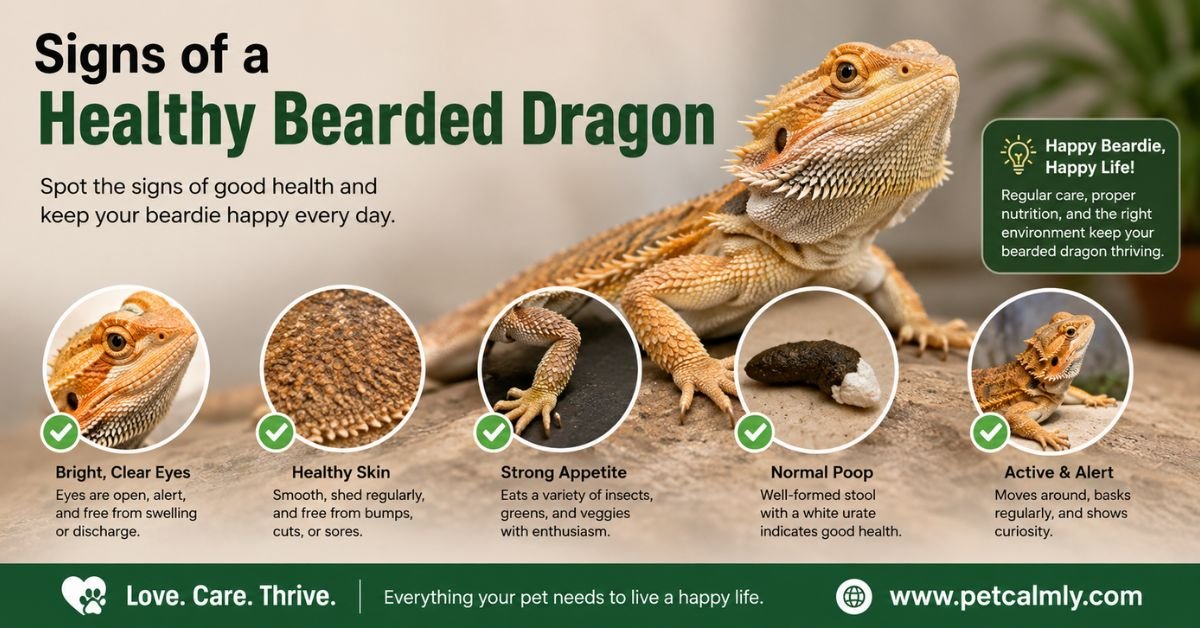
A healthy bearded dragon is alert, active during the day, has bright clear eyes, smooth skin, a healthy appetite, regular bowel movements, strong limbs, a well-filled tail, and sheds normally. While every beardie has its own personality, consistent eating, basking, exploring, and responding to its surroundings are some of the clearest signs that it is healthy and thriving. Small day-to-day changes are normal, but ongoing lethargy, weight loss, poor appetite, or abnormal behavior should be checked by a reptile veterinarian.
Introduction
Watching your bearded dragon grow into a curious, confident companion is one of the most rewarding parts of reptile ownership. But unlike dogs or cats, bearded dragons often hide illness until they become seriously sick. That means learning to recognize the signs of a healthy bearded dragon is one of the best ways to protect your pet.
Healthy beardies don’t just “look okay.” They show a combination of physical, behavioral, and environmental signs that tell you their body is functioning as it should. Their appetite, activity level, skin condition, body weight, posture, and even their poop can reveal valuable clues about their health.
Whether you’ve just brought home your first juvenile or you’ve cared for adult beardies for years, understanding what “normal” looks like helps you notice problems early when they’re often much easier to treat.
In this guide, you’ll learn:
- What a healthy bearded dragon looks like
- Normal behaviors that indicate good health
- Physical signs every owner should check weekly
- Healthy eating and shedding habits
- Common mistakes that can affect health
- When normal changes become warning signs
- When it’s time to visit a reptile veterinarian
Why Learning the Signs of a Healthy Bearded Dragon Matters
Bearded dragons are naturally good at hiding illness. In the wild, showing weakness makes reptiles vulnerable to predators. Even in captivity, this instinct remains.
By the time obvious symptoms appear, a health problem may already be advanced.
Knowing what healthy looks like helps you:
- Spot illness earlier
- Monitor growth properly
- Improve enclosure conditions
- Prevent nutritional deficiencies
- Reduce stress
- Give your beardie a longer, healthier life
Think of routine health checks as part of normal pet care rather than something you only do when your dragon seems sick.
Signs of a Healthy Bearded Dragon at a Glance
| Health Area | Healthy Signs |
|---|---|
| Eyes | Bright, clear, fully open, no swelling or discharge |
| Skin | Smooth, clean, sheds normally |
| Appetite | Eats consistently according to age |
| Activity | Alert, curious, active during daylight |
| Weight | Stable with a full, rounded tail base |
| Beard | Relaxed most of the time, darkens briefly when excited or stressed |
| Mouth | Pink gums with no excess mucus |
| Nose | Clean and dry |
| Vent | Clean without swelling or dried feces |
| Limbs | Strong, steady movement without tremors |
| Stool | Well-formed with a white urate portion |
| Breathing | Quiet and effortless |
This quick checklist is useful for weekly health checks.
Physical Signs of a Healthy Bearded Dragon
The easiest way to assess your bearded dragon’s health is by looking at its body from head to tail.
Rather than focusing on just one feature, evaluate the whole animal.
Bright, Clear Eyes
Healthy bearded dragons usually have:
- Clear, open eyes
- No crusting
- No discharge
- No swelling
- Equal pupil size
- Good tracking of movement
Most healthy beardies actively watch people walking by and often follow movement around the room.
Normal Eye Behaviors
Don’t panic if your dragon occasionally:
- Closes one eye while basking
- Sleeps deeply at night
- Briefly shuts its eyes during shedding
- Blinks after drinking
These behaviors can all be normal.
When Eyes May Indicate a Problem
Seek veterinary advice if you notice:
- Eyes staying closed during the day
- Swollen eyelids
- Yellow or green discharge
- Cloudiness
- Sunken eyes
- Frequent rubbing against decorations
These signs can point to dehydration, infection, injury, retained shed, or husbandry issues.
Healthy Skin and Color
A healthy beardie’s skin should appear:
- Even in texture
- Free of wounds
- Free from unusual swelling
- Clean
- Flexible
- Appropriate for its natural color pattern
Remember that bearded dragons naturally change shades throughout the day.
Their color may become:
- Darker while warming up
- Lighter after basking
- Slightly dull before shedding
- Darker during stressful situations
Color changes alone do not always mean illness.
Normal Shedding Is a Great Health Indicator
Healthy shedding usually happens in patches rather than all at once.
Young dragons shed much more frequently because they’re growing rapidly.
Adults often shed only a few times each year.
Signs of Healthy Shedding
- Skin loosens gradually
- Old skin peels away naturally
- Fresh skin appears underneath
- Appetite returns after shedding
- Activity remains mostly normal
Never pull loose skin off your dragon.
If pieces remain stuck around toes, tail tips, or eyes for several days, gently review your enclosure’s humidity and consult a reptile veterinarian if circulation appears affected.
Strong Body Condition
Healthy dragons should appear muscular rather than skinny or obese.
A well-conditioned beardie has:
- Rounded body shape
- Firm muscles
- Well-filled hips
- Thick tail base
- Strong shoulders
- Balanced posture
The tail stores important fat reserves.
A healthy tail should gradually taper toward the tip not appear extremely thin or bony.
Healthy Weight Without Being Overweight
Many owners mistakenly assume that heavier always means healthier.
Actually, obesity is becoming increasingly common in pet bearded dragons.
Healthy weight depends on:
- Age
- Genetics
- Activity level
- Diet
- Sex
Instead of focusing only on grams, watch for consistent body condition over time.
Signs of Healthy Weight
- Tail remains full
- Ribs aren’t prominently visible
- Belly isn’t dragging excessively
- Dragon walks comfortably
- Climbing remains easy
Weighing your beardie once every few weeks can help you notice gradual changes that aren’t obvious by eye.
Healthy Behavior in a Bearded Dragon
Behavior often tells you as much about health as physical appearance.
Every dragon has a unique personality, but healthy beardies generally share several common habits.
Active During the Day
Bearded dragons are diurnal reptiles.
That means they’re naturally awake during daylight hours.
Healthy dragons usually:
- Explore their enclosure
- Bask after waking
- Watch movement around them
- Climb branches
- Move between warm and cool areas
- Hunt insects enthusiastically
Activity naturally slows:
- During winter brumation
- After large meals
- During shedding
- As dragons age
A slight decrease in activity isn’t always concerning if everything else appears normal.
Curious About Their Environment
Healthy dragons are naturally observant.
You may notice your beardie:
- Watching you enter the room
- Tilting its head
- Following insects
- Looking through enclosure glass
- Investigating new decorations
Curiosity is usually a positive sign of good mental and physical health.
Comfortable Basking Behavior
Basking is essential for digestion, metabolism, immune function, and calcium utilization.
Healthy dragons often begin each morning by moving to their basking spot.
During basking they may:
- Flatten their body
- Stretch their legs
- Slightly open their mouth (gaping)
- Relax with eyes partially closed
Is Gaping Normal?
Yes.
A slightly open mouth while basking often helps regulate body temperature.
It’s usually normal when:
- The dragon is under its basking light
- Breathing is quiet
- Mouth closes after leaving the basking area
Constant open-mouth breathing outside the basking area, however, deserves veterinary evaluation.
Good Appetite
One of the strongest signs of a healthy bearded dragon is a reliable appetite.
Healthy dragons usually show interest in food appropriate for their age.
Juveniles generally eat:
- More insects
- Multiple meals daily
- Plenty of leafy greens
Adults often prefer:
- Daily vegetables
- Fewer insects
- Regular feeding schedules
Remember that appetite naturally changes during:
- Shedding
- Brumation
- Breeding season
- Environmental changes
Temporary reductions are common.
Complete refusal to eat for an extended period especially with weight loss or lethargy is not.
Healthy Hydration Habits
Bearded dragons don’t always drink from a water bowl every day, which surprises many first-time owners.
Healthy hydration can come from:
- Fresh vegetables
- Occasional drinking
- Proper enclosure conditions
Signs Your Dragon Is Well Hydrated
- Bright eyes
- Smooth skin
- Normal urates (white portion of stool)
- Elastic skin
- Regular activity
Hydration needs vary depending on diet, temperature, and life stage.
Healthy Eating Habits That Show Your Bearded Dragon Is Thriving
A healthy appetite is about more than simply eating everything offered. A thriving bearded dragon shows consistent feeding habits that match its age, activity level, and season.
Some days your dragon may eat a little less than usual, especially during shedding or cooler months. What matters most is the overall pattern rather than one skipped meal.
What Healthy Eating Looks Like
A healthy bearded dragon typically:
- Notices food quickly
- Shows interest in live insects
- Eats fresh vegetables regularly
- Chews food normally
- Swallows without difficulty
- Returns to basking after meals
Young dragons usually eat much more frequently because they’re growing rapidly. Adult dragons rely more on leafy greens and generally need fewer insects.
Foods a Healthy Bearded Dragon Enjoys
A balanced diet supports healthy growth, strong bones, proper shedding, and a healthy immune system.
Daily Vegetables
Offer a variety of nutritious greens, such as:
- Collard greens
- Mustard greens
- Turnip greens
- Dandelion greens
- Endive
- Escarole
- Bok choy (in moderation)
Rotating vegetables helps provide a broader range of nutrients and keeps meals interesting.
Safe Vegetables
Healthy beardies often enjoy:
- Squash
- Bell peppers
- Green beans
- Butternut squash
- Prickly pear cactus pads (properly prepared)
Protein Sources
Healthy protein options include:
- Dubia roaches
- Crickets
- Black soldier fly larvae
- Silkworms
- Occasional hornworms
Feed insects that are appropriately sized generally no wider than the space between your dragon’s eyes.
Calcium and Vitamins Matter
Even a healthy-looking dragon can develop nutritional deficiencies if supplements are neglected.
Most reptile specialists recommend:
- Calcium supplementation on a regular schedule
- Vitamin D3 when appropriate, depending on UVB lighting
- Multivitamin supplements in moderation
Always follow your reptile veterinarian’s advice and the instructions for your specific UVB setup.
Healthy Poop: What Normal Bearded Dragon Stool Looks Like
Checking your dragon’s droppings may not be glamorous, but it’s one of the easiest ways to monitor health.
Healthy stool generally has two parts:
- A firm, brown stool
- A soft white urate (solid urine)
The urate should usually be white or off-white. Slight moisture is normal.
Healthy Bowel Movement Signs
Normal droppings are typically:
- Well formed
- Passed without straining
- Not excessively foul-smelling
- Free of blood
- Free of visible parasites
Frequency varies depending on:
- Age
- Diet
- Temperature
- Activity
- Brumation
Juveniles often defecate more frequently than adults.
Stool Changes That Need Attention
Contact a reptile veterinarian if you notice:
- Persistent diarrhea
- Blood in the stool
- Black, tarry feces
- Large amounts of mucus
- Parasites visible in droppings
- No bowel movements for an unusually long time along with loss of appetite or swelling
Keeping a simple record of eating and bathroom habits can help identify changes early.
Signs of Healthy Breathing
Healthy breathing is usually quiet and effortless.
Most owners rarely notice their dragon breathing unless they look closely.
Normal Breathing Includes
- Mouth closed when not basking
- Smooth chest movement
- No clicking sounds
- No wheezing
- No bubbles around the nose
- No excessive throat pumping
A dragon that breathes comfortably while resting is generally a good sign.
When Breathing May Be a Concern
Breathing problems deserve prompt veterinary attention if your dragon shows:
- Open-mouth breathing away from the basking spot
- Wheezing
- Clicking noises
- Thick mucus
- Frequent coughing motions
- Difficulty lifting the body while breathing
Respiratory infections can worsen quickly if left untreated.
Healthy Limbs, Feet, and Movement
Movement reflects both muscular strength and bone health.
Healthy dragons walk with confidence and use all four legs evenly.
What Strong Movement Looks Like
A healthy bearded dragon can usually:
- Climb branches
- Grip surfaces securely
- Walk steadily
- Turn easily
- Lift its body off the ground
- Chase insects
You may notice occasional clumsy moments, especially in young dragons learning to climb, but overall coordination should be good.
Healthy Toes and Nails
Inspect the feet during routine health checks.
Healthy feet have:
- Straight toes
- Intact nails
- No swelling
- No retained shed
- Good grip
Retained shed around toes can reduce blood flow if ignored, so examine them after every shed.
Healthy Beard and Body Language
The beard is one of the most expressive parts of a bearded dragon.
Its color and position often reflect how your pet feels.
A Relaxed Beard
A healthy, calm dragon usually has:
- A relaxed beard
- Normal coloration
- Loose body posture
- Calm breathing
Brief beard darkening can happen when your dragon is:
- Warming up
- Excited
- Curious
- Defending territory
- Seeing another dragon
This isn’t automatically a sign of illness.
Persistent Black Beard
A beard that stays black for long periods, especially with poor appetite or lethargy, may indicate:
- Pain
- Stress
- Illness
- Poor husbandry
- Reproductive issues
If this behavior continues, arrange a veterinary examination.
Healthy Sleep Patterns
Many new owners worry because their dragon sleeps deeply or in unusual positions.
Fortunately, this is often completely normal.
Healthy dragons commonly:
- Sleep through the night
- Wake with the lights
- Return to their basking spot in the morning
- Choose elevated sleeping places
Some even sleep standing against branches or pressed into corners.
While it may look uncomfortable, reptiles often choose positions that feel secure.
Healthy Shedding by Age
Shedding frequency changes as your dragon grows.
| Age | Typical Shedding Pattern |
|---|---|
| Hatchlings | Every 1–2 weeks during rapid growth |
| Juveniles | Every few weeks |
| Adults | Every few months or only a few times each year |
Healthy shedding should not require pulling off loose skin.
Providing proper temperatures, UVB lighting, hydration, and good nutrition supports normal shedding.
A Healthy Bearded Dragon Enclosure Supports Good Health
Even the healthiest dragon cannot stay healthy in poor living conditions.
Correct husbandry prevents many common health problems.
Proper Temperature Gradient
Your dragon should be able to move between warm and cool areas.
A suitable enclosure includes:
- A warm basking area
- A cooler retreat
- Consistent daytime temperatures
- Cooler nighttime temperatures without becoming dangerously cold
Using reliable digital thermometers is much more accurate than relying on stick-on gauges.
Quality UVB Lighting
UVB lighting is essential for:
- Vitamin D3 production
- Calcium absorption
- Bone health
- Muscle function
- Immune support
Without proper UVB exposure, even dragons eating a healthy diet can develop serious health issues over time.
Replace UVB bulbs according to the manufacturer’s recommendations, as they continue to produce visible light even after UVB output declines.
Clean Habitat
A healthy enclosure should include:
- Clean food dishes
- Fresh water
- Spot-cleaned waste
- Safe climbing structures
- Proper substrate
- Regular deep cleaning
Good hygiene reduces the risk of bacterial and fungal infections.
4 Common Mistakes That Can Make a Healthy Dragon Sick
Many health problems begin with small husbandry errors rather than disease.
Fortunately, most are preventable.
1. Incorrect UVB Lighting
Poor-quality or improperly positioned UVB lights can contribute to metabolic bone disease.
Always use a reputable reptile UVB system and install it according to the manufacturer’s guidance.
2. Wrong Temperatures
If basking temperatures are too low, your dragon may struggle to:
- Digest food
- Stay active
- Absorb nutrients effectively
Temperatures that are too high can increase the risk of overheating and dehydration.
3. Feeding Too Many Fatty Treats
Waxworms and similar insects should be occasional treats rather than staple foods.
Overfeeding high-fat insects can contribute to obesity and poor nutrition.
4. Ignoring Small Changes
A dragon that slowly eats less, moves less, or loses weight over several weeks may be developing a health problem.
Small changes are often easier to address than advanced illness.
Weekly Healthy Bearded Dragon Checklist
Spend a few minutes each week checking your dragon from nose to tail.
✔ Eyes are bright and clear
✔ Nose is clean
✔ Mouth appears healthy
✔ Beard is relaxed most of the time
✔ Appetite remains consistent
✔ Weight appears stable
✔ Tail is full
✔ Limbs move normally
✔ Skin looks healthy
✔ No retained shed around toes
✔ Stool looks normal
✔ Breathing is quiet
✔ Enclosure temperatures are correct
✔ UVB lighting is functioning properly
This simple routine helps you notice subtle changes before they become serious.
When Should You Worry About Your Bearded Dragon?
Even the healthiest bearded dragons have occasional off days. They may eat less during a shed, sleep longer during brumation, or seem less active after a large meal. These normal changes usually resolve on their own.
The key is to watch for persistent or worsening changes, especially if more than one symptom appears at the same time.
Warning Signs That Need Veterinary Attention
Contact a reptile veterinarian if your bearded dragon has any of the following:
- Refuses food for several days outside of brumation, especially with weight loss
- Becomes unusually lethargic or weak
- Has swollen joints or a swollen jaw
- Shows difficulty walking, climbing, or standing
- Develops tremors or muscle twitching
- Has persistent diarrhea or bloody stool
- Produces black, tarry droppings
- Has discharge from the eyes, nose, or mouth
- Breathes with an open mouth away from the basking area
- Wheezes, clicks, or struggles to breathe
- Keeps a black beard for an extended period along with other signs of illness
- Experiences rapid weight loss
- Has wounds, burns, or severe retained shed restricting blood flow
- Vomits repeatedly or regurgitates food
Many illnesses respond better to treatment when caught early. Delaying care can allow problems such as respiratory infections, parasites, or metabolic bone disease to become much more serious.
What Should Pet Owners Do to Keep a Bearded Dragon Healthy?
Good health is built through consistent daily care rather than occasional fixes. Small habits make a big difference over your dragon’s lifetime.
Follow a Consistent Care Routine
Healthy bearded dragons benefit from:
- Fresh vegetables every day
- Age-appropriate insect feedings
- Clean drinking water
- Correct basking temperatures
- Proper UVB lighting
- A clean enclosure
- Regular handling that respects their comfort level
- Routine weight checks
Consistency helps reduce stress and allows you to notice changes quickly.
Observe Your Dragon Every Day
You don’t need to perform a full examination daily.
Simply spend a few minutes watching your dragon.
Ask yourself:
- Is it alert?
- Did it bask today?
- Is it eating normally?
- Does it move comfortably?
- Does it look interested in its surroundings?
These quick observations often reveal changes before physical symptoms become obvious.
Keep a Simple Health Journal
Many experienced reptile keepers record important information, including:
| What to Track | Why It Matters |
|---|---|
| Weight | Detects gradual weight loss or obesity |
| Appetite | Identifies early illness |
| Shedding dates | Helps recognize abnormal shedding patterns |
| Bowel movements | Monitors digestion and hydration |
| UVB bulb replacement | Ensures effective UVB exposure |
| Enclosure temperatures | Confirms proper husbandry |
| Veterinary visits | Creates a useful medical history |
Even a simple notebook or phone app can help you identify trends over time.
Healthy vs. Unhealthy Bearded Dragon: Quick Comparison
| Healthy Bearded Dragon | Possible Health Concern |
|---|---|
| Bright, open eyes | Sunken, swollen, or closed eyes |
| Regular appetite | Refusing food for an extended period |
| Active during the day | Persistent lethargy |
| Strong grip and climbing ability | Weakness or difficulty walking |
| Smooth, complete shedding | Retained shed or repeated shedding problems |
| Full, rounded tail base | Thin or bony tail |
| Quiet breathing | Wheezing, clicking, or labored breathing |
| Clean vent | Swelling, discharge, or dried waste |
| Well-formed stool | Persistent diarrhea, blood, or mucus |
| Relaxed posture | Constant stress posture or prolonged black beard |
Remember that a single symptom doesn’t always mean your dragon is seriously ill. Looking at the overall picture including behavior, appetite, and body condition provides the best assessment.
Frequently Asked Questions
1. How can I tell if my bearded dragon is healthy?
A healthy bearded dragon is alert during the day, eats regularly, has clear eyes, smooth skin, normal shedding, a full tail base, strong limbs, quiet breathing, and well-formed droppings. It should also bask daily and respond to movement in its environment.
2. Is it normal for a healthy bearded dragon to sleep a lot?
Yes, healthy bearded dragons sleep through the night and may sleep more during shedding or brumation. If your dragon is difficult to wake during normal daytime hours or remains inactive for several days outside of brumation, it should be evaluated by a reptile veterinarian.
3. What color should a healthy bearded dragon be?
There is no single “healthy color.” Healthy beardies naturally change shades throughout the day depending on temperature, mood, and lighting. Brief darkening while basking or during excitement is usually normal.
4. How often should a healthy bearded dragon poop?
The frequency depends on age, diet, and metabolism. Juveniles often pass stool more frequently than adults. As long as the droppings are well formed and your dragon is eating and behaving normally, variation can be perfectly normal.
5. Does a healthy bearded dragon always eat every day?
Not necessarily. Juveniles usually eat more frequently than adults. Adult bearded dragons may naturally eat less during shedding, seasonal changes, or brumation. Persistent refusal to eat, especially with weight loss or lethargy, is not considered normal.
6. How often should I check my bearded dragon’s health?
A quick visual check every day and a more thorough examination once a week is a good routine. Regularly checking weight, appetite, shedding, and enclosure conditions makes it easier to spot problems early.
More Information About Pets, Please Visit Our Website: How Long Do Bearded Dragons Live?
How Much Does a Bearded Dragon Cost?
Common Bearded Dragon Health Problems
Conclusion
Learning the signs of a healthy bearded dragon is one of the most valuable skills any owner can develop. A bright-eyed, active dragon with a healthy appetite, smooth skin, normal shedding, strong limbs, and a clean enclosure is usually on the right track.
Rather than waiting for obvious illness, make a habit of observing your beardie every day. Small changes in appetite, behavior, weight, or appearance often provide the earliest clues that something isn’t right.
Remember that proper husbandry including correct temperatures, quality UVB lighting, balanced nutrition, and regular cleaning is the foundation of good health. Combined with routine veterinary care from a reptile-experienced veterinarian when needed, these practices give your bearded dragon the best chance of living a long, healthy, and enriching life.