Short direct answer
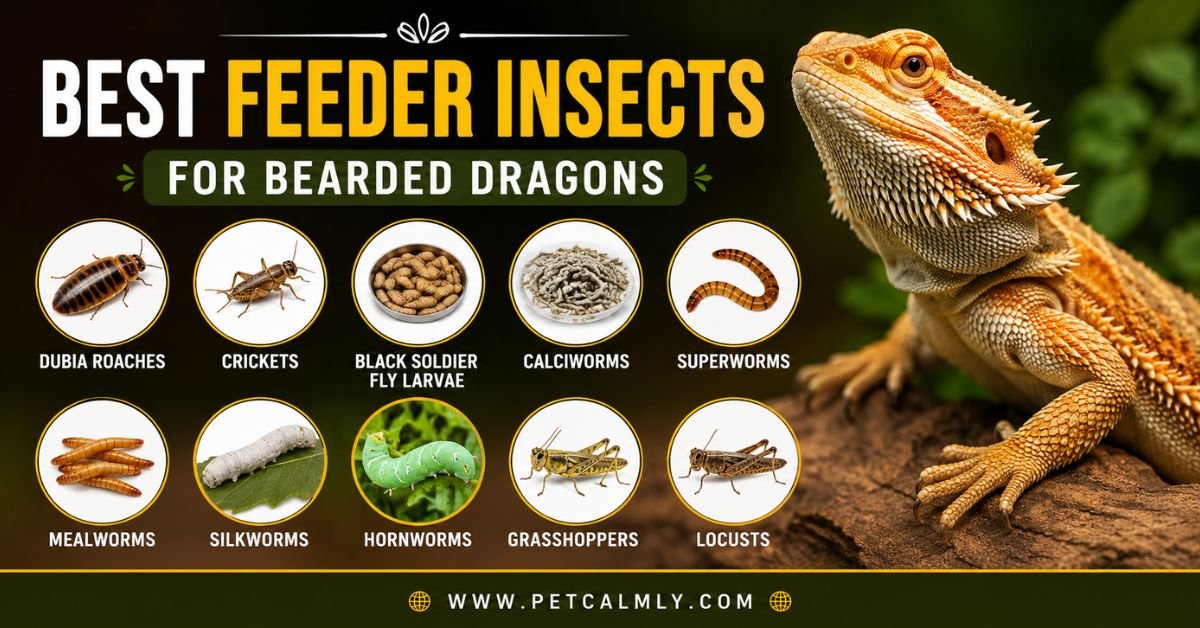
The best feeder insects for bearded dragons are dubia roaches, crickets, black soldier fly larvae, silkworms, and locusts (where legal and available). These insects provide high-quality protein, essential nutrients, and natural enrichment while encouraging healthy hunting behavior. Offering a variety of feeder insects, along with properly dusted supplements and fresh vegetables, helps support healthy growth, strong bones, good digestion, and long-term wellbeing.
Best Feeder Insects for Bearded Dragons
Keeping a bearded dragon healthy starts with one simple question many new owners ask:
“Which insects should I feed my bearded dragon?”
The answer isn’t as simple as choosing the cheapest insects at the pet store.
Different feeder insects contain different amounts of protein, fat, calcium, moisture, and fiber. Some insects are excellent everyday staples, while others should only be offered occasionally as treats.
Choosing the wrong insects too often can contribute to obesity, poor growth, digestive problems, nutritional deficiencies, or metabolic bone disease. On the other hand, feeding a varied diet with properly gut-loaded insects gives your dragon the nutrients it needs to thrive.
Whether you’re raising a tiny hatchling or caring for a calm senior dragon, understanding the strengths and weaknesses of each feeder insect helps you build a healthier feeding routine.
In this guide, you’ll learn:
- The best staple feeder insects
- Which insects are highest in nutrition
- Which bugs should only be occasional treats
- How often to feed different insects
- Safe feeding tips for babies and adults
- Common feeding mistakes many owners make
By the end, you’ll know exactly how to choose feeder insects that keep your bearded dragon active, healthy, and excited for mealtime.
Why Choosing the Best Feeder Insects for Bearded Dragons Matters
Insects are much more than entertainment for a bearded dragon.
They are one of the primary sources of:
- Protein
- Amino acids
- Healthy fats
- Vitamins
- Minerals
- Energy
Young bearded dragons especially rely on insects to fuel rapid growth. Adult dragons still need insects, although in smaller amounts than babies.
Offering a balanced variety helps mimic the diverse diet wild bearded dragons naturally consume in Australia’s arid environments.
A varied insect diet can also:
- Encourage natural hunting instincts
- Prevent boredom
- Reduce picky eating
- Improve digestion
- Support healthy muscle development
- Help maintain ideal body weight
No single feeder insect provides every nutrient your dragon needs, which is why experienced reptile keepers rotate several staple insects throughout the week.
What Makes the Best Feeder Insects for Bearded Dragons?
Not every insect sold as reptile food is equally nutritious.
The best feeder insects share several important qualities.
High Protein Content
Protein supports:
- Muscle growth
- Tissue repair
- Healthy shedding
- Organ function
Young dragons especially benefit from protein-rich feeders because they grow rapidly during their first year.
Good Calcium-to-Phosphorus Ratio
Calcium is essential for:
- Strong bones
- Healthy muscles
- Proper nerve function
- Egg production in females
Unfortunately, many feeder insects naturally contain more phosphorus than calcium.
Too much phosphorus can reduce calcium absorption, increasing the risk of metabolic bone disease if insects are not properly supplemented.
This is why most reptile veterinarians recommend dusting feeder insects with calcium powder according to your dragon’s age and UVB setup.
Moderate Fat Levels
Fat provides energy.
However, insects that are too fatty can contribute to:
- Weight gain
- Fatty liver disease
- Reduced activity
High-fat insects are best reserved as occasional treats rather than daily staples.
Easy to Digest
Healthy feeder insects should have:
- Softer exoskeletons
- Appropriate moisture
- Good digestibility
Very hard-bodied insects may be difficult for young dragons to process, especially if offered in large quantities.
Easy to Gut Load
Gut loading means feeding nutritious foods to insects 24–48 hours before offering them to your bearded dragon.
Well-fed insects become much more nutritious meals.
Healthy gut-loading foods include:
- Mustard greens
- Collard greens
- Squash
- Carrots
- Sweet potato
- Commercial gut-loading diets made for feeder insects
Best Feeder Insects for Bearded Dragons Ranked
Below are the most commonly recommended feeder insects, along with their strengths and ideal use in a balanced feeding routine.
| Feeder Insect | Nutrition | Best For | Feed Frequency |
|---|---|---|---|
| Dubia roaches | Excellent protein, moderate calcium | Staple feeder | Very often |
| Crickets | High protein, active hunters | Staple feeder | Very often |
| Black soldier fly larvae | Naturally high calcium | Staple feeder | Frequent |
| Silkworms | Lean protein, high moisture | Staple feeder | Frequent |
| Locusts | Lean protein, active prey | Staple feeder | Frequent |
| Hornworms | High moisture | Hydration support | Occasionally |
| Mealworms | Moderate nutrition, harder shell | Older dragons | Occasionally |
| Superworms | Higher fat | Adult treats | Occasionally |
| Waxworms | Very high fat | Rare treats | Rarely |
| Butterworms | High fat | Treat | Rarely |
Dubia Roaches: One of the Best Feeder Insects for Bearded Dragons
Dubia roaches are widely considered one of the healthiest feeder insects available.
Many experienced reptile keepers choose them as their primary staple because they offer an excellent nutritional profile and are relatively easy to maintain.
Why Dubia Roaches Are a Great Choice
Benefits include:
- High-quality protein
- Moderate fat
- Better calcium levels than many other insects
- Soft-bodied and easy to digest
- Quiet and odor-free
- Cannot climb smooth plastic or glass
- Longer lifespan than crickets
These qualities make them practical for owners while providing excellent nutrition for dragons.
Feeding Tips
Choose roaches that are no wider than the space between your bearded dragon’s eyes. This simple rule helps reduce the risk of choking or digestive issues.
Offer appropriately sized nymphs for babies and juveniles, and larger roaches for adults.
Crickets for Bearded Dragons
Crickets have been a staple reptile feeder for decades.
Although they require a little more maintenance than dubia roaches, they remain an excellent option.
Benefits of Crickets
Crickets are:
- High in protein
- Readily available
- Affordable
- Excellent for encouraging exercise
Because crickets move quickly, they stimulate your dragon’s natural hunting instincts.
Many owners notice their dragon becomes more active and engaged during cricket feeding sessions.
Downsides
Crickets can:
- Escape easily
- Produce odor if not cleaned regularly
- Bite reptiles if left overnight
- Die quickly in poor conditions
Always remove uneaten crickets from the enclosure after feeding.
Black Soldier Fly Larvae (BSFL)
Black soldier fly larvae are sometimes sold under brand names and are becoming increasingly popular among reptile keepers.
They are unique because they naturally contain much more calcium than most feeder insects.
Why They Stand Out
Advantages include:
- Naturally rich in calcium
- Soft-bodied
- Easy to digest
- Good protein source
- Suitable for young dragons
Because of their calcium content, they can be a valuable part of a varied feeding plan. However, supplementation should still follow your veterinarian’s or reptile care guidance based on your dragon’s diet and UVB lighting.
Best Uses
These larvae are especially useful for:
- Growing juveniles
- Recovering dragons with poor appetite
- Owners wanting to increase dietary variety
Some dragons need time to recognize them as food because they move differently from crickets or roaches.
Silkworms: A Highly Nutritious Staple Feeder
Silkworms are often overlooked, but they are among the healthiest feeder insects available.
They are soft-bodied, low in fat, and packed with moisture, making them easy to digest.
Benefits of Silkworms
Silkworms provide:
- Lean protein
- Good moisture content
- Low fat levels
- Soft texture for easier digestion
They’re especially helpful during shedding, when maintaining hydration supports healthy skin turnover. While silkworms don’t replace proper hydration or enclosure humidity, they can contribute additional dietary moisture.
Why Many Owners Like Them
Silkworms:
- Rarely bite
- Do not jump
- Produce little odor
- Are easy for many dragons to catch
Their only drawback is that they can be more expensive and sometimes harder to find than crickets or dubia roaches.
Locusts for Bearded Dragons
Where legally available, locusts are another excellent staple feeder.
They are lean, active, and highly stimulating for bearded dragons to hunt.
Advantages of Locusts
Locusts offer:
- High protein
- Low to moderate fat
- Natural hunting enrichment
- Easy digestion
- Good movement that encourages exercise
Because they jump and climb, locusts keep feeding sessions engaging and mentally stimulating, helping reduce boredom in captive dragons.
However, always ensure the enclosure is secure during feeding to prevent escapes.
Hornworms for Bearded Dragons
Hornworms are bright green caterpillars that many bearded dragons eagerly accept. They are not an everyday staple, but they can be a valuable addition to a balanced diet because of their high moisture content.
If your dragon seems slightly dehydrated, is shedding, or has a reduced appetite, hornworms may encourage eating thanks to their soft texture and movement. However, they should complement—not replace—a varied diet of staple insects and leafy greens.
Benefits of Hornworms
Hornworms offer several advantages:
- Very high moisture content
- Soft body that’s easy to digest
- Moderate protein
- Low fat
- Excellent for encouraging picky eaters
Many owners use hornworms as an occasional “appetite booster” because their active movement often attracts reluctant dragons.
Things to Keep in Mind
Hornworms grow extremely fast.
A small hornworm can become too large for a juvenile dragon within a few days, so buy an appropriate size and feed them before they outgrow your pet’s safe prey size.
Because they contain lots of water but aren’t as protein-dense as staple insects, they should be offered only once or twice a week as part of a varied feeding routine.
Are Mealworms Good for Bearded Dragons?
Mealworms are one of the most common feeder insects sold in pet stores, but they’re often misunderstood.
While they can be part of a healthy diet for adult dragons, they are not the best staple feeder, especially for babies and small juveniles.
Pros of Mealworms
Mealworms provide:
- Moderate protein
- Convenient storage
- Affordable price
- Long shelf life
Cons of Mealworms
They also have drawbacks:
- Hard outer shell (exoskeleton)
- Lower calcium levels
- Less moisture than many other feeders
- Less nutritious than dubia roaches or silkworms
Young dragons have developing digestive systems, so softer insects are usually a safer choice.
How Often Can They Be Fed?
For healthy adult bearded dragons:
- Offer occasionally
- Rotate with healthier staple insects
- Always dust with calcium when appropriate
Mealworms shouldn’t become the primary insect in your dragon’s diet.
Superworms for Adult Bearded Dragons
Superworms are larger, more active relatives of mealworms.
Most bearded dragons love them because they wriggle vigorously, making feeding time exciting.
Benefits
Superworms provide:
- Good protein
- More movement for enrichment
- Easy availability
Drawbacks
They are also:
- Higher in fat
- Lower in calcium
- Not suitable for small dragons
- Capable of biting if left unattended
Because of their fat content, they’re best viewed as an occasional treat rather than a staple food.
Most reptile keepers avoid feeding superworms to very young dragons because of their size and tougher exoskeleton.
Waxworms: A Treat, Not a Staple
Waxworms are often compared to candy for bearded dragons.
They’re soft, tasty, and high in fat, making them irresistible to many reptiles.
Why Dragons Love Waxworms
Waxworms are:
- Soft-bodied
- Easy to digest
- Highly palatable
However, their nutritional profile makes them unsuitable as an everyday feeder.
When to Feed Waxworms
They can be useful:
- As an occasional reward
- To tempt a dragon with a poor appetite (under veterinary guidance if illness is suspected)
- During short-term weight gain plans recommended by a reptile veterinarian
Too many waxworms can encourage picky eating, where a dragon refuses healthier staple insects.
Butterworms: Another Occasional Treat
Butterworms are similar to waxworms in that they’re rich and appealing.
They contain beneficial nutrients but are still relatively high in fat compared with staple insects.
Feed them sparingly as part of a varied rotation rather than relying on them as a primary food source.
Best Feeder Insects by Bearded Dragon Age
A bearded dragon’s nutritional needs change as it grows. Feeding the same ratio of insects throughout its life can lead to health problems.
Best Feeder Insects for Baby Bearded Dragons
Baby bearded dragons grow rapidly and need plenty of protein.
Good choices include:
- Small dubia roaches
- Pinhead crickets
- Small black soldier fly larvae
- Tiny silkworms
Feed several small meals each day using insects no larger than the distance between your dragon’s eyes.
Fresh greens should also be introduced early, even if babies eat mostly insects at first. This helps them become familiar with vegetables as they mature.
Best Feeder Insects for Juvenile Bearded Dragons
Juveniles still require plenty of insects but gradually begin eating more plant matter.
A varied insect rotation works well:
- Dubia roaches
- Crickets
- Silkworms
- Black soldier fly larvae
- Occasional hornworms
This is also a good stage to establish healthy feeding habits and prevent selective eating.
Best Feeder Insects for Adult Bearded Dragons
Adults need fewer insects and more leafy vegetables.
Excellent insect choices include:
- Dubia roaches
- Silkworms
- Crickets
- Black soldier fly larvae
- Occasional superworms
- Occasional hornworms
For many healthy adults, insects are offered only a few times per week, while fresh greens become the largest part of the diet.
Why Variety Is Better Than Feeding One Insect
One of the most common mistakes new owners make is feeding only one type of insect.
Even the healthiest feeder insect has nutritional strengths and weaknesses.
Rotating several insects helps provide a broader range of nutrients and keeps feeding interesting.
A weekly rotation might include:
- Dubia roaches as the main staple
- Crickets once or twice
- Silkworms for extra variety
- Black soldier fly larvae several times
- Hornworms as an occasional hydration boost
This approach more closely resembles the varied diet wild bearded dragons naturally consume.
Gut Loading: Make Every Feeder Insect More Nutritious
Gut loading means feeding nutritious foods to insects before they become your dragon’s meal.
Think of it as improving the quality of your feeder insects from the inside out.
Good Gut-Loading Foods
Healthy choices include:
- Collard greens
- Mustard greens
- Turnip greens
- Squash
- Carrots
- Sweet potato
- Commercial gut-loading diets
Avoid feeding insects junk food or relying solely on grain-based products, as this lowers their nutritional value.
Ideally, gut load insects for 24–48 hours before feeding them to your bearded dragon.
Calcium and Vitamin Supplements
Even the best feeder insects for bearded dragons don’t supply everything your pet needs.
That’s why proper supplementation is an important part of responsible reptile care.
Calcium Powder
Calcium supports:
- Strong bones
- Healthy muscles
- Egg production
- Normal nerve function
The exact dusting schedule depends on:
- Your dragon’s age
- Diet
- UVB lighting
- Overall health
Because supplementation needs vary, follow your reptile veterinarian’s advice or the guidance provided with your UVB setup rather than using a one-size-fits-all schedule.
Multivitamin Supplements
Most bearded dragons also benefit from a reptile multivitamin used at appropriate intervals.
Over-supplementing vitamins can be harmful, so more is not always better.
Balance is the goal.
Feeder Insects to Avoid
Not every insect is safe.
Never feed insects collected outdoors because they may carry:
- Pesticides
- Parasites
- Harmful bacteria
- Environmental toxins
Avoid offering:
- Fireflies (highly toxic)
- Wild beetles
- Wild caterpillars
- Unknown spiders
- Insects from gardens treated with chemicals
If you’re unsure whether an insect is safe, don’t feed it.
Purchase feeder insects from reputable reptile suppliers instead.
5 Common Mistakes When Feeding Bearded Dragons
Even experienced owners occasionally make feeding mistakes.
Here are some of the most common ones.
Feeding Only One Type of Insect
A monotonous diet can lead to nutritional gaps over time.
Rotate staple insects whenever possible.
Offering Oversized Insects
Large insects increase the risk of choking, digestive problems, or impaction.
Stick to prey that’s appropriately sized for your dragon.
Forgetting Calcium Supplementation
Without proper calcium, bearded dragons are at greater risk of developing metabolic bone disease, particularly if UVB exposure is also inadequate.
Leaving Live Insects in the Enclosure
Uneaten insects—especially crickets and superworms can bite resting dragons, create stress, and make it harder to monitor how much your pet actually ate.
Remove leftovers after feeding.
Feeding Too Many Fatty Treats
Waxworms, butterworms, and superworms should never replace staple insects.
Too many treats can contribute to obesity and picky eating.
When Should You Worry About Your Bearded Dragon’s Appetite?
A healthy bearded dragon may occasionally eat less because of seasonal changes, shedding, or normal variation.
However, appetite loss deserves closer attention if it’s accompanied by other signs of illness.
Watch for:
- Rapid weight loss
- Lethargy
- Swollen limbs or jaw
- Persistent diarrhea
- Bloody stool
- Vomiting
- Difficulty moving
- Refusal to eat for several days (especially in young dragons)
- Sunken eyes or signs of dehydration
These symptoms warrant an examination by a reptile veterinarian. Problems such as parasites, infections, improper temperatures, inadequate UVB lighting, or metabolic bone disease can all affect appetite and require professional diagnosis.
Practical Feeding Checklist for Bearded Dragon Owners
Choosing the best feeder insects for bearded dragons is only one part of proper nutrition. Daily feeding habits also make a big difference in your pet’s long-term health.
Use this checklist to make every meal as safe and nutritious as possible.
Before Feeding
✔ Choose insects that are no wider than the space between your dragon’s eyes.
✔ Buy feeder insects from a reputable breeder or pet supplier.
✔ Gut-load insects for 24–48 hours before feeding.
✔ Dust insects with calcium or a reptile multivitamin according to your veterinarian’s advice and your UVB lighting setup.
✔ Ensure your dragon has access to fresh drinking water.
✔ Confirm that basking temperatures and UVB lighting are correct, as digestion depends on proper heat and lighting.
During Feeding
✔ Feed insects in an escape-proof feeding dish when appropriate.
✔ Allow your dragon to hunt naturally when it’s safe to do so.
✔ Monitor how many insects are actually eaten.
✔ Remove uneaten insects after the feeding session.
✔ Observe your dragon’s energy level and appetite.
After Feeding
✔ Remove insect waste from the enclosure.
✔ Replace wilted vegetables with fresh greens.
✔ Record any unusual eating behavior if your dragon is recovering from illness or changing diets.
A simple routine like this helps you spot problems early and keeps feeding sessions clean and stress-free.
How to Buy Healthy Feeder Insects
Not all feeder insects are raised under the same conditions. Poor-quality insects provide less nutrition and may even carry disease if sourced improperly.
When buying feeder insects, look for suppliers that:
- Raise insects specifically for reptile feeding
- Keep colonies clean
- Provide healthy, active insects
- Ship insects safely
- Clearly identify insect sizes
- Offer fresh stock instead of old inventory
Healthy insects should appear active, well-fed, and free from mold or unusual odors.
Whenever possible, avoid purchasing insects that appear weak, dehydrated, or covered with waste.
How to Store Feeder Insects Properly
Proper storage helps keep feeder insects healthy and nutritious until feeding time.
Dubia Roaches
Store in a well-ventilated plastic container with egg cartons for hiding places.
Provide:
- Fresh vegetables
- Commercial roach diet
- Water crystals or another safe hydration source recommended for feeder colonies
Keep them warm, but avoid overheating.
Crickets
Crickets require more maintenance.
Provide:
- Good airflow
- Dry bedding
- Fresh vegetables
- Commercial cricket feed
- Regular cleaning
Removing dead crickets quickly helps reduce odor and keeps the colony healthier.
Black Soldier Fly Larvae
Store according to the supplier’s recommendations, usually in a cool location.
Avoid exposing them to excessive heat, which can cause them to pupate more quickly.
Silkworms
Silkworms require fresh mulberry leaves or prepared silkworm chow.
Because they have specialized feeding needs, buy only the number you expect to use within a reasonable time.
Hornworms
Hornworms grow rapidly.
Store them at the temperature recommended by the supplier to slow growth if necessary, but avoid keeping them too cold unless the supplier specifically advises it.
Can You Breed Feeder Insects at Home?
Many experienced bearded dragon owners eventually breed some feeder insects themselves.
The most common home-bred insects include:
- Dubia roaches
- Black soldier flies
- Mealworms
- Superworms
Benefits of Home Breeding
Breeding your own feeders can:
- Reduce long-term feeding costs
- Ensure a steady food supply
- Give you better control over insect nutrition
- Reduce emergency trips to the pet store
However, maintaining healthy colonies requires time, space, cleanliness, and a basic understanding of each species’ care requirements.
If you’re new to reptile keeping, purchasing insects from a trusted supplier is often the easier option.
Seasonal Changes That Affect Feeding
Many owners become concerned when their bearded dragon suddenly eats fewer insects.
In some cases, this can be completely normal.
Factors that may reduce appetite include:
- Seasonal changes
- Brumation (a natural dormancy-like period in healthy adult dragons)
- Shedding
- Breeding behavior
- Environmental stress
However, appetite loss should never be ignored if it occurs alongside weight loss, weakness, swelling, diarrhea, or other signs of illness.
If you’re unsure whether your dragon’s reduced appetite is normal, consult a reptile veterinarian.
What Should Pet Owners Do to Keep Their Bearded Dragon Healthy?
Feeding the best feeder insects for bearded dragons is only one part of responsible care.
A healthy dragon also needs:
Provide Proper UVB Lighting
Without appropriate UVB lighting, bearded dragons cannot properly use dietary calcium.
Replace UVB bulbs according to the manufacturer’s schedule, even if the light still appears bright, as UVB output decreases over time.
Maintain Correct Temperatures
Proper basking temperatures allow your dragon to digest food efficiently.
A dragon kept too cool may refuse food or develop digestive problems.
Always verify temperatures with reliable digital thermometers rather than guessing.
Offer Fresh Vegetables Daily
Adult bearded dragons should eat a wide variety of leafy greens and vegetables alongside feeder insects.
Excellent choices include:
- Collard greens
- Mustard greens
- Turnip greens
- Dandelion greens
- Squash
- Bell peppers
Rotating vegetables provides a wider range of nutrients and helps prevent picky eating.
Schedule Regular Health Checks
Routine veterinary examinations can detect nutritional deficiencies, parasites, and other health concerns before they become serious.
This is especially important for:
- Young dragons
- Newly adopted reptiles
- Senior dragons
- Females producing eggs
Frequently Asked Questions
1. What is the healthiest feeder insect for a bearded dragon?
Dubia roaches are often considered one of the healthiest staple feeders because they provide high-quality protein, moderate fat, and are easy to digest. Black soldier fly larvae and silkworms are also excellent choices, and rotating several staple insects offers the most balanced nutrition.
2. Can bearded dragons eat only crickets?
Crickets can be part of a healthy diet, but they should not be the only feeder insect. Feeding a variety of insects helps provide a broader range of nutrients and keeps your dragon mentally stimulated.
3. How many insects should a bearded dragon eat each day?
The number depends on your dragon’s age, size, health, and activity level.
Babies generally need more insect meals to support rapid growth, while healthy adults typically eat fewer insects and more leafy greens. Your reptile veterinarian can provide guidance tailored to your dragon.
4. Are mealworms bad for bearded dragons?
Mealworms aren’t necessarily bad, but they shouldn’t be the main feeder insect. Their tougher outer shell and lower calcium content make them better suited as an occasional food for healthy adult dragons rather than young juveniles.
5. Should feeder insects be dusted with calcium every time?
Supplement schedules vary based on your bearded dragon’s age, overall diet, and UVB lighting. Follow your reptile veterinarian’s recommendations or the guidance provided with your UVB system to avoid both deficiencies and excessive supplementation.
6. Can I feed insects caught in my backyard?
No.
Wild insects may carry parasites, pesticides, bacteria, or toxins that can make your bearded dragon seriously ill. Always use feeder insects raised specifically for reptiles by trusted suppliers.
More Information About Pets, Please Visit Our Website: Signs of a Healthy Bearded Dragon
Bearded Dragon Basking Temperature
Conclusion
The best feeder insects for bearded dragons are those that provide balanced nutrition, encourage natural hunting behavior, and fit your dragon’s stage of life. For most healthy dragons, a rotation of dubia roaches, crickets, black soldier fly larvae, silkworms, and locusts creates an excellent nutritional foundation. Hornworms, mealworms, superworms, waxworms, and butterworms can still play a role, but they should be offered thoughtfully rather than becoming everyday staples.
Remember that no feeder insect can make up for poor husbandry. Proper UVB lighting, correct basking temperatures, calcium supplementation, fresh vegetables, and clean housing all work together to support your dragon’s health. By focusing on variety instead of relying on a single insect, you’ll help reduce nutritional gaps and keep feeding time both healthy and enriching.
If your bearded dragon suddenly stops eating, loses weight, or shows signs such as weakness, swelling, or persistent digestive problems, seek advice from a reptile veterinarian promptly. Early attention often leads to better outcomes and helps your pet enjoy a long, active life.