
Short direct answer
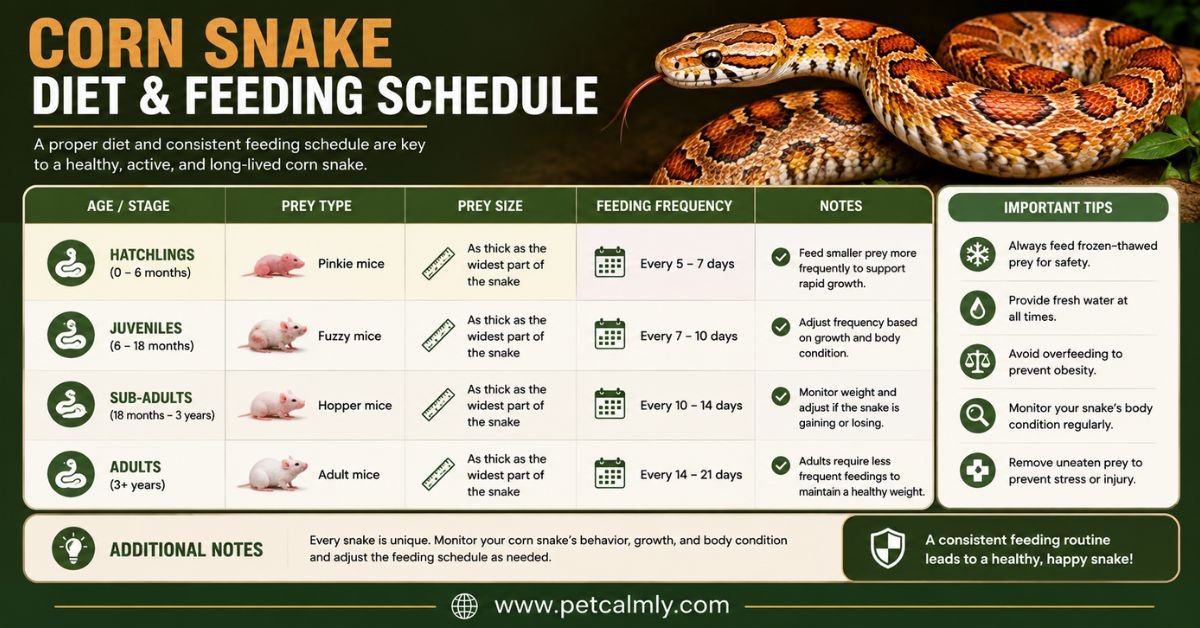
A proper corn snake diet feeding schedule depends mainly on your snake’s age, size, and body condition. Hatchlings usually eat a pinky mouse every 5–7 days, juveniles eat larger prey every 7–10 days, and adult corn snakes typically eat one appropriately sized mouse every 10–14 days. The prey should be about the same width as the snake’s widest body section. Consistent feeding, proper prey sizing, and avoiding overfeeding are the keys to maintaining a healthy corn snake.
Introduction
Few questions confuse new corn snake owners more than feeding.
How often should you feed a baby corn snake? When should you move up to larger mice? Is your snake eating too much or not enough?
These concerns are completely normal. Feeding is one of the most important parts of corn snake care, yet new owners often receive conflicting advice online. Some schedules encourage overfeeding, while others leave growing snakes undernourished.
The good news is that corn snakes are generally excellent feeders. Once you understand how age, size, metabolism, and seasonal changes affect appetite, feeding becomes much simpler.
This guide covers everything you need to know about creating a healthy corn snake feeding routine, including age-specific schedules, prey sizing, common mistakes, seasonal appetite changes, and signs that your snake is maintaining a healthy weight.
Understanding a Corn Snake’s Natural Diet
In the wild, corn snakes are opportunistic predators.
They eat a variety of small prey animals, including:
- Mice
- Small rats
- Young birds
- Bird eggs
- Lizards
- Frogs
Unlike mammals, snakes do not eat daily. Their digestive systems are designed to process relatively large meals and then go several days—or even weeks—before eating again.
This is why feeding a corn snake too frequently can actually cause health problems.
A healthy feeding schedule mimics their natural pattern of eating substantial meals at regular intervals rather than constant snacking.
Corn Snake Diet Feeding Schedule by Age
Quick Reference Table
| Corn Snake Age | Typical Food | Feeding Frequency |
|---|---|---|
| Hatchling (0–3 months) | Pinky mouse | Every 5–7 days |
| Young Juvenile (3–12 months) | Pinky or fuzzy mouse | Every 5–7 days |
| Juvenile (1–2 years) | Fuzzy or hopper mouse | Every 7 days |
| Sub-Adult (2–3 years) | Hopper or adult mouse | Every 7–10 days |
| Adult (3+ years) | Adult mouse | Every 10–14 days |
| Mature Large Adult | Large adult mouse | Every 14 days |
Most healthy adult corn snakes thrive on a feeding schedule of one appropriately sized mouse every 10–14 days.
Feeding Hatchling Corn Snakes
What Should Baby Corn Snakes Eat?
Newly hatched corn snakes usually begin eating pinky mice after their first shed.
Pinkies are:
- Newborn mice
- Hairless
- Easy to digest
- Nutritionally suitable for young snakes
Most hatchlings accept frozen-thawed pinkies readily.
Hatchling Feeding Schedule
A typical baby corn snake schedule looks like:
- 1 pinky mouse
- Every 5–7 days
Growth is rapid during the first year, so regular feeding is important.
Many keepers choose:
- Every 5 days for fast-growing hatchlings
- Every 6–7 days for average growth
Monitor body condition rather than focusing solely on age.
Feeding Juvenile Corn Snakes
As your snake grows, pinkies eventually become too small.
Signs it’s time to increase prey size include:
- Snake still appears hungry shortly after meals
- Rapid growth
- Prey leaves little visible bulge
- Weight gain slows despite regular feeding
Typical Juvenile Schedule
Juveniles often eat:
- Double pinkies
- Fuzzies
- Small hoppers
Feeding frequency:
- Every 5–7 days for younger juveniles
- Every 7 days for larger juveniles
This stage is crucial for healthy development.
Adult Corn Snake Feeding Schedule
Quick Answer
Most adult corn snakes should eat one adult mouse every 10–14 days.
This schedule supports:
- Healthy weight
- Good muscle tone
- Proper digestion
- Reduced obesity risk
Adult snakes grow much more slowly than juveniles and require fewer calories.
Example Adult Feeding Routine
Week 1:
- Feed one appropriately sized mouse
Week 2:
- Monitor digestion and activity
Week 3:
- Feed again after 10–14 days
This simple routine works well for most healthy adults.
Choosing the Correct Prey Size
More feeding problems result from incorrect prey size than feeding frequency.
The Width Rule
The prey should be:
- Roughly equal to the snake’s widest body point
- Slightly larger than the widest point
- Not dramatically larger
After feeding, you should notice a modest bulge.
The meal should not:
- Stretch the snake excessively
- Cause visible discomfort
- Leave the snake struggling to swallow
Common Mouse Sizes
| Mouse Size | Typical Snake Stage |
| Pinky | Hatchling |
| Fuzzy | Young juvenile |
| Hopper | Juvenile |
| Adult Mouse | Adult corn snake |
| Large Adult Mouse | Large mature adult |
Frozen-Thawed vs Live Prey
Most Experts Recommend Frozen-Thawed
Frozen-thawed rodents offer several advantages:
- Lower injury risk
- Easier storage
- More humane
- Reduced parasite exposure
- Convenient feeding
Live rodents can bite snakes.
Even a small mouse can cause:
- Eye injuries
- Facial wounds
- Infection risks
For this reason, frozen-thawed prey is generally considered the safest option.
How to Feed a Corn Snake Properly
Step-by-Step Feeding Routine
1. Thaw the Rodent Completely
Use:
- Refrigerator thawing
- Warm water warming
Avoid microwaving.
2. Warm the Prey
Prey should feel slightly warm.
This helps trigger a feeding response.
3. Use Feeding Tongs
Tongs help:
- Prevent accidental bites
- Create natural prey movement
- Keep feeding hygienic
4. Allow Privacy
Many corn snakes prefer minimal disturbance while eating.
5. Leave the Snake Alone After Feeding
Avoid handling for:
- At least 48 hours
- Sometimes 72 hours for large meals
This reduces regurgitation risk.
How Long Does Digestion Take?
Corn snakes digest slowly compared to mammals.
Generally:
| Age | Digestion Time |
| Hatchlings | 2–3 days |
| Juveniles | 3–4 days |
| Adults | 4–7 days |
Temperature plays a major role.
Cool enclosures often lead to slower digestion.
Signs Your Corn Snake Is Eating Enough
Healthy corn snakes typically show:
- Consistent growth
- Good muscle tone
- Alert behavior
- Regular shedding
- Stable body weight
The body should appear smooth and rounded.
A healthy snake should not look extremely thin or excessively thick.
Signs of Overfeeding
Overfeeding is surprisingly common among pet corn snakes.
Warning Signs
- Thick rolls near the tail
- Rounded body profile
- Fat deposits
- Reduced activity
- Obesity
A corn snake should not resemble a tube stuffed with filling.
Healthy snakes have gradual body contours.
Why Overfeeding Matters
Obesity can contribute to:
- Reduced lifespan
- Fatty liver disease
- Reproductive issues
- Mobility problems
Feeding more often does not necessarily mean a healthier snake.
Signs of Underfeeding
While less common, underfeeding can occur.
Watch for:
- Visible spine
- Triangular body shape
- Slow growth in juveniles
- Noticeable weight loss
- Reduced muscle mass
If these signs appear, review prey size and feeding frequency.
Seasonal Changes in Appetite
Many new owners panic when a corn snake suddenly stops eating.
Often, seasonal changes are responsible.
Winter Appetite Changes
Corn snakes may naturally:
- Eat less
- Skip meals
- Become less active
- Hide more frequently
This behavior is often linked to brumation instincts.
Healthy adult snakes can safely miss several meals during seasonal slowdowns.
Why Is My Corn Snake Refusing Food?
Common Causes
Shedding Cycle
Many snakes stop eating before shedding.
Signs include:
- Dull coloration
- Cloudy eyes
- Increased hiding
Appetite usually returns afterward.
Stress
Stress triggers include:
- New enclosure
- Excessive handling
- Frequent cage changes
- Loud environments
Incorrect Temperatures
Poor temperature gradients often reduce appetite.
Corn snakes require proper warm and cool zones for digestion.
Oversized Prey
Large prey can intimidate some snakes.
Trying a smaller prey item may help.
4 Common Feeding Mistakes New Owners Make
1: Feeding Too Frequently
One of the most common mistakes.
Corn snakes are efficient eaters and do not need daily meals.
2: Moving Up Prey Sizes Too Quickly
Larger prey is not always better.
Increase prey size gradually.
3: Handling Immediately After Feeding
This can lead to:
- Stress
- Regurgitation
- Digestive issues
4: Ignoring Body Condition
Every snake is different.
Schedules should be adjusted based on:
- Weight
- Growth
- Activity level
Not solely by age.
Feeding Schedule During Shedding
Many corn snakes naturally refuse food before a shed.
A practical approach:
- Offer food as scheduled
- Remove uneaten prey
- Wait until shedding is complete
Most snakes resume feeding shortly afterward.
Avoid forcing meals.
Corn Snake Feeding Checklist
Use this quick checklist before every feeding:
✓ Prey properly thawed
✓ Prey appropriately sized
✓ Enclosure temperatures correct
✓ Snake appears healthy
✓ No handling planned afterward
✓ Fresh water available
✓ Feeding tongs ready
Following these basics helps prevent most feeding-related problems.
Corn Snake Feeding Dos and Don’ts
Do
- Feed prey sized to body width
- Use frozen-thawed rodents
- Track feeding dates
- Monitor weight regularly
- Allow digestion time
Don’t
- Feed daily
- Leave live rodents unattended
- Handle immediately after meals
- Force-feed healthy snakes
- Ignore sudden weight loss
Sample Weekly Feeding Plans
Hatchling Example
Week 1:
- Pinky mouse
Week 2:
- Pinky mouse
Week 3:
- Pinky mouse
Frequency:
- Every 5–7 days
Juvenile Example
Week 1:
- Fuzzy mouse
Week 2:
- Fuzzy mouse
Week 3:
- Hopper mouse if size appropriate
Frequency:
- Every 7 days
Adult Example
Day 1:
- Adult mouse
Day 10–14:
- Adult mouse
Repeat based on body condition.
When Should You Worry?
Most feeding irregularities are harmless.
However, seek advice from an experienced reptile veterinarian if your corn snake:
- Loses significant weight
- Refuses food for several months
- Regurgitates repeatedly
- Appears lethargic
- Shows swelling or deformities
- Has breathing difficulties
- Experiences sudden body condition changes
Young snakes deserve closer monitoring because they have fewer energy reserves than adults.
What Should Pet Owners Do?
If you’re unsure whether your corn snake is eating correctly:
- Verify prey size first.
- Review enclosure temperatures.
- Track feeding dates and weight.
- Watch overall body condition.
- Avoid overreacting to a single missed meal.
- Reduce handling if stress may be involved.
- Consult a reptile veterinarian for ongoing concerns.
Most feeding issues become much easier to solve once husbandry factors are checked.
Helpful Related Topics to Explore
As your snake grows, you may also want to learn about:
- Corn snake enclosure setup
- Corn snake humidity requirements
- Safe handling techniques
- Corn snake shedding problems
- Beginner reptile care mistakes
- Frozen-thawed prey storage
- Reptile weight monitoring
These topics work together with proper feeding to support long-term health.
Frequently Asked Questions
1: How often should a baby corn snake eat?
Most baby corn snakes should eat one appropriately sized pinky mouse every 5–7 days. Consistent feeding supports healthy growth during the first year.
2: Can I feed my adult corn snake every week?
Some adults tolerate weekly feeding, but many do better on a 10–14 day schedule. Weekly feeding may increase the risk of obesity over time.
3: What happens if I miss a feeding day?
A healthy corn snake usually handles a delayed meal without problems. Simply resume the normal schedule rather than feeding extra.
4: How do I know if my prey is too large?
If the snake struggles excessively, takes an unusually long time to swallow, or becomes extremely stretched, the prey may be too large.
5: Should corn snakes eat rats instead of mice?
Most corn snakes thrive on mice throughout their lives. Rats are usually unnecessary unless recommended for specific size or nutritional reasons.
6: Why does my corn snake act hungry after eating?
Corn snakes are opportunistic feeders and may continue searching for food after a meal. This behavior does not always mean they need additional food.
More Information About Pets, Please Visit Our Website: Baby Corn Snake Diet
Conclusion
A successful corn snake diet feeding schedule is less about strict calendar rules and more about matching prey size and feeding frequency to your snake’s age, growth stage, and body condition.
For most owners, the formula is simple: feed appropriately sized prey, avoid overfeeding, maintain proper enclosure temperatures, and monitor your snake’s weight over time. Hatchlings generally eat every 5–7 days, juveniles every 7 days, and adults every 10–14 days.
Remember, a healthy corn snake doesn’t need constant feeding. Consistency, patience, and observation are far more important than offering food too often. Once you learn your snake’s normal appetite and growth pattern, feeding becomes one of the easiest and most rewarding parts of corn snake care.