Short direct answer
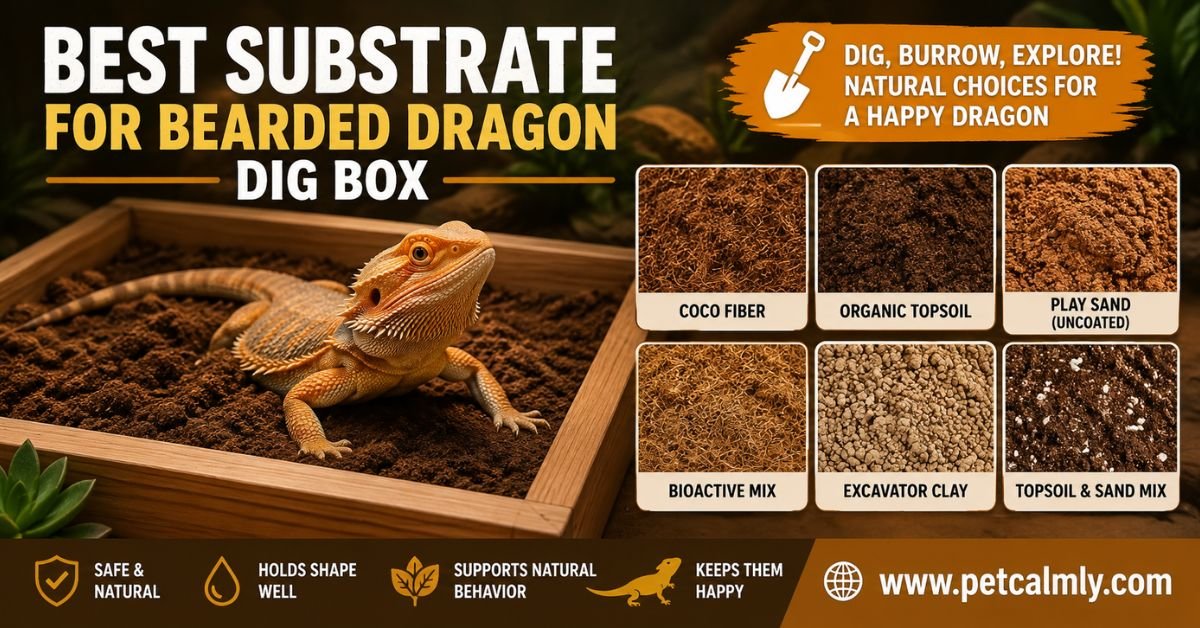
The best substrate for a bearded dragon dig box is a slightly moist mix of washed play sand and organic topsoil (about 50:50), free from fertilizers, pesticides, wood chips, or added chemicals. This combination allows natural digging behavior, holds tunnels better than sand alone, and is considered one of the safest choices when used correctly with a healthy adult bearded dragon. Avoid calcium sand, walnut shell, silica sand, and dusty substrates that can increase the risk of health problems.
Best Substrate for Bearded Dragon Dig Box
Bearded dragons love to dig. Whether they’re preparing to shed, exploring their environment, cooling off, or if female searching for a place to lay eggs, digging is one of their most natural behaviors.
Unfortunately, many pet owners either skip providing a dig box altogether or fill it with unsafe substrates after reading conflicting advice online. Some products marketed specifically for reptiles can actually create unnecessary risks, while others simply don’t allow natural burrowing.
The good news is that creating a safe, enriching dig box is surprisingly simple. With the right substrate, proper moisture level, and correct setup, your bearded dragon can dig comfortably without compromising its health.
In this guide, you’ll learn:
- The safest substrates for a bearded dragon dig box
- Which materials to avoid
- How to make a DIY dig box at home
- The right substrate depth
- Tips for maintaining cleanliness
- Common mistakes many keepers make
- When digging may signal a health concern instead of normal behavior
Whether you’ve just adopted your first bearded dragon or you’re upgrading your enclosure, this guide will help you create a dig box your pet can enjoy safely.
Why Do Bearded Dragons Need a Dig Box?
A dig box isn’t just an accessory—it’s a way to encourage behaviors that bearded dragons naturally display in the wild.
In Australia’s dry landscapes, wild bearded dragons frequently dig shallow burrows to:
- Escape extreme heat
- Rest in cooler soil
- Hide from predators
- Explore their surroundings
- Create nesting sites during breeding season
Even captive dragons retain these instincts.
Providing a designated digging area allows them to express normal behaviors without tearing apart decorations or scratching endlessly at the enclosure floor.
Benefits of a Bearded Dragon Dig Box
A properly designed dig box can provide several benefits.
Encourages Natural Instincts
Digging gives your dragon an outlet for instinctive behavior. Pets that can express natural behaviors often appear more relaxed and engaged with their environment.
Provides Mental Enrichment
Exploring different textures and reshaping the substrate stimulates curiosity and helps prevent boredom.
Many owners notice their dragons spending several minutes digging before basking or settling down for the evening.
Helps Gravid Females Lay Eggs
Female bearded dragons can develop eggs even without a male.
Without an appropriate place to dig, some females struggle to lay eggs, increasing the risk of egg retention—a condition that requires prompt veterinary attention.
A deep dig box is especially important if your female shows signs such as:
- Constant digging
- Restlessness
- Reduced appetite
- Enlarged abdomen
- Frequent pacing
Supports Shedding Behavior
Some dragons enjoy rubbing and digging through slightly textured substrate while shedding.
While a dig box doesn’t replace proper humidity management, it can make shedding more comfortable for some individuals.
Adds Environmental Variety
A bare enclosure offers limited opportunities for exploration.
Adding a dig box creates another activity area that encourages movement throughout the day.
What Makes the Best Substrate for a Bearded Dragon Dig Box?
Not every loose substrate is suitable.
The ideal substrate should imitate natural soil while minimizing unnecessary risks.
Here are the qualities to look for.
Safe if Accidentally Ingested
Tiny amounts of substrate may occasionally be swallowed while your dragon hunts insects or explores.
A safe substrate should pass naturally when husbandry is correct rather than clumping into hard masses.
No loose substrate is completely risk-free, but choosing appropriate materials and maintaining proper temperatures significantly reduces problems.
Holds Burrows Without Collapsing
Pure sand often collapses as your dragon digs.
Mixing sand with soil allows tunnels to hold their shape better, making digging more rewarding and closer to what occurs in nature.
Low Dust
Dusty substrates may irritate:
- Eyes
- Nose
- Respiratory tract
Choose washed materials and avoid products that create visible dust clouds when handled.
Free from Chemicals
Never use soil containing:
- Fertilizers
- Perlite
- Wetting agents
- Pesticides
- Compost additives
- Artificial fragrances
Organic products with simple ingredients are the safest choice.
Easy to Spot Clean
A good substrate allows you to quickly remove:
- Feces
- Uneaten insects
- Shed skin
- Food debris
Regular spot cleaning helps maintain hygiene without replacing the entire substrate frequently.
Best Substrate for Bearded Dragon Dig Box (Ranked)
Choosing the right material is one of the most important decisions you’ll make. Below are the safest and most commonly recommended options for healthy adult bearded dragons.
1. Organic Topsoil and Washed Play Sand (Best Overall)
Best for: Most adult bearded dragons
This combination is widely recommended because it closely resembles the firm, sandy soils found in parts of the bearded dragon’s native habitat.
Ideal Ratio
- 50% washed play sand
- 50% organic topsoil
Some experienced keepers adjust the ratio slightly depending on how well the mixture holds tunnels, but a roughly equal blend works well for most setups.
Why It Works
- Holds burrows effectively
- Looks natural
- Encourages digging
- Retains just enough moisture
- Affordable
- Easy to replace
- Suitable for larger dig boxes
The mixture should feel slightly damp when prepared—not wet or muddy.
A simple test is to squeeze a handful. It should hold together briefly before crumbling apart.
2. Australian Desert Sand
For keepers looking to recreate a more natural-looking habitat, commercially prepared Australian desert sand can be a good option.
Advantages include:
- Natural appearance
- Consistent texture
- Minimal dust when high quality
- Ready to use
However, sand alone doesn’t support tunnels as well as a sand-and-soil blend, so many owners still prefer mixing it with organic soil for a dedicated dig box.
3. Bioactive Soil Mix
Bioactive enclosures often use specially formulated substrate blends designed to support beneficial microorganisms and clean-up crews.
A quality bioactive mix may include:
- Organic soil
- Clay
- Sand
- Leaf litter (surface layer)
- Natural minerals
These setups require more planning but can provide excellent enrichment when maintained correctly.
Bioactive systems are generally better suited to experienced reptile keepers who understand moisture control and enclosure balance.
4. Excavator Clay Mix
Some reptile keepers use clay-based reptile substrates that harden slightly after shaping.
Benefits include:
- Excellent tunnel support
- Stable digging areas
- Realistic desert appearance
- Durable landscape features
The downside is that these products can be more expensive and require careful preparation according to the manufacturer’s instructions.
5. Plain Washed Play Sand (Acceptable with Limitations)
Plain washed play sand is sometimes used on its own, but it isn’t the ideal choice for a dig box.
While inexpensive and widely available, it has a few drawbacks:
- Tunnels collapse easily
- Doesn’t mimic natural compacted soil
- Can become messy
- Provides less enrichment than mixed substrates
If you already have washed play sand, combining it with organic topsoil usually creates a much better digging environment.
Substrates You Should Never Use
Some products continue to appear in pet stores despite long-standing concerns from experienced keepers and reptile veterinarians. Avoiding these materials can help reduce unnecessary risks.
Calcium Sand
Despite the name, calcium sand is not a healthy calcium supplement.
Because it has a flavor that may encourage repeated licking, dragons can consume more than intended. If enough is swallowed—especially alongside poor husbandry such as low basking temperatures—it may contribute to digestive problems.
Crushed Walnut Shell
Walnut shell substrate has sharp edges and poor digestibility.
Potential concerns include:
- Mouth irritation
- Eye injuries
- Digestive issues if swallowed
- Dust production
For these reasons, it is generally not recommended for bearded dragons.
Silica Sand
Fine silica sand can become very dusty and may irritate the respiratory system and eyes.
It also doesn’t hold burrows well, making it a poor choice for a dig box.
Wood Shavings and Bark Chips
Materials commonly used for snakes, rodents, or some tropical reptiles are unsuitable for bearded dragons.
Avoid:
- Pine shavings
- Cedar shavings
- Cypress mulch
- Bark chips
These substrates don’t support natural digging and may contain aromatic oils or retain too much moisture for an arid species.
Can You Collect Soil or Sand from Outside?
Many new keepers wonder if they can simply use soil from the garden or sand from a nearby outdoor area.
In most cases, it’s not recommended.
Outdoor materials can contain:
- Parasites
- Harmful bacteria
- Pesticide residues
- Fertilizer contamination
- Sharp stones
- Glass fragments
- Weed seeds
- Insects or insect eggs
Even if the area looks clean, it’s difficult to know exactly what’s in the soil.
Using clean, purchased materials gives you much better control over your dragon’s environment and reduces avoidable health risks.
How to Make the Best Bearded Dragon Dig Box
A dig box doesn’t need to be complicated or expensive. The goal is to create a safe, stable area where your bearded dragon can dig naturally without the substrate collapsing or becoming dirty too quickly.
You can place a dig box inside the enclosure if there’s enough space, or use a separate container for supervised digging sessions.
What You’ll Need
Gather the following supplies before you begin:
- A sturdy plastic storage bin, ceramic tray, or wooden box
- Organic topsoil (free of fertilizers, perlite, manure, or pesticides)
- Washed children’s play sand
- Water for lightly moistening the substrate
- A scoop or garden trowel for mixing
- A hide or piece of cork bark (optional)
Choose a container with smooth sides to reduce the chance of injuries. It should also be heavy enough that your dragon cannot easily tip it over.
Step-by-Step DIY Dig Box Setup
Step 1: Mix the Substrate
Combine:
- 50% washed play sand
- 50% organic topsoil
Mix thoroughly until the texture is consistent.
Step 2: Add a Small Amount of Water
The substrate should be slightly damp—not wet.
A simple test:
- Squeeze a handful.
- It should briefly hold its shape.
- It should crumble apart with gentle pressure.
- Water should never drip out.
Moist substrate supports burrows much better than completely dry sand.
Step 3: Fill the Dig Box
Fill the container with enough substrate to encourage real digging rather than surface scratching.
For most adult bearded dragons:
- Minimum depth: 6 inches (15 cm)
- Better depth: 8–12 inches (20–30 cm) if space allows
Female dragons that may lay eggs benefit from the deeper end of this range because they naturally dig longer nesting tunnels.
Step 4: Place It Correctly
Position the dig box where it won’t interfere with basking or block movement around the enclosure.
Avoid placing it directly under heat lamps if the substrate dries out too quickly.
Many keepers place the dig box on the cooler half of the enclosure while ensuring the dragon can still reach proper basking temperatures whenever needed.
Step 5: Let Your Dragon Explore Naturally
Some dragons start digging immediately.
Others ignore the box for several days before becoming interested.
Avoid forcing your bearded dragon into the dig box. Curiosity usually takes over once they feel secure.
How Deep Should a Bearded Dragon Dig Box Be?
Depth is just as important as substrate choice.
A shallow layer rarely satisfies natural digging instincts because the dragon quickly reaches the bottom of the container.
| Bearded Dragon | Recommended Depth |
|---|---|
| Juveniles | 4–6 inches |
| Adult males | 6–8 inches |
| Adult females | 8–12 inches |
| Gravid females | 10–12+ inches if possible |
Deeper substrate also helps tunnels remain stable.
Should the Substrate Be Dry or Moist?
This is one of the most common questions new keepers ask.
The answer is:
Slightly moist—not wet.
Completely dry sand collapses easily.
Very wet soil becomes muddy and may encourage mold or bacterial growth.
A lightly damp mixture provides:
- Better tunnel stability
- Less dust
- More natural digging
- Reduced substrate shifting
If the substrate dries out completely, lightly mist and remix only the portion needed. Avoid soaking the entire dig box.
How Often Should You Replace the Dig Box Substrate?
The schedule depends on how often your dragon uses it.
A simple maintenance routine works well for most homes.
Daily
- Remove droppings
- Pick out uneaten insects
- Remove spoiled vegetables
- Remove shed skin
Weekly
- Stir the substrate
- Check moisture level
- Inspect for mold
- Remove compacted areas
Every 1–3 Months
Replace all substrate if:
- It develops an odor
- Mold appears
- Parasites are suspected
- It stays excessively damp
- It becomes heavily soiled
If your bearded dragon has been diagnosed with parasites, replace the substrate immediately and follow your veterinarian’s cleaning recommendations to reduce the chance of reinfection.
Signs Your Bearded Dragon Enjoys the Dig Box
Every dragon has a different personality.
Some become enthusiastic diggers, while others use the box only occasionally.
Healthy signs include:
- Digging several small tunnels
- Pushing substrate with front legs
- Exploring calmly
- Resting after digging
- Basking normally afterward
- Returning to the dig box regularly
Some dragons even rearrange the substrate repeatedly before settling into a comfortable spot.
This is normal behavior.
When Digging May Be a Sign of a Problem
Digging isn’t always about play or enrichment.
Sometimes it signals that your dragon is trying to solve another problem.
Pay attention to the overall picture rather than the digging alone.
A Female May Be Ready to Lay Eggs
Even females that have never been housed with a male can produce infertile eggs.
Possible signs include:
- Constant digging
- Enlarged abdomen
- Reduced appetite
- Restlessness
- Spending more time searching corners
If your female appears unable to lay eggs despite repeated digging, contact an experienced reptile veterinarian promptly. Egg binding (dystocia) can become life-threatening without treatment.
Temperatures May Be Incorrect
A dragon that repeatedly digs into cool substrate could be trying to escape excessive enclosure temperatures.
Check:
- Basking temperature
- Warm side temperature
- Cool side temperature
- Nighttime temperatures
Always verify temperatures with reliable digital thermometers and an infrared temperature gun rather than relying on stick-on gauges.
Brumation May Be Approaching
Adult bearded dragons sometimes dig more before entering brumation.
Other signs may include:
- Sleeping more
- Reduced appetite
- Less activity
- Spending more time hiding
Brumation should never be assumed if your dragon appears sick. If you’re unsure whether the behavior is seasonal or illness-related, seek veterinary advice.
Stress or Environmental Changes
Recent changes can also trigger increased digging.
Examples include:
- Moving to a new enclosure
- New decorations
- Household renovations
- Another pet near the enclosure
- Frequent handling
- Bright lighting at night
Most dragons settle once they feel secure again.
5 Common Mistakes to Avoid
Many substrate-related problems happen because of small husbandry mistakes rather than the substrate itself.
Here are some of the most common ones.
Using Calcium Sand
This remains one of the biggest mistakes new keepers make.
Despite clever marketing, calcium sand is not recommended as a dietary calcium source and may increase health risks if consumed in large amounts.
Choosing Soil with Fertilizers
Always read the bag carefully.
Avoid products containing:
- Perlite
- Fertilizer
- Compost
- Wetting agents
- Pesticides
- Manure
- Decorative additives
Simple organic topsoil is the safest option.
Making the Substrate Too Wet
Wet substrate can encourage:
- Mold growth
- Bacterial buildup
- Unpleasant odors
Aim for slightly damp soil that supports burrows without becoming muddy.
Offering a Very Shallow Dig Box
A layer that’s only an inch or two deep often frustrates dragons because they cannot dig naturally.
Depth matters.
Ignoring Husbandry
Even the best substrate cannot compensate for poor enclosure care.
Make sure your dragon has:
- Proper UVB lighting
- Correct basking temperatures
- Nutritious diet
- Clean water
- Regular enclosure cleaning
Healthy husbandry helps reduce the risk of digestive problems and supports normal behavior.
Is a Dig Box Safe for Baby Bearded Dragons?
Young bearded dragons are naturally curious and may investigate their surroundings by licking or tasting loose substrate. Because of this, many experienced keepers prefer solid substrates such as paper towels, non-adhesive shelf liner, or textured ceramic tile—for hatchlings and very young juveniles in their main enclosure.
If you choose to introduce a dig box to a juvenile:
- Wait until the dragon is feeding well and growing steadily.
- Offer supervised digging sessions rather than leaving the dig box available all day.
- Avoid placing insects directly into the substrate, as this may encourage accidental ingestion while hunting.
- Watch for normal eating, basking, and bowel movements afterward.
If your juvenile repeatedly eats large amounts of substrate or shows signs such as lethargy, loss of appetite, vomiting, or difficulty passing stool, remove the dig box and consult a reptile veterinarian.
What Should Pet Owners Do?
If you’re setting up a dig box for the first time, focus on creating a safe and enriching environment instead of chasing the “perfect” product.
Here’s a practical checklist:
✔ Choose a 50:50 mix of washed play sand and organic topsoil.
✔ Make sure all materials are free from chemicals and fertilizers.
✔ Keep the substrate lightly moist so it holds tunnels.
✔ Provide at least 6–8 inches of digging depth for adult dragons.
✔ Spot-clean the substrate every day and replace it when heavily soiled.
✔ Monitor your dragon’s behavior after introducing the dig box.
✔ Maintain proper UVB lighting, basking temperatures, and a balanced diet to support overall health.
✔ Contact a reptile veterinarian if persistent digging is accompanied by illness, severe lethargy, weight loss, or a female’s inability to lay eggs.
A well-maintained dig box is more than just enrichment it gives your bearded dragon a safe way to express natural behaviors that are difficult to replicate in a simple enclosure.
Frequently Asked Questions
1. What is the safest substrate for a bearded dragon dig box?
A 50:50 mix of washed play sand and organic topsoil is one of the safest and most practical choices for healthy adult bearded dragons. It closely mimics natural soil, supports digging, and holds burrows better than sand alone. Make sure the soil contains no fertilizers, pesticides, perlite, or added chemicals.
2. Can I use only play sand in a bearded dragon dig box?
Yes, but it’s not the best option. Pure play sand tends to collapse when your dragon digs, making it less satisfying for natural burrowing. Mixing play sand with organic topsoil creates a firmer substrate that’s better for enrichment and tunnel stability.
3. Is coconut fiber a good substrate for a bearded dragon dig box?
Coconut fiber (coco coir) isn’t ideal as a standalone substrate for bearded dragons. It retains more moisture than an arid species typically needs and can become dusty when dry. While it may be used in small amounts within some custom mixes, a sand-and-topsoil blend is generally a better choice for a desert reptile.
4. How often should I clean my bearded dragon’s dig box?
Spot-clean the dig box every day by removing droppings, uneaten insects, and food scraps. Stir the substrate weekly and replace it completely every 1–3 months, or sooner if it develops mold, odors, becomes heavily soiled, or your dragon has a confirmed parasite infection.
5. Can baby bearded dragons use a dig box?
Very young bearded dragons are more likely to investigate loose substrate by licking or tasting it. Many keepers wait until juveniles are eating well and growing consistently before introducing a dig box. If you offer one, supervise digging sessions and avoid feeding insects directly in the substrate.
6. Why is my bearded dragon digging so much all of a sudden?
Sudden digging can be completely normal, especially if your dragon is exploring, shedding, or seeking a comfortable place to rest. Female bearded dragons may also dig when preparing to lay eggs. However, excessive digging combined with poor appetite, lethargy, weight loss, abnormal stools, or signs of illness should be evaluated by an experienced reptile veterinarian.
More Information About Pets, Please Visit Our Website: Best Feeder Insects for Bearded Dragons
Signs of a Healthy Bearded Dragon
How Long Do Bearded Dragons Live?
When Should You Contact a Reptile Veterinarian?
A dig box is meant to encourage healthy, natural behavior. However, digging can occasionally signal an underlying problem rather than simple enrichment.
Arrange a veterinary examination if your bearded dragon:
- Stops eating for several days without an obvious reason.
- Becomes unusually lethargic or weak.
- Loses weight despite normal care.
- Strains to pass stool or hasn’t defecated for an extended period.
- Has persistent diarrhea or bloody stools.
- Shows signs of dehydration.
- Has swelling, injuries, or difficulty moving.
- Is a female that has been digging intensely for several days but cannot lay eggs.
Early veterinary care is especially important because reptiles often hide signs of illness until they become more advanced.
Conclusion
Choosing the best substrate for a bearded dragon dig box is about more than appearance it’s about supporting your pet’s natural behaviors in a safe, enriching way.
For most healthy adult bearded dragons, a 50:50 blend of washed play sand and organic topsoil offers the best balance of safety, stability, and practicality. It allows your dragon to dig, burrow, and explore while closely resembling the compact sandy soils found in parts of its native Australian habitat.
Remember that no substrate can replace proper husbandry. A healthy bearded dragon also depends on correct UVB lighting, appropriate basking temperatures, a balanced diet, regular enclosure cleaning, and routine health checks. When these essentials are in place, a well-maintained dig box becomes an excellent form of environmental enrichment that can improve both physical activity and mental stimulation.
If your dragon’s digging suddenly becomes excessive or is accompanied by changes in appetite, energy level, or other unusual symptoms, don’t assume it’s normal. Reviewing your husbandry and consulting a qualified reptile veterinarian when needed can help identify problems early and keep your pet healthy.
With the right setup and regular maintenance, a dig box can become one of the most rewarding additions to your bearded dragon’s habitat—encouraging natural instincts while giving you the satisfaction of watching your pet thrive.