Short direct answer
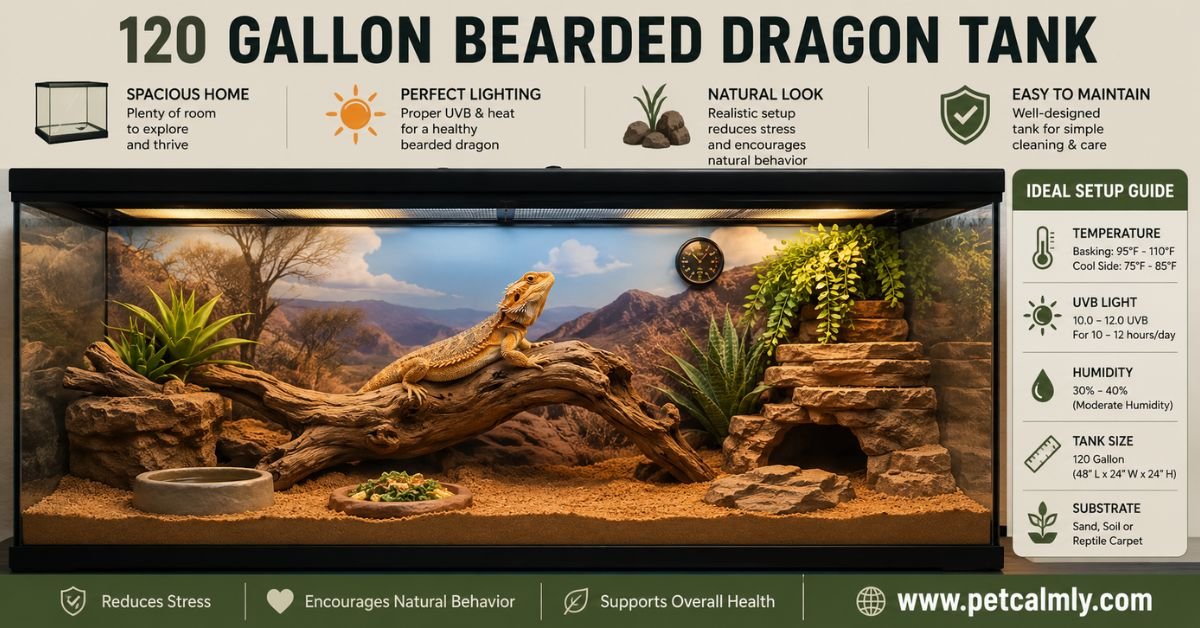
A 120 gallon bearded dragon tank is considered the ideal enclosure for most adult bearded dragons because it provides enough room to bask, explore, climb, and display natural behaviors. A properly set up 120-gallon habitat should include strong UVB lighting, a suitable heat gradient, safe substrate, climbing structures, hides, and plenty of open floor space. When designed correctly, it helps support healthy growth, reduces stress, encourages exercise, and makes daily care easier for owners.
Introduction
Bringing home a bearded dragon is exciting, but one of the biggest decisions you’ll make is choosing the right enclosure. While young dragons can start in smaller habitats, adults quickly outgrow them. Many first-time owners discover that upgrading tanks later can be stressful for both them and their pet.
That’s why experienced keepers and many reptile care guides recommend starting with or planning for a 120 gallon bearded dragon tank.
A larger enclosure doesn’t simply give your dragon more room. It also makes it easier to create the proper temperature gradient, encourages natural behaviors, provides space for enrichment, and helps prevent boredom. An active, curious bearded dragon is usually a healthier and happier one.
In this guide, you’ll learn everything you need to know about choosing and setting up a 120-gallon enclosure, from tank dimensions and essential equipment to common mistakes new owners make. Whether you’re preparing for your first bearded dragon or upgrading an existing habitat, this guide will help you create a safe and comfortable home.
Why a 120 Gallon Bearded Dragon Tank Is the Recommended Size
Many people ask:
Is a 120 gallon tank too big for a bearded dragon?
The answer is no.
Healthy bearded dragons naturally roam large areas in Australia’s arid landscapes. Although captivity can’t replicate the wild, providing generous space allows them to express many normal behaviors.
A properly furnished 120-gallon enclosure lets your dragon:
- Walk and explore naturally
- Move between warm and cool zones
- Climb on branches and rocks
- Dig in appropriate substrate
- Stretch out fully
- Exercise throughout the day
- Reduce boredom-related behaviors
Unlike mammals, reptiles rely heavily on their environment to regulate body temperature. More space makes creating an effective thermal gradient much easier than in a small enclosure.
Benefits of a Larger Habitat
Choosing a 120-gallon enclosure offers several long-term advantages.
Better Temperature Control
A longer enclosure allows one end to remain warm for basking while the opposite end stays cooler. This gives your dragon the freedom to regulate its body temperature naturally throughout the day.
Improved Physical Health
More room encourages movement instead of sitting under the basking light all day.
Regular activity helps support:
- Muscle tone
- Joint flexibility
- Healthy weight
- Natural hunting behaviors
- Overall fitness
Reduced Stress
Crowded habitats may limit exploration and enrichment.
A spacious enclosure gives your bearded dragon:
- Multiple resting spots
- Separate basking and sleeping areas
- Visual barriers
- Places to hide when desired
Many owners notice calmer behavior after upgrading from a smaller tank.
Easier Decorating
A 120-gallon tank provides enough room to safely include:
- Branches
- Rocks
- Hammocks
- Platforms
- Multiple hides
- Feeding stations
Without overcrowding the enclosure.
What Size Is a 120 Gallon Bearded Dragon Tank?
Although manufacturers vary slightly, most 120 gallon bearded dragon tanks measure approximately:
| Measurement | Typical Size |
|---|---|
| Length | 48 inches (122 cm) |
| Width | 24 inches (61 cm) |
| Height | 24 inches (61 cm) |
This is commonly referred to as a 4x2x2 bearded dragon enclosure.
Some premium manufacturers offer slightly different dimensions, but the goal remains the same:
- At least 4 feet long
- 2 feet deep
- Around 2 feet tall
The extra floor space is far more valuable than excessive height because bearded dragons are primarily terrestrial reptiles.
Why Floor Space Matters More Than Height
Unlike chameleons or arboreal geckos, bearded dragons spend most of their time on the ground.
While they enjoy climbing:
- Rocks
- Branches
- Elevated basking platforms
they do not require extremely tall habitats.
Extra floor space allows them to:
- Walk comfortably
- Chase insects
- Explore different textures
- Thermoregulate effectively
A long enclosure supports these behaviors much better than a tall, narrow tank.
Is a 120 Gallon Tank Too Big for a Baby Bearded Dragon?
This is one of the most common beginner concerns.
Fortunately, the answer is generally no, provided the enclosure is set up thoughtfully.
A baby bearded dragon can thrive in a 120-gallon habitat if it has:
- Several secure hiding places
- Easy access to basking areas
- Food located where it can be found quickly
- Appropriate temperatures
- Safe decorations without fall hazards
Young dragons may initially spend more time hiding while they adjust. This is normal and often improves as they become familiar with their surroundings.
Tips for Housing a Baby in a Large Enclosure
If you choose to start with a 120-gallon tank:
- Place food dishes in consistent locations.
- Avoid excessive clutter that makes feeding difficult.
- Add multiple hides throughout the enclosure.
- Ensure basking platforms are easy to reach.
- Monitor feeding closely during the first few weeks.
Many experienced keepers prefer buying the adult-sized enclosure from the beginning to avoid the expense and stress of upgrading later.
Who Should Choose a 120 Gallon Bearded Dragon Tank?
A 120-gallon enclosure is ideal for:
First-Time Owners
Starting with the recommended adult enclosure saves money over time and prevents repeated habitat changes.
Growing Juveniles
Juveniles grow surprisingly fast during their first year.
Instead of purchasing several increasingly larger tanks, many owners transition directly to a permanent adult enclosure.
Adult Bearded Dragons
Most healthy adult dragons benefit greatly from the extra space.
Large enclosures help support:
- Daily activity
- Natural exploration
- Better environmental enrichment
- Easier temperature regulation
Rescue Bearded Dragons
Rescued reptiles often arrive after spending months or years in undersized habitats.
Providing a spacious enclosure can encourage natural behaviors that may have been limited previously.
Essential Features Every 120 Gallon Bearded Dragon Tank Should Have
Not every enclosure is built equally.
Before purchasing, look for features that improve both your dragon’s welfare and your daily maintenance routine.
Front-Opening Doors
Front-opening doors make routine care much easier.
Benefits include:
- Less stressful handling
- Easier feeding
- Convenient cleaning
- Safer interaction
- Better visibility
Approaching from the front is generally less intimidating for bearded dragons than reaching down from above, which can resemble a predator in the wild.
Excellent Ventilation
Good airflow helps maintain:
- Stable temperatures
- Appropriate humidity
- Fresh air circulation
- Lower mold risk
Look for enclosures with well-designed side or top ventilation rather than completely sealed tanks.
Secure Locking System
Bearded dragons are curious climbers.
Choose doors that close securely to prevent accidental escapes, especially in homes with children or other pets.
Strong Screen Top
The top should safely support:
- UVB lighting fixtures
- Heat lamps
- Additional lighting equipment
A durable screen also allows proper airflow while keeping your dragon safely inside.
Waterproof Interior
Many modern PVC enclosures include moisture-resistant interiors that simplify cleaning and help protect the enclosure from spills during routine maintenance.
Glass vs PVC: Which Material Is Better?
One of the first decisions you’ll face is choosing between a traditional glass tank and a PVC reptile enclosure.
Both can work well, but each has advantages depending on your home, climate, and budget.
| Feature | Glass Tank | PVC Enclosure |
|---|---|---|
| Heat retention | Fair | Excellent |
| Weight | Heavy | Much lighter |
| Visibility | Excellent | Front viewing only (typically) |
| Durability | Can crack | Highly durable |
| Energy efficiency | Moderate | Better insulation |
| Cleaning | Easy | Easy |
| Assembly | Usually ready to use | Some models require assembly |
| Cost | Often lower initially | Usually higher upfront |
Glass Tanks
Glass tanks provide excellent visibility and are widely available. However, they can lose heat more quickly, making temperature management slightly more challenging in cooler homes.
PVC Enclosures
PVC enclosures are popular among experienced reptile keepers because they hold heat more efficiently, are lightweight, and often feature front-opening doors with built-in ventilation. Although they usually cost more upfront, many owners appreciate their durability and ease of maintenance over time.
Planning Your Tank Before Bringing Your Dragon Home
A successful setup starts before your dragon arrives.
Take time to choose the right location for the enclosure.
Place the tank:
- Away from direct sunlight
- Away from air conditioners and heating vents
- In a quiet room with regular family activity
- On a sturdy stand that can safely support the enclosure’s weight
- Near electrical outlets for lighting and heating equipment
Avoid frequently moving the enclosure once your dragon has settled in, as sudden environmental changes can increase stress.
Beginner Checklist Before Buying a 120 Gallon Bearded Dragon Tank
Before making your purchase, ask yourself:
- ✓ Is the enclosure at least 4 ft × 2 ft × 2 ft?
- ✓ Does it have front-opening doors?
- ✓ Is there good ventilation?
- ✓ Can it safely support UVB and heat lamps?
- ✓ Is the interior easy to clean?
- ✓ Does it provide enough floor space for climbing, basking, and exploring?
- ✓ Is there room for future upgrades like larger hides or enrichment items?
Taking a little extra time now can save money and help you avoid common setup mistakes later.
How to Set Up a 120 Gallon Bearded Dragon Tank
Setting up a bearded dragon enclosure isn’t just about adding decorations. Every item inside the tank should serve a purpose—helping your dragon stay warm, absorb UVB, exercise, feel secure, and explore.
A complete setup should include:
- Proper UVB lighting
- A safe basking heat source
- A cool side for thermoregulation
- Suitable substrate
- Hides and climbing structures
- Food and water dishes
- Enrichment items
- Accurate thermometers and a hygrometer
When these essentials work together, your dragon can behave much as it would in its natural environment.
Choosing the Right Heating for a 120 Gallon Bearded Dragon Tank
Heat is one of the most important parts of reptile care. Bearded dragons rely on external heat to digest food, stay active, and support healthy immune function.
A large enclosure allows you to create a natural temperature gradient, giving your dragon the freedom to move between warmer and cooler areas as needed.
Ideal Temperature Zones
| Area | Recommended Temperature |
|---|---|
| Basking surface | 100–108°F (38–42°C) for most adults* |
| Warm side | 88–95°F (31–35°C) |
| Cool side | 75–85°F (24–29°C) |
| Night | Around 65–75°F (18–24°C), unless your home becomes unusually cold |
*Juveniles may prefer slightly warmer basking surfaces. Always measure the basking surface with an infrared thermometer for accuracy.
Avoid making the entire enclosure the same temperature. Without a gradient, your dragon can’t regulate its body temperature effectively.
Best Heating Equipment
Most 120-gallon setups use:
- Halogen or basking heat bulb
- Ceramic socket fixture
- Dome reflector
- Digital thermostat (where appropriate)
- Infrared temperature gun
- Digital probe thermometers
Place the basking lamp at one end of the enclosure so the opposite end remains cooler.
Common Heating Mistakes
Many beginners accidentally create unhealthy conditions by:
- Heating the entire tank evenly
- Using colored “night” bulbs
- Guessing temperatures without thermometers
- Positioning the basking platform too far from the heat source
- Using hot rocks, which can cause burns
Instead, rely on properly positioned overhead heating and accurate temperature monitoring.
Why UVB Lighting Is Essential
If there’s one piece of equipment you should never skip, it’s a quality UVB light.
Without adequate UVB exposure, bearded dragons can’t produce enough vitamin D3 to absorb calcium efficiently. Over time, this can lead to metabolic bone disease (MBD), a serious condition affecting bones, muscles, and overall health.
A proper UVB setup helps support:
- Strong bones
- Healthy growth
- Muscle function
- Normal appetite
- Natural activity levels
Choosing the Right UVB Fixture
For a 120-gallon enclosure, linear fluorescent UVB fixtures are generally recommended over compact bulbs because they provide more even coverage.
Position the fixture so your dragon can bask within the manufacturer’s recommended distance while still having shaded areas to retreat from the light if desired.
Replace UVB bulbs according to the manufacturer’s schedule, even if they still produce visible light, because UVB output decreases over time.
How Long Should the Lights Stay On?
A simple day-night schedule works well for most homes.
Aim for approximately:
- 12–14 hours of light during longer daylight seasons
- 10–12 hours of light during shorter daylight seasons
Using an automatic timer helps maintain a consistent routine and reduces stress.
Choosing the Best Substrate for a 120 Gallon Bearded Dragon Tank
Substrate is one of the most debated topics among bearded dragon owners.
There isn’t a single perfect choice for every dragon, but the safest option depends on your pet’s age, health, and your ability to maintain the enclosure.
Safe Substrate Options
Many keepers choose:
- Ceramic or porcelain tile
- Textured slate
- Paper towels (especially for quarantine or sick reptiles)
- Non-adhesive shelf liner
- Carefully selected naturalistic substrate blends for healthy adult dragons
Each option has advantages.
Tile
Tile is:
- Easy to clean
- Durable
- Stable under basking lights
- Excellent for maintaining hygiene
It is one of the most popular beginner-friendly choices.
Paper Towels
Although not attractive, paper towels are useful for:
- Baby dragons
- New arrivals
- Medical observation
- Quarantine periods
They make it easy to monitor droppings and clean the enclosure quickly.
Naturalistic Substrates
Some experienced keepers use carefully prepared soil-and-sand mixes that encourage digging and enrichment.
These setups require proper husbandry, healthy dragons, and regular maintenance. Loose substrates are generally not recommended for very young, ill, or poorly cared-for dragons because incorrect husbandry increases the risk of problems.
Substrates to Avoid
Avoid materials that may increase health or safety risks, including:
- Calcium sand
- Walnut shell substrate
- Corn cob bedding
- Wood shavings such as cedar or pine
- Artificial turf that traps bacteria
- Gravel or small stones
These materials may contribute to injury, irritation, or hygiene issues.
Decorating Your 120 Gallon Bearded Dragon Tank
Decorations aren’t just for appearance.
A well-designed enclosure gives your dragon opportunities to climb, rest, hide, and explore throughout the day.
Essential Décor Items
Include a combination of:
- Basking platform
- Flat rocks
- Sturdy branches
- Driftwood
- Climbing logs
- One or two hides
- Hammock (if securely installed)
- Open walking space
Avoid filling every inch of the enclosure. Bearded dragons enjoy open areas where they can move freely.
Create Different Activity Zones
A thoughtfully arranged enclosure often includes:
Basking Zone
Place here:
- Heat lamp
- UVB exposure
- Main basking rock
Resting Zone
Provide:
- Shade
- Hide
- Cooler temperatures
This gives your dragon a quiet place to relax.
Exploration Zone
Include:
- Branches
- Logs
- Safe climbing opportunities
- Digging area (if using an appropriate substrate)
Changing the layout occasionally can provide mental stimulation without causing unnecessary stress.
Feeding and Water Setup
Food dishes should be easy to access and simple to clean.
Most owners place food near the middle or cooler side of the enclosure so vegetables stay fresh longer.
Separate dishes for greens and insects can make feeding more organized.
Fresh drinking water should always be available, although many bearded dragons drink only occasionally. Some individuals get much of their hydration from leafy greens and occasional baths, but clean water should still be offered daily.
Remove uneaten insects after feeding to prevent them from bothering your dragon.
Do Bearded Dragons Need Enrichment?
Absolutely.
Even though bearded dragons aren’t playful in the same way as dogs or cats, they benefit from environmental variety.
Simple enrichment ideas include:
- Rearranging climbing branches occasionally
- Offering safe digging opportunities
- Rotating basking platforms
- Providing supervised exploration outside the enclosure (in a safe, warm area)
- Offering food in different ways to encourage natural foraging
A curious dragon often spends more time exploring, climbing, and observing its surroundings.
Cleaning a 120 Gallon Bearded Dragon Tank
Regular cleaning keeps your dragon healthier and makes deep cleaning easier.
Daily Tasks
- Remove waste
- Replace soiled substrate if needed
- Wash food dishes
- Refill fresh water
- Check temperatures
- Observe your dragon’s appetite and activity
Weekly Tasks
- Wipe surfaces
- Clean decorations as needed
- Remove leftover food debris
- Inspect lighting and equipment
Monthly Deep Cleaning
A more thorough cleaning should include:
- Removing décor
- Cleaning enclosure surfaces with a reptile-safe disinfectant
- Rinsing and drying items completely
- Checking for damaged equipment
- Replacing worn accessories if necessary
Always return everything only after it is clean and completely dry.
Common Mistakes When Setting Up a 120 Gallon Bearded Dragon Tank
Many husbandry problems aren’t caused by the tank itself but by the setup.
Avoid these common mistakes:
1. Buying the Tank but Skipping Quality Lighting
A large enclosure cannot compensate for poor UVB or inadequate heating.
2. Overcrowding the Habitat
Too many decorations reduce walking space.
Aim for balance between enrichment and open floor area.
3. Not Measuring Temperatures Correctly
Stick-on dial thermometers are often inaccurate.
Use digital probes and an infrared thermometer to monitor basking surface temperatures.
4. Choosing Unsafe Décor
Avoid:
- Sharp rocks
- Loose decorations that can collapse
- Toxic plants
- Small objects that may be accidentally swallowed
5. Ignoring Routine Maintenance
Even a beautiful enclosure can become unhealthy if waste, leftover food, and dirty surfaces are allowed to build up.
Consistency matters more than perfection.
How Much Does a Complete 120 Gallon Bearded Dragon Tank Setup Cost?
The enclosure is only one part of the investment.
A complete setup typically includes:
| Item | Typical Cost Range (USD) |
|---|---|
| 120-gallon enclosure | $250–$700+ |
| UVB fixture and bulb | $60–$120 |
| Heat lamp and fixture | $30–$80 |
| Thermometers and infrared thermometer | $25–$80 |
| Substrate | $20–$80 |
| Branches, rocks, hides, décor | $75–$250 |
| Food and water dishes | $10–$30 |
| Timer and accessories | $20–$50 |
Actual costs vary by brand, materials, and where you shop. Investing in reliable heating and UVB equipment is usually more important than buying decorative accessories first.
When Should You Worry About Your Tank Setup?
Sometimes your dragon’s behavior can signal that something in the enclosure needs attention.
Watch for signs such as:
- Constant hiding
- Spending all day under the basking light
- Avoiding the basking area completely
- Persistent lack of appetite
- Difficulty shedding
- Frequent glass surfing
- Unusual lethargy
- Repeated attempts to escape
These behaviors don’t always mean something is wrong, but they can indicate issues with temperature, lighting, stress, or husbandry.
If your dragon shows persistent symptoms, loses weight, appears weak, or develops swelling, tremors, or difficulty moving, schedule an examination with an experienced reptile veterinarian. Early intervention often leads to better outcomes.
Is a 120 Gallon Bearded Dragon Tank Enough for Every Adult?
For the vast majority of pet bearded dragons, yes. A properly designed 120 gallon bearded dragon tank (typically 4 ft × 2 ft × 2 ft) meets the minimum enclosure size recommended by many reptile care organizations and experienced keepers for a healthy adult.
That said, “big enough” doesn’t automatically mean “ideal.” Your dragon’s quality of life depends on how the enclosure is furnished and maintained.
A spacious tank with proper lighting, heating, climbing opportunities, and enrichment is far better than a large but mostly empty enclosure.
A 120-Gallon Tank Is Well-Suited For:
- Adult bearded dragons (12 months and older)
- Active dragons that enjoy exploring
- First-time owners who want a long-term setup
- Rescue dragons needing more space
- Owners who want room for enrichment and natural behaviors
You May Consider Going Larger If:
Some keepers choose enclosures that are 5–6 feet long, especially for:
- Exceptionally large dragons
- Very active individuals
- Bioactive or naturalistic habitats
- Owners with available space and budget
More space can offer additional enrichment, but only if temperatures and UVB coverage remain appropriate throughout the enclosure.
DIY vs. Store-Bought 120 Gallon Bearded Dragon Tanks
Many reptile owners wonder whether they should build their own enclosure or purchase a ready-made one.
Both options can work well when designed safely.
Store-Bought Enclosures
These are often the easiest option for beginners.
Advantages
- Professionally designed ventilation
- Secure front-opening doors
- Strong screen tops
- Easy assembly
- Reliable dimensions
- Time-saving
Considerations
- Higher upfront cost
- Limited customization
- Shipping costs for larger enclosures
DIY Enclosures
Building your own enclosure can be rewarding if you have woodworking experience.
Advantages
- Fully customizable
- Potential cost savings
- Can match your home’s décor
- Flexible sizing
Considerations
- Requires tools and time
- Ventilation must be planned carefully
- Materials must be safe for reptiles
- Improper sealing may cause moisture damage over time
If you choose a DIY build, avoid treated lumber or paints that may release harmful fumes. Allow all sealants and finishes to cure completely before introducing your dragon.
How to Choose the Best 120 Gallon Bearded Dragon Tank
With so many options available, it’s easy to focus on appearance alone. Instead, prioritize features that directly affect your dragon’s comfort and your ability to maintain the enclosure.
1. Prioritize Floor Space
Look for dimensions close to:
- 48 inches long
- 24 inches wide
- 24 inches tall
Longer tanks generally provide a better thermal gradient than taller ones.
2. Look for Front-Opening Doors
Front access makes everyday tasks much easier, including:
- Feeding
- Cleaning
- Health checks
- Handling
It can also reduce stress because your dragon sees you approaching from the front instead of above.
3. Check Ventilation
Good airflow helps maintain stable humidity and reduces stale air.
Avoid enclosures with poor ventilation or completely enclosed tops.
4. Make Sure Lighting Can Be Mounted Properly
Your enclosure should allow:
- A full-length UVB fixture
- A basking lamp
- Safe cable management
- Easy bulb replacement
Proper lighting placement is just as important as choosing quality bulbs.
5. Think About Maintenance
Choose materials that are:
- Easy to wipe clean
- Resistant to moisture
- Durable enough for daily use
PVC and sealed wood enclosures are often easier to maintain than unfinished materials.
Signs Your Bearded Dragon Enjoys Its Enclosure
Every dragon has its own personality, but a comfortable habitat often encourages healthy daily routines.
Positive signs include:
- Regular basking after meals
- Exploring different areas of the enclosure
- Climbing branches or rocks
- Eating consistently
- Bright, alert eyes
- Relaxed body posture
- Normal shedding
- Moving between warm and cool areas throughout the day
These behaviors suggest your dragon is using the enclosure as intended.
Signs the Habitat May Need Improvement
Sometimes your dragon’s behavior is the first clue that something in the setup should be adjusted.
Watch for:
- Constant glass surfing
- Refusing to bask
- Spending all day hiding
- Frequent dark stress markings
- Difficulty shedding
- Poor appetite
- Weight loss
- Persistent lethargy
These signs can have many causes, including incorrect temperatures, inadequate UVB, illness, stress, or environmental changes.
Start by checking your husbandry carefully. If problems continue or your dragon appears unwell, contact a reptile veterinarian.
Seasonal Adjustments for a 120 Gallon Bearded Dragon Tank
Your dragon’s needs may change slightly throughout the year.
During Winter
If your home becomes cooler:
- Check basking temperatures more often.
- Ensure the warm side stays within the recommended range.
- Replace aging heat bulbs if temperatures begin to drop.
- Monitor nighttime temperatures before adding supplemental heating.
Some healthy adult bearded dragons naturally become less active during cooler months. This seasonal slowdown, sometimes called brumation, can resemble hibernation. However, reduced activity can also be caused by illness. If you’re unsure whether your dragon is entering brumation or is sick, consult a reptile veterinarian before assuming it’s normal.
During Summer
Warmer weather may require small adjustments.
Keep the enclosure:
- Away from direct sunlight through windows
- Well ventilated
- Monitored with accurate thermometers
Never assume room temperature is safe without checking enclosure temperatures.
When Should You Upgrade or Replace the Enclosure?
A quality enclosure can last many years, but it won’t last forever.
Consider replacing or upgrading it if you notice:
- Broken glass
- Damaged locks
- Warped panels
- Rusted screen tops
- Poor ventilation
- Water damage
- Equipment that no longer fits properly
Upgrading may also make sense if you’re transitioning to a naturalistic or bioactive setup that requires additional depth or specialized features.
Beginner Checklist for a Healthy 120 Gallon Bearded Dragon Tank
Before you introduce your dragon, run through this final checklist.
Enclosure
- ✓ Minimum size of 4 × 2 × 2 feet
- ✓ Secure front-opening doors
- ✓ Good ventilation
- ✓ Stable stand or cabinet
Heating and Lighting
- ✓ Proper basking bulb
- ✓ Linear UVB fixture
- ✓ Digital thermometers
- ✓ Infrared temperature gun
- ✓ Automatic timer
Interior Setup
- ✓ Basking platform
- ✓ Hide on the warm side
- ✓ Hide on the cool side
- ✓ Safe climbing branches
- ✓ Easy-to-clean substrate
- ✓ Food dish
- ✓ Water dish
Daily Care
- ✓ Fresh greens
- ✓ Appropriate live insects
- ✓ Fresh water
- ✓ Spot cleaning
- ✓ Daily health observation
Completing this checklist helps ensure your bearded dragon has a safe and enriching environment from the very beginning.
Frequently Asked Questions
1. Is a 120 gallon tank too big for a baby bearded dragon?
No. A baby can do well in a 120-gallon enclosure if it has easy access to food, proper temperatures, several hiding places, and a layout that allows it to find basking areas easily.
2. What are the ideal dimensions for a 120 gallon bearded dragon tank?
Most measure approximately 48 × 24 × 24 inches (122 × 61 × 61 cm), providing ample floor space for an adult bearded dragon.
3. How often should I clean a 120 gallon bearded dragon tank?
Spot-clean waste and leftover food daily, wipe surfaces weekly, and perform a more thorough cleaning every few weeks or as needed based on your substrate and husbandry.
4. Can two bearded dragons live together in a 120 gallon tank?
No. Adult bearded dragons are generally solitary reptiles. Housing two together can lead to stress, competition for resources, injuries, or dominance issues, even if they appear to tolerate each other initially.
5. What’s the best substrate for a 120 gallon bearded dragon tank?
There isn’t one perfect choice for every dragon. Tile, slate, paper towels (for quarantine or medical observation), and carefully managed naturalistic substrate blends for healthy adults are commonly used safe options.
6. How long does a 120 gallon enclosure usually last?
A well-built enclosure made from quality materials can last for many years with regular maintenance. Replacing worn lighting, damaged screens, or broken hardware as needed will help extend its lifespan.
More Information About Pets, Please Visit Our Website: Best Substrate for Bearded Dragon Dig Box
Best Feeder Insects for Bearded Dragons
How Much Does a Bearded Dragon Cost?
Best UVB Light for Bearded Dragon 40 Gallon Tank
Common Bearded Dragon Health Problems
Conclusion
A 120 gallon bearded dragon tank provides much more than extra space it creates the foundation for a healthier, more natural lifestyle. With room to bask, explore, climb, and regulate body temperature, your dragon is better equipped to express the behaviors that keep it active and engaged.
Remember that the enclosure itself is only one piece of successful husbandry. Consistent heating, high-quality UVB lighting, safe furnishings, a nutritious diet, and regular observation all work together to support your pet’s long-term health.
If you’re setting up your first habitat, focus on getting the essentials right rather than filling the enclosure with unnecessary accessories. A simple, well-planned setup that meets your dragon’s biological needs is always more valuable than one that looks impressive but falls short on husbandry.
As your confidence grows, you can gradually add enrichment and refine the habitat. With thoughtful care and routine maintenance, a properly equipped 120-gallon enclosure can provide a comfortable home for your bearded dragon throughout its adult life.