Short direct answer
If your bearded dragon suddenly becomes inactive, stops eating, sleeps for long periods, and feels cool to the touch, it may be entering brumation rather than being dead. A living bearded dragon in brumation usually still has subtle signs of life, such as slow breathing, slight muscle tone, and a heartbeat. However, if there is no breathing, no heartbeat, a stiff body, a foul odor, or discoloration, it may have died. Because the signs can sometimes be difficult to recognize, it’s safest to warm your dragon gradually and contact a reptile veterinarian if you’re unsure.
Is Your Bearded Dragon Brumating or Has It Died?
Finding your bearded dragon lying still in its enclosure can be frightening. Many owners immediately assume the worst, especially if their usually active pet hasn’t moved for hours or even days.
Fortunately, there is another possibility.
Healthy adult bearded dragons naturally go through a seasonal resting period called brumation, which is similar to hibernation but not exactly the same. During this time, they may sleep almost constantly, ignore food, hide for weeks, and barely move.
Because these behaviors closely resemble serious illness or even death it can be difficult for first-time owners to know what’s happening.
This guide explains exactly how to tell the difference between brumation and death, what signs you should check first, when to seek veterinary care, and how to keep your bearded dragon safe throughout the process.
What Is Bearded Dragon Brumation?
Brumation is a natural period of dormancy that reptiles enter when temperatures and daylight hours decrease. In the wild, it helps conserve energy during cooler months when food becomes scarce.
Unlike mammals that hibernate, bearded dragons don’t remain in a deep, continuous sleep. Instead, they may wake occasionally to change position, drink water, or briefly explore before returning to rest.
During brumation, their metabolism slows dramatically.
Common changes include:
- Sleeping most of the day
- Refusing insects and vegetables
- Spending more time inside hides
- Moving very little
- Reduced bowel movements
- Lower activity levels
- Mild weight loss over time
For healthy adult dragons, this behavior can last anywhere from several weeks to three or four months.
At What Age Do Bearded Dragons Usually Brumate?
Not every bearded dragon brumates.
Most healthy adults begin experiencing brumation after reaching 10–18 months of age.
Young dragons under one year generally continue growing and usually should not enter extended brumation.
Age guide:
| Age | Brumation Likely? |
|---|---|
| Under 6 months | Very unlikely |
| 6–12 months | Occasionally, but uncommon |
| 12–18 months | Possible |
| Over 18 months | Common in many healthy adults |
If a baby bearded dragon suddenly becomes inactive or refuses food, illness is far more likely than normal brumation.
Bearded Dragon Brumation or Dead: How Can You Tell?
This is the question that worries almost every reptile owner.
A brumating dragon may appear lifeless because everything slows down:
- Breathing becomes extremely slow.
- Heart rate decreases.
- Eyes remain closed.
- The body feels cool.
- Movement nearly stops.
These signs are normal during healthy brumation.
A deceased dragon, however, shows permanent physical changes that don’t improve with warmth or gentle stimulation.
The safest approach is never to assume either possibility until you’ve checked for several signs together.
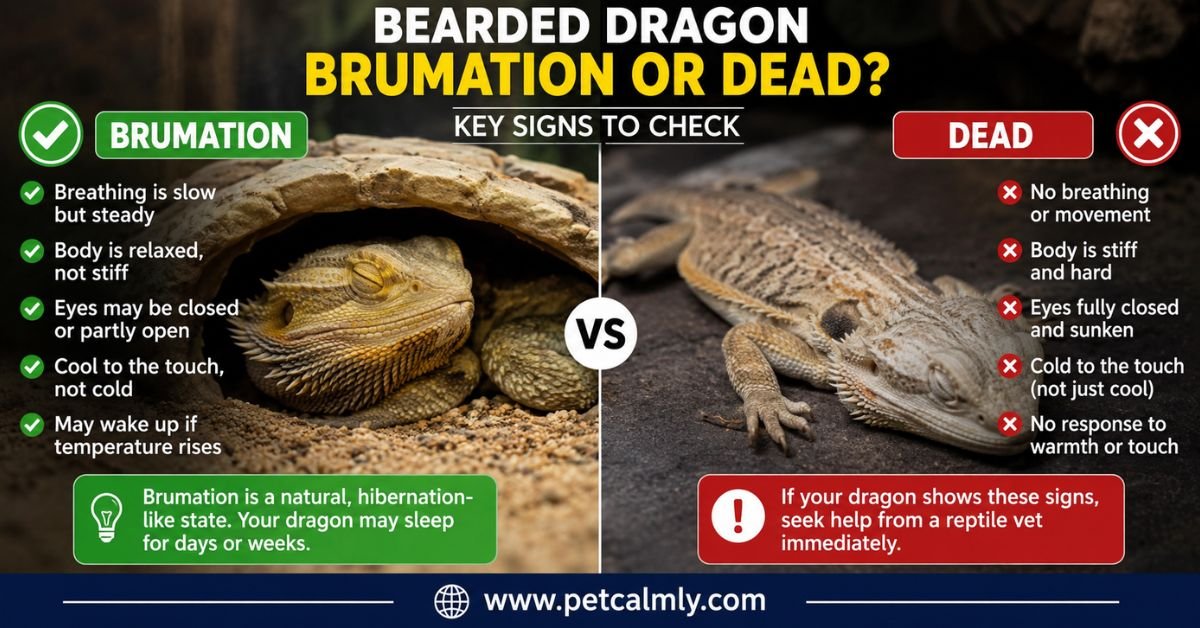
Bearded Dragon Brumation vs. Dead: Key Differences
| Brumation | Dead |
|---|---|
| Slow breathing | No breathing |
| Soft muscles | Body becomes stiff (after death) |
| Eyes usually closed | Eyes may remain open or sunken |
| Occasionally changes position | Never moves |
| May react to gentle touch | No response at all |
| Healthy skin color | Gray, pale, or discolored skin |
| No bad smell | Foul odor develops |
| Slight heartbeat present | No heartbeat |
One sign alone isn’t enough to make a conclusion.
Instead, look at the whole picture.
Why Brumation Looks So Much Like Death
Brumation dramatically slows nearly every body function.
A dragon that normally runs around its enclosure may suddenly:
- Stay hidden for weeks
- Ignore favorite insects
- Sleep almost all day
- Refuse interaction
- Barely breathe
Owners naturally become alarmed because these are also signs of severe illness.
The difference is that healthy brumating dragons usually entered this state gradually.
For example:
A two-year-old bearded dragon may begin spending more time inside its cave during autumn. Over several weeks, it eats less, becomes quieter, and eventually sleeps most of the day.
That gradual change is typical of brumation.
By contrast, a dragon that suddenly collapses overnight without warning should always be considered a medical emergency until proven otherwise.
How to Check If Your Bearded Dragon Is Still Alive
Before panicking, carefully perform a few gentle checks.
Avoid shaking, squeezing, or forcing your dragon to wake up.
Instead, work through these observations one at a time.
Look for Slow Breathing
Brumating dragons breathe much more slowly than usual.
Sometimes you may only notice movement every minute or two.
Watch the chest carefully for several minutes under good lighting.
Patience is important because the breathing can be extremely subtle.
Check for Tiny Movements
Sleeping dragons occasionally make small adjustments.
You might notice:
- Slight toe movement
- Small head shift
- Tail repositioning
- Tiny jaw movement
These are reassuring signs that your dragon is alive.
Feel for Muscle Tone
A living dragon generally maintains some muscle firmness.
The limbs shouldn’t feel completely limp.
Likewise, they shouldn’t be rock hard.
If the body is stiff and cannot be gently repositioned, this may indicate rigor mortis rather than brumation.
Observe Skin Color
Healthy brumating dragons usually keep their normal coloration.
They may appear darker because they’re cooler, but the skin shouldn’t look gray, blackened, or severely discolored.
Unexpected color changes together with other concerning signs deserve veterinary attention.
Check the Eyes Carefully
Many dragons keep their eyes tightly closed throughout brumation.
This alone isn’t unusual.
However, severely sunken eyes combined with dehydration, weight loss, or other illness may suggest an underlying medical problem instead of healthy brumation.
Signs Your Bearded Dragon Is Most Likely Brumating
If several of these apply, brumation becomes much more likely.
Your dragon:
- Is over one year old
- Entered autumn or winter recently
- Gradually became less active
- Slowly stopped eating
- Sleeps inside a favorite hide
- Occasionally changes position
- Maintains healthy body condition
- Shows no swelling or injuries
- Has normal skin color
- Breathes slowly but consistently
The more of these signs you observe together, the more likely your dragon is simply experiencing a normal seasonal slowdown.
Signs Your Bearded Dragon May Have Died
Although uncommon in otherwise healthy pets, these signs require immediate attention:
- No detectable breathing after several minutes of observation
- Strong foul odor
- Body becomes rigid and stiff
- Severe discoloration
- No heartbeat
- Eyes appear collapsed and dry
- No response after gentle warming
- Flies or insect activity around the body
If you’re uncertain, place your dragon in a properly heated enclosure and contact an experienced reptile veterinarian immediately rather than making assumptions.
Can a Brumating Bearded Dragon Feel Cold?
Yes.
This often surprises new owners.
During brumation, body temperature naturally drops because metabolism slows.
A cool body does not automatically mean your bearded dragon has died.
Instead of focusing only on temperature, always combine it with breathing, body condition, responsiveness, and overall appearance.
Common Causes of Brumation in Bearded Dragons
Brumation is a natural biological response, but it doesn’t happen without a reason. Your bearded dragon’s body reacts to changes in its environment and internal clock, even if it lives indoors.
Understanding what triggers brumation can help you decide whether your dragon is behaving normally or showing signs of illness.
Seasonal Changes Trigger Natural Instincts
Wild bearded dragons evolved in Australia’s semi-arid regions, where winters bring cooler temperatures and fewer food sources. To conserve energy, they enter brumation until conditions improve.
Pet bearded dragons may still follow this instinct, even when they have consistent heat, lighting, and food.
Some dragons begin slowing down in late fall or winter, while others may never brumate at all.
Shorter Daylight Hours
A reduction in daylight is one of the strongest brumation triggers.
Even if you use UVB lighting, your dragon may notice:
- Shorter natural daylight through windows
- Seasonal changes in household lighting
- Slight changes to the enclosure’s light schedule
These subtle differences can encourage the body to prepare for dormancy.
Cooler Temperatures
A drop in enclosure temperatures can also trigger brumation.
Examples include:
- Cooler rooms during winter
- A malfunctioning basking bulb
- Lower nighttime temperatures
- Reduced basking spot temperatures
If your dragon suddenly becomes inactive after temperatures drop, check your enclosure with reliable digital thermometers before assuming it’s brumating.
Age and Maturity
Most healthy adult bearded dragons are more likely to brumate than juveniles.
Young dragons are still growing rapidly and usually need regular feeding and warmth throughout the year.
If a baby or juvenile suddenly stops eating, it should be evaluated for health problems before assuming brumation.
How Long Does Bearded Dragon Brumation Last?
Every dragon is different.
Some rest for only a few weeks, while others remain inactive for several months.
Here’s a general guide:
| Brumation Length | Is It Normal? |
|---|---|
| 2–4 weeks | Common |
| 1–2 months | Very common |
| 3–4 months | Possible in healthy adults |
| More than 4 months | Veterinary advice recommended |
Several factors affect the duration, including:
- Age
- Overall health
- Genetics
- Environmental conditions
- Individual personality
One dragon may brumate every winter, while another from the same clutch may never do so.
What Should You Do During Brumation?
The goal isn’t to force your bearded dragon to stay awake. Instead, provide a safe environment while monitoring its health.
Continue Providing Fresh Water
Even sleeping dragons can become dehydrated.
Offer fresh water daily.
Some dragons wake occasionally to drink before returning to sleep.
If your dragon briefly wakes up, allow it to drink naturally rather than forcing hydration.
Keep the Enclosure Clean
A sleeping dragon still needs a clean habitat.
Regularly:
- Remove waste immediately
- Replace soiled substrate if needed
- Clean food dishes
- Refresh water bowls
- Maintain good hygiene
A clean enclosure helps reduce bacteria and keeps your dragon comfortable.
Monitor Weight Regularly
Healthy dragons usually lose only a small amount of weight during brumation.
Use a digital kitchen scale every two to four weeks if your dragon wakes enough to be weighed without causing stress.
A gradual, minor weight loss is generally expected.
Rapid or significant weight loss is not.
Keeping a simple notebook with dates and weights makes it easier to spot concerning changes.
Maintain Proper Heating and UVB
Some owners mistakenly switch everything off because their dragon is sleeping.
This isn’t recommended unless your reptile veterinarian advises otherwise.
Continue providing:
- Proper basking temperatures
- Appropriate cool side temperatures
- Quality UVB lighting
- Regular day-night cycle
Your dragon may wake occasionally and should have access to normal environmental conditions.
Should You Wake a Brumating Bearded Dragon?
Usually, no.
A healthy dragon should be allowed to complete its natural brumation cycle.
Repeatedly waking or handling your dragon can increase stress and interrupt its normal behavior.
However, gentle checks are appropriate if you need to:
- Confirm it is alive
- Monitor body condition
- Check for dehydration
- Weigh it occasionally
- Clean the enclosure
Avoid forcing food or prolonged handling unless medically necessary.
What If Your Bearded Dragon Won’t Wake Up?
This is one of the most common concerns among reptile owners.
If your dragon has been sleeping for several weeks, don’t panic immediately.
Instead, work through a simple checklist.
Step 1: Check the Enclosure
Confirm that:
- The basking bulb is working
- UVB lighting is functioning
- Temperatures are correct
- Night temperatures aren’t too cold
Environmental issues can make a healthy dragon appear even more inactive.
Step 2: Look for Signs of Life
Watch carefully for:
- Slow breathing
- Slight body movements
- Muscle tone
- Occasional repositioning
These are reassuring signs.
Step 3: Check Body Condition
A healthy brumating dragon should not become extremely thin.
Noticeable fat pads around the head and tail base should gradually decrease only slightly.
Sharp hip bones, a sunken tail base, or severe weight loss are warning signs.
Step 4: Contact a Reptile Veterinarian
If your dragon:
- Doesn’t wake after several months
- Shows significant weight loss
- Has unusual swelling
- Develops discharge
- Has difficulty breathing
- Appears weak after waking
schedule a veterinary examination.
Illnesses That Can Look Like Brumation
Not every sleepy bearded dragon is brumating.
Several medical conditions produce similar symptoms.
Understanding the differences can prevent dangerous delays in treatment.
Parasite Infections
Internal parasites often cause:
- Lethargy
- Poor appetite
- Weight loss
- Weakness
- Loose stools
Unlike healthy brumation, affected dragons usually continue declining over time.
Respiratory Infections
A respiratory infection may cause:
- Open-mouth breathing
- Wheezing
- Mucus around the nose
- Clicking sounds
- Labored breathing
These signs are not part of normal brumation.
Metabolic Bone Disease (MBD)
Poor calcium balance and inadequate UVB exposure can lead to:
- Weakness
- Tremors
- Soft jaw
- Difficulty walking
- Poor appetite
This condition requires veterinary treatment and proper husbandry corrections.
Impaction
Impaction occurs when material blocks the digestive tract.
Signs include:
- Refusing food
- Lack of bowel movements
- Weakness
- Straining
- Reduced activity
Impaction may resemble brumation but typically occurs alongside digestive problems.
Severe Dehydration
A dehydrated dragon may become inactive while also showing:
- Wrinkled skin
- Sunken eyes
- Thick saliva
- Dry mouth
- Weakness
Hydration issues should never be ignored.
5 Common Mistakes Owners Make During Brumation
Even experienced keepers sometimes make mistakes that can affect their dragon’s health.
1: Assuming Every Sleepy Dragon Is Brumating
If your dragon is young, losing weight rapidly, or showing signs of illness, don’t automatically assume it’s seasonal brumation.
When in doubt, seek veterinary advice.
2: Force Feeding
Owners often worry when their dragon refuses food.
However, forcing food into a brumating dragon can cause unnecessary stress and may increase the risk of digestive problems.
If your dragon chooses not to eat during normal brumation, monitor its weight instead of insisting on meals.
3: Turning Off All Heating
A common misconception is that sleeping dragons don’t need heat.
Maintaining appropriate enclosure temperatures allows your dragon to regulate its body if it wakes briefly.
4: Handling Too Frequently
Checking your dragon every few hours may actually disturb its natural resting cycle.
Limit handling to necessary health checks and enclosure maintenance.
5: Ignoring Weight Loss
Some weight loss can occur, but dramatic changes are not normal.
Regular monitoring helps you notice problems before they become serious.
How to Prepare for Brumation Before It Starts
Good preparation makes the process safer for both you and your bearded dragon.
A simple pre-brumation checklist:
- ✔ Confirm your dragon is healthy.
- ✔ Schedule a wellness exam if you have concerns.
- ✔ Ensure UVB bulbs are within their recommended replacement period.
- ✔ Verify basking and cool-side temperatures with digital thermometers.
- ✔ Keep fresh water available at all times.
- ✔ Record your dragon’s starting weight.
- ✔ Clean the enclosure thoroughly.
- ✔ Continue monitoring without excessive handling.
Preparing in advance reduces stress and makes it easier to recognize when something isn’t right.
When Brumation Ends: What to Expect
As the brumation period comes to an end, your bearded dragon won’t usually return to normal overnight.
Many dragons wake gradually over several days or even a couple of weeks.
You may notice them:
- Spending more time under the basking light
- Opening their eyes more often
- Exploring the enclosure
- Drinking water
- Showing interest in food again
- Becoming more alert each day
Allow this transition to happen naturally. Avoid rushing the process or offering large meals immediately after your dragon wakes.
When Should You Worry Instead of Assuming Brumation?
Brumation is normal for many healthy adult bearded dragons, but it should never be used to explain every change in behavior. If something feels unusual or your dragon’s condition worsens instead of remaining stable, it’s time to look more closely.
A good rule is this:
A healthy brumating dragon generally stays stable. A sick dragon usually gets progressively worse.
If you notice ongoing weight loss, signs of pain, abnormal breathing, swelling, or discharge, don’t wait for the brumation period to end. These symptoms point toward illness rather than a normal seasonal slowdown.
Signs Your Bearded Dragon Needs Immediate Veterinary Care
Some situations should be treated as emergencies, regardless of the season.
Contact a reptile veterinarian promptly if your bearded dragon has any of the following:
- No detectable breathing after careful observation and gentle warming
- Severe weight loss or an extremely thin body
- Difficulty breathing, wheezing, or mucus around the nose or mouth
- Blood in the stool or around the vent
- Persistent black beard accompanied by weakness or distress
- Swollen limbs, jaw, or abdomen
- Eyes that remain closed after waking and appear sunken or infected
- Severe dehydration that doesn’t improve
- A foul smell coming from the body
- Skin discoloration together with complete unresponsiveness
- Sudden collapse without the gradual changes typical of brumation
Early veterinary care often provides the best chance of identifying and treating health problems before they become life-threatening.
What Should You Do If You’re Unsure Whether Your Bearded Dragon Is Brumating or Dead?
When emotions run high, it’s easy to panic. Instead of making quick assumptions, follow a calm step-by-step approach.
Step 1: Stay Calm
Many healthy bearded dragons have frightened their owners by sleeping for days or weeks during brumation.
Take a few minutes to carefully observe before touching your dragon.
Step 2: Check the Environment
Confirm that:
- Basking temperatures are appropriate.
- UVB lighting is working properly.
- Nighttime temperatures aren’t too low.
- The enclosure hasn’t experienced equipment failures.
Incorrect husbandry can make a healthy dragon unusually inactive.
Step 3: Look for Subtle Signs of Life
Watch quietly for several minutes.
Look for:
- Slow chest movement
- Tiny toe or tail movements
- Gentle muscle tone
- Slight repositioning
These small signs often reassure owners that their dragon is alive.
Step 4: Assess Body Condition
Compare your dragon with how it looked before becoming inactive.
Ask yourself:
- Has weight changed dramatically?
- Does the tail base still appear full?
- Does the body look reasonably hydrated?
Stable body condition supports normal brumation.
Step 5: Contact a Reptile Veterinarian If You’re Unsure
If you cannot confidently determine whether your dragon is alive or if anything seems abnormal, professional advice is the safest choice.
Never assume a reptile has died based only on inactivity.
How to Help Your Bearded Dragon Recover After Brumation
Most dragons wake gradually rather than all at once.
Recovery should be gentle and predictable.
Reintroduce Food Slowly
Once your dragon becomes active again:
- Allow it to warm under the basking light.
- Offer fresh water.
- Begin with smaller meals.
- Return gradually to its normal feeding schedule.
Avoid offering very large meals immediately after weeks of reduced activity.
Monitor Appetite
A healthy dragon usually regains interest in food over several days.
If it refuses meals for an extended period after waking, schedule a veterinary examination.
Resume Normal Handling
Your dragon may seem tired for a short time after brumation.
Wait until it is alert, eating normally, and moving comfortably before returning to regular handling sessions.
Continue Monitoring Weight
Keep recording weight every week until your dragon returns to its normal condition.
Steady weight gain or maintenance is reassuring.
How to Reduce Problems During Future Brumation
While you can’t prevent natural brumation, you can reduce the risk of health problems by maintaining excellent husbandry throughout the year.
Schedule Regular Health Checks
An annual examination by a reptile veterinarian helps detect hidden illnesses before brumation begins.
Healthy dragons generally tolerate brumation much better than dragons with underlying disease.
Maintain Proper UVB Lighting
Replace UVB bulbs according to the manufacturer’s recommendations, even if they still produce visible light.
UVB output decreases over time and is essential for calcium metabolism and overall health.
Feed a Balanced Diet
Offer a varied diet appropriate for your dragon’s age, including:
- Properly gut-loaded feeder insects
- Safe leafy greens
- Occasional vegetables
- Calcium and vitamin supplements as recommended
Good nutrition helps build energy reserves before brumation.
Monitor Temperatures Year-Round
Use reliable digital thermometers and thermostats instead of guessing.
Consistent temperatures support healthy digestion, immunity, and activity.
Keep Health Records
A simple notebook or spreadsheet can include:
- Weight
- Appetite
- Shedding dates
- Brumation periods
- Veterinary visits
- Changes in behavior
These records make future brumation much easier to recognize.
Common Questions New Owners Ask
Many first-time reptile keepers worry that they’re doing something wrong when their dragon suddenly becomes inactive.
Here are a few reassuring points:
- Every dragon brumates differently.
- Some never brumate at all.
- Sleeping for weeks can be normal in healthy adults.
- Appetite often returns gradually after brumation ends.
- When in doubt, a reptile veterinarian is your best source of guidance.
Frequently Asked Questions
1: Can a bearded dragon be alive but look dead during brumation?
Yes. A healthy dragon in brumation may sleep almost constantly, breathe very slowly, refuse food, and barely move. This often alarms owners, but subtle breathing, normal body color, and slight muscle tone usually indicate it is still alive.
2: How long can a bearded dragon stay asleep during brumation?
Most healthy adult bearded dragons brumate for two weeks to four months. The exact length varies depending on age, health, genetics, and environmental conditions.
3: Should I feed my bearded dragon during brumation?
If your dragon chooses not to eat while brumating, don’t force-feed it. Keep fresh water available, monitor its weight, and offer food only when it wakes naturally and shows interest.
4: Is it normal for a bearded dragon to feel cold during brumation?
Yes. Because metabolism slows significantly, the body often feels cooler than usual. Temperature alone isn’t a reliable way to determine whether a dragon is alive.
5: Can baby bearded dragons go into brumation?
It’s uncommon. Juvenile dragons generally continue growing throughout the year. If a young dragon suddenly becomes lethargic or stops eating, it should be evaluated for illness before assuming brumation.
6: How do I know if my bearded dragon died overnight?
A dragon that has died typically shows no breathing, no heartbeat, body stiffness after death, discoloration, and eventually a foul odor. If you’re uncertain, warm the enclosure appropriately and contact a qualified reptile veterinarian immediately.
More Information About Pets, Please Visit Our Website: Bearded Dragon Black Beard Meaning
Can Bearded Dragons Eat Strawberries?
Conclusion
Watching your bearded dragon become unusually quiet or motionless can be one of the most stressful experiences for any reptile owner. Fortunately, in many cases, a healthy adult dragon is simply entering brumation, a natural seasonal resting period that can closely resemble death.
The key is to look at the complete picture rather than relying on one sign. Slow breathing, stable body condition, normal skin color, and gradual behavioral changes are all consistent with healthy brumation. On the other hand, severe weight loss, difficulty breathing, foul odor, body stiffness, discoloration, or complete unresponsiveness require prompt veterinary attention.
By maintaining proper temperatures, quality UVB lighting, balanced nutrition, regular weight checks, and annual health examinations, you can help your bearded dragon safely navigate brumation year after year.
Whenever you’re uncertain, it’s always safer to consult a reptile veterinarian than to guess. A cautious approach protects your pet and gives you peace of mind.