Short direct answer
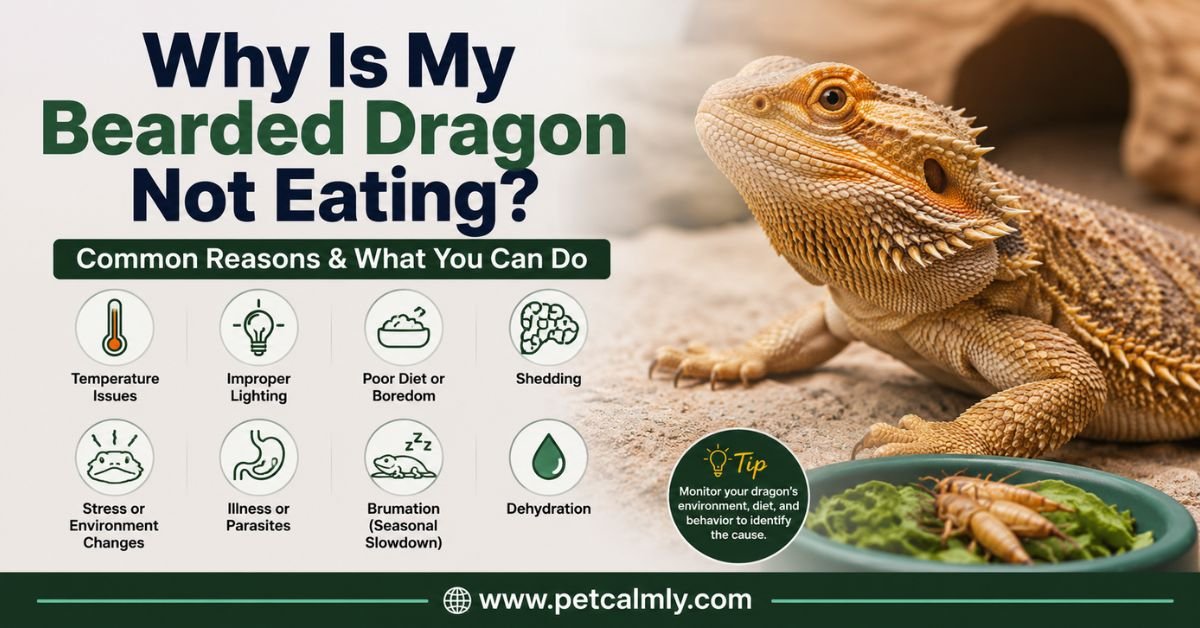
If you’re wondering “Why is my bearded dragon not eating?”, the answer depends on its age, behavior, environment, and overall health. Many bearded dragons temporarily lose their appetite because of shedding, seasonal brumation, stress, or incorrect temperatures. However, a sudden refusal to eat especially when combined with weight loss, lethargy, sunken eyes, diarrhea, or difficulty moving may signal an illness that needs prompt veterinary attention. Checking the habitat setup, hydration, lighting, and recent behavior is the best first step before assuming the worst.
Why Is My Bearded Dragon Not Eating? Complete Owner’s Guide
A healthy bearded dragon usually has a good appetite. That’s why it can be worrying when your pet suddenly ignores insects, greens, or favorite treats.
The good news is that not every loss of appetite means something is seriously wrong. Many bearded dragons naturally eat less during certain life stages or environmental changes. Others stop eating because something in their enclosure isn’t quite right.
The challenge is figuring out whether your dragon is simply taking a normal break from food—or trying to tell you something is wrong.
This guide explains:
- The most common reasons bearded dragons stop eating
- How to tell normal appetite changes from emergencies
- What signs you should monitor at home
- Safe ways to encourage eating
- When it’s time to contact a reptile veterinarian
By the end, you’ll have a clear plan for helping your dragon eat again while avoiding common mistakes.
Why Is My Bearded Dragon Not Eating? Common Causes
There isn’t one single reason a bearded dragon refuses food. Appetite is influenced by temperature, lighting, stress, age, hormones, hydration, and overall health.
Let’s look at the most common possibilities.
Incorrect Enclosure Temperature
One of the biggest reasons bearded dragons stop eating is an enclosure that’s too cold.
Unlike mammals, bearded dragons rely on external heat to digest food. If their basking spot isn’t warm enough, digestion slows dramatically. As a result, they naturally lose interest in eating.
Signs the temperature may be too low
- Sitting under the heat lamp all day
- Moving less than usual
- Food left untouched
- Difficulty digesting previous meals
- Little or no bowel movements
Ideal temperature ranges
| Area | Recommended Temperature |
|---|---|
| Basking spot | 100–110°F (38–43°C) for adults |
| Warm side | 85–90°F (29–32°C) |
| Cool side | 75–85°F (24–29°C) |
| Night | 65–75°F (18–24°C) |
Always measure temperatures with a reliable digital thermometer rather than guessing.
UVB Lighting Problems
Even if temperatures are correct, poor UVB lighting can reduce appetite.
Bearded dragons need UVB light to produce vitamin D3, which helps them absorb calcium and maintain healthy muscles, bones, and metabolism.
Without proper UVB exposure, they may become:
- Weak
- Less active
- Reluctant to eat
- More prone to metabolic bone disease
Common UVB mistakes
- Old bulbs that no longer emit enough UVB
- Plastic or glass blocking UVB rays
- Bulbs placed too far away
- Low-quality compact bulbs used in large enclosures
- Lights left off for long periods
Many owners don’t realize UVB bulbs continue to shine even after their UV output has significantly declined.
Stress Can Cause a Temporary Loss of Appetite
Stress is another surprisingly common reason bearded dragons stop eating.
Unlike dogs or cats, reptiles often respond to stress by becoming quieter and refusing food.
Moving to a New Home
New bearded dragons often need time to adjust.
During the first several days or even a couple of weeks they may:
- Hide frequently
- Eat very little
- Stay still for long periods
- Watch their surroundings carefully
This adjustment period is completely normal if your dragon otherwise appears alert and healthy.
Avoid excessive handling while your pet settles in.
Frequent Handling
Most bearded dragons enjoy gentle interaction once they trust their owner.
However, too much handling can become stressful, especially for:
- Young dragons
- Newly adopted reptiles
- Sick animals
- Dragons during shedding
If your dragon seems nervous after being handled, give it a few quiet days with minimal disturbance.
Enclosure Changes
Small habitat changes can temporarily affect appetite.
Examples include:
- New decorations
- Rearranged furniture
- Different substrate
- Larger enclosure
- New lighting
- Different feeding dishes
Most dragons adjust within several days.
Seeing Another Bearded Dragon
Bearded dragons are naturally solitary animals.
Even if two dragons never touch, constantly seeing another dragon nearby may create stress.
Some may respond by:
- Glass surfing
- Head bobbing
- Black beard displays
- Reduced appetite
If enclosures face each other, consider adding a visual barrier.
Shedding Often Reduces Appetite
Many owners panic when their dragon stops eating before a shed.
In reality, reduced appetite during shedding is common.
As old skin loosens, your dragon may feel uncomfortable and less interested in food.
Signs Your Dragon Is About to Shed
Watch for:
- Dull skin color
- Gray patches
- Cloudy appearance
- Less activity
- Increased rubbing
- Appetite changes
Young dragons shed much more frequently than adults because they’re growing rapidly.
Should You Feed During Shedding?
Yes.
Always offer food as usual.
Some dragons continue eating normally, while others only nibble a little.
Never force-feed a dragon that’s shedding unless advised by a reptile veterinarian.
Brumation Is a Normal Seasonal Cause
Adult bearded dragons often experience brumation, a natural period similar to hibernation.
During brumation they naturally:
- Eat very little
- Sleep much more
- Stay hidden
- Move less often
- Spend longer under shelter
Many first-time owners mistake brumation for illness.
What Age Do Bearded Dragons Brumate?
Most healthy adults begin brumation after reaching around 10–18 months of age.
Young juveniles generally should not enter prolonged brumation.
If a very young dragon suddenly stops eating and becomes inactive, it’s safer to investigate other causes before assuming brumation.
Signs It May Be Brumation
Your dragon may:
- Ignore insects
- Refuse vegetables
- Sleep for much of the day
- Stay inside its hide
- Wake occasionally for water
- Maintain a stable body condition
Before assuming brumation, it’s wise to ensure your dragon isn’t ill, especially if this is the first time you’ve observed the behavior.
Age Changes Appetite
Appetite naturally changes as bearded dragons grow.
Many owners worry because an adult eats far less than it did as a baby.
This is completely expected.
Baby Bearded Dragons
Young dragons grow incredibly fast.
They often eat:
- Several times daily
- Large numbers of appropriately sized insects
- Fresh greens alongside protein
Their appetite can seem endless.
Juveniles
As growth slows, meals gradually become less frequent.
Vegetables begin making up a larger portion of the diet.
Some days they may eat enthusiastically, while other days they appear less interested.
Adult Bearded Dragons
Healthy adults usually eat fewer insects than babies.
Instead, they often consume:
- Leafy greens
- Vegetables
- Moderate insect meals several times per week
Owners sometimes mistake this natural reduction in appetite for illness.
Diet Problems That Reduce Appetite
Sometimes the issue isn’t your dragon’s health it’s the food being offered.
Offering the Same Food Every Day
Imagine eating exactly the same meal every day.
Bearded dragons can become less interested in repetitive diets too.
Rotate safe foods to provide variety while keeping meals balanced.
Suitable options include:
- Collard greens
- Mustard greens
- Dandelion greens
- Squash
- Bell peppers
- Occasional safe insects
Feeding Oversized Insects
Large prey can intimidate your dragon or even cause digestive problems.
As a general rule, insects should not be wider than the space between your dragon’s eyes.
Oversized prey may lead to:
- Refusing meals
- Choking risk
- Digestive discomfort
- Constipation
Too Many Treats
Many dragons love treats such as waxworms or hornworms.
However, frequent treats can make healthier foods seem less appealing.
If your dragon has been spoiled with rich treats, it may begin refusing its regular balanced diet.
Moderation is key.
Mild Dehydration Can Affect Appetite
Bearded dragons don’t always drink from a water bowl, so dehydration can develop gradually.
Even mild dehydration may reduce appetite.
Signs of dehydration include:
- Wrinkled skin
- Sticky saliva
- Sunken eyes
- Thick urates
- Reduced activity
- Less interest in food
Hydration can often be supported by:
- Fresh drinking water
- Moist vegetables
- Occasional supervised baths if your dragon tolerates them
- Light misting of greens rather than the dragon itself, if appropriate
Not every dragon drinks the same way, so observing your pet’s habits is important.
Medical Causes, Warning Signs, and What to Do When Your Bearded Dragon Stops Eating
Now that we’ve covered the common husbandry and environmental reasons for appetite loss, it’s time to look at situations that require closer attention.
Not eating for a day or two isn’t always an emergency. However, if your bearded dragon continues refusing food despite having the correct temperatures, UVB lighting, and a low-stress environment, an underlying health problem becomes more likely.
The key is to look at your dragon as a whole not just its appetite.
Medical Reasons Why a Bearded Dragon Is Not Eating
Illness often causes appetite loss before other obvious symptoms appear.
Understanding these conditions can help you recognize when home care is enough and when professional veterinary treatment is needed.
Parasites
Internal parasites are one of the most common medical reasons for poor appetite in captive bearded dragons.
A small number of parasites may not cause noticeable problems, but heavy parasite loads can affect digestion, energy levels, and nutrient absorption.
Possible signs include:
- Gradual weight loss
- Loose stools or diarrhea
- Bad-smelling feces
- Reduced appetite
- Low energy
- Poor growth in younger dragons
A reptile veterinarian can diagnose parasites through a fecal examination and recommend the appropriate treatment.
Impaction
Impaction occurs when material becomes lodged in the digestive tract, making it difficult or impossible to pass normally.
Common causes include:
- Eating substrate such as sand or gravel
- Swallowing oversized insects
- Low enclosure temperatures that slow digestion
- Dehydration
- Inadequate fiber in the diet
Warning signs
- Refusing food
- No bowel movements
- Swollen abdomen
- Difficulty walking
- Weakness in the back legs
- Straining without producing stool
Impaction can become life-threatening if left untreated.
Mouth Problems
A painful mouth can make eating uncomfortable.
Issues may include:
- Mouth infections
- Injured gums
- Swollen tissues
- Broken teeth
- Food trapped around the gums
Watch for:
- Drooling
- Refusing hard insects
- Keeping the mouth slightly open
- Swelling around the jaw
- Bad odor from the mouth
These problems usually require veterinary examination.
Respiratory Infections
Respiratory illness often causes a noticeable decrease in appetite.
Symptoms may include:
- Wheezing
- Clicking sounds
- Mucus around the nose
- Open-mouth breathing while resting
- Frequent gaping unrelated to basking
- Lethargy
Respiratory infections should never be ignored because they can worsen quickly.
Metabolic Bone Disease (MBD)
Poor UVB lighting or long-term calcium deficiency can lead to metabolic bone disease.
As the condition progresses, eating becomes difficult because muscles and bones weaken.
Signs include:
- Tremors
- Soft jaw
- Bent limbs
- Weak grip
- Difficulty climbing
- Reduced appetite
Proper UVB lighting and calcium supplementation are essential for prevention.
Egg Binding in Female Bearded Dragons
Adult females may stop eating before laying eggs.
Sometimes, however, eggs become stuck inside the body.
Warning signs
- Digging without laying
- Swollen abdomen
- Restlessness
- Weakness
- Loss of appetite lasting several days
Egg binding is a medical emergency requiring veterinary care.
How Long Can a Bearded Dragon Go Without Eating?
The answer depends on its age and overall health.
| Age | Typical Tolerance Without Food* |
|---|---|
| Babies | Only a short period before veterinary advice is recommended |
| Juveniles | Several days may become concerning if they refuse all food |
| Healthy adults | Can sometimes go longer, especially during brumation |
*These are general observations not goals. Any prolonged appetite loss accompanied by illness, dehydration, or weight loss should be evaluated promptly.
Never judge your dragon’s health by appetite alone.
Signs Your Bearded Dragon Is Sick Instead of Simply Not Hungry
A healthy dragon may skip meals occasionally.
A sick dragon usually shows additional changes.
Look for these warning signs
- Rapid weight loss
- Sunken eyes
- Persistent black beard
- Lethargy
- Difficulty moving
- Swollen joints
- Runny stool
- Bloody stool
- Constipation
- Vomiting
- Tremors
- Weak grip
- Trouble climbing
- Swollen belly
- Breathing difficulties
The more symptoms present, the more likely your dragon needs veterinary attention.
How to Check Your Bearded Dragon at Home
A simple home assessment can help identify obvious husbandry problems before assuming illness.
Step 1: Check Temperatures
Use a digital thermometer to verify:
- Basking surface
- Warm side
- Cool side
- Overnight temperatures
Incorrect temperatures are one of the most common reasons reptiles stop eating.
Step 2: Inspect the UVB Light
Ask yourself:
- Is the bulb still within its recommended replacement period?
- Is anything blocking the UVB rays?
- Is the bulb positioned correctly?
- Is it on for an appropriate daytime cycle?
Replacing an old UVB bulb often improves appetite within days if lighting was the issue.
Step 3: Observe Behavior
Notice whether your dragon:
- Is alert
- Watches movement
- Climbs normally
- Responds to food
- Basks regularly
Behavior often reveals more than appetite alone.
Step 4: Look at the Stool
Healthy droppings provide valuable clues.
Pay attention to:
- Frequency
- Color
- Consistency
- Presence of parasites
- Blood
- Undigested insects
Bring a fresh stool sample to your veterinarian if illness is suspected.
Step 5: Monitor Body Weight
A kitchen scale can help you detect gradual weight loss before it becomes obvious.
Record weight weekly if your dragon has stopped eating.
Weight trends are often more informative than a single measurement.
What Should You Do If Your Bearded Dragon Stops Eating?
Stay calm and avoid making multiple changes at once.
Work through the following checklist.
✔ Review the habitat
Confirm:
- Correct basking temperature
- Proper UVB lighting
- Suitable enclosure size
- Clean habitat
- Appropriate humidity
- Safe substrate
✔ Offer Fresh Foods
Provide fresh food daily even if your dragon refuses it.
Rotate healthy options such as:
- Collard greens
- Mustard greens
- Turnip greens
- Dandelion greens
- Squash
- Bell peppers
Offer appropriately sized feeder insects based on your dragon’s age.
✔ Encourage Hydration
Hydration supports digestion and overall health.
Ways to encourage hydration include:
- Fresh water available daily
- Moist leafy greens
- Offering water carefully if your dragon drinks from a syringe under veterinary guidance
- Occasional supervised soaking for dragons that tolerate it
Never force water into your dragon’s mouth, as this can increase the risk of aspiration.
✔ Reduce Stress
Your dragon may simply need a quiet environment.
Reduce stress by:
- Limiting handling
- Keeping loud pets away
- Avoiding frequent enclosure changes
- Providing hiding spots
- Maintaining a consistent routine
✔ Observe Before Panicking
If your dragon is:
- Bright
- Active
- Maintaining weight
- Recently shedding
- Entering brumation
A short period of appetite reduction may be completely normal.
Foods That May Encourage a Reluctant Bearded Dragon to Eat
Sometimes offering favorite foods helps stimulate appetite.
Healthy options include:
- Fresh collard greens
- Mustard greens
- Dandelion greens
- Butternut squash
- Bell peppers
- Dubia roaches
- Crickets
- Black soldier fly larvae
Treat insects like hornworms or waxworms should only be used occasionally, not as a daily solution.
Common Mistakes Owners Make
Good intentions can sometimes make the situation worse.
Avoid these common mistakes.
Changing Everything at Once
If you replace lighting, substrate, food, decorations, and temperatures all on the same day, it becomes impossible to know what solved the problem.
Make one adjustment at a time whenever possible.
Overfeeding Treats
Offering only favorite treats teaches some dragons to ignore healthier foods.
Maintain a balanced diet rather than rewarding food refusal.
Ignoring Weight Loss
Some owners focus only on whether the dragon eventually eats.
Weight loss is often a more important indicator than appetite itself.
Waiting Too Long
If your dragon hasn’t eaten for an extended period and is becoming weak or losing weight, don’t wait for the problem to resolve on its own.
Early veterinary care often leads to better outcomes.
Force Feeding Without Advice
Force feeding can cause stress or injury if performed incorrectly.
Unless instructed by a reptile veterinarian, avoid attempting it at home.
Simple Checklist: Why Is My Bearded Dragon Not Eating?
Use this quick checklist before assuming the worst.
✅ Basking temperature is correct
✅ UVB bulb is working and not overdue for replacement
✅ Fresh vegetables are offered daily
✅ Insects are appropriately sized
✅ Dragon is hydrated
✅ No recent major stress
✅ No signs of illness
✅ Normal bowel movements
✅ Weight remains stable
If several boxes cannot be checked or your dragon’s condition is worsening it’s time to seek veterinary advice.
When Should You Worry If Your Bearded Dragon Is Not Eating?
Some appetite changes are harmless, while others require prompt veterinary care.
The following situations should never be ignored.
Contact a Reptile Veterinarian If Your Bearded Dragon Has:
- Refused food for an extended period without an obvious cause
- Rapid or noticeable weight loss
- Severe lethargy or weakness
- Sunken eyes or signs of dehydration
- Difficulty breathing
- Blood in the stool
- Persistent diarrhea
- No bowel movements for several days along with signs of impaction
- Swollen abdomen
- Tremors or difficulty walking
- Soft jaw or bent limbs
- Vomiting or regurgitation
- A black beard that remains dark for long periods with other signs of illness
Prompt treatment often prevents minor problems from becoming serious.
When Is Appetite Loss Considered Normal?
There are several situations where eating less can be completely normal.
During Shedding
Many dragons naturally eat less for a few days before or during a shed.
As long as your pet remains alert and resumes eating afterward, this temporary appetite drop is usually not a cause for concern.
During Brumation
Healthy adult bearded dragons often slow down during cooler months.
Typical signs include:
- Sleeping more
- Eating less
- Spending more time hiding
- Reduced activity
If you’re unsure whether your dragon is brumating or sick, a veterinary examination is the safest way to rule out illness.
After Moving to a New Home
New surroundings can temporarily reduce appetite.
Most healthy dragons begin eating normally once they feel secure in their enclosure.
Avoid excessive handling during this adjustment period.
How to Prevent Appetite Problems
Good husbandry is the best way to keep your bearded dragon eating well throughout its life.
Maintain Proper Temperatures
Check enclosure temperatures regularly with accurate digital thermometers.
Don’t rely on stick-on gauges, as they may not reflect the true basking surface temperature.
Replace UVB Bulbs on Schedule
Even if the bulb still produces visible light, its UVB output gradually declines.
Follow the manufacturer’s recommended replacement schedule and position the bulb at the correct distance.
Feed a Balanced Diet
Offer a varied diet instead of relying on the same foods every day.
A healthy diet should include:
- A variety of leafy greens
- Safe vegetables
- Appropriate feeder insects
- Calcium and vitamin supplements as recommended
Avoid making fatty insects a regular part of the diet.
Keep Fresh Water Available
Some dragons rarely drink from a bowl, but fresh water should always be available.
Hydration also comes from moisture-rich vegetables and proper husbandry.
Reduce Stress
A calm dragon is more likely to eat consistently.
Help reduce stress by:
- Keeping a regular daily routine
- Avoiding unnecessary enclosure changes
- Limiting loud disturbances
- Providing hiding areas
- Handling gently and appropriately
Schedule Routine Health Checks
Regular veterinary visits can identify problems before they affect appetite.
Routine fecal examinations are especially useful for detecting parasites that may not cause obvious symptoms at first.
Can Stress Alone Cause a Bearded Dragon to Stop Eating?
Yes.
Stress is one of the most overlooked causes of appetite loss.
Common stress triggers include:
- Relocation
- Frequent handling
- New pets
- Loud household activity
- Improper enclosure setup
- Seeing another bearded dragon
- Sudden lighting changes
Once the stressor is removed, many dragons begin eating normally within several days.
Should You Force Feed a Bearded Dragon?
In most situations, no.
Force feeding can:
- Increase stress
- Cause injury
- Lead to aspiration if done incorrectly
- Delay proper diagnosis
Instead, identify the reason your dragon isn’t eating.
If assisted feeding becomes necessary, it should be done under the guidance of a reptile veterinarian.
How to Monitor Recovery
Once your dragon begins eating again, continue monitoring its progress.
Keep track of:
- Appetite
- Weight
- Activity level
- Bowel movements
- Hydration
- Shedding cycles
Many experienced reptile owners keep a simple notebook or digital log.
Recording small changes over time can help identify patterns and provide useful information if veterinary care becomes necessary.
Quick Recovery Checklist
Use this checklist while your dragon recovers.
Daily
✔ Check basking temperature
✔ Verify UVB lighting is functioning
✔ Offer fresh greens
✔ Remove uneaten food
✔ Observe activity level
✔ Check for normal stool
✔ Refresh drinking water
Weekly
✔ Weigh your dragon
✔ Clean enclosure thoroughly
✔ Inspect lighting equipment
✔ Monitor body condition
✔ Watch for signs of shedding or brumation
Myths About Bearded Dragons Not Eating
Many misconceptions online can lead to unnecessary worry or delay proper care.
Myth 1: Every Dragon That Stops Eating Is Sick
Fact: Temporary appetite loss during shedding, stress, or brumation is common.
Myth 2: A Dragon Will Never Starve Itself
Fact: While some appetite changes are normal, serious illnesses can cause prolonged food refusal. Persistent anorexia should always be investigated.
Myth 3: Feeding More Treats Solves the Problem
Fact: Too many treats may encourage picky eating while failing to address the real cause.
Myth 4: UVB Lights Last Forever
Fact: UVB output declines over time, even if the bulb still appears bright.
Myth 5: All Appetite Loss Is an Emergency
Fact: Context matters. Behavior, body condition, hydration, and enclosure setup help determine whether the situation is urgent.
Frequently Asked Questions
1. Why is my bearded dragon not eating but acting normal?
If your dragon is alert, active, maintaining its weight, and living in a properly maintained enclosure, temporary appetite loss may be related to shedding, stress, seasonal brumation, or natural age-related changes. Continue monitoring closely and review your husbandry.
2. How long can a healthy adult bearded dragon go without eating?
Healthy adults can sometimes eat much less during brumation than at other times of the year. Outside of brumation, ongoing food refusal should be investigated especially if accompanied by weight loss or changes in behavior.
3. Why is my baby bearded dragon not eating?
Young dragons grow quickly and usually have strong appetites. Poor temperatures, incorrect UVB lighting, relocation stress, parasites, or illness should be considered if a baby consistently refuses food.
4. Should I keep offering food if my bearded dragon won’t eat?
Yes. Offer fresh food daily, remove leftovers promptly, and avoid leaving insects loose in the enclosure. Consistent feeding opportunities help you monitor appetite without creating additional stress.
5. Can dehydration make a bearded dragon stop eating?
Yes. Mild dehydration can reduce appetite and slow digestion. Ensure fresh water is available, provide moisture-rich vegetables, and review the enclosure’s environmental conditions.
6. When should I take my bearded dragon to the veterinarian?
Seek veterinary care if appetite loss continues alongside weight loss, lethargy, breathing problems, swelling, diarrhea, vomiting, signs of impaction, or any other concerning symptoms.
More Information About Pets, Please Visit Our Website: Bearded Dragon Stress Signs
Bearded Dragon Tank Setup Guide
Conclusion
If you’ve been asking yourself, “Why is my bearded dragon not eating?”, remember that the answer isn’t always simple. A temporary loss of appetite may be caused by shedding, stress, seasonal brumation, or minor husbandry issues that can often be corrected at home.
However, your bearded dragon’s overall condition matters more than a single missed meal. Watch for changes in weight, energy, hydration, bowel movements, and behavior while ensuring the enclosure provides the correct heat, UVB lighting, and nutrition.
When appetite loss persists or is accompanied by signs of illness, don’t delay seeking help from a qualified reptile veterinarian. Early diagnosis and treatment give your pet the best chance of a full recovery.
With careful observation, proper husbandry, and timely veterinary care when needed, most bearded dragons can return to healthy eating habits and continue living active, rewarding lives.