Short direct answer
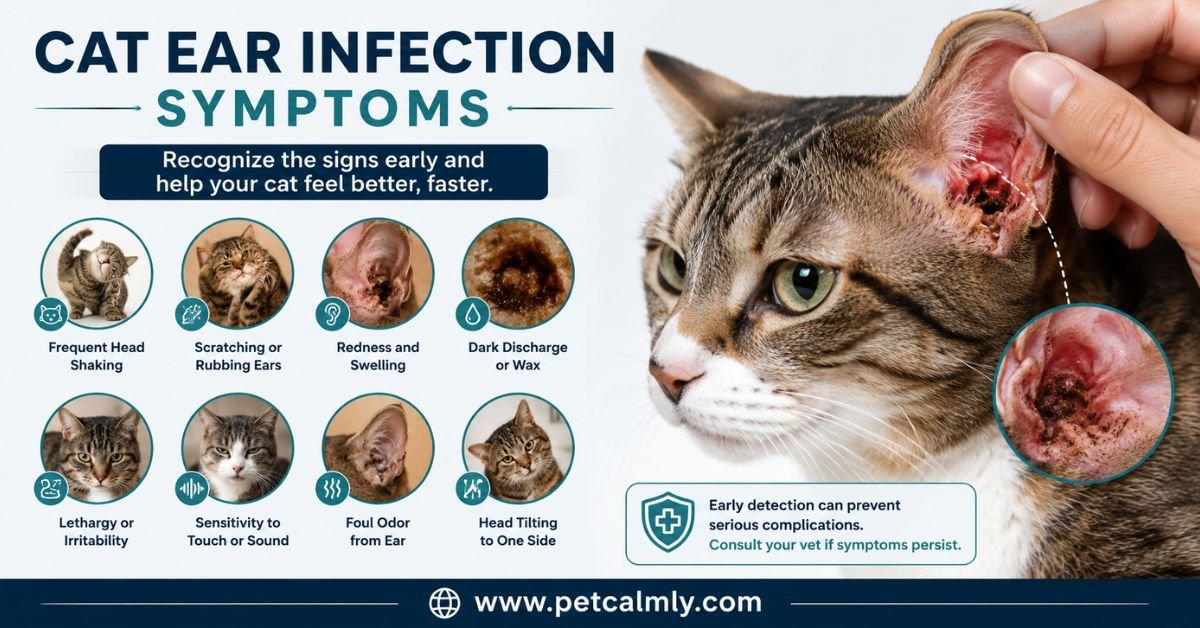
The most common cat ear infection symptoms are frequent head shaking, scratching or pawing at the ear, a dark brown, yellow, or coffee-ground-like discharge, a strong odor coming from the ear, redness or swelling inside the ear flap, and visible discomfort when the ear is touched. If your cat is tilting their head to one side, seems off-balance, or the ear looks painful to touch, that points to a more advanced infection and needs a same-week vet visit rather than a wait-and-see approach.
If you’ve just noticed your cat shaking their head a little too often, or caught a whiff of something not-quite-right when they walked by, you’re probably here because something feels off. That instinct is usually right. Cats are subtle about pain an ear infection that would have a dog howling might only show up as your cat being a bit more irritable, avoiding being petted near the head, or sleeping with one ear tucked down. This guide walks through what these infections actually look like in real cats, why they happen, what you can safely do at home, and just as importantly where home care stops and a vet visit starts.
What Does a Cat Ear Infection Actually Look Like?
Picture a healthy cat ear: pale pink on the inside, no smell, and only a small amount of light-colored wax if any. An infected ear rarely looks subtle once you know what to check for. The skin often turns red or dusky, the canal may look swollen or narrower than usual, and there’s usually some kind of discharge sitting in the folds of the ear.
What that discharge looks like can actually tell you a lot before you even get to the vet:
- Dark brown, crumbly debris that resembles coffee grounds often points to ear mites, especially in kittens or cats that spend time outdoors.
- Yellow or waxy discharge with a yeasty smell is frequently linked to a yeast (Malassezia) overgrowth.
- Thick, pus-like discharge with a sharper odor tends to suggest a bacterial component.
None of this is meant to replace a diagnosis cytology under a microscope is really the only way a vet can confirm what’s growing in there but it does help you describe the problem accurately, which speeds up treatment.
The Full List of Cat Ear Infection Symptoms to Watch For
Some of these show up early, others only appear once the infection has been brewing for a while. Cats rarely show every symptom at once, so don’t wait for the “classic” picture before taking it seriously.
- Shaking the head repeatedly, sometimes hard enough that you can hear the ears flap
- Scratching at one or both ears, occasionally hard enough to leave scabs or hair loss around the base of the ear
- A visible discharge brown, black, yellow, or occasionally bloody
- A noticeable odor when you lean in close to the ear
- Redness, swelling, or heat inside the ear flap
- Flinching, pulling away, or growling when the ear area is touched
- Holding one ear lower or flatter than the other
- Excessive grooming around the head and neck, sometimes to the point of irritating the skin
- Tilting the head to one side, especially if it’s a new behavior
- Loss of balance, stumbling, or circling in more advanced cases
- Rubbing the side of the face against furniture or the floor
If you’re seeing two or three of the earlier symptoms shaking, scratching, mild odor that’s usually still in the “book a routine vet visit” territory. Head tilting, balance problems, or an ear that’s clearly painful to the touch move this into “don’t wait” territory, which we’ll cover in more detail further down.
Why Do Cats Get Ear Infections in the First Place?
It helps to understand the mechanics here, because it changes how you think about prevention. A cat’s ear canal is lined with skin that produces a small, steady amount of wax and oil. When something disrupts that balance irritation, excess moisture, a parasite, allergies the skin responds by producing more wax and becoming inflamed. That creates a warm, damp environment where the bacteria and yeast that normally live harmlessly in the ear start to multiply out of control. The itching and irritation that follows leads to more scratching, which causes more inflammation, and the cycle feeds itself.
Some of the most common underlying triggers include:
Ear mites (Otodectes cynotis). This is one of the most frequent causes of outer ear irritation in kittens and cats that go outdoors, and it’s highly contagious between pets in the same household. Mites tend to produce that distinctive dark, crumbly discharge.
Allergies. Food sensitivities or environmental allergies (pollen, dust, certain fabrics) can inflame the ear canal the same way they inflame skin elsewhere on the body. Cats with chronic, recurring ear issues are often dealing with an allergy that hasn’t been identified yet, rather than the same infection coming back.
Yeast and bacterial overgrowth. These are almost always secondary something else irritates the ear first, and yeast or bacteria take advantage of the disrupted environment.
Foreign material. Grass seeds, debris, or even excess hair can lodge in the canal, particularly in cats that spend time outside or in long-haired breeds.
Polyps or growths. Less common, but inflammatory polyps in the middle ear can cause symptoms that look identical to a routine infection, which is one reason a vet exam matters even when you’re fairly sure it’s “just” an infection.
Underlying health conditions. Cats with weakened immune systems, diabetes, or hormonal imbalances tend to be more prone to ear infections that don’t fully resolve or that keep coming back.
Outer, Middle, and Inner Ear Infections: Why the Difference Matters
Most cat ear infections start in the outer ear canal the part you can actually see when you lift the ear flap. Vets call this otitis externa, and it’s by far the most common form in cats. Left untreated, an outer ear infection can work its way deeper into the middle ear (otitis media) and, in rare cases, the inner ear (otitis interna).
This progression matters because the symptoms shift as the infection moves deeper:
| Location | Typical Symptoms | Urgency |
|---|---|---|
| Outer ear (otitis externa) | Discharge, odor, scratching, redness | Book a vet visit within a few days |
| Middle ear (otitis media) | Head tilt, pain, muffled hearing, discharge | See a vet promptly |
| Inner ear (otitis interna) | Loss of balance, circling, unusual eye movements, disorientation | Same-day or emergency care |
The reason this table matters isn’t to scare you most cats never get past otitis externa if it’s treated within a reasonable window. It’s that the earlier you address the outer ear symptoms, the less likely you are to end up dealing with balance problems or hearing complications down the line.
Kitten Ear Infections vs. Adult Cat Ear Infections
Kittens, especially ones that came from a shelter, foster home, or outdoor litter, are far more likely to have ear mites than adult cats. If you’ve recently brought home a kitten and notice dark, gritty debris in the ears along with head shaking, mites should be high on your list of suspects and worth mentioning specifically when you call the vet, since treatment for mites is different from treatment for a bacterial or yeast infection.
Adult and senior cats, by comparison, are more likely to be dealing with allergies, yeast overgrowth, or an underlying condition contributing to recurring infections. If your adult cat has had more than one ear infection in the past year, it’s worth asking your vet about allergy testing rather than just treating each episode as a standalone event.
5 Common Mistakes Cat Owners Make With Ear Infections
A few patterns come up again and again, and they usually come from good intentions:
1: Waiting to “see if it clears up.”
Ear infections don’t resolve on their own the way a mild upset stomach sometimes does. The itch-scratch cycle tends to make things worse, not better, over a week or two of waiting.
2: Using human ear drops or hydrogen peroxide.
These aren’t formulated for a cat’s ear canal and can actually irritate already-inflamed tissue, making symptoms worse.
3: Deep cleaning with cotton swabs.
Pushing a swab into the canal can pack debris deeper or, in a worst-case scenario, injure the eardrum. Cleaning should stay limited to the visible parts of the ear that you can reach with a soft cloth.
4: Stopping medication early.
Once a vet prescribes ear drops, symptoms often improve within a few days but the underlying infection usually isn’t fully cleared until the full course is finished, typically seven to fourteen days. Stopping early is one of the most common reasons infections come back.
5: Treating the same symptoms as if it’s always the same problem.
A recurring “infection” in a cat that gets treated over and over may actually be an unaddressed allergy or anatomical issue rather than a new infection each time.
How Vets Diagnose an Ear Infection
Knowing what to expect at the appointment can take some of the stress out of it. A typical visit involves:
- A visual exam of the ear canal, often using an otoscope to look past the outer ear
- A swab of the discharge, examined under a microscope to identify whether mites, yeast, or bacteria are present
- In cats that are especially painful or uncooperative, mild sedation may be used to get a safe, thorough look
- For recurring cases, a vet may recommend allergy testing or bloodwork to look for an underlying cause
This step matters more than it might seem. Treating a yeast infection with an antibacterial product (or vice versa) simply won’t work, and guessing at home wastes time your cat is spending uncomfortable.
Practical Guide: What You Can Safely Do at Home
There’s a real difference between supportive care and treatment. You can do a few things at home to keep your cat comfortable while you arrange a vet visit, but none of these replace an actual diagnosis:
- Gently wipe the visible, outer part of the ear with a soft, damp cloth never insert anything into the canal
- Keep your cat from scratching excessively by trimming nails or using a soft recovery collar if the scratching is causing skin damage
- Avoid bathing or getting water in the ears until the infection has been evaluated
- Keep a simple log of what you’re seeing which ear, how often they’re shaking their head, any changes in discharge color so you can give the vet clear information
- Isolate the affected cat from other pets temporarily if you suspect mites, since they spread easily between animals sharing bedding or grooming each other
Home care is about comfort and information-gathering, not resolution. Medicated ear drops, whether antiparasitic, antifungal, or antibacterial, require a proper diagnosis to choose correctly.
When Should You Worry? Signs That Need Immediate Veterinary Attention
Most ear infections are uncomfortable but not urgent a vet visit within a few days is usually appropriate. That said, certain signs mean you shouldn’t wait:
- A head tilt that appears suddenly or persists
- Loss of balance, stumbling, or walking in circles
- Unusual eye movements (rapid side-to-side flicking)
- The ear is hot, visibly swollen, or extremely painful to touch
- Discharge with blood, or a sudden foul smell that’s noticeably worse than before
- Your cat stops eating or hides more than usual, which in cats often signals pain
- Signs of infection in both ears at once, which can sometimes indicate a more systemic issue
These symptoms suggest the infection may have moved into the middle or inner ear, or that there’s a complication like a ruptured eardrum. None of these should wait for a “let’s see how the week goes” approach.
What Should Pet Owners Do Next?
If you’re noticing early symptoms shaking, mild scratching, a bit of odor the right move is to schedule a vet visit within the next few days rather than an emergency trip. Bring notes on which ear is affected, how long you’ve noticed symptoms, and whether your cat has had ear issues before. If you’re seeing any of the “don’t wait” signs above, treat it the way you would any sudden neurological or pain symptom and get seen the same day.
Once you have a diagnosis, the treatment plan your vet gives you whether that’s antiparasitic drops, an antifungal, an antibiotic, or an anti-inflammatory needs to be followed for the full length prescribed, even after your cat seems back to normal. A recheck exam is often recommended to confirm the infection has actually cleared and isn’t just quiet for now.
Preventing Future Ear Infections
Prevention isn’t about doing more it’s about doing a few things consistently:
- Check your cat’s ears every couple of weeks as part of a normal grooming routine, so you notice changes early
- Keep up with flea and parasite prevention, since some of these products also help control ear mites
- If your cat has known allergies, stick with the diet and management plan your vet has recommended, since flare-ups often show up in the ears first
- Only use ear cleaning products your vet has specifically recommended, and only as often as advised healthy ears generally don’t need frequent cleaning
- Dry your cat’s ears gently after baths if they get water in them
A cat with no history of ear problems usually doesn’t need a special routine beyond occasional checks. A cat with allergies or a history of infections benefits from a bit more consistency, ideally guided by your vet’s specific recommendations for that cat.
Conclusion
Cat ear infections are uncomfortable, sometimes frustrating to catch early, but almost always manageable once properly diagnosed and treated. The pattern to watch for is simple: head shaking, scratching, discharge, and odor mean it’s time for a vet visit; head tilting, balance issues, or clear pain mean it’s time to go now. Trust what you’re noticing you know your cat’s normal better than anyone else, and catching these symptoms early is genuinely the biggest factor in keeping a simple outer ear infection from becoming something more serious.
More Information About Pets, Please Visit Our Website: Why Do Cats Purr?
Cat Digestive Health Tips
Best Cat Vitamins for Indoor Cats
How to Improve Cat Dental Health
Frequently Asked Questions
1: How can I tell if my cat has an ear infection or just dirty ears?
Normal ear wax is usually light in color, minimal in amount, and odorless. If you’re noticing dark or crumbly debris, a strong smell, redness, or your cat reacting when you touch the ear, that points to infection rather than routine buildup, and it’s worth a vet visit to be sure.
2: Can a cat ear infection go away on its own without treatment?
It’s uncommon. Because the itch-scratch cycle tends to make inflammation worse rather than better, most infections need targeted treatment antiparasitic, antifungal, or antibacterial drops depending on the cause to actually resolve.
3: Is it safe to clean my cat’s ears at home if I suspect an infection?
You can gently wipe the visible outer ear with a soft cloth, but avoid inserting anything into the canal or using over-the-counter products before a vet has examined your cat. The wrong product on an already-inflamed ear can make things worse.
4: How long does it take for a cat ear infection to clear up?
With appropriate treatment, most infections start improving within a few days, and the full course typically runs seven to fourteen days. Chronic or severe cases, or ones tied to an underlying allergy, can take longer and may need a recheck exam.
5: Why does my cat keep getting ear infections?
Recurring infections are often a sign of an underlying issue allergies, anatomy, or a hormonal condition rather than bad luck. If your cat has had more than one or two episodes in a year, it’s worth discussing allergy testing or a longer-term management plan with your vet.
6: Are ear infections contagious between cats in the same household?
It depends on the cause. Ear mites spread easily between cats (and even to dogs) through close contact and shared bedding, so it’s wise to have other pets checked. Yeast and bacterial infections tied to allergies are generally not contagious.