Short direct answer
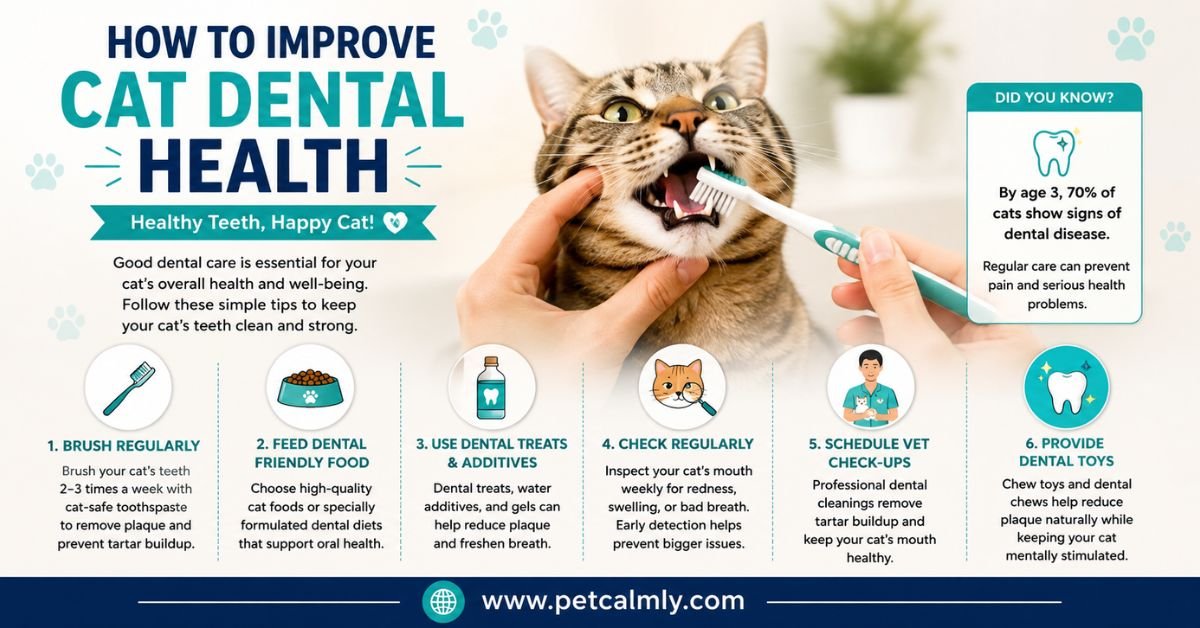
The best way to improve cat dental health is through a combination of regular tooth brushing, dental-friendly nutrition, professional veterinary checkups, and early detection of oral problems. Daily brushing with a cat-safe toothpaste remains the gold standard for preventing plaque and tartar buildup. Supporting dental care with dental treats, appropriate diets, and routine oral examinations can significantly reduce the risk of gum disease, tooth loss, pain, and other health complications.
Most importantly, dental disease often develops silently in cats. By creating a simple daily dental routine and recognizing early warning signs, you can help your cat maintain healthier teeth and a better quality of life for years to come.
Introduction
Many cat owners are surprised to learn that dental disease is one of the most common health problems seen in cats. A cat may appear perfectly normal eating, sleeping, and playing as usual while quietly dealing with painful gum inflammation or infected teeth.
Unlike people, cats rarely show obvious signs of discomfort until a problem becomes significant. That’s why dental care deserves far more attention than it often receives.
If you’ve noticed bad breath, difficulty eating, drooling, or simply want to keep your cat’s mouth healthy as they age, you’re in the right place.
This guide explains how to improve cat dental health naturally and safely, covering daily care routines, nutrition, common mistakes, warning signs, and practical tips that actually fit into real life with cats.
Why Cat Dental Health Matters
Dental health affects much more than your cat’s mouth.
When plaque and bacteria accumulate along the gum line, they can trigger inflammation, infection, pain, and tooth damage. Over time, chronic oral disease may affect overall well-being and make eating uncomfortable.
Healthy teeth help your cat:
- Eat comfortably
- Maintain a healthy weight
- Avoid chronic pain
- Reduce bacterial buildup
- Enjoy normal grooming habits
- Stay active and comfortable
Many owners assume bad breath is normal in cats. In reality, persistent bad breath often signals an underlying dental issue.
Understanding Common Cat Dental Problems
Before improving dental health, it helps to understand what commonly goes wrong.
Plaque and Tartar Buildup
Plaque is a sticky film of bacteria that forms on teeth after eating.
If plaque is not removed regularly, it hardens into tartar, which becomes much more difficult to eliminate without professional cleaning.
Signs of plaque and tartar:
- Yellow or brown deposits on teeth
- Bad breath
- Red gums
- Mild discomfort while eating
Gingivitis
Gingivitis is inflammation of the gums.
This condition is often reversible when caught early, making prevention especially important.
Common symptoms include:
- Red gums
- Swollen gum tissue
- Mild bleeding
- Bad breath
- Sensitivity around the mouth
Periodontal Disease
Periodontal disease develops when infection spreads deeper into the tissues supporting the teeth.
Without treatment, it may cause:
- Tooth loss
- Chronic pain
- Gum recession
- Jaw damage in severe cases
The main reason periodontal disease is dangerous is that it often progresses gradually before obvious symptoms appear.
Tooth Resorption
Tooth resorption is a surprisingly common condition in cats.
The tooth structure slowly breaks down, causing significant pain.
Signs may include:
- Sudden food dropping
- Chattering jaw while eating
- Reluctance to chew
- Sensitivity around the mouth
Many affected cats appear normal until examined by a veterinarian.
12 Early Signs Your Cat May Have Dental Problems
Cats naturally hide discomfort.
Watch for these subtle warning signs:
- Bad breath
- Drooling
- Pawing at the mouth
- Reduced appetite
- Preference for soft food
- Food falling from the mouth
- Weight loss
- Less grooming
- Facial swelling
- Irritability when touched near the head
- Blood in food bowls
- Avoiding toys they normally chew
Even one of these signs warrants a closer look.
The Best Ways to Improve Cat Dental Health
1. Brush Your Cat’s Teeth Regularly
If you could choose only one dental habit, brushing would be the most effective.
Brushing physically removes plaque before it hardens into tartar.
How often should you brush?
Ideally:
- Daily brushing is best
- Every other day is helpful
- Three times weekly is better than none
Consistency matters more than perfection.
What you’ll need
- Cat toothbrush or finger brush
- Cat-safe toothpaste
- Patience
- Positive reinforcement
Never use human toothpaste because ingredients can be harmful to cats.
Step-by-step brushing routine
- Let your cat smell the toothpaste.
- Place a small amount on your finger.
- Gently rub the gums.
- Introduce the toothbrush slowly.
- Focus on outer tooth surfaces.
- Keep sessions short.
- Reward afterward.
Many owners find success by starting with just a few seconds each day.
2. Feed a Dental-Friendly Diet
Nutrition plays a surprisingly important role in oral health.
Some foods are specifically designed to reduce plaque accumulation through their texture and chewing action.
Features of dental diets
- Larger kibble pieces
- Special fiber matrix designs
- Controlled nutritional profiles
- Reduced plaque accumulation
Ask your veterinarian whether a dental-support diet is appropriate for your cat.
3. Use Veterinary-Approved Dental Treats
Dental treats can complement brushing but should not replace it.
Quality dental treats may:
- Encourage chewing
- Help reduce plaque
- Freshen breath
- Support oral hygiene routines
When selecting treats:
- Follow feeding guidelines
- Consider calorie intake
- Choose products supported by veterinary recommendations
4. Provide Safe Chewing Opportunities
Although cats are not heavy chewers like dogs, some enjoy chewing appropriate toys.
Suitable options may help stimulate the mouth and encourage natural chewing behavior.
Look for:
- Cat-specific dental toys
- Textured chew products
- Safe rubber dental items
Avoid anything that can splinter or break into sharp pieces.
5. Schedule Regular Veterinary Dental Exams
Professional examinations remain one of the most important parts of dental care.
Even dedicated owners cannot see below the gum line where many dental problems begin.
Routine exams help identify:
- Gingivitis
- Tooth resorption
- Hidden infections
- Loose teeth
- Oral masses
Early treatment often prevents more serious issues later.
A Simple Daily Cat Dental Care Routine
Many owners worry dental care will take too much time.
In reality, an effective routine can take less than five minutes.
Daily Checklist
Morning
✓ Observe eating behavior
✓ Check for unusual drooling
✓ Notice any bad breath
Evening
✓ Brush teeth
✓ Offer dental-friendly treat
✓ Brief visual mouth check
Weekly
✓ Inspect gums
✓ Look for tartar buildup
✓ Monitor chewing habits
✓ Check for changes in appetite
Small efforts performed consistently often produce the best results.
Cat Dental Care by Age
Kittens
Good dental habits begin early.
Focus on:
- Handling the mouth gently
- Introducing toothpaste
- Positive experiences
- Monitoring baby teeth
The easier dental care feels during kittenhood, the easier it becomes later.
Adult Cats
Adult cats benefit most from:
- Consistent brushing
- Regular examinations
- Weight management
- Balanced nutrition
This stage is often when early dental disease first appears.
Senior Cats
Older cats have increased dental risks.
Pay extra attention to:
- Appetite changes
- Weight loss
- Drooling
- Oral sensitivity
Senior cats often require more frequent dental monitoring.
4 Common Mistakes Cat Owners Make
Many dental problems develop despite good intentions.
Here are some frequent mistakes.
1: Assuming Bad Breath Is Normal
Healthy cat breath may not smell minty, but it should not be overwhelmingly foul.
Persistent odor often indicates a problem.
2: Waiting for Obvious Symptoms
Cats frequently continue eating despite significant dental pain.
By the time symptoms become obvious, disease may already be advanced.
3: Relying Only on Treats
Dental treats help, but they do not replace brushing or veterinary care.
Think of them as a supplement, not a complete solution.
4: Using Human Toothpaste
Human toothpaste can contain ingredients unsuitable for cats.
Always choose products specifically formulated for pets.
5: Stopping Brushing After Resistance
Many cats initially resist dental care.
Slow introductions and positive reinforcement usually improve acceptance over time.
Natural Ways to Support Cat Dental Health
Some owners prefer incorporating natural support alongside standard dental care.
These methods can be helpful additions.
Encourage Water Intake
Adequate hydration supports overall oral health.
Try:
- Water fountains
- Multiple water stations
- Fresh water daily
Balanced Nutrition
A nutritionally complete diet supports healthy gums and immune function.
Avoid excessive treats and unbalanced homemade diets unless professionally formulated.
Reduce Stress
Chronic stress may indirectly affect overall health, including immune function.
Provide:
- Safe hiding places
- Predictable routines
- Environmental enrichment
- Interactive play
If your cat struggles with anxiety, related wellness and behavior resources may also be useful.
Dental Products: What Works and What Doesn’t?
Not every product marketed for dental care delivers meaningful results.
Helpful Options
| Product Type | Potential Benefit |
|---|---|
| Toothbrushes | Direct plaque removal |
| Cat toothpaste | Supports brushing |
| Dental diets | May reduce plaque accumulation |
| Dental treats | Supplemental support |
| Water additives | Additional hygiene support |
| Dental gels | May assist oral care |
Less Reliable Expectations
Products alone rarely solve established dental disease.
If tartar is already significant, professional treatment is usually necessary.
What to Avoid
Some well-meaning choices can create problems.
Avoid:
- Human toothpaste
- Sharp chew items
- Bones
- Hard objects that may crack teeth
- Ignoring persistent bad breath
- Skipping veterinary checkups
- Abrupt brushing sessions that create fear
Dental care should be gradual and positive whenever possible.
How Long Does It Take to See Improvement?
The timeline varies depending on your cat’s starting condition.
Mild plaque buildup
You may notice fresher breath within weeks.
Gingivitis
Improvement may occur after consistent dental care and veterinary guidance.
Advanced disease
Professional dental treatment is often needed before significant improvement occurs.
The key is consistency rather than expecting overnight results.
When Should You Worry?
Some signs require prompt veterinary attention.
Contact your veterinarian if you notice:
- Refusing food
- Facial swelling
- Bleeding gums
- Broken teeth
- Sudden weight loss
- Excessive drooling
- Severe bad breath
- Mouth pain
- Difficulty chewing
- Pawing at the face repeatedly
Potential Emergency Situations
Seek urgent veterinary care if your cat:
- Cannot eat
- Has major facial swelling
- Experiences trauma to the mouth
- Shows signs of severe pain
- Has uncontrolled bleeding
Dental issues can become serious surprisingly quickly.
What Should Pet Owners Do?
If you’re wondering where to start, keep it simple.
Action Plan
This Week
- Examine your cat’s mouth briefly.
- Purchase cat-safe toothpaste.
- Schedule a wellness exam if overdue.
- Introduce toothpaste gradually.
This Month
- Establish a brushing routine.
- Add dental-support products if recommended.
- Monitor breath and gum health.
- Track changes in eating behavior.
Long-Term
- Maintain consistent brushing.
- Schedule regular veterinary exams.
- Address dental issues early.
- Adjust care as your cat ages.
Most importantly, don’t wait for symptoms before taking action.
Preventive care is far easier and often less stressful than treating advanced dental disease.
Frequently Asked Questions
1: How often should I brush my cat’s teeth?
Daily brushing is ideal because plaque forms continuously. If daily brushing isn’t possible, aim for several sessions each week to maintain better oral health.
2: Can dental treats replace brushing?
No. Dental treats may help reduce plaque, but they cannot remove buildup as effectively as brushing. They work best as part of a complete dental care routine.
3: Why does my cat have bad breath even after brushing?
Persistent bad breath can indicate gingivitis, periodontal disease, tooth resorption, or infection. A veterinary dental examination is recommended if odor continues.
4: Is wet food bad for cat teeth?
Wet food is not necessarily harmful. Dental health depends on multiple factors, including oral hygiene, genetics, diet quality, and professional care rather than food type alone.
5: At what age should I start dental care for my cat?
The earlier the better. Introducing tooth brushing during kittenhood often makes lifelong dental care much easier and less stressful.
6: How can I tell if my cat’s mouth hurts?
Signs may include drooling, reduced appetite, chewing on one side, food dropping from the mouth, weight loss, irritability, or avoiding hard foods.
More Information About Pets, Please Visit Our Website: Dog Skin Allergy Treatment at Home
Dog Skin Allergy Treatment at Home
Good Mental Health Dogs
Can Dogs Eat Cat Food?
Can I Give My Dog Benadryl?
Conclusion
Improving cat dental health doesn’t require complicated routines or expensive solutions. The most effective approach combines regular brushing, proper nutrition, routine veterinary examinations, and close attention to early warning signs.
Because cats often hide dental pain, prevention becomes especially important. A few minutes of care each day can help reduce plaque, protect the gums, support comfortable eating, and improve your cat’s overall quality of life.
Start small if needed. Even introducing toothpaste, performing quick mouth checks, or scheduling a dental evaluation is a positive step. Over time, these habits can make a meaningful difference in your cat’s health, comfort, and happiness.