
Short direct answer
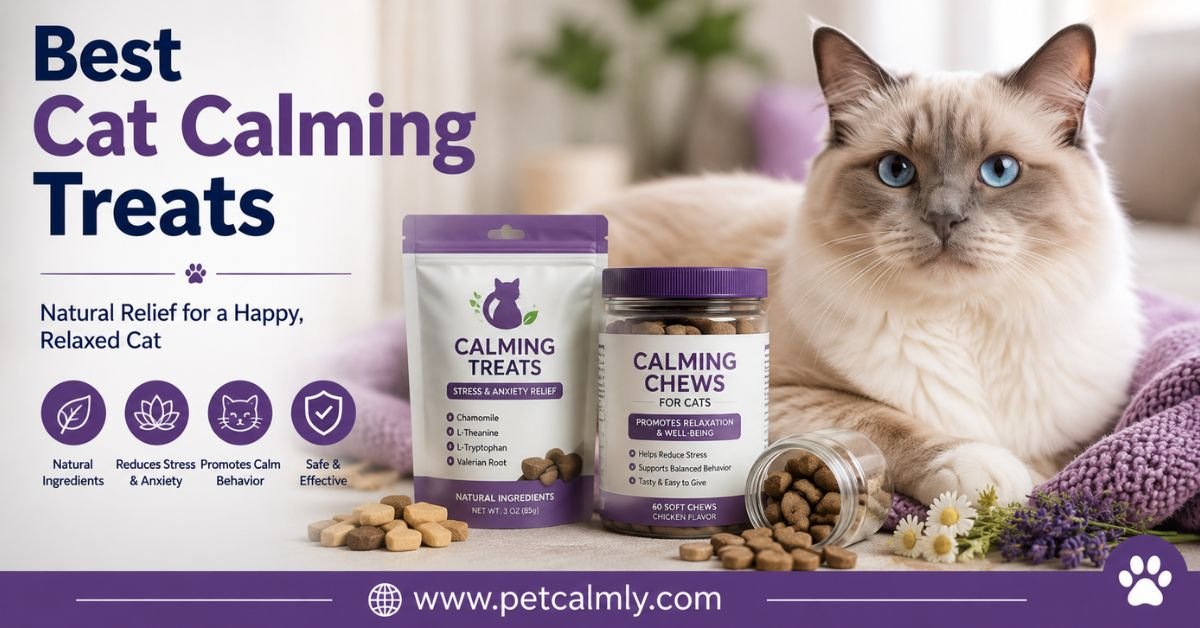
The best cat calming treats combine a proven calming ingredient such as L-theanine, tryptophan, colostrum, or hemp with a texture and flavor your cat will actually eat. No treat works instantly or for every cat, and treats work best alongside environmental changes like more vertical space, consistent routines, and reduced stress triggers. If your cat’s anxiety is severe, sudden, or affecting their health, a veterinary visit should come before any treat.
Why This Guide Exists
If you’re reading this at 11 p.m. because your cat has been hiding under the bed for two days, or yowling at the door every time you leave, you don’t need a sales pitch. You need something that actually works — and you need to know when a treat isn’t the answer at all.
This guide walks through how calming treats work, which ingredients have real backing, how to introduce them safely, and what to do if treats aren’t enough. It’s written for owners who want a straight answer, not a listicle of affiliate links.
What Are Cat Calming Treats and How Do They Work?
Cat calming treats are soft chews, crunchy bites, or gel-based supplements formulated with ingredients believed to support relaxation, reduce stress reactivity, or ease situational anxiety in cats. They aren’t sedatives. A quality calming treat won’t knock your cat out it takes the edge off, similar to how a cup of chamomile tea might make a person feel a little more settled without making them drowsy.
Most calming treats work through one of three general mechanisms:
- Amino acid support — ingredients like L-theanine and tryptophan influence neurotransmitters (such as serotonin and GABA) that are associated with calm, relaxed states.
- Gut-brain support — colostrum and certain probiotics are thought to support the gut-brain connection, which plays a role in overall stress resilience.
- Herbal or botanical compounds — ingredients like valerian root, chamomile, and hemp/CBD have traditional or emerging use in calming formulations, though scientific evidence in cats specifically is still limited compared to human or canine research.
It’s worth being honest here: calming treats are a supplement, not a cure. They tend to work best for mild-to-moderate, situational stress — vet visits, car rides, new pets, fireworks, moving homes rather than deep-rooted anxiety disorders.
Signs Your Cat May Need Calming Support
Cats are subtle communicators, and stress often shows up as a change in behavior rather than an obvious “meltdown.” Common signs include:
- Excessive grooming, sometimes leading to bald patches
- Hiding more than usual, especially during the day
- Increased vocalization, particularly at night
- Loss of appetite or picky eating
- Litter box avoidance or accidents outside the box
- Pacing, restlessness, or an inability to settle
- Aggression toward other pets or family members that’s out of character
- Dilated pupils, flattened ears, or a low crouched posture
If you’re noticing two or more of these consistently, it’s reasonable to look into calming support. But it’s also worth ruling out medical causes first a cat that suddenly stops using the litter box, for example, may have a urinary issue rather than anxiety. When in doubt, a vet visit is the safer first step.
What Causes Anxiety and Stress in Cats?
Understanding the “why” behind your cat’s stress makes it much easier to choose the right kind of support.
Situational Stress vs. Chronic Anxiety
Situational stress is triggered by a specific, often temporary event a vet appointment, thunderstorm, houseguest, or car ride. It usually resolves once the trigger passes. This is the type of stress calming treats are best suited for.
Chronic anxiety is ongoing and often doesn’t have one obvious trigger. It might stem from early-life experiences, an under-stimulating environment, conflict with another pet in the home, or an underlying medical condition. Chronic anxiety usually needs a broader plan environmental changes, sometimes prescription support from a vet, and consistent behavioral routines not just a treat.
Common root causes include:
- Changes in routine (new work schedule, new baby, moving homes)
- Multi-cat household tension or resource competition
- Lack of vertical space or hiding spots
- Loud noises or unfamiliar visitors
- Past trauma, such as rescue or shelter history
- Boredom and understimulation
- Underlying pain or illness that hasn’t been diagnosed yet
How to Choose the Best Calming Treats for Your Cat
Not all calming treats are created equal, and the “best” one really depends on your individual cat their size, sensitivities, and the type of stress they’re experiencing.
Ingredients Worth Looking For
| Ingredient | What It May Help With | Notes |
|---|---|---|
| L-theanine | General relaxation, situational stress | Derived from tea leaves; widely used in pet calming formulas |
| Tryptophan | Mood regulation, mild anxiety | An amino acid also found in natural protein sources |
| Colostrum | Gut-brain stress support | Often used in treats aimed at digestive and nervous system balance |
| Chamomile | Mild sedative, digestive comfort | Generally considered gentle; introduce slowly |
| Valerian root | Relaxation, sometimes used like catnip | Effects vary widely between cats |
| Hemp/CBD (THC-free) | Situational anxiety, noise sensitivity | Look for third-party lab-tested products designed specifically for cats |
Ingredients and Practices to Avoid
- Xylitol — toxic to pets and should never appear in any treat.
- Artificial dyes and excessive fillers — unnecessary and can trigger sensitivities in some cats.
- Unlabeled “proprietary blends” — if a brand won’t tell you exact ingredient amounts, it’s hard to know what your cat is actually getting.
- Products marketed as “sedatives” — true sedation should only come from a veterinarian, not an over-the-counter treat.
- Human CBD or THC products — never give your cat anything formulated for humans; dosing and safety profiles are completely different.
A good rule of thumb: if you can’t pronounce most of the ingredient list, or the packaging makes big promises with no explanation of how it works, it’s worth being skeptical.
Types of Cat Calming Treats Explained
L-Theanine Treats
L-theanine is one of the most researched calming compounds used in pet products, largely because of its established role in promoting relaxation without drowsiness in other species. It’s a solid starting point for cats who get worked up during transport, grooming, or vet visits.
Tryptophan-Based Treats
Tryptophan treats work on the idea that supporting serotonin pathways can help even out mood. These tend to be a gentler, food-based option, and some cats respond well to them as part of a daily routine rather than an as-needed dose.
CBD and Hemp Treats
Interest in CBD for pets has grown quickly, but the research in cats specifically is still developing compared to dogs. If you’re considering a hemp or CBD treat, choose one made specifically for cats, confirm it’s THC-free, and talk to your vet first — especially if your cat is on any other medication, since CBD can interact with how the liver processes certain drugs.
Herbal and Botanical Blends
Chamomile and valerian are common in herbal calming treats. Reactions vary a lot from cat to cat — some cats find valerian relaxing, others get temporarily more energetic (similar to a catnip response). Start with a small amount to see how your individual cat reacts.
Probiotic and Colostrum-Based Calming Support
These treats lean on the gut-brain connection. They tend to take longer to show an effect think days to weeks of consistent use rather than an immediate change but can be a good option for cats with more chronic, low-grade stress tied to digestive sensitivity.
How to Introduce Calming Treats to Your Cat Safely
- Start with a half dose the first time, even if the label says a full treat is fine. This lets you watch for any unusual reaction.
- Give it before the stressful event, not during. Most calming ingredients need 30–60 minutes to take effect, so timing matters.
- Watch for at least 24 hours after the first dose for any digestive upset, unusual lethargy, or behavior change.
- Keep a simple log — even a few notes in your phone about what you gave, when, and how your cat responded — so you can tell what’s actually working over time.
- Don’t stack multiple calming products at once (for example, a treat plus a diffuser plus a supplement) without spacing them out or checking with your vet, since effects and ingredients can overlap.
- Be patient with herbal and gut-based options — these often need consistent use over 1–2 weeks before you’ll notice a real difference, unlike fast-acting amino acid treats.
Beyond Treats: Supporting a Calm Cat at Home
Treats work best as one part of a bigger picture. A few things that consistently make a difference for anxious cats:
- Vertical space — cat trees, shelves, or window perches give cats a sense of control and a safe vantage point.
- Predictable routine — feeding, play, and quiet time at roughly the same times each day reduces uncertainty.
- Safe hiding spots — a covered bed or box lets a stressed cat retreat without being cornered.
- Play before stressful events — a short play session can burn off nervous energy before something like a vet visit or guest arrival.
- Pheromone diffusers — synthetic feline facial pheromone products are commonly used alongside treats and may help reinforce a sense of territorial security.
- Consistent multi-cat resources — separate food bowls, litter boxes, and resting spots reduce competition-driven stress in multi-cat homes.
None of these need to be perfect. Small, consistent changes tend to matter more than one big overhaul.
When Should You Worry? Signs That Need a Vet, Not Just a Treat
Calming treats are meant for mild-to-moderate, situational stress. Reach out to your veterinarian if you notice:
- Sudden onset of anxiety with no clear trigger
- Loss of appetite lasting more than 24 hours
- Vomiting, diarrhea, or noticeable weight loss
- Self-injury from over-grooming, biting, or scratching
- Aggression that’s new, escalating, or directed at people/other pets
- Anxiety that doesn’t improve at all after a few weeks of consistent treats and environmental changes
- Any change in litter box habits, since this can point to a medical issue like a urinary tract problem rather than pure stress
According to the Cornell University College of Veterinary Medicine, sudden behavior changes in cats often have a medical component that should be ruled out before assuming the cause is purely behavioral. This is especially true for older cats, where anxiety-like symptoms can sometimes overlap with pain, cognitive decline, or thyroid issues.
What Pet Owners Should Do Next
If you’re just starting out, here’s a simple order of operations:
- Rule out medical causes if the anxiety is sudden or severe a quick vet check can save weeks of guessing.
- Identify the trigger, if there is one. Situational stress responds differently than chronic anxiety.
- Choose one calming treat to try first, ideally one with L-theanine or tryptophan for situational stress, or a colostrum/probiotic option for more chronic, gut-linked stress.
- Pair it with one environmental change vertical space, a hiding spot, or a pheromone diffuser tend to have the best return for the effort.
- Give it 1–2 weeks before deciding whether it’s working, unless you’re using it for a single event like a car ride, in which case you’ll know within the hour.
- Loop in your vet if there’s no improvement, or if symptoms are getting worse rather than better.
Conclusion
There’s no single “best” calming treat that works for every cat, and any product that claims otherwise is oversimplifying a genuinely individual issue. What matters is matching the ingredient to the type of stress your cat is experiencing, introducing it carefully, and treating it as one part of a broader approach that includes environment and routine. Most cats do better with a combination of a well-chosen treat and a calmer, more predictable home life than with either one alone. And if something feels off beyond typical stress sudden changes, physical symptoms, or anxiety that isn’t budging that’s your cue to bring in your veterinarian rather than trying another product off the shelf.
More Information About Pets, Please Visit Our Website: Best Cat Calming Treats for Travel
Best Cat Brushes for Shedding
Frequently Asked Questions
1: Do cat calming treats actually work?
For mild-to-moderate, situational stress like vet visits or car rides many cats do respond to calming treats, particularly those with L-theanine or tryptophan. Results vary by cat, and treats are generally less effective for chronic or severe anxiety on their own.
2: How long does it take for calming treats to work?
Amino acid-based treats like L-theanine often take effect within 30–60 minutes. Herbal and gut-based options, such as colostrum or probiotic treats, usually need 1–2 weeks of consistent use before you’ll notice a meaningful difference.
3: Are calming treats safe for cats to take every day?
Many are formulated for daily use, but it’s worth checking the label and confirming with your vet, especially if your cat is on other medication or has an existing health condition. Avoid combining multiple calming products without professional guidance.
4: Can I give my cat CBD treats for anxiety?
CBD treats made specifically for cats and confirmed THC-free are used by some owners for anxiety, but research in cats is still limited compared to dogs. Talk to your veterinarian first, particularly if your cat takes other medications, since CBD can affect how the liver metabolizes certain drugs.
5: What’s the difference between a calming treat and a sedative?
Calming treats use ingredients that support relaxation without inducing sleep or heavy drowsiness. Sedatives are typically prescription medications that produce a stronger, more controlled effect and should only be used under veterinary guidance.
6: My cat won’t eat calming treats what else can I try?
Try a different texture (soft chew vs. crunchy) or flavor, or look for a calming product in gel, liquid, or powder form that can be mixed into regular food. Pairing this with non-food strategies like a pheromone diffuser or added hiding spots — can help even if treats aren’t an option.