Short direct answer
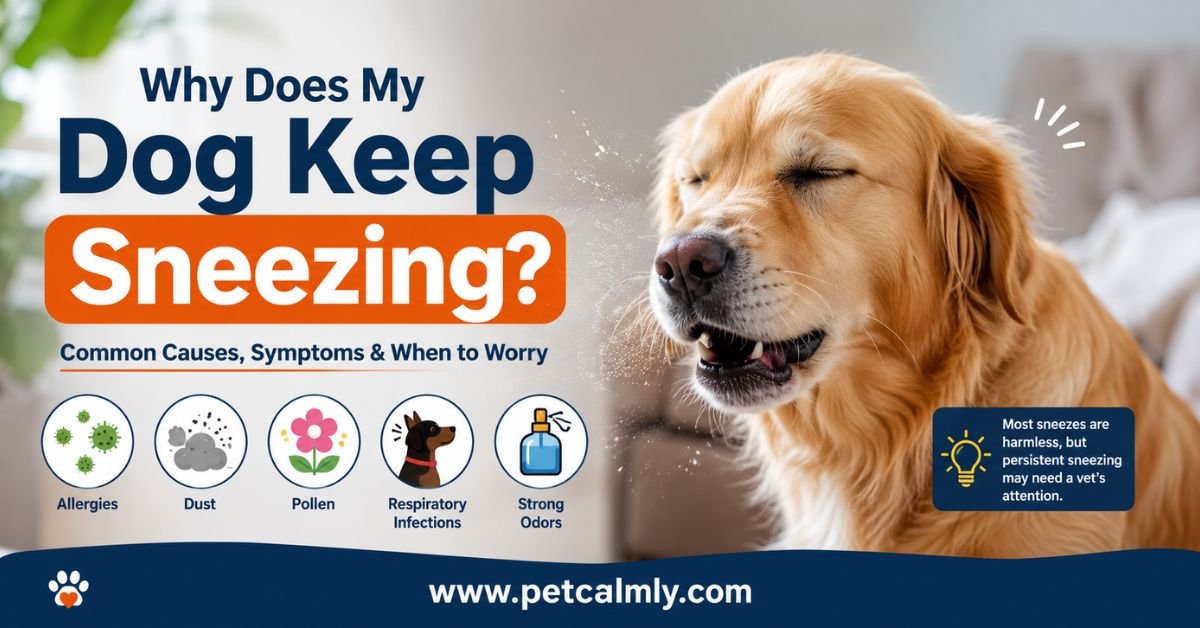
Most dog sneezing is harmless. Dogs sneeze to clear their nose of dust, pollen, grass, hair, or a strong smell the same reflex you’d have with a tickle in your nostril. Occasional, single sneezes during play or after sniffing something interesting are completely normal and nothing to worry about.
Repeated or persistent sneezing usually points to nasal irritation, seasonal allergies, or reverse sneezing (a common, non-dangerous throat spasm that sounds scary but resolves on its own). Sneezing that comes with nasal discharge, blood, facial swelling, or lasts more than a few days can signal a foreign object stuck in the nose, an infection, dental disease, or less commonly a nasal growth, and deserves a veterinary check.
The rest of this guide walks through every likely cause, how to tell them apart, what you can safely do at home, and exactly when it’s time to call your vet.
Why Trust This Guide
Sneezing is one of the most common “should I be worried?” questions dog owners search for, and it’s also one of the most over-dramatized online. This guide sticks to what’s actually backed by veterinary understanding of canine respiratory anatomy and behavior no invented statistics, no fear-based claims. Where a health claim is made, it reflects widely accepted veterinary knowledge from sources like the Merck Veterinary Manual, VCA Animal Hospitals, and Cornell University College of Veterinary Medicine, all listed in the references section below. If your dog is a first-time patient for a symptom like this, nothing here replaces an actual physical exam a vet can feel, smell, and sometimes scope things a search engine never will.
Is My Dog’s Sneezing Normal? How to Tell the Difference
Before diving into causes, it helps to sort sneezing into two buckets: situational and persistent.
Situational sneezing happens once or twice, usually tied to an obvious trigger rolling in grass, sniffing a carpet, getting a face full of dust from a vacuum. Your dog shakes it off, sneezes once or twice, and goes back to normal within seconds. This is not a medical event. It’s just how a dog’s nose clears itself.
Persistent sneezing is different. This is a dog sneezing in short bursts throughout the day, sneezing several days in a row, or sneezing paired with other symptoms like discharge, pawing at the face, or reduced appetite. This pattern is what actually warrants a closer look, and it’s what most of this guide focuses on.
A simple gut-check: if you can point to exactly what caused the sneeze and it doesn’t happen again for hours, relax. If you’re noticing it repeatedly across the day without an obvious trigger, keep reading.
8Common Causes of Sneezing in Dogs
1: Environmental Irritants and Dust
Dogs experience the world nose-first, which means their nasal passages are constantly exposed to things ours never touch directly carpet fibers, cleaning spray residue, incense, candle smoke, litter box dust (in multi-pet homes), and construction debris. A sneeze here is simply the nose doing its job. If your dog sneezes right after you mop with a strong-smelling cleaner or spray air freshener, that’s your answer.
Common household irritants include:
- Scented candles and plug-in air fresheners
- Cleaning products, especially bleach or ammonia-based sprays
- Cigarette or vape smoke
- Fresh paint or varnish fumes
- Dust from renovations or old carpet
2: Seasonal and Environmental Allergies
Just like people, dogs can react to pollen, mold spores, and dust mites. Allergic sneezing tends to follow a pattern: it shows up more in spring or fall, gets worse after time outdoors, and often comes with other allergy signs like itchy paws, watery eyes, or ear scratching. Some breeds, particularly those with lighter coats or known sensitivities, seem more prone to this than others, though any dog can develop seasonal allergies at any age.
If your dog’s sneezing spikes around the same time every year, allergies are a reasonable explanation — but a vet can help confirm it and rule out look-alike conditions rather than guessing long-term.
3: Reverse Sneezing (Paroxysmal Respiratory Sneezing)
This is the one that sends the most owners into a panic search at 11 p.m. Reverse sneezing looks and sounds alarming: your dog suddenly stands still, extends its neck, and makes rapid, loud snorting or honking sounds, almost like it’s choking or having a seizure. It usually lasts 10 to 30 seconds and stops as suddenly as it started.
What’s actually happening is a spasm of the soft palate and throat, often triggered by excitement, pulling on a leash, drinking water too fast, or a sudden smell. It’s uncomfortable-looking but not dangerous, and most dogs recover instantly with no lasting effect. Small and brachycephalic (flat-faced) breeds like Pugs, French Bulldogs, and small terriers experience this more often due to their airway shape.
If it happens occasionally and your dog is back to normal within a minute, this is almost always reverse sneezing, not an emergency.
4: Nasal Foreign Objects (Grass Seeds, Splinters, Debris)
Dogs that sniff deeply into grass, bushes, or leaf piles can inhale small foreign objects grass awns (foxtails), splinters, or seed husks are the classic culprits. When something gets lodged in the nasal passage, the sneezing tends to be sudden, intense, and one-sided, often with pawing at one nostril, and sometimes a small amount of blood.
This is one of the more urgent causes on this list. A lodged foreign object won’t work itself out on its own in most cases and can lead to infection if left untreated.
5: Dental Disease and Tooth Root Infections
This is a cause many owners never suspect. The roots of a dog’s upper teeth sit very close to the nasal cavity. When a tooth becomes infected or abscessed, that infection can spread upward and irritate the nasal passage, triggering chronic sneezing — sometimes with thick, sometimes smelly, discharge from one nostril. If your dog also has bad breath, is reluctant to chew, or has visibly damaged teeth, dental disease is worth ruling out alongside any nasal explanation.
6: Respiratory Infections (Viral, Bacterial, or Fungal)
Sneezing combined with nasal discharge, coughing, lethargy, or reduced appetite can point toward a respiratory infection. Kennel cough (canine infectious respiratory disease complex) is the most common example and often spreads in places dogs gather daycare, boarding, dog parks. Most cases are mild and clear up with rest and time, though some need veterinary treatment, especially in puppies, senior dogs, or dogs with weaker immune systems.
Fungal infections like nasal aspergillosis are far less common but tend to cause more persistent, one-sided discharge and sneezing that doesn’t improve over weeks this is a case where a vet visit isn’t optional.
7: Nasal Mites or Parasites
Less commonly, nasal mites can cause chronic sneezing, reverse sneezing episodes, and head shaking. This is harder to diagnose without a vet, since mites aren’t visible to the naked eye, but it’s worth mentioning because it’s a real, treatable cause that owners rarely consider on their own.
8: Structural or Breed-Related Causes
Brachycephalic breeds Bulldogs, Pugs, Boxers, Shih Tzus have naturally narrower nasal passages and softer palates. This anatomy makes them more prone to snorting, reverse sneezing, and noisy breathing in general. It’s usually just “how they’re built” rather than a sign of illness, but it also means it’s harder to tell when something is actually wrong, so any change from their normal baseline is worth paying attention to.
9: Nasal Tumors or Growths (Less Common, Usually in Older Dogs)
This is the cause owners fear most, and it’s also the least common. Nasal tumors typically affect older dogs and cause a slow, worsening pattern: sneezing that gradually increases over weeks or months, often one-sided, sometimes with blood-tinged discharge or facial swelling later on. This is not something to self-diagnose from a symptom list but it’s also not something to panic about from a single day of sneezing. The distinguishing feature is a slow, progressive pattern rather than a sudden one.
Puppy Sneezing vs. Adult and Senior Dog Sneezing
Age changes how you should interpret sneezing, and this is a detail most articles skip.
Puppies sneeze often simply because they’re exploring the world with their nose for the first time everything from a new carpet to a sibling’s fur can trigger a sneeze. Puppies are also more vulnerable to kennel cough and other contagious respiratory infections, especially soon after adoption from a shelter, breeder, or pet store, since their immune systems are still developing. Sneezing paired with eye discharge, coughing, or low energy in a young puppy is worth a prompt vet call rather than a wait-and-see approach.
Adult dogs in good health can usually handle occasional sneezing without concern, and this is the group where allergies and environmental triggers are the most common explanation.
Senior dogs deserve a bit more attention. Their immune systems and dental health are more likely to have underlying issues, and a slow, worsening sneezing pattern is more often linked to dental disease or, less commonly, a nasal growth. This doesn’t mean every senior dog sneeze is serious — it just means the “monitor for a few days” window should probably be shorter before you call your vet.
How Vets Typically Diagnose the Cause of Sneezing
Understanding what a vet visit actually involves can make the process feel less intimidating. In most cases, a vet starts with a physical exam checking the nose, mouth, teeth, and lymph nodes, and asking about the pattern you’ve observed (which is why tracking it at home is so useful). For straightforward cases, like a suspected mild irritant or short-term reverse sneezing, this exam alone may be enough.
For more persistent or one-sided sneezing, a vet may recommend further steps such as bloodwork, dental X-rays, nasal imaging, or in some cases a rhinoscopy (a small camera used to look inside the nasal passage) to check for foreign objects, infection, or growths. This sounds intensive, but it’s typically reserved for cases where symptoms haven’t resolved on their own or where the pattern points toward something needing direct visual confirmation. Most dogs never need to go beyond a basic exam.
Table: Sneezing Type vs. Likely Cause
| Sneezing Pattern | Most Likely Cause | Urgency |
|---|---|---|
| One or two sneezes, then normal | Dust, scent, or minor irritant | None — normal behavior |
| Sudden honking/snorting episode, resolves fast | Reverse sneezing | Low — monitor only |
| Sudden, intense, one nostril, possible blood | Foreign object (grass seed, splinter) | High — vet visit needed |
| Seasonal pattern, itchy skin/eyes too | Environmental allergies | Low-moderate — vet can confirm |
| Sneezing + thick discharge + lethargy | Respiratory infection | Moderate — monitor, vet if worsening |
| Sneezing + bad breath + chewing pain | Dental-related nasal irritation | Moderate — dental exam needed |
| Slow, worsening over weeks, older dog, one-sided | Possible growth/tumor | High — vet visit needed |
Real Owner Situations (And What They Usually Mean)
“My dog sneezes every time we walk in the same field.”
This pattern points toward either an environmental irritant unique to that location (a specific plant, mold, or fertilizer) or a seasonal allergy that flares in outdoor grass and pollen. Try a different walking route for a week and see if the sneezing follows.
“My Frenchie does this weird honking thing when he gets excited at the door.”
This is textbook reverse sneezing, and it’s extremely common in flat-faced breeds. Gently stroking the throat or briefly covering the nostrils can sometimes shorten an episode, but in most cases it’s safe to simply let it pass.
“My dog was digging in the yard, then started pawing at one side of his nose and sneezing nonstop.”
This combination — recent digging or sniffing in vegetation, one-sided sneezing, pawing at the face — is the classic profile of a foreign object stuck in the nasal passage. This one deserves a same-day or next-day vet visit rather than a wait-and-see approach.
“My senior dog has been sneezing on and off for a month and it’s getting worse.”
A gradually worsening pattern in an older dog is the one situation worth being more proactive about. It doesn’t mean something serious is happening, but it’s exactly the kind of pattern a vet should evaluate rather than one to keep watching from home.
Mistakes Owners Commonly Make
- Assuming all sneezing means illness. Most sneezing is completely normal nasal clearing, and treating every sneeze as a red flag creates unnecessary stress for both of you.
- Ignoring one-sided, bloody, or worsening sneezing. These are the details that actually matter, and they’re easy to miss if you’re only counting how many times your dog sneezes.
- Trying to “fix” reverse sneezing with panic. Grabbing your dog’s face or panicking during an episode can make the dog more anxious. Staying calm helps the episode pass faster.
- Using human allergy medication without guidance. Many over-the-counter antihistamines aren’t dosed or formulated safely for dogs. Never medicate a dog based on human dosing without professional advice.
- Waiting too long when a foreign object is suspected. A grass seed or splinter doesn’t dissolve on its own and can lead to infection or migrate deeper into tissue the longer it’s left.
What You Can Do at Home
- Track the pattern. Note when the sneezing happens, how often, and whether it’s tied to a location, activity, or time of day. This single habit makes any future vet conversation far more productive.
- Reduce airborne irritants. Switch to unscented cleaning products, avoid spraying air freshener near your dog’s resting area, and keep the house well-ventilated during renovations.
- Check for visible discharge or swelling. A quick daily glance at your dog’s nose while petting them is enough — you’re just looking for anything new.
- Avoid letting your dog dig face-first into thick grass or leaf piles in areas known for foxtails or grass awns, especially in late spring and summer when seeds are driest and sharpest.
- Keep dental checkups current. Since tooth root infections can cause nasal symptoms, regular dental care is a preventive step that pays off in more ways than fresh breath.
- Stay calm during reverse sneezing episodes. Speak softly, gently massage the throat if your dog tolerates it, and let the episode run its course.
When Should You Worry? Signs That Need a Vet
Occasional sneezing is not an emergency. But certain signs shift this from “monitor at home” to “call the vet.” Contact your veterinarian if you notice:
- Sneezing that lasts more than a few days without improvement
- Blood in the nasal discharge, even a small amount
- Discharge from only one nostril, especially if thick or foul-smelling
- Facial swelling, especially around the nose or under one eye
- Pawing repeatedly at the face or nose
- Loss of appetite, lethargy, or fever alongside sneezing
- Noisy or labored breathing, not just sneezing
- A gradually worsening pattern over weeks, particularly in an older dog
If your dog was recently outdoors in tall grass or brush and suddenly starts intense, one-sided sneezing, treat this as more urgent a same-day or next-day vet visit is the safer call, since a lodged foreign object rarely resolves without help.
What Pet Owners Should Do Next
If the sneezing is occasional and your dog is otherwise eating, playing, and acting normal, the right move is simply to keep an eye on things for a few days. Most sneezing resolves on its own without any intervention.
If you’re seeing any of the warning signs above, the next step is a veterinary exam rather than more searching online. A vet can look inside the nasal passage, check the teeth, and rule out infection or a foreign object in a way that no article can replace. Bring your notes on when the sneezing happens this small bit of preparation often speeds up diagnosis significantly.
If your dog has a known history of allergies, ask your vet about long-term management options rather than guessing at over-the-counter solutions, since dosing and safety vary by dog size, age, and health history.
Conclusion
A sneezing dog is rarely a sign of something serious most of the time, it’s just a nose doing exactly what noses are built to do. The goal isn’t to eliminate every sneeze, it’s to know which patterns are worth watching and which ones need a professional look. Pay attention to frequency, discharge, and how your dog is acting overall, and you’ll almost always know the difference between “nothing to worry about” and “time to call the vet.” When in doubt, a quick vet visit brings far more peace of mind than another hour of searching symptoms online.
More Information About Pets, Please Visit Our Website: Why Is My Dog Scratching So Much?
Why Is My Dog Losing Hair?
Why Is My Dog Drinking So Much Water?
Dog Sleeping Positions Meaning
Frequently Asked Questions
1: Why does my dog sneeze so much all of a sudden?
A sudden increase in sneezing is usually caused by a new environmental irritant (a cleaning product, candle, or seasonal pollen) or, if it’s intense and one-sided, a foreign object like a grass seed. If it starts suddenly and doesn’t ease up within a day, it’s worth having a vet take a look.
2: Is it normal for dogs to sneeze a lot when playing?
Yes. Play sneezing is common and is actually thought to be a form of communication between dogs, signaling excitement or friendly intent, not distress. This kind of sneezing usually stops the moment play slows down.
3: Why does my dog sneeze and then shake its head?
This combination often points to nasal irritation from dust, pollen, or a foreign object, or in some cases early ear or sinus discomfort. If the head-shaking is frequent or paired with pawing at the face, a vet check is a good next step.
4: Can allergies cause my dog to sneeze constantly?
Yes, environmental allergies are a common cause of repeated sneezing, especially when it follows a seasonal pattern and comes with itchy skin, watery eyes, or ear irritation. A vet can help confirm allergies versus other causes.
5: Should I worry if my dog sneezes blood?
Yes any blood in nasal discharge, even a small amount, warrants a veterinary visit. It can indicate a foreign object, injury, infection, or in rarer cases a growth, and it’s not something to wait out at home.
6: What is reverse sneezing and is it dangerous?
Reverse sneezing is a spasm of the throat and soft palate that causes loud snorting or honking sounds, often triggered by excitement or a fast drink of water. It looks alarming but is not dangerous, and it typically resolves within seconds to about a minute on its own.