Short direct answer
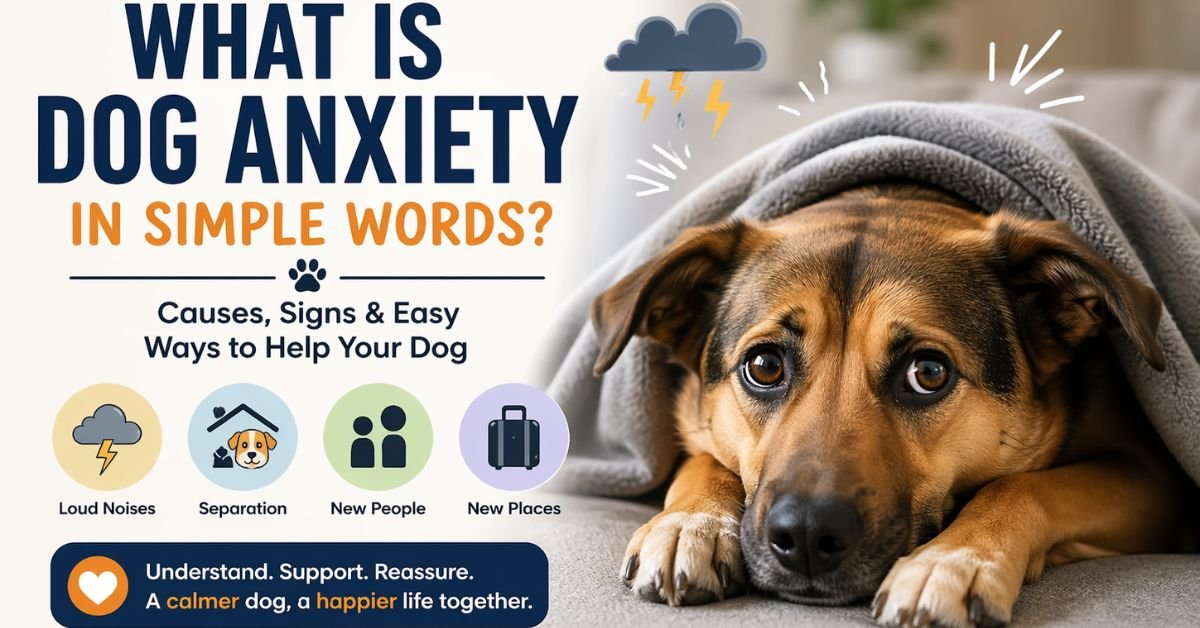
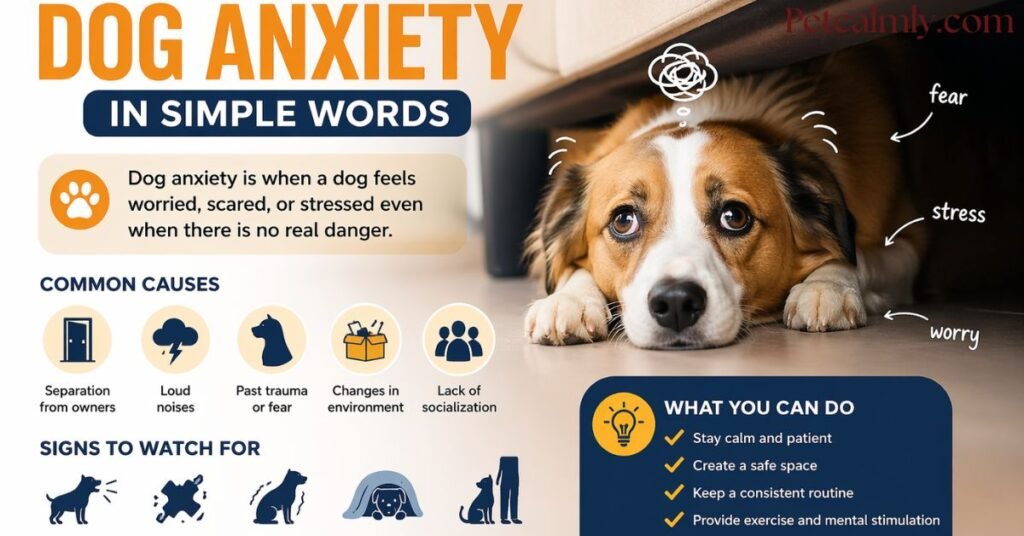
Dog anxiety is when a dog feels worried, scared, or stressed even when there is no real danger. It’s like a constant feeling of unease. Instead of relaxing, the dog stays alert or nervous, which can lead to behaviors like barking, hiding, or chewing things.
Why Understanding Dog Anxiety Really Matters
Many dog owners misunderstand anxiety. They see torn cushions, loud barking, or clingy behavior and assume the dog is misbehaving.
But here’s the truth: most of the time, the dog is not being “bad.” It is trying to cope with fear.
Think of it like a person who bites their nails or paces when nervous. Dogs do similar things but in their own way.
When you understand dog anxiety in simple words, you shift from frustration to empathy. That change alone can improve your relationship with your dog.
What Does Dog Anxiety Feel Like for a Dog?
Dogs don’t think in words, but they feel emotions deeply.
An anxious dog often feels:
- Unsafe
- Confused
- Overwhelmed
- Unable to relax
Imagine being in a place where everything feels unfamiliar and unpredictable. Your dog may feel like that in situations you consider normal.
For example:
- A vacuum cleaner may sound like a threat
- Being alone may feel like abandonment
- Meeting strangers may feel dangerous
Dog anxiety is basically a heightened fear response that doesn’t switch off easily.
6 Common Causes of Dog Anxiety
Not every dog becomes anxious for the same reason. Some are naturally more sensitive, while others develop anxiety due to experiences.
Let’s explore the most common causes.
1. Separation Anxiety (The Most Common Type)
This happens when a dog becomes distressed when left alone.
Typical signs:
- Barking or howling
- Scratching doors
- Destroying objects
- Following you everywhere
A simple scenario:
You leave for work, and your dog panics because it doesn’t understand when or if you’ll return.
2. Loud Noises and Sudden Sounds
Dogs hear much better than humans. Sounds that seem normal to you may feel intense to them.
Common triggers:
- Thunderstorms
- Fireworks
- Vacuum cleaners
- Construction noise
Some dogs shake, hide, or try to escape during these events.
3. Past Trauma or Negative Experiences
Dogs that have experienced:
- Abuse
- Neglect
- Abandonment
may carry emotional scars.
Even after being adopted into a loving home, certain triggers can remind them of past fear.
4. Changes in Environment or Routine
Dogs love consistency. Sudden changes can cause stress.
Examples include:
- Moving to a new house
- A new baby or pet
- Owner schedule changes
- Rearranging furniture
Even small disruptions can affect sensitive dogs.
5. Lack of Early Socialization
Puppies need exposure to:
- Different people
- Other dogs
- New environments
If they don’t get this early experience, they may grow up fearful of unfamiliar situations.
6. Health Problems and Aging
Older dogs may develop anxiety due to:
- Pain
- Hearing loss
- Vision problems
- Cognitive decline
They may feel confused or insecure more often.
Signs and Symptoms of Dog Anxiety
Dogs express anxiety in different ways. Some signs are obvious, while others are subtle.
Physical Signs
- Trembling or shaking
- Panting without heat
- Drooling excessively
- Pacing back and forth
Behavioral Signs
- Excessive barking or whining
- Destructive chewing
- Digging or scratching
- Escaping attempts
Emotional Signals
- Clinginess
- Hiding
- Avoiding eye contact
- Sudden aggression
A Short Story Example
Let’s say your dog Max is calm when you’re home. But the moment you pick up your keys, he starts whining.
When you leave:
- He scratches the door
- Barks loudly
- Chews your shoes
This is not “revenge.” Max is anxious because he feels unsafe alone.
Types of Dog Anxiety Explained Simply
Understanding the type helps you manage it better.
Separation Anxiety
Triggered when the dog is left alone.
Noise Anxiety
Caused by loud or unexpected sounds.
Social Anxiety
Fear of:
- New people
- Other dogs
- Busy environments
Travel Anxiety
Stress during car rides or new places.
Generalized Anxiety
Constant worry without a clear trigger.
When Should You Be Concerned?
Some anxiety is normal. But certain signs mean it’s time to act.
Be concerned if:
- Anxiety happens daily
- Behavior is getting worse
- Your dog hurts itself trying to escape
- Eating or sleeping changes
- Aggression appears
If anxiety interferes with normal life, it needs attention.
What Should Pet Owners Do?
Helping an anxious dog is not about quick fixes. It’s about building trust and stability.
1. Stay Calm and Patient
Your dog looks to you for cues.
If you react with frustration, the dog’s anxiety increases.
Speak softly. Move calmly.
2. Create a Safe Space
Give your dog a place where it feels secure.
This could be:
- A crate
- A quiet room
- A bed with familiar smells
During stressful moments, guide your dog there.
3. Build a Predictable Routine
Dogs feel safer when life is predictable.
Keep:
- Feeding times consistent
- Walk schedules regular
- Bedtime stable
Routine reduces uncertainty.
4. Gradual Exposure Training
Don’t force your dog into scary situations.
Instead:
- Introduce triggers slowly
- Reward calm behavior
- Increase exposure over time
This builds confidence.
5. Exercise and Mental Stimulation
A bored dog is more likely to feel anxious.
Daily activities:
- Walks
- Playtime
- Puzzle toys
These help release energy and reduce stress.
6. Avoid Punishment
Punishing an anxious dog makes things worse.
The dog is not misbehaving it is struggling emotionally.
Focus on positive reinforcement.
7. Use Calming Aids
Some helpful tools include:
- Anxiety wraps
- Calming music
- Pheromone diffusers
- Chew toys
They support but don’t replace training.
8. Seek Professional Help if Needed
If anxiety is severe:
- Consult a veterinarian
- Work with a trainer
- Consider behavior therapy
In some cases, medication may help.
Everyday Situations That Trigger Anxiety
Sometimes anxiety shows up in simple daily moments.
For example:
- Doorbell rings → dog panics
- Owner leaves → dog cries
- Visitors arrive → dog hides
Recognizing these patterns helps you respond better.
5 Common Mistakes Dog Owners Make
Even caring owners can accidentally worsen anxiety.
1: Ignoring Early Signs
Small signs often grow into bigger problems.
2: Inconsistent Routine
Unpredictability increases stress.
3: Over-Comforting
Too much attention during anxiety can reinforce the behavior.
4: Lack of Exercise
Energy buildup leads to stress.
5: Forcing Social Situations
Pushing a fearful dog into crowded environments can increase anxiety.
How Dog Anxiety Affects Daily Life
An anxious dog struggles with everyday experiences.
- Walks may feel stressful
- Being alone becomes impossible
- Visitors cause panic
- Sleep patterns get disrupted
This affects both the dog and the owner.
Can Dog Anxiety Be Treated or Managed?
Yes most dogs improve with the right approach.
Some outcomes:
- Mild anxiety can disappear
- Moderate anxiety improves greatly
- Severe anxiety becomes manageable
Consistency is key.
A Simple Way to Understand Dog Anxiety
Think of anxiety like a car alarm that goes off too easily.
Instead of reacting only to real danger, it reacts to:
- Small noises
- Normal situations
- Everyday changes
Your job is to help your dog “reset” that system.
Building Confidence in Anxious Dogs
Confidence reduces anxiety.
You can build it by:
- Rewarding calm behavior
- Teaching basic commands
- Introducing new experiences slowly
Each small success helps your dog feel safer.
Long-Term Tips for a Calmer Dog
- Keep routines steady
- Provide daily exercise
- Use positive training
- Watch for early signs
- Stay patient
Over time, your dog learns that the world is safe.
Conclusion
Dog anxiety, in simple words, is a feeling of fear or stress that affects how a dog behaves. It’s not about bad behavior it’s about emotional discomfort.
When you understand the causes, recognize the signs, and respond with patience, you can make a huge difference.
Your dog doesn’t need perfection it needs consistency, safety, and trust.
With time and care, even anxious dogs can become calm, happy companions.
More Information About Pets, Please Visit Our Website: Senior Dog Anxiety at Night
Frequently Asked Questions
1. What is dog anxiety in simple words?
Dog anxiety is when a dog feels scared or worried without a clear reason, leading to behaviors like barking, hiding, or chewing.
2. What are the main signs of anxiety in dogs?
Common signs include shaking, excessive barking, destructive behavior, pacing, and clinginess.
3. Can dog anxiety go away on its own?
Some mild cases improve, but most dogs need training, routine, and support to manage anxiety effectively.
4. What causes anxiety in dogs?
Causes include separation, loud noises, past trauma, lack of socialization, and changes in routine
5. Should I comfort my dog during anxiety?
Yes, but calmly. Avoid overreacting, as too much attention can reinforce anxious behavior.
6. When should I get professional help?
If anxiety is severe, frequent, or causing harm, consult a veterinarian or dog behavior expert.