Short direct answer
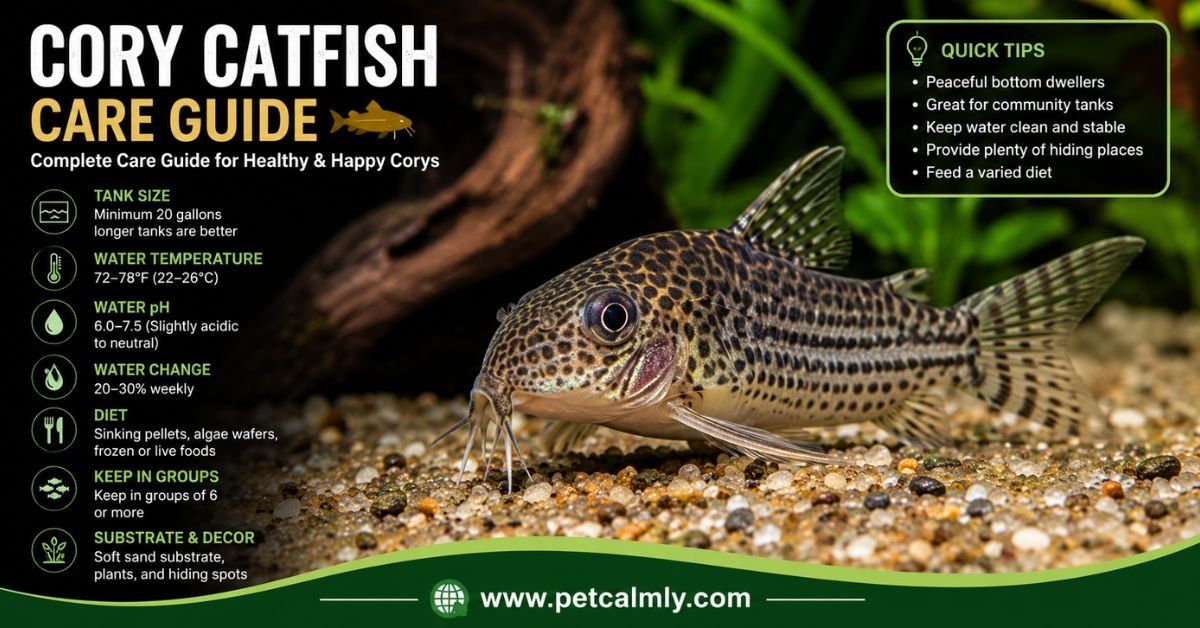
Cory catfish care comes down to five essentials: a soft sand substrate that protects their sensitive barbels, a tank with at least five to six cories (they’re a schooling species), stable water temperature between 72–78°F, a varied diet of sinking pellets and live food, and gentle, well-oxygenated water conditions. Get these right and cories are one of the hardiest, most rewarding bottom-dwellers you can keep.
If you’ve ever watched a group of Corydoras dart around the bottom of a tank in perfect little formations, you already know why so many aquarists fall for them. They’re curious, social, and surprisingly expressive for a fish that spends most of its life a few inches off the substrate. But cories are also one of the most misunderstood community fish out there sold as an afterthought “cleanup crew” when really they need almost as much thought as your centerpiece fish.
This guide walks through everything a Cory catfish actually needs, why certain mistakes happen so often, and how to tell the difference between normal Cory behavior and something that needs your attention.
What Is a Cory Catfish?
Corydoras (often shortened to “cories”) are small, armored catfish native to slow-moving rivers and streams across South America, particularly the Amazon basin. There are well over 170 recognized species, ranging from the classic bronze Cory to dwarf varieties like the Pygmy Cory, which stays under an inch long.
What they all share is a bottom-dwelling lifestyle, a set of sensitive barbels (whisker-like feelers) they use to hunt for food in the substrate, and a strongly social nature. In the wild, cories move in large, loose schools across the riverbed a habit that matters a lot more in a home aquarium than most beginners realize.
Cory Catfish Tank Setup: Getting the Foundation Right
Tank Size and Group Numbers
A common mistake is treating cories as an afterthought adding two or three to “clean up” a tank that was really built for something else. Cories are shoaling fish, and a group of fewer than five tends to show more stress, less confidence, and reduced activity. Aim for a minimum of six cories in at least a 20-gallon long tank, since the extra floor space matters more to them than the height of the water column.
If you’re working with a smaller footprint, Pygmy Cories or Habrosus Cories can do well in a well-planted 10-gallon, still kept in groups of six or more.
Substrate: The Detail Most Owners Get Wrong
This is where Cory catfish care differs most from general fishkeeping advice. Cories constantly sift through the substrate with their barbels while foraging, and sharp gravel even gravel that looks smooth to your fingers can wear those barbels down over time. Damaged or “stubby” barbels are one of the most common preventable problems in Cory keeping.
Use fine, rounded sand (pool filter sand is a popular, affordable choice) or smooth, rounded gravel specifically labeled safe for bottom-dwellers. Run your fingers through a handful before buying if you can feel any sharp edges, cories will feel them too.
Water Parameters That Keep Cories Thriving
| Parameter | Ideal Range |
|---|---|
| Temperature | 72–78°F (22–26°C) |
| pH | 6.5–7.5 |
| Water hardness | 2–15 dGH (soft to moderately hard) |
| Ammonia/Nitrite | 0 ppm |
| Nitrate | Under 20 ppm |
Cories are more sensitive to poor water quality than their tough reputation suggests. They spend their lives near the substrate, where waste and debris tend to settle, so a tank that looks clean at the surface can still be building up ammonia near the bottom. Weekly 20–25% water changes and gentle gravel vacuuming go a long way toward preventing the barbel and skin issues cories are prone to in neglected tanks.
Filtration and Water Flow
Cories come from slow-moving waters, so a filter that creates strong, direct current across the tank floor can stress them. A sponge filter or a filter with an adjustable flow rate is often a better fit than a powerhead-style filter running at full force. What matters more than flow speed is oxygenation cories have an unusual ability to gulp air at the surface and absorb oxygen through their intestines, which is actually a sign of a healthy fish, not a distressed one, as long as it’s occasional rather than constant.
What Do Cory Catfish Eat?
Cories are omnivorous bottom feeders, and in a community tank, they need food that actually reaches the bottom before it’s gone. Relying on leftover flakes from mid-water fish is one of the most common reasons cories become thin over time.
A well-rounded Cory diet includes:
- High-quality sinking pellets or wafers formulated for bottom feeders
- Freeze-dried or frozen bloodworms, brine shrimp, and daphnia (2–3 times a week)
- Blanched vegetables like zucchini or cucumber slices, occasionally
- Live or frozen black worms as an enrichment treat
Feed once or twice daily, offering only what your group can finish within a couple of minutes. Because they forage constantly, cories will graze on leftover debris throughout the day, but that shouldn’t be mistaken for their full nutritional needs they still need dedicated feedings aimed at the bottom of the tank.
Cory Catfish Behavior: What’s Normal and What’s Not
Understanding Cory behavior is one of the fastest ways to catch a problem early, since these fish show stress and illness through subtle changes rather than dramatic ones.
Normal Cory behavior includes:
- Resting in loose groups, sometimes stacked or touching each other
- Occasional dashes to the surface for air
- Periods of stillness on the substrate, especially after eating
- Playful “zoomies” in the evening or after water changes
Behavior that may signal a problem:
- Constant surface gasping (rather than occasional trips)
- Clamped fins or a hunched, curled posture
- Hiding constantly and refusing food for more than a day or two
- Rubbing or “flashing” against decorations repeatedly
A single Cory sitting still for a few minutes isn’t cause for alarm that’s just part of their rhythm. A whole group refusing food or gasping at the surface consistently is a different story, and usually points back to water quality.
3 Common Cory Catfish Health Issues
Barbel Damage or Loss
As mentioned earlier, this is usually caused by rough substrate, though it can also result from poor water quality irritating sensitive skin. Barbels sometimes regrow slowly if conditions improve, but prevention through proper substrate choice is far more reliable than treatment.
Fungal and Bacterial Infections
White, cotton-like patches or red streaking on the body can indicate secondary infections, often triggered by stress or an open wound from barbel damage. According to the Merck Veterinary Manual, secondary fungal and bacterial infections in aquarium fish frequently take hold after an underlying stressor like poor water quality or physical injury compromises the fish’s protective slime coat.
Ich (White Spot Disease)
Small white spots resembling grains of salt across the body and fins are a classic sign of Ich, a parasitic infection common in stressed or newly introduced fish. It’s treatable with appropriate medication and a gradual temperature increase, but cories can be more sensitive to certain medications (particularly those containing copper) than other aquarium fish, so it’s worth checking that any treatment is labeled scaleless-fish safe.
When Should You Worry? Signs That Need Veterinary or Expert Attention
Most Cory catfish problems can be traced back to water quality and are fixable at home. However, some signs warrant more urgent attention either from an aquatic veterinarian, where available, or an experienced local fish store that can help diagnose the issue:
- Rapid, labored breathing paired with red or inflamed gills
- Sudden, unexplained deaths in the group
- Open sores, significant fin loss, or visible internal swelling
- Loss of balance or floating/sinking that the fish can’t control
- Complete loss of appetite across the whole group lasting several days
Because aquatic veterinary care is less widely available than care for cats or dogs, many aquarists rely on experienced fish stores or online aquatic health communities for guidance. That said, if you have access to a vet with fish experience, sudden group-wide symptoms are worth that call.
What Should Pet Owners Do? A Practical Care Checklist
- Keep cories in groups of six or more, not as solo “cleaners”
- Use soft sand or rounded, smooth gravel — never sharp substrate
- Test water weekly and keep ammonia/nitrite at zero
- Feed sinking food specifically, not just leftover flakes
- Watch for group-wide behavior changes, not just one fish acting differently
- Quarantine new fish before adding them to an established Cory tank
- Choose tankmates that won’t outcompete cories for food or bully them at the bottom
Choosing Tankmates for Cory Catfish
Cories do best with calm, similarly-sized community fish that share their preference for peaceful water. Good options include:
- Neon or Ember Tetras
- Harlequin Rasboras
- Dwarf Gouramis
- Otocinclus catfish (they occupy a similar niche but rarely compete directly)
Avoid pairing cories with fin-nippers, aggressive cichlids, or fish large enough to see a small Cory as a snack. Also be cautious with bottom-dwelling tankmates like loaches in a small tank they can end up competing directly with cories for food and floor space.
Conclusion
Cory catfish care rewards attention to detail more than it demands expert-level skill. A soft substrate, a proper group size, stable water quality, and food that actually reaches the tank floor cover most of what these fish need to thrive. Once that foundation is in place, cories tend to be remarkably resilient, active, and genuinely fun to watch the kind of fish that make a community tank feel alive without ever stealing the spotlight from your other species.
More Information About Pets, Please Visit Our Website: Neon Tetra Care Guide
How Often to Feed Goldfish
Why Is My Goldfish Turning Black?
Best Food for Guppy Fish
Best Food for Aquarium Fish
Best Aquarium Fish for Beginners
Why Is My Fish Tank Water Cloudy?
Freshwater Aquarium Algae Control
Frequently Asked Questions
1: How many Cory catfish should I keep together?
At least six is recommended. Cories are shoaling fish, and smaller groups often show more stress and less natural behavior than larger ones.
2: Do Cory catfish need a heater?
Yes, in most home environments. Cories do best between 72–78°F, and room temperature alone often isn’t stable enough, especially overnight or during colder seasons.
3: Can Cory catfish live with bettas?
Often yes, since cories stay at the bottom and bettas typically patrol the middle and top of the tank. Compatibility still depends on the individual betta’s temperament, so monitor the first few days closely.
4: Why do my Cory catfish dart to the surface?
Occasional trips to gulp air are normal cories can absorb oxygen through their gut. Frequent, urgent gasping usually points to low oxygen levels or poor water quality and is worth investigating.
5: How long do Cory catfish live?
With good care, many species live 5 years or longer, and some well-kept cories have reached 10+ years, according to aquarist and hobbyist tracking sources.
6: What’s the best substrate for Cory catfish?
Fine, rounded sand is the safest choice for protecting their barbels. If using gravel, choose a smooth, rounded variety and check it by hand for sharp edges before adding it to the tank.