Short direct answer
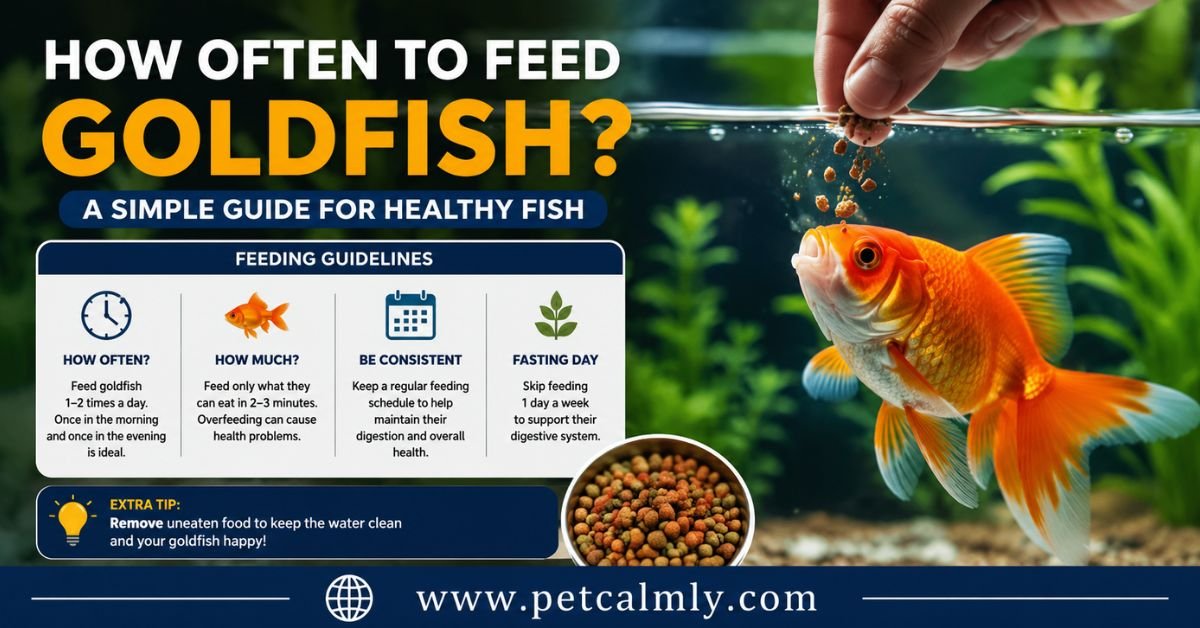
Most adult goldfish do best on 1 to 2 small feedings per day, spaced at least a few hours apart. Young goldfish under a year old are still growing and benefit from 2 to 3 smaller meals daily. The exact number matters less than the amount each feeding should be small enough for your fish to finish in about 30 to 60 seconds. Overfeeding, not underfeeding, is the mistake that sends most goldfish owners searching for answers in the first place.
If you only remember one thing from this guide, let it be this: a goldfish that looks a little “hungry” between meals is almost always healthier than one that’s fed constantly. Their digestive system, water quality, and long-term health all depend on portion control more than feeding frequency.
Why This Question Trips Up So Many New Owners
Goldfish don’t really have a stomach in the way we picture one. They have a simple, tube-like digestive tract that moves food through fairly quickly, and they don’t have an internal “stop eating” signal the way many animals do. That’s part of why they’ll keep begging at the glass long after they’ve had enough it’s not defiance, it’s just biology.
I’ve talked to plenty of first-time goldfish owners who assumed a fish swimming up to the glass meant hunger, so they’d sprinkle in another pinch of food “just to be safe.” Within a couple of weeks, the water turned cloudy, the fish looked bloated, and nobody could figure out why. Almost every time, overfeeding was the root cause. Once feeding was scaled back and portioned correctly, the tank stabilized and the fish perked back up.
Understanding why goldfish behave this way is what actually solves the problem not just memorizing a number.
How Often to Feed Goldfish by Age and Life Stage
Feeding frequency isn’t one-size-fits-all. It shifts as your fish grows.
Feeding Baby and Juvenile Goldfish (Under 1 Year Old)
Young goldfish are putting a lot of energy into growth, so they need more frequent, smaller meals than adults.
- Feed 2 to 3 times per day
- Keep portions tiny think a few flakes or a small pinch of crumbled pellets
- Spread feedings out by at least 3 to 4 hours
Growing goldfish that are underfed can develop stunted growth or weakened immune function over time, so this is one life stage where slightly more frequent feeding is genuinely appropriate as long as portions stay small.
Feeding Adult Goldfish (1 Year and Older)
Once goldfish reach adulthood, their growth slows and so should their feeding frequency.
- Feed 1 to 2 times per day
- A single daily feeding works well for most home aquariums, especially in cooler water
- Twice-daily feeding (smaller portions each time) can be gentler on digestion for fancy, round-bodied varieties
Feeding Fancy Goldfish (Oranda, Ryukin, Ranchu, and Similar Breeds)
Fancy goldfish have compact, rounded bodies with organs packed more tightly than slim-bodied varieties like comets or shubunkins. This body shape makes them more prone to digestive blockages and swim bladder trouble.
- Feed 2 to 3 very small meals per day rather than one large one
- Pre-soak pellets for a few minutes before feeding to reduce the chance of them expanding in the gut
- Favor sinking pellets over flakes to cut down on the gulped air that contributes to buoyancy problems
How Water Temperature Changes Feeding Frequency
This is the part most feeding charts skip, and it matters more than people expect. Goldfish are cold-blooded, so their metabolism rises and falls with water temperature.
- Cooler water (below 65°F / 18°C): Digestion slows down considerably. Feed once a day or even every other day.
- Moderate water (65–72°F / 18–22°C): A typical indoor tank range. Once or twice daily works well.
- Warmer water (above 72°F / 22°C): Metabolism speeds up. Fish may tolerate two feedings a day, but watch water quality closely since warmer water also holds less oxygen.
- Outdoor ponds in fall/winter: As temperatures drop, feeding should be reduced dramatically and stopped altogether once the water gets cold enough that the fish become sluggish, since undigested food can sit in a slowed gut and cause serious harm.
If your goldfish seems less interested in food during a cold snap, that’s normal behavior, not a sign of illness.
How Much to Feed Goldfish (Not Just How Often)
Frequency and portion size work together getting one right while ignoring the other still leads to problems.
The 2-Minute Rule
Offer only what your goldfish can eat in about 1 to 2 minutes. If food is still floating or sinking uneaten after that window, you’ve offered too much. Remove the leftovers with a net so they don’t decay and foul the water.
The Eye-Size Guideline
A simple visual trick many experienced keepers use: the total amount of dry food per meal should be roughly the size of one of your goldfish’s eyes. It sounds oddly specific, but it’s a surprisingly reliable way to avoid overfeeding, especially for beginners who tend to eyeball portions too generously.
Signs You’re Feeding Too Much
- Leftover food sinking to the substrate after each feeding
- Cloudy or smelly water within a day or two of a water change
- A noticeably rounder, distended belly
- Fish floating sideways or struggling to stay upright (often linked to swim bladder strain from overeating)
Signs You’re Feeding Too Little
- Visibly sunken or pinched-in belly
- Reduced activity or energy over several days
- Slow growth in juvenile fish
- Increased aggression or chasing around feeding times
What to Feed Goldfish (and How It Affects Feeding Schedule)
The type of food you use actually influences how often you should feed.
- Flakes: Convenient and widely available, but goldfish often gulp air at the surface while eating them, which can contribute to buoyancy issues. Best used in smaller, more frequent portions.
- Sinking pellets: Encourage more natural bottom-feeding behavior and reduce surface air-gulping. Many experienced keepers prefer these as a staple.
- Fresh or blanched vegetables (peas with the skin removed, shredded zucchini, leafy greens): Great as an occasional addition a couple of times a week. The fiber content actually helps prevent constipation and swim bladder strain.
- Frozen or live treats (bloodworms, brine shrimp, daphnia): Nutritious in moderation, roughly once or twice a week, but shouldn’t replace a balanced staple diet.
A goldfish-specific formula (rather than generic “tropical fish” food) is worth prioritizing, since goldfish have different protein and fiber needs than many tropical species.
5 Common Feeding Mistakes That Cause Real Problems
- Feeding out of habit rather than schedule. It’s easy to toss in food every time you walk past the tank. Stick to set times instead.
- Letting kids feed the fish freely. A well-meaning child can easily double or triple a daily portion without realizing it. If kids are involved, pre-measure the food into a small container for them to use.
- Feeding right before or after a water change. Give the tank a little time to settle so you’re not adding stress to a system that’s already been disturbed.
- Assuming “begging” means hunger. Goldfish beg reflexively at the glass regardless of how recently they’ve eaten. It’s a learned association with your presence, not a reliable hunger cue.
- Using expired or old food. Fish food loses nutritional value over time, particularly vitamin content. Replace flakes and pellets roughly every 3 to 6 months.
Sample Feeding Schedule for a Healthy Goldfish
| Life Stage | Feedings Per Day | Portion Size | Food Type |
|---|---|---|---|
| Juvenile (under 1 year) | 2–3 | Small pinch, eaten in ~1 minute | Goldfish flakes or crushed pellets |
| Adult, slim-bodied (comet, shubunkin) | 1–2 | Eye-sized portion per feeding | Sinking pellets, occasional veggies |
| Adult, fancy/round-bodied (oranda, ranchu) | 2–3 (very small) | Slightly less than eye-sized | Pre-soaked sinking pellets |
| Outdoor pond, warm season | 1–2 | Small, based on activity | Pellets plus natural algae grazing |
| Outdoor pond, cold season | 0–1 (as temp drops) | Minimal to none | Reduced or paused entirely |
Use this as a starting framework, then adjust based on your fish’s body condition, activity level, and water temperature.
When Should You Worry About Goldfish Feeding Habits?
Most feeding-related issues resolve with adjusted portions and a bit of patience, but certain signs point to something that needs closer attention:
- Persistent floating, sinking, or swimming sideways that doesn’t improve after a short fasting period (24 hours is a commonly used reset for mild, feeding-related buoyancy issues)
- Visible bloating that doesn’t go down between meals
- Refusal to eat for more than a few days in a row, especially paired with lethargy or clamped fins
- Stringy, white, or unusually colored waste trailing from the fish
- Rapid, labored gill movement alongside feeding changes
These can sometimes point to swim bladder disorder, internal parasites, or bacterial issues that go beyond simple portion adjustments. According to veterinary aquatic resources, persistent buoyancy problems or prolonged appetite loss are reasonable reasons to consult a veterinarian experienced with fish, since some causes require diagnosis and treatment beyond dietary changes alone.
What Should Pet Owners Do Day to Day?
- Set two fixed feeding windows (for example, morning and early evening) and stick to them
- Pre-measure portions so feeding isn’t left to guesswork in the moment
- Watch the tank for a minute or two after each feeding to confirm food is fully eaten
- Skip a feeding once a week for adult fish a short fast supports digestion and mimics natural feeding gaps in the wild
- Adjust frequency seasonally if your goldfish lives outdoors or in an unheated tank
- Keep a simple feeding log for the first few weeks if you’re new to goldfish keeping; it makes patterns (and mistakes) much easier to spot
Conclusion
Feeding goldfish well isn’t about finding one perfect number and repeating it forever it’s about reading your specific fish, their age, their body shape, and the water they’re living in, then adjusting from there. Once you get the rhythm down, feeding time becomes one of the easiest and most enjoyable parts of goldfish care rather than a source of stress. Underfeeding slightly is almost always safer than overfeeding, and a consistent, modest routine will do more for your goldfish’s long-term health than any single “ideal” feeding schedule ever could.
More Information About Pets, Please Visit Our Website: Why Is My Goldfish Turning Black?
Common Goldfish Tank Size
Guppy Fry Care
How Many Babies Do Guppies Have in a Year?
Best Food for Guppy Fish
How Often to Feed Betta Fish?
Frequently Asked Questions
1: How many times a day should I feed my goldfish?
Most adult goldfish do well with 1 to 2 small feedings a day, while young or fancy goldfish often do better with 2 to 3 very small feedings spread throughout the day.
2: Can I feed my goldfish once a day?
Yes. A single daily feeding is perfectly healthy for most adult goldfish, especially in cooler water, as long as the portion is appropriately sized and not overly generous.
3: What happens if I overfeed my goldfish?
Overfeeding leads to leftover food decaying in the tank, which spikes ammonia and harms water quality. It can also cause bloating, constipation, and swim bladder problems in the fish itself.
4: Can goldfish go a day without eating?
Yes, easily. Healthy adult goldfish can comfortably skip a day or two of feeding without any harm, and occasional short fasts can actually support healthy digestion.
5: Do goldfish stop eating when they’re full?
Not reliably. Goldfish lack a strong internal “full” signal and will often keep eating opportunistically, which is why portion control matters more than watching for signs they’re satisfied.
6: Should I feed my goldfish differently in winter?
Yes. Cooler water slows their metabolism significantly, so feeding should be reduced sometimes to nothing at all in unheated outdoor ponds once temperatures drop low enough to slow the fish down.