Short direct answer
If your goldfish is turning black, the most likely cause is ammonia burn a chemical injury that happens when ammonia builds up in the tank and damages the fish’s skin. As the wound heals, the body deposits melanin (dark pigment) over the injured area, which is why the patch looks black instead of red. Other possible causes include nitrite exposure, physical injury, black spot disease, stress, or simply natural aging. Most cases are treatable once you identify the trigger.
It’s an unsettling thing to notice. One day your goldfish looks completely normal, and the next there’s a dark smudge on its side, its fins, or even around its gills. Before you panic, take a breath in the majority of cases, this is your goldfish’s body responding to something in its environment, and it’s fixable once you know what to look for.
This guide walks through every realistic cause of a goldfish turning black, how to tell them apart, what to do about each one, and when the color change is actually a sign you need to call a vet or aquatic specialist.
What Does It Mean When a Goldfish Turns Black?
Goldfish don’t turn black for no reason. Their scales contain pigment cells called chromatophores, and melanophores specifically are responsible for black and dark pigment. When skin tissue is damaged by a chemical burn, a scrape, or an infection the body often responds by producing extra melanin around the injury site as part of the healing process.
In other words, black patches are frequently a repair response, not the injury itself. That’s actually reassuring in many cases, because it means your goldfish’s body is already working to fix the problem. The real question isn’t just “why is it black,” but “what caused the damage in the first place” because that’s the part you need to correct.
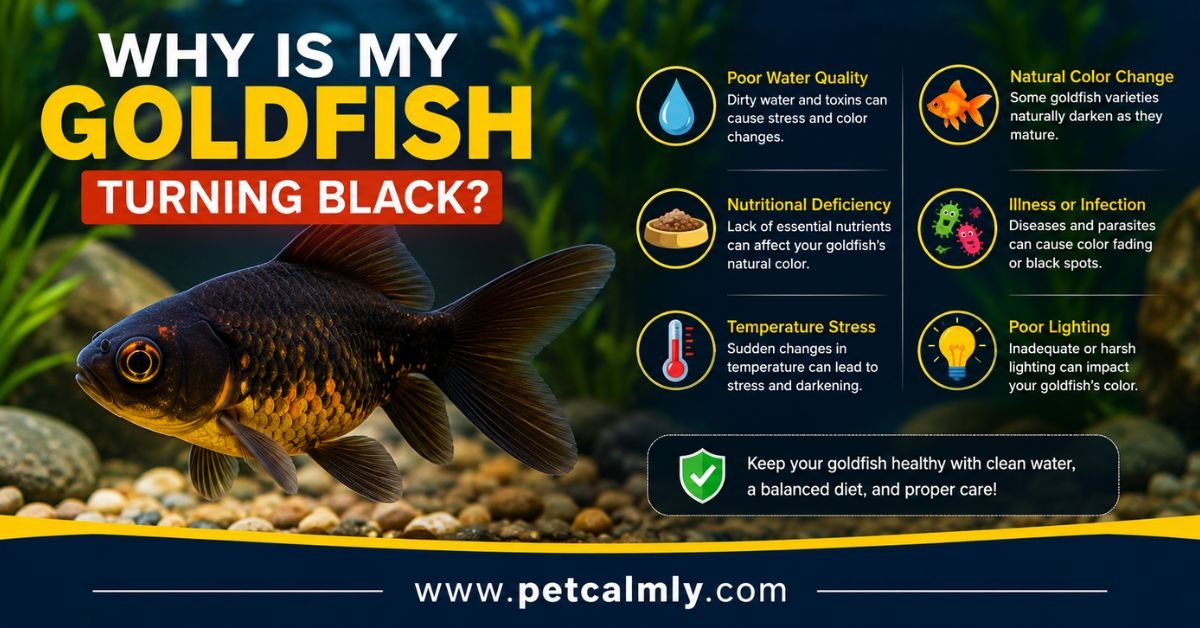
Top 6 Causes of a Goldfish Turning Black
1. Ammonia Burn (the Most Common Cause)
Ammonia is a natural byproduct of fish waste, uneaten food, and decaying plant matter. In a properly cycled tank, beneficial bacteria convert ammonia into less harmful compounds. But in a new tank that hasn’t finished cycling, or an overstocked tank with weak filtration, ammonia can climb to levels that chemically burn a goldfish’s skin and gills.
The pattern usually looks like this:
- Skin first appears red, irritated, or streaky
- Over the following days, the damaged area darkens as it heals
- Black patches often start on the fins or gills before spreading to the body
According to the Merck Veterinary Manual, un-ionized ammonia concentrations above roughly 0.05 mg/L are considered potentially harmful to fish, and “new tank syndrome where ammonia spikes in the first weeks of a new setup is a leading cause of sudden fish illness and death.
What to do: Test your water immediately with a liquid test kit (paper strips are notoriously inaccurate). If ammonia reads above 0 ppm, do a 25–50% water change right away, and repeat daily until levels stabilize near zero.
2. Nitrite Poisoning
Nitrite is the compound ammonia converts into during the second stage of the nitrogen cycle. It’s just as dangerous, because it binds to hemoglobin in the fish’s blood and interferes with oxygen transport — essentially suffocating the fish from the inside. Nitrite exposure can also trigger dark, blotchy discoloration, especially near the gills.
If you test your water and ammonia is at zero but nitrite is elevated, your biological filter is still establishing itself, or something has disrupted it (a recent filter cleaning with tap water, a course of antibiotics, or a sudden pH crash can all wipe out beneficial bacteria).
3. Healing From a Physical Injury
Goldfish are curious and sometimes clumsy. A scrape against a rock, a nip from a tankmate, or rough handling during a net transfer can all damage the slime coat and skin underneath. As new tissue regenerates, it frequently grows back darker than the surrounding scales before gradually fading back to the original color over several weeks.
This type of black patch tends to:
- Appear suddenly, right after a known incident
- Stay localized to one spot rather than spreading
- Slowly lighten over time instead of getting darker
4. Black Spot Disease
Less common indoors, black spot disease is caused by a parasite (a fluke larva) that needs snails and fish-eating birds to complete its life cycle. It’s mostly seen in outdoor ponds where snails and wild birds have access to the water. Small black spots appear where the parasite burrows into the skin.
Because the parasite’s life cycle depends on birds and snails, indoor aquarium goldfish are very unlikely to develop it unless snails from an infected source were introduced.
5. Stress-Related Color Change
Fish can shift pigment in response to prolonged stress whether from poor water quality, aggressive tankmates, overcrowding, sudden temperature swings, or a tank that’s too small for the fish’s adult size. Stress darkening often comes with other behavioral clues, like hiding more, clamped fins, reduced appetite, or gasping at the surface.
6. Natural Aging and Genetics
Not every color change is a problem. Goldfish, especially metallic-scaled varieties, can naturally shift color as they mature — sometimes lightening, sometimes developing darker patches as part of their genetic coloring pattern. This kind of change tends to be gradual, symmetrical, and unaccompanied by any other symptoms. If your goldfish is eating normally, swimming normally, and simply looks a little different than it did a year ago, this may just be normal development rather than illness.
A Real-World Example: How This Usually Plays Out
Picture a fairly common scenario: someone sets up a new 20-gallon tank, adds three goldfish within the first week because the tank “looks empty,” and feeds generously since the fish seem hungry. Two weeks later, faint red streaks appear on one goldfish’s tail. By week three, those streaks have turned into dark, almost black patches.
This is the textbook ammonia-burn timeline. The tank never had time to build up the bacteria colonies needed to process waste from three goldfish at once, so ammonia spiked, injured the weakest fish first, and the black patches showed up as the injury healed. The fix in this situation isn’t medication it’s slowing down, testing water daily, doing partial water changes, and holding off on new fish until the readings stabilize at zero. Within a month, cases like this typically resolve on their own once the tank finishes cycling.
Not every case looks like this, but a large share of the “why is my goldfish turning black” questions people ask trace back to some version of this same story: a tank that hasn’t caught up to its bioload yet.
5 Common Mistakes That Make It Worse
A few habits tend to prolong or worsen black discoloration, even when owners are trying to help:
- Over-cleaning the filter. Rinsing filter sponges under hot tap water kills the beneficial bacteria that process ammonia, which can restart the whole cycling process at the worst possible time.
- Changing too much water at once. A sudden 100% water change can shock the fish and destabilize water chemistry further. Smaller, more frequent changes are gentler and more effective.
- Adding medication before testing water. Many owners reach for a bottled “fish tonic” first. If the real problem is ammonia or nitrite, medication won’t fix the water chemistry, and it can waste valuable time.
- Overfeeding “to help the fish feel better.” More food means more waste, which means more ammonia. Cutting back to what the fish can eat within two to three minutes, once or twice a day, actually helps.
- Ignoring tank size as the fish grows. A goldfish that outgrows its tank produces more waste than the filtration was designed for, creating chronic low-grade ammonia stress that shows up as recurring dark patches.
How Long Does It Take for the Black Color to Fade?
Timelines vary depending on the cause, but here’s a general sense of what to expect:
- Ammonia or nitrite burns: Once water quality is corrected, visible healing often begins within one to two weeks, with color gradually normalizing over several weeks to a couple of months. Some scarring may be permanent, especially with more severe burns.
- Minor physical injuries: These usually fade within two to four weeks as new tissue matures and blends back in with surrounding scales.
- Stress-related darkening: This can resolve fairly quickly, sometimes within days, once the stressor (crowding, aggressive tankmate, temperature swing) is removed.
- Natural genetic changes: These are permanent and simply reflect how that individual fish’s coloring develops over its lifetime.
If a black patch hasn’t changed at all after a month of stable, clean water, or if it continues to grow, that’s a reasonable point to check in with a vet or aquatic specialist rather than continuing to wait it out.
Prevention Checklist
Once the current issue is resolved, these habits reduce the odds of it happening again:
- Fully cycle any new tank before adding fish, or add fish slowly, one at a time, over several weeks
- Test ammonia, nitrite, and nitrate weekly, even in an established tank
- Keep to roughly one goldfish per 20 gallons (or more, depending on adult size) rather than judging by current size
- Feed only what fish finish within two to three minutes, once or twice daily
- Rinse filter media in tank water, never tap water, during maintenance
- Quarantine new fish and plants for a few weeks before introducing them to the main tank
- Keep decor free of sharp edges that could scrape fish during normal swimming
Quick Comparison: Identifying the Cause
| Cause | How It Looks | Speed of Onset | Other Symptoms |
|---|---|---|---|
| Ammonia burn | Starts red/streaky, darkens over days | Fast (days) | Lethargy, appetite loss, red gills |
| Nitrite poisoning | Dark blotches, often near gills | Fast (days) | Gasping, rapid gill movement |
| Physical injury | Localized dark patch at injury site | Immediate | None beyond the mark itself |
| Black spot disease | Small, distinct black dots | Gradual | Usually none (outdoor ponds) |
| Stress | Diffuse darkening, whole body | Variable | Hiding, clamped fins, low appetite |
| Natural aging | Gradual, even color shift | Slow (weeks/months) | None |
How to Confirm the Cause: A Step-by-Step Approach
- Test your water first. Use a liquid test kit to check ammonia, nitrite, nitrate, and pH. This single step rules in or out the two most common causes immediately.
- Look at the pattern. A single localized spot suggests injury. Widespread blotching suggests water chemistry or stress. Tiny scattered dots suggest parasites.
- Check your fish’s behavior. Normal swimming, eating, and social behavior are reassuring signs. Gasping at the surface, clamped fins, or hiding are red flags.
- Review recent changes. Did you add new fish, clean the filter with tap water, change the diet, or move the tank? Recent changes often point straight to the cause.
- Watch the trend over 1–2 weeks. Healing marks should stay the same size or shrink. Marks that keep spreading need closer attention.
Practical Fixes for Each Cause
- For ammonia or nitrite spikes: Do partial water changes (25–50%) every day or every other day until levels normalize. Avoid overfeeding, and don’t add new fish until the tank has fully cycled.
- For a weak or damaged filter: Confirm your filter is rated for at least the actual volume of your tank, and avoid rinsing filter media in tap water, since chlorine kills the beneficial bacteria living in it.
- For overcrowding: Goldfish produce a surprising amount of waste and grow much larger than their store-bought size suggests. Rehoming extra fish or upgrading tank size reduces the bioload significantly.
- For injuries: Keep the water clean while the fish heals, and consider aquarium salt (not table salt) at a vet- or manufacturer-recommended dose to support the slime coat, unless you keep scaleless or salt-sensitive tankmates.
- For suspected black spot disease: This mainly applies to outdoor ponds. Reducing snail populations and limiting bird access can help prevent reinfestation.
- For stress: Reassess tank size, tankmate compatibility, and water temperature stability. Goldfish generally do best in cooler, well-oxygenated water with peaceful tankmates.
When Should You Worry?
Most cases of a goldfish turning black are manageable at home once water quality is corrected. But a few signs suggest the issue is more serious and worth professional input from an aquatic veterinarian or experienced fish health specialist:
- The black patches are spreading rapidly rather than healing
- Your fish is gasping at the surface or has visibly red, inflamed gills
- There’s a loss of appetite lasting more than a day or two
- You notice lethargy, floating oddly, or difficulty staying upright
- Water tests keep coming back with detectable ammonia or nitrite despite regular changes
- Open sores, fraying fins, or a fuzzy/cottony texture appear alongside the darkening
If any of these show up, it’s reasonable to consult a vet who treats fish, or reach out to a knowledgeable local aquarium store for a second opinion on your water test results.
What Should Goldfish Owners Do Right Now?
If you’ve just noticed your goldfish turning black, here’s a simple order of operations:
- Test the water today don’t guess.
- Do a partial water change if ammonia or nitrite is detected.
- Observe behavior over the next 24–48 hours.
- Avoid adding new fish, food changes, or medications until you know the cause.
- Photograph the affected area so you can track whether it’s spreading or healing.
- If symptoms worsen or your fish shows breathing distress, seek professional advice promptly.
Conclusion
A goldfish turning black is rarely something to panic over, but it’s also not something to ignore. In most homes, the cause traces back to ammonia or nitrite in the water both of which are fixable with consistent water changes and a properly cycled filter. Less often, the darkening comes from a healing injury, a parasite, ordinary stress, or simply your fish’s natural coloring changing with age.
The best approach is calm, methodical: test the water, watch behavior, and give it a little time. Most goldfish heal fully once the underlying cause is addressed, and the black patches gradually fade as the fish’s health improves.
Why Explaining “Why” Matters More Than Just Naming the Cause
It’s tempting to treat this as a simple lookup see black spot, match it to a cause, apply a fix. But understanding why the discoloration happens changes how you respond to it long-term.
If you only treat the visible symptom (say, adding aquarium salt) without correcting the ammonia spike behind it, the black patches may fade temporarily and then return, or new ones may appear elsewhere on the fish. Melanin buildup is the body’s response to damage it’s not the root problem itself. That’s why every fix in this guide starts with identifying and correcting the underlying trigger, whether that’s water chemistry, tank size, a recent injury, or simple aging, rather than only addressing the color change on the surface.
This is also why two goldfish in the same tank can react differently to the same water conditions. A younger or smaller fish, or one that’s already mildly stressed from a recent move, may show visible burns before a larger, more established tankmate does. If one fish in a group is darkening and the others look fine, it doesn’t rule out a water quality problem it may just mean that fish is more sensitive right now.
More Information About Pets, Please Visit Our Website: Common Goldfish Tank Size
Ich Treatment for Freshwater Fish
Freshwater Fish Diseases
Freshwater Aquarium Algae Control
How to Cycle a Fish Tank With Plants
Freshwater Aquarium Maintenance
Why Is My Fish Tank Water Cloudy?
Frequently Asked Questions
1: Is it normal for goldfish to turn black?
It can be. Some goldfish naturally darken as they age, especially metallic varieties. But sudden or spreading black patches usually point to a water quality issue and are worth investigating rather than assuming they’re normal.
2: Will the black spots on my goldfish go away?
In many cases, yes. Once the underlying cause (usually ammonia or nitrite) is corrected, healed skin often fades back toward its original color over several weeks, though some marks may remain as permanent scarring.
3: Can stress alone turn a goldfish black?
Yes. Chronic stress from overcrowding, aggressive tankmates, or unstable water conditions can cause diffuse darkening, usually alongside behavior changes like hiding or reduced appetite.
4: How do I know if it’s ammonia burn or just my goldfish’s natural color?
Ammonia burn typically starts as red or irritated skin that darkens over days, often on the fins or gills first. Natural coloring changes happen gradually over weeks or months and aren’t linked to a water test showing ammonia or nitrite.
5: Do I need to quarantine a goldfish that’s turning black?
If you suspect a parasite like black spot disease, or you’re unsure whether an illness is contagious, separating the affected fish is a reasonable precaution. For ammonia or nitrite-related darkening, the priority is fixing the water in the main tank rather than moving the fish.
6: Should I use aquarium salt to treat a goldfish turning black?
Aquarium salt can support the slime coat during healing, but it isn’t a universal fix and isn’t safe for every tank setup, especially with scaleless fish or live plants. It’s best used at a measured, appropriate dose rather than as a default reaction, and persistent or worsening cases still warrant testing your water and, if needed, professional advice.