Short direct answer
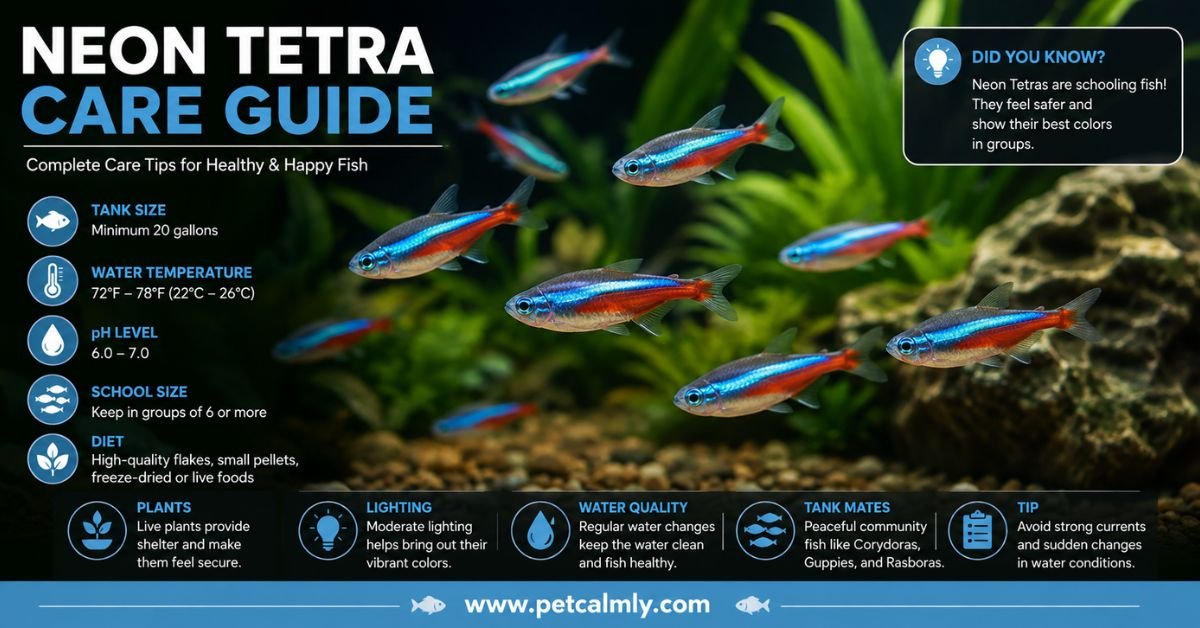
If you’ve just brought home a shoal of tiny, glowing blue-and-red fish, you’re probably wondering how to keep them alive, happy, and thriving. A solid neon tetra care guide comes down to five essentials: soft, slightly acidic water between 70–78°F, a well-planted tank of at least 10 gallons, a school of six or more, a varied diet of small foods 1–2 times daily, and calm tankmates that won’t outcompete or bully them. Get those right, and neon tetras are one of the easiest, most rewarding freshwater fish you can keep.
That said, “easy” doesn’t mean “no thought required.” Neon tetras are small, delicate, and surprisingly specific about their environment and a lot of the fish deaths new owners experience in the first few weeks come down to a handful of avoidable mistakes. This guide walks through exactly what these fish need, why they need it, and what to do if something looks off.
What Is a Neon Tetra, Exactly?
The neon tetra (Paracheirodon innesi) is a small freshwater fish native to the blackwater and clearwater tributaries of the Amazon basin in South America, particularly around Peru, Colombia, and Brazil. In the wild, they’re used to dim, tannin-stained water, dense vegetation, and very soft, slightly acidic conditions which is important context, because it explains almost every care requirement on this list.
They’re famous for the iridescent blue stripe that runs from nose to tail and the bright red streak along the lower half of their body. That coloring isn’t just decorative it’s a schooling signal that helps neon tetras stay together in murky water, and it’s also a decent early warning sign of stress, since the color visibly dulls when a fish is unwell or frightened.
A healthy neon tetra typically reaches about 1 to 1.5 inches long and, with good care, can live 5 to 8 years much longer than most first-time owners expect from a fish this small.
Setting Up the Right Tank for Neon Tetras
Minimum Tank Size and Shoal Numbers
Neon tetras are a shoaling species, which means they instinctively stay in groups for safety and rely on each other to feel secure. A single neon tetra, or even two or three, will often hide, refuse to eat, or show constant stress-related color loss.
As a baseline:
- Minimum group size: 6 neon tetras
- Ideal group size: 8–12 for a calmer, more natural-looking shoal
- Minimum tank size: 10 gallons for a small group
- Better tank size: 15–20 gallons, which also gives you more stable water chemistry
Larger, more stable volumes of water are genuinely easier to keep balanced small tanks swing in temperature and chemistry far more quickly, which is part of why beginners often lose fish in tiny bowls or nano tanks.
Substrate, Plants, and Décor
In the wild, neon tetras live among dense plants, submerged roots, and leaf litter, so replicating that environment isn’t just aesthetic it directly reduces stress. A dark substrate (black sand or dark gravel) tends to make their colors pop and mimics the dim riverbed conditions they’re adapted to.
Good additions include:
- Live or silk plants such as Java fern, Amazon sword, or hornwort
- Driftwood, which can also naturally release tannins
- Floating plants to soften overhead lighting
- Caves or dense plant clusters for hiding spots
Avoid rough or sharp decorations neon tetras are thin-bodied and can injure themselves darting through tight, jagged spaces when startled.
Water Parameters Neon Tetras Actually Need
This is where most beginner mistakes happen, because “just any tropical tank” isn’t quite right for this species.
| Parameter | Ideal Range |
|---|---|
| Temperature | 70–78°F (21–26°C) |
| pH | 6.0–7.0 (slightly acidic) |
| Water hardness | Soft, 1–2 dGH |
| Ammonia/Nitrite | 0 ppm |
| Nitrate | Under 20 ppm |
Neon tetras are noticeably more sensitive to sudden parameter swings than hardier fish like guppies or platies. A tank that hasn’t finished cycling — meaning the beneficial bacteria that break down waste haven’t fully established yet — is one of the leading causes of early neon tetra deaths. It’s worth running your tank fish-free for several weeks, testing water with a liquid test kit, and only adding fish once ammonia and nitrite consistently read zero.
Weekly partial water changes (around 20–25%) help keep nitrate low without shocking the fish with a completely different water chemistry all at once.
Feeding Neon Tetras: What, How Much, and How Often
Neon tetras are omnivores with tiny mouths, so food size matters as much as food type. In their natural habitat, they eat small insects, larvae, worms, and bits of plant matter, so a varied diet mirrors that best.
A practical feeding routine:
- High-quality micro pellets or flakes formulated for small tropical fish, as a daily base
- Frozen or live foods — baby brine shrimp, daphnia, or micro-worms two to three times a week for protein and color
- Feed only what they finish in 1–2 minutes, once or twice a day
Overfeeding is one of the quiet, ongoing problems that new owners underestimate. Leftover food doesn’t just get wasted it breaks down into ammonia, which quietly poisons the same fish you were trying to feed. If you’re ever unsure, it’s genuinely safer to underfeed slightly than overfeed.
Neon Tetra Behavior: What’s Normal and What’s Not
Understanding normal behavior makes it much easier to spot a problem early, before it becomes an emergency.
Normal behavior looks like:
- Swimming together in a loose, shifting group, mostly in the middle water column
- Darting occasionally when startled, then regrouping
- Bright, vivid coloring, especially under proper lighting
- Active feeding response when food hits the water
Behavior worth watching:
- One fish constantly hiding or isolating from the shoal
- Faded or patchy coloring that doesn’t return
- Gasping at the surface, which often points to low oxygen or poor water quality
- Clamped fins held tightly against the body
A single fish acting oddly for a few hours isn’t necessarily an emergency fish have off moments too. But a pattern that persists for more than a day, or spreads to multiple fish, is a signal to check water parameters immediately.
Choosing Tank Mates for Neon Tetras
Because neon tetras are small and non-aggressive, tank mate choice matters more than it might seem. Fish that are too large, too fast, or too territorial can outcompete them for food or stress them into hiding permanently.
Good tank mate options generally include:
- Corydoras catfish (peaceful bottom dwellers)
- Other small, calm tetras (ember tetras, rasboras)
- Dwarf shrimp, in tanks without larger predatory fish
- Peaceful small livebearers in some setups, though this depends on tank size
Fish to avoid pairing with neon tetras:
- Bettas with a known nippy or aggressive temperament
- Larger cichlids, which may view neon tetras as food
- Fin-nipping species like tiger barbs
- Any fish large enough to physically eat a 1.5-inch tetra
If you’re building out a community tank, it genuinely helps to research each species’ adult size and temperament before combining them — a fish that looks harmless at pet-store size isn’t always harmless once it’s grown.
Breeding Neon Tetras: The Basics
Breeding neon tetras in a home aquarium is possible but takes deliberate setup it doesn’t tend to happen accidentally in a standard community tank. They typically need very soft, acidic water, dim lighting, and a separate breeding tank to protect the eggs, since adult tetras (and other tankmates) will often eat their own eggs given the chance.
For most beginner and intermediate owners, breeding isn’t a required part of care it’s an optional next step once the basics of keeping a shoal healthy are fully mastered.
3 Common Health Problems in Neon Tetras
Neon Tetra Disease
This is the condition the species is unfortunately named after, and it’s worth understanding even if you never encounter it. Neon Tetra Disease is caused by a microsporidian parasite that affects the muscle tissue, and it’s more common in stressed or overcrowded tanks. According to the Merck Veterinary Manual, this parasite has no effective treatment, and infected fish typically need to be humanely removed to prevent it from spreading to the rest of the shoal.
Signs include:
- Loss of the normal blue/red stripe coloring, especially in patches
- A curved or bent spine
- Trouble swimming or staying upright
- General lethargy and isolation from the group
Because there’s no cure, prevention through quarantine and clean water is the only real defense.
Ich (White Spot Disease)
A common freshwater parasite that shows up as small white dots across the body and fins, often triggered by stress or a sudden temperature drop. This one is treatable in most cases with heat adjustment and an appropriate aquarium medication, but it spreads fast in a shoaling species, so early action matters.
Fin Rot
Usually linked to poor water quality, fin rot shows up as ragged, discolored, or shrinking fins. It typically improves once water conditions are corrected, though a bacterial treatment may be needed for advanced cases.
When Should You Worry? Signs That Need Fast Action
Most day-to-day neon tetra care is calm and routine, but a few signs mean it’s time to act quickly rather than wait and see:
- Multiple fish gasping at the surface — often an oxygen or ammonia emergency
- Sudden mass color loss across the shoal — usually a water quality crash
- Visible spine curvature or a fish struggling to stay upright
- Rapid, unexplained deaths within a short window
- A fish separated from the group for over 24 hours and refusing food
If you see any of these, testing your water parameters immediately is the first step — most emergencies trace back to ammonia, nitrite, or a sudden temperature shift. Persistent illness that doesn’t resolve with water changes, or symptoms matching Neon Tetra Disease, is a situation where consulting an aquatic veterinarian or an experienced local fish store with a strong reputation is genuinely worthwhile, since home diagnosis of parasitic and bacterial conditions is limited.
What Should New Owners Actually Do? A Practical Checklist
Here’s a simple sequence that prevents the majority of beginner problems:
- Cycle the tank fully before adding any fish — this alone prevents most early losses
- Test water weekly with a liquid test kit, not just strips
- Buy neon tetras in groups of 6 or more from the start
- Keep temperature and pH stable, avoiding sudden swings during water changes
- Feed small amounts once or twice daily, prioritizing variety over quantity
- Quarantine new fish for 2–4 weeks before adding them to an established tank
- Watch the shoal daily for a few minutes — early behavior changes are the easiest problems to catch
None of these steps are complicated on their own. What actually protects the fish is doing them consistently, especially in the first two months when a tank’s ecosystem is still stabilizing.
Conclusion
Neon tetras earn their reputation as a beginner-friendly fish, but “beginner-friendly” really means forgiving of small mistakes — not immune to neglect. A cycled tank, stable soft-acidic water, a proper shoal size, and a bit of daily observation cover almost everything these fish need to live a full, colorful life. When something does go wrong, the earliest and most reliable signal is usually the shoal’s color and behavior, which is exactly why a few quiet minutes of watching them each day is worth more than almost any other single habit.
More Information About Pets, Please Visit Our Website: How Often to Feed Goldfish
Why Is My Goldfish Turning Black?
Common Goldfish Tank Size
Guppy Fry Care
Best Fish for 10 Gallon Tank
Freshwater Aquarium Maintenance
Why Is My Fish Tank Water Cloudy?
Frequently Asked Questions
1: How many neon tetras should I keep together?
At least six, since they’re a shoaling species that becomes stressed and reclusive in smaller numbers. Eight to twelve tends to produce a calmer, more natural-looking group in tanks of 15 gallons or more.
2: What size tank do neon tetras need?
A minimum of 10 gallons for a small group of six, though 15–20 gallons is more forgiving and keeps water chemistry more stable over time.
3: Why are my neon tetras losing their color?
Faded color is usually a stress response, often linked to poor water quality, a tank that hasn’t fully cycled, aggressive tankmates, or the early stages of Neon Tetra Disease if the fading is patchy and doesn’t return.
4: Can neon tetras live with bettas?
Sometimes, but it depends entirely on the individual betta’s temperament. A calm betta in a large enough tank may coexist peacefully, but a nippy or territorial betta can seriously harm or kill neon tetras.
5: How long do neon tetras live?
With stable water conditions and proper care, neon tetras commonly live 5 to 8 years, which surprises many new owners who expect a shorter lifespan from such a small fish.
6: Do neon tetras need a heater?
Yes, in most homes. They need a stable 70–78°F, and room temperature alone often fluctuates outside that range, especially overnight or in cooler climates.