Short direct answer
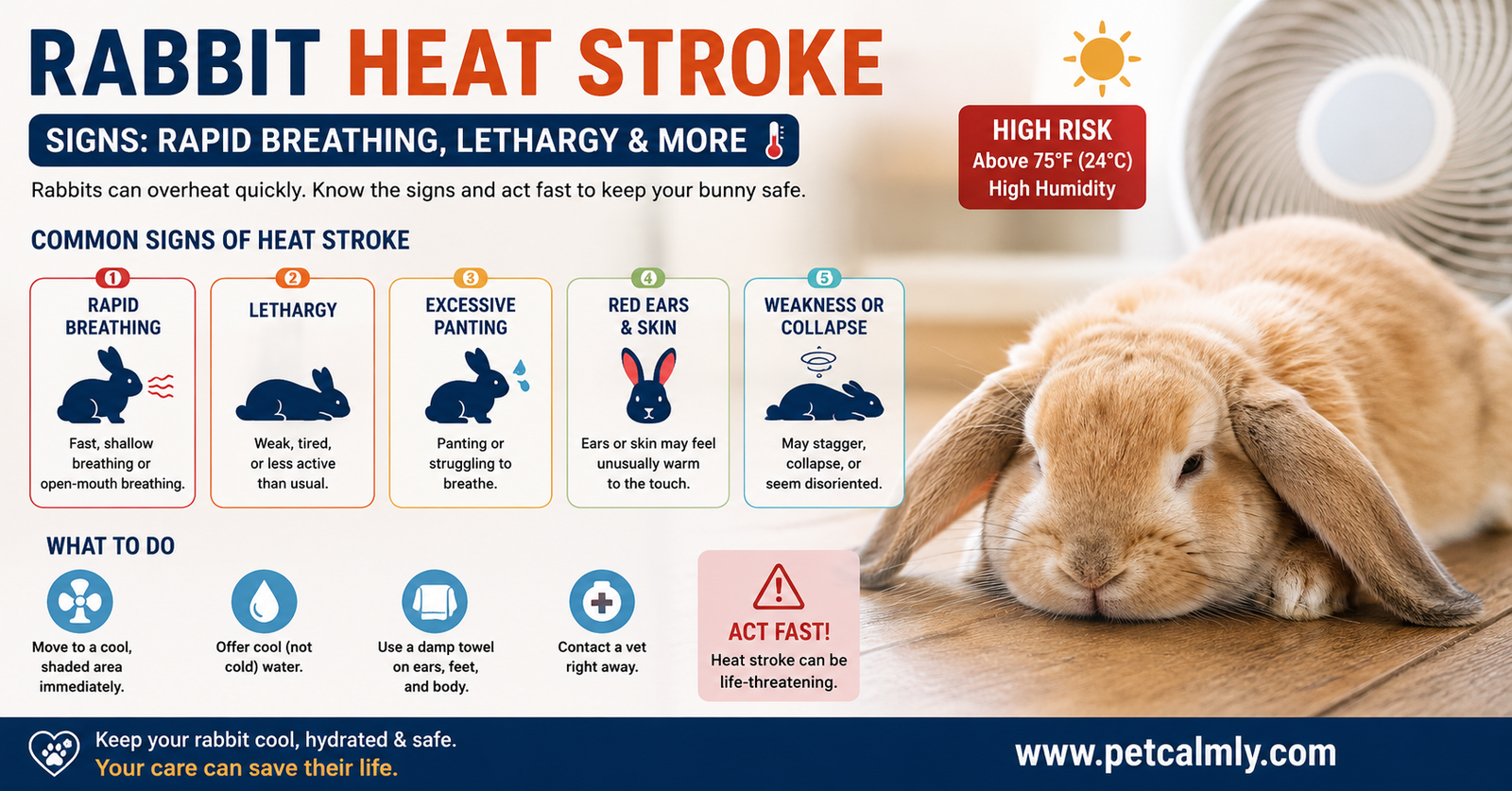
The clearest signs of heat stroke in rabbits are rapid, open-mouth breathing, sudden lethargy or collapse, hot ears that feel warmer than usual, excessive drooling, and a rabbit that suddenly refuses food or water. If your rabbit shows any combination of these signs, especially after time in a hot hutch, a warm car, or direct sunlight, this is an emergency. Move them to a cool, shaded area immediately and contact an emergency vet, since rabbit heat stroke can turn fatal within a very short window.
If you’re reading this because your rabbit is acting “off” on a hot day, take a breath you’re already doing the right thing by looking this up quickly. This guide walks you through exactly what heat stroke looks like in rabbits, why it happens so fast in this species specifically, what separates a scare from a true emergency, and what to do in the next ten minutes if you think your rabbit is overheating.
Why Rabbits Overheat Faster Than Dogs or Cats
Most new rabbit owners assume their bunny handles heat about as well as a cat or small dog. It doesn’t, and the reason comes down to biology, not bad luck.
Rabbits can’t sweat the way humans do, and unlike dogs, they don’t pant efficiently to cool down. Their main way of releasing body heat is through their ears blood vessels near the surface of the ears dilate and release warmth into the air. This works fine in a temperate room, but it’s a slow, limited system. Once the surrounding air itself is hot, or there’s no airflow, a rabbit’s body simply has nowhere to send that heat.
This is why veterinary sources like VCA Animal Hospitals and the Merck Veterinary Manual note that rabbits are considered highly susceptible to heat stress once ambient temperatures climb above roughly 85°F (29°C), particularly when humidity is also high. A dog might pant and pace through a warm afternoon. A rabbit in the same conditions can go from “seems a little quiet” to a full medical emergency in under an hour.
Thick-coated breeds, overweight rabbits, very young or senior rabbits, and rabbits with any existing respiratory or heart issue are all at higher risk, because their bodies have less capacity to compensate.
Early Warning Signs of Heat Stroke in Rabbits
Heat stroke rarely comes out of nowhere. There’s almost always a build-up phase where the rabbit is trying to cope, followed by a crash. Knowing the early signs gives you a window to intervene before things become critical.
Rapid Breathing (Tachypnea): What It Actually Means
A healthy rabbit at rest typically breathes somewhere around 30 to 60 breaths per minute, though this varies by individual. When a rabbit is overheating, you’ll often notice breathing that looks fast, shallow, and effortful sometimes with the nostrils flaring or the mouth slightly open, which is unusual for rabbits and worth taking seriously on its own.
What’s happening internally is that the rabbit’s body is trying to move air and blood faster to shed heat, since it can’t sweat it out. The faster and more labored the breathing looks, especially paired with stillness or a hunched posture, the more urgent the situation.
A simple way to check: watch the rise and fall of your rabbit’s side for 15 seconds and multiply by four. If it’s noticeably faster than what’s normal for your rabbit, or the breathing looks strained rather than just quick, don’t wait it out — this is one of the clearest early indicators something is wrong.
Lethargy and Sudden Weakness
Rabbits are naturally alert, curious animals. A rabbit that suddenly won’t move, doesn’t respond to you approaching, or flops down and stays unusually still is telling you something is wrong, even before you check for other symptoms.
This lethargy happens because overheating affects the rabbit’s entire nervous system, not just its comfort level. As core body temperature rises, the brain and muscles start to lose function, which is why a rabbit going into heat stroke often looks “drunk” or uncoordinated before it looks fully collapsed wobbling when it tries to hop, or seeming disoriented about its own space.
If your rabbit is normally food-motivated and suddenly ignores a favorite treat, or doesn’t perk up at the sound of the fridge or a bag rustling, treat that as a real symptom, not just a mood.
Other Physical Signs You Shouldn’t Ignore
Beyond breathing and energy level, heat stroke tends to show up in a cluster of physical signs:
- Hot, red, or floppy ears that feel warmer than the rest of the body
- Drooling or wet fur around the mouth and chin
- A wet or slightly blue-tinged nose in more advanced cases
- Loss of appetite, particularly refusing hay, which is unusual for rabbits
- Reduced or no fecal output, since gut motility slows dramatically under heat stress
- Seizure-like movements or full collapse in severe, advanced cases
None of these signs on their own always means heat stroke a rabbit can have warm ears just from lying in a sunny spot for a few minutes. What matters is the combination and the context. Warm ears plus fast breathing plus sudden inactivity, especially on a hot day or after time outside, is a very different picture than warm ears alone.
What Actually Causes Heat Stroke in Rabbits
Understanding the common triggers helps you spot risk before symptoms even start.
- Hutches or cages in direct sunlight, especially ones with solid plastic bottoms and little airflow
- Cars, garages, and sheds, which heat up far faster than people expect, even with a window cracked
- Rooms without ventilation during summer heatwaves, particularly upper floors or attics
- Overcrowded enclosures, where body heat from multiple rabbits compounds the problem
- Long car rides or vet transport carriers left in a warm vehicle, even briefly
- Thick fur or matting, especially in long-haired breeds like Angoras, which trap heat close to the skin
- Obesity, which acts as insulation and makes it harder for the rabbit to release heat efficiently
A pattern worth noting: heat stroke isn’t only a “left outside all day” problem. Many cases veterinarians see happen indoors, in rooms owners assumed were cool enough, or in carriers during a 20-minute errand.
Mistakes Well-Meaning Owners Often Make
Most rabbit owners who end up dealing with heat stroke aren’t neglectful they’re working from assumptions that don’t quite fit rabbit biology. A few patterns come up again and again:
- Assuming a shaded hutch is automatically a cool hutch. Shade helps, but if there’s no airflow, heat still builds up inside a hutch throughout the day.
- Judging temperature by how the room feels to a human. A room that feels comfortably warm to you can already be stressful for a rabbit, especially one with a heavy coat.
- Using ice packs directly against the skin as a quick fix, which can cause shock rather than gentle, safe cooling.
- Waiting to “see if it passes” because the rabbit is still moving around. Early lethargy is often mistaken for the rabbit just being tired.
- Not checking on outdoor rabbits often enough during heatwaves, assuming water and shade in the morning is enough for the whole day.
None of these are about carelessness. They’re about heat stroke not looking as dramatic, at first, as most owners expect.
What To Do Immediately If You Suspect Heat Stroke
If your rabbit is showing rapid breathing, lethargy, or any of the warning signs above, time matters more than getting every step perfect. Here’s the order that matters:
- Move your rabbit to a cool, shaded, well-ventilated area right away. A quiet indoor room with air conditioning or a fan (not pointed directly at the rabbit) is ideal.
- Offer room-temperature water, not cold water, so your rabbit can drink if willing. Never force water into the mouth of a lethargic rabbit, as this risks aspiration.
- Gently cool the ears with a lukewarm, damp cloth, wiping rather than soaking. This helps use the rabbit’s natural cooling mechanism without shocking the system.
- If your rabbit can tolerate it, lightly dampen the fur on the belly and inner ears with cool (not cold) water, using a spray bottle or damp towel rather than full immersion.
- Avoid ice or ice-cold water directly on the skin. A sudden temperature drop can cause the blood vessels to constrict, trapping heat internally rather than releasing it.
- Call an emergency vet or exotic/rabbit-savvy vet immediately, even while you’re doing the steps above. Heat stroke in rabbits often requires IV fluids and monitoring that can’t be done safely at home.
This is genuinely one of the situations where “wait and watch” is the wrong call. Suspected heat stroke in rabbits should always be treated as a same-day emergency, not a next-available-appointment situation.
When Should You Worry? Emergency Red Flags
Some signs mean you should stop reading and go straight to a vet, rather than trying home cooling first:
- Your rabbit is unresponsive or won’t lift its head
- Breathing looks extremely labored, gasping, or irregular
- There are visible tremors, twitching, or seizure-like movements
- Gums or tongue look pale, blue, or grey
- Your rabbit collapses or can’t stay upright
- Body temperature (if you’re able to check safely) is above 104°F (40°C) normal rabbit temperature runs between about 101°F and 103°F
If you see any of these, home cooling steps become secondary. Wrap your rabbit loosely in a damp towel for the car ride and go directly to emergency veterinary care. Rabbits can decline very quickly once heat stroke reaches this stage, and prompt IV fluid therapy meaningfully improves outcomes.
What Should Pet Owners Do Long-Term? Prevention Tips That Actually Work
Once your rabbit has recovered, or if you simply want to prevent this from happening in the first place, prevention comes down to a few consistent habits rather than one big fix.
Ideal Temperature and Housing Setup
Most veterinary guidance places the safe comfort zone for rabbits between about 60°F and 70°F (15–21°C), with real caution needed once temperatures pass 80°F (27°C). Practical steps that help:
- Keep hutches and cages in shaded, well-ventilated spots never direct sun, even for “a little while”
- Bring outdoor rabbits indoors during heatwaves whenever possible
- Use a fan nearby (not blowing directly on the rabbit) to keep air moving
- Freeze water in a bottle or a sealed container, wrap it in a towel, and place it in the enclosure for the rabbit to lie against
- Provide ceramic tiles or marble slabs, which stay naturally cool and give rabbits a spot to stretch out on
Hydration Habits Worth Building
Dehydration and overheating feed into each other, so consistent water access matters more in summer than any other season.
- Check water bottles and bowls at least twice a day, since bottles can clog or run dry faster in heat
- Offer water-rich vegetables like cucumber or romaine lettuce as a small supplement, not a replacement for water
- Have a backup water source in case one bottle fails during the day
Breed, Age, and Weight Risk Factors
Some rabbits need extra caution, not because owners did anything wrong, but because of their physical build:
- Long-haired breeds (Angoras, Lionheads) benefit from regular grooming in warmer months to reduce insulation
- Overweight rabbits have a harder time releasing heat and benefit from a vet-guided weight management plan
- Very young kits and senior rabbits regulate temperature less efficiently and should be monitored more closely during heat
- Rabbits with known respiratory or cardiac issues should have a lower heat threshold for concern, discussed directly with your vet
A Realistic Owner Scenario
Picture a rabbit named Biscuit, kept in a hutch on a covered porch shaded, technically, but tucked against a brick wall that absorbs afternoon sun. By early evening, Biscuit’s owner notices he hasn’t touched his hay since lunch and is lying flat instead of his usual alert posture near the hutch door. His breathing looks fast when she checks closely, and his ears feel noticeably warmer than his back.
This is a textbook early-stage pattern: environmental heat build-up, appetite loss, lethargy, and rapid breathing, without anything as dramatic as a collapse yet. Moving Biscuit indoors immediately, offering room-temperature water, and calling the vet at the first signs rather than waiting to see if he “perks up” is exactly the kind of early response that prevents a mild scare from becoming a genuine emergency.
Frequently Asked Questions
1: How fast does heat stroke happen in rabbits?
It can develop within 30 minutes to a couple of hours in high heat with poor ventilation, especially in enclosed spaces like cars, sheds, or hutches without airflow. This is faster than most owners expect, which is why prevention matters more than reaction time.
2: What does a rabbit’s breathing look like during heat stroke?
Breathing typically becomes fast, shallow, and visibly effortful, sometimes with slight mouth opening or flared nostrils, which is unusual for a species that normally breathes only through the nose.
3: Can a rabbit recover from heat stroke at home without a vet?
Mild, very early overheating caught within minutes may resolve with prompt cooling and rest, but true heat stroke marked by lethargy, rapid breathing, and appetite loss needs veterinary evaluation, since internal effects like organ stress aren’t visible from the outside.
4: Is it safe to put a rabbit in cold water to cool it down fast?
No. Cold or ice water can cause a dangerous, rapid temperature drop and shock. Lukewarm water applied gradually to the ears and belly is the safer approach recommended by exotic vets.
5: What temperature is too hot for a rabbit?
Most rabbits start showing heat stress once temperatures pass 80–85°F (27–29°C), particularly with high humidity or no airflow, even though the room may feel manageable to a person.
6: Are some rabbit breeds more prone to heat stroke than others?
Yes. Long-haired breeds, overweight rabbits, and very young or senior rabbits are all at higher risk because their bodies have a harder time releasing internal heat efficiently.
More Information About Pets, Please Visit Our Website: Why Is My Rabbit Not Eating?
Rabbit Water Bottle vs Bowl
What Are the Best Pellets for Rabbits
Rabbit Behavior Meanings
How Long Do Pet Rabbits Live Indoors?
How to Care for a Pet Rabbit Indoors
How Often Should I Clean My Rabbit Cage?
Conclusion
Heat stroke in rabbits isn’t rare, and it isn’t a sign that an owner did something wrong it’s a reflection of how differently rabbits are built compared to more heat-tolerant pets. The signs to remember are simple: rapid or labored breathing, sudden lethargy, warm ears, drooling, and appetite loss. Catching that combination early, cooling gently rather than drastically, and treating it as an emergency rather than a “wait and see” situation gives your rabbit the best possible chance.
If you’re setting up your rabbit’s space for warmer months, it’s also worth reviewing your rabbit’s general hydration routine and hutch ventilation setup, since both play a direct role in preventing heat stress before it starts.