Short direct answer
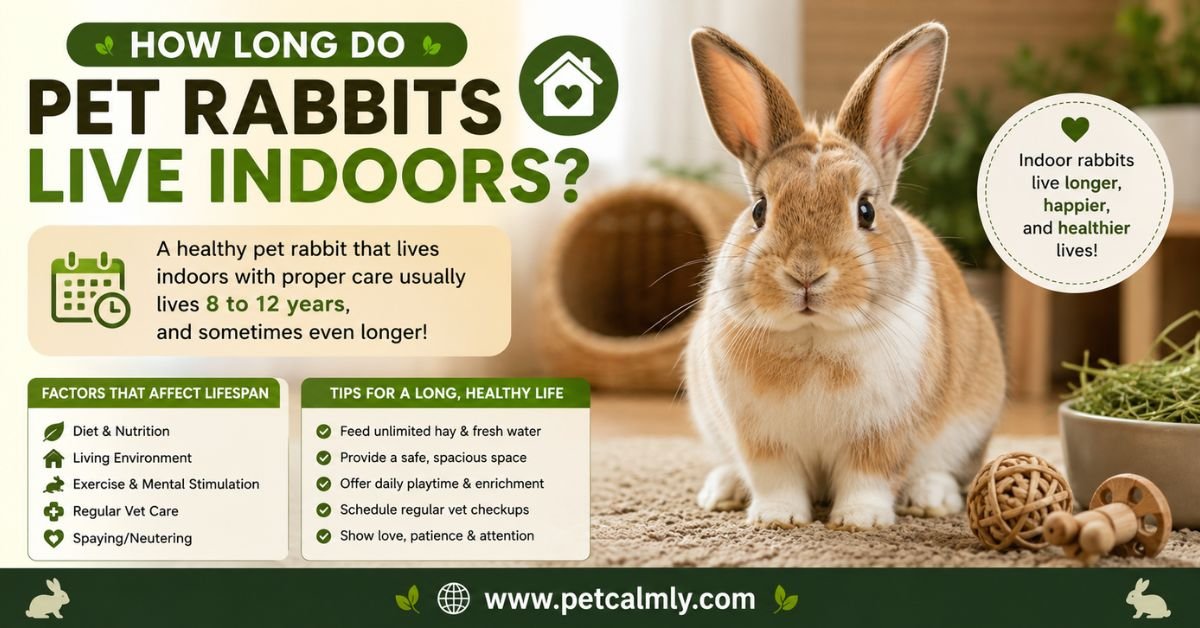
Most pet rabbits live 8 to 12 years when kept indoors, spayed or neutered, fed a proper hay-based diet, and given regular veterinary care. Some smaller breeds, like Netherland Dwarfs rabbit or Mini Rex, occasionally reach 12 to 14 years. This is significantly longer than outdoor rabbits, who typically live only 2 to 5 years because of predators, extreme temperatures, and limited veterinary monitoring. The single biggest factor in a rabbit’s lifespan isn’t luck it’s the environment and daily care an owner provides.
If you’re reading this because you just brought a rabbit home, or you’re trying to understand what to expect over the coming years, you’re in the right place. This guide covers everything that actually affects how long your rabbit will live, what shortens that lifespan without owners realizing it, and what to watch for as your rabbit ages.
Why Indoor Rabbits Live So Much Longer Than Outdoor Rabbits
The gap between indoor and outdoor rabbit lifespans isn’t small it can be double or even triple. Understanding why helps explain almost every other piece of advice in this article.
Protection From Predators and Weather
Outdoor hutches, even well-built ones, rarely stop every threat. Foxes, hawks, raccoons, and neighborhood dogs can cause fatal stress even without physical contact rabbits can die from a heart attack triggered purely by fear. Heat is another silent killer; rabbits are highly sensitive to heatstroke and struggle to cool themselves once temperatures climb past the mid-80s Fahrenheit. Indoors, none of these risks exist in the same way.
Fewer Parasites and Diseases
Outdoor rabbits are exposed to fly strike (a serious and often fatal condition caused by flies laying eggs in soiled fur), mosquito-borne illnesses, and contact with wild rabbits that can carry disease. Indoor rabbits, kept in clean, climate-controlled spaces, face a far lower risk of these exposures.
Closer Bond With Owners Means Earlier Health Detection
Rabbits are prey animals, which means they instinctively hide pain and illness until a problem is advanced. An owner who sees their rabbit every day, up close, tends to notice small changes a slightly smaller poop pile, a rabbit skipping breakfast, a bit less energy during playtime long before those changes become emergencies. This early detection alone accounts for a meaningful chunk of the indoor lifespan advantage.
Average Rabbit Lifespan by Breed
Breed size plays a real role in longevity, similar to the pattern seen in dogs, where smaller breeds tend to outlive larger ones.
| Breed | Average Indoor Lifespan |
|---|---|
| Netherland Dwarf | 10–12 years |
| Mini Rex | 10–12 years |
| Holland Lop | 7–10 years |
| Dutch Rabbit | 8–10 years |
| Lionhead | 7–9 years |
| Flemish Giant | 5–8 years |
| Mixed-breed/rescue rabbit | 8–12 years |
These numbers are general ranges, not guarantees. A well-cared-for large breed can outlive a poorly cared-for small breed. Genetics set the ceiling, but daily care determines how close a rabbit actually gets to it.
What Actually Determines How Long Your Rabbit Will Live
Diet and Nutrition
A rabbit’s digestive system is built around one thing: constant access to hay. Unlimited grass hay (like timothy or orchard grass) should make up roughly 80% of the diet, with fresh leafy greens and a small measured portion of pellets filling in the rest. Diets heavy in pellets or treats and light on hay are one of the most common causes of GI stasis, a dangerous slowdown of the digestive tract that’s a leading cause of preventable death in pet rabbits.
Spaying and Neutering
This is one of the most impactful decisions an owner can make. Unspayed female rabbits have a notably high lifetime risk of developing uterine cancer, sometimes cited by veterinary sources as affecting a majority of unspayed does by middle age. Neutering males reduces aggression, spraying, and the drive to escape enclosures in search of a mate — behaviors that indirectly lead to injury.
Housing and Living Space
Rabbits kept in cramped cages for most of the day tend to develop weaker bones, more obesity, and more behavioral stress than rabbits with room to run, stretch out, and perform natural behaviors like binkying (those joyful jumps and twists) and periscoping (standing tall to look around). A general guideline used by rabbit welfare organizations is a minimum of 8 square feet of enclosure space plus several hours of supervised free-roam time daily.
Mental Stimulation and Companionship
Rabbits are social animals. A bored, understimulated rabbit is more prone to stress-related illness and destructive chewing. Bonded rabbit pairs often show fewer signs of anxiety than solitary rabbits, and enrichment — cardboard tunnels, foraging toys, safe chew items — keeps both the mind and teeth healthy (rabbit teeth grow continuously throughout their life).
Genetics and Breed
Some health conditions run in certain lines, similar to purebred dogs. Reputable breeders and rescues can often tell you about known issues in a rabbit’s lineage, which is worth asking about if you’re adopting a purebred rabbit.
6 Common Mistakes That Quietly Shorten a Rabbit’s Lifespan
Most owners who lose a rabbit early aren’t neglectful they’re simply working from outdated or incomplete information. The most frequent mistakes include:
- Feeding too many pellets and not enough hay, which contributes to obesity and digestive problems
- Skipping spay/neuter surgery, often out of fear of anesthesia risk, when the long-term cancer risk of not spaying is far higher
- Housing a rabbit alone in a small cage with minimal daily exercise
- Missing early warning signs like reduced appetite or smaller droppings, which can indicate the start of GI stasis
- Using cedar or pine bedding, which can irritate a rabbit’s respiratory system over time
- Assuming rabbits don’t need vet visits because they seem low-maintenance — annual checkups matter even when nothing looks wrong
None of these mistakes come from bad intentions. They come from rabbits still being a relatively new addition to many households, without the decades of shared knowledge that exists around cats and dogs.
How to Help Your Indoor Rabbit Live a Longer, Healthier Life
Feeding Guidelines for Longevity
Aim for this general daily structure, adjusting for your rabbit’s size and any vet guidance:
- Unlimited fresh hay, available at all times
- 1–2 cups of fresh leafy greens per 4–5 lbs of body weight
- A small, measured portion of plain pellets (roughly 1/8–1/4 cup per 5 lbs)
- Fresh water, changed daily
- Occasional fruit as a treat only — a teaspoon or two, a few times a week
Exercise and Enrichment
Set up a rabbit-proofed room or pen where your rabbit can safely roam for several hours a day. Rotate toys weekly so things stay interesting, and provide safe wood chews to help manage constantly growing teeth.
Regular Health Checks
An annual vet visit with a rabbit-savvy veterinarian (not every vet treats rabbits regularly, so it’s worth confirming beforehand) allows small issues to be caught early. Weigh your rabbit monthly at home a kitchen scale works fine since gradual weight loss is often the first sign something is wrong.
Signs of Aging in Rabbits: What to Expect Year by Year
Rabbits age in a fairly predictable pattern, similar to how owners track life stages in cats:
- Years 1–4 (Young adult): Peak energy, most active phase, lowest health risk
- Years 4–7 (Middle age): Slight slowdown in activity, increased importance of weight monitoring and dental checks
- Years 7+ (Senior): More rest, softer joints, higher risk of dental disease and arthritis; diet and enclosure may need adjusting (lower platforms, softer bedding)
Senior rabbits often benefit from more frequent vet visits many rabbit-experienced vets recommend twice-yearly checkups once a rabbit passes age 6 or 7.
When Should You Worry About Your Rabbit’s Health
General care advice covers most day-to-day situations, but some symptoms cross the line into a genuine emergency. Contact a veterinarian promptly if you notice:
- No droppings, or very few, for more than 12 hours
- Refusal to eat or drink for more than a few hours
- Visible pain teeth grinding loudly, hunched posture, reluctance to move
- Labored or noisy breathing
- Head tilt, loss of balance, or circling
- Bloody urine or straining to urinate
- Sudden collapse or extreme lethargy
These signs can indicate GI stasis, a urinary blockage, or another rapidly progressing condition. Rabbits can decline quickly, so when in doubt, it’s always safer to call a vet than to wait and see.
What Should Pet Owners Do Right Now
If you want a simple starting checklist based on everything above, here’s where to begin:
- Confirm your rabbit has 24/7 access to fresh hay
- Schedule a spay/neuter consultation if it hasn’t happened yet
- Measure your enclosure space — aim for at least 8 sq ft plus daily roam time
- Find a rabbit-experienced vet near you before an emergency happens
- Start a monthly weigh-in routine
- Rabbit-proof one room for safe daily exercise
Small, consistent habits like these do more for lifespan than any single “trick” ever could.
A Realistic Look at How This Plays Out Day to Day
Many rabbit owners describe a similar pattern in the first year: the rabbit seems perfectly healthy, so hay and vet visits feel optional. Then, somewhere around year two or three, a smaller issue soft stool, a slightly reduced appetite, overgrown teeth shows up, often traced back to a diet that leaned too heavily on pellets and treats. Owners who catch this early and shift back to a hay-first diet typically see their rabbit bounce back within days. It’s a common enough pattern that most rabbit-savvy vets will ask about hay intake as one of the first questions during any checkup, regardless of the symptom.
This is really the heart of indoor rabbit care: it’s rarely one dramatic decision that determines lifespan. It’s the accumulation of small daily choices the hay bowl staying full, the extra hour of roam time, the vet visit that happens even when nothing seems wrong.
Conclusion
Indoor pet rabbits typically live 8 to 12 years, and that number is shaped far more by daily care than by luck or breed alone. Hay-based nutrition, spaying or neutering, adequate space, mental stimulation, and a vet familiar with rabbit health all stack together to push your rabbit toward the longer end of that range or beyond it. Outdoor living, by contrast, introduces risks that are difficult to fully control, which is why the lifespan gap between indoor and outdoor rabbits is so consistent.
If you’re just starting your rabbit-care journey, don’t feel like you need to get everything perfect immediately. Start with the checklist above, build the habits gradually, and lean on a rabbit-experienced vet as your ongoing partner. That combination is what turns an average rabbit lifespan into an exceptional one.
More Information About Pets, Please Visit Our Website: Can Rabbits Eat Strawberries?
Why Is My Rabbit Suddenly Biting Me?
How to Care for a Pet Rabbit Indoors
Frequently Asked Questions
1: Do indoor rabbits really live longer than outdoor rabbits?
Yes. Indoor rabbits typically live 8–12 years, while outdoor rabbits often live only 2–5 years due to predator stress, temperature extremes, and parasite exposure.
2: What is the oldest a pet rabbit has lived?
While most rabbits live into their early teens at most, there are documented cases of pet rabbits living into their late teens, though this is uncommon and usually involves exceptional genetics and care.
3: Does spaying or neutering really affect how long a rabbit lives?
Yes, significantly. Spaying female rabbits removes a major cancer risk, and neutering males reduces stress hormones and injury-causing behaviors like aggression and escape attempts.
4: How can I tell if my rabbit is getting old?
Look for reduced activity, more resting time, slower movement, and changes in eating habits. Most rabbits show noticeable signs of aging starting around 6–7 years old.
5: Is it normal for a rabbit to stop eating for a day?
No. Rabbits should never go more than a few hours without eating. A rabbit refusing food is considered a potential emergency and should be checked by a vet promptly.
6: Can two rabbits living together help them live longer?
Bonded rabbit pairs often show lower stress levels and more natural behavior than solitary rabbits, which can support better overall wellbeing, though lifespan itself still depends mainly on diet, housing, and medical care.