Short direct answer
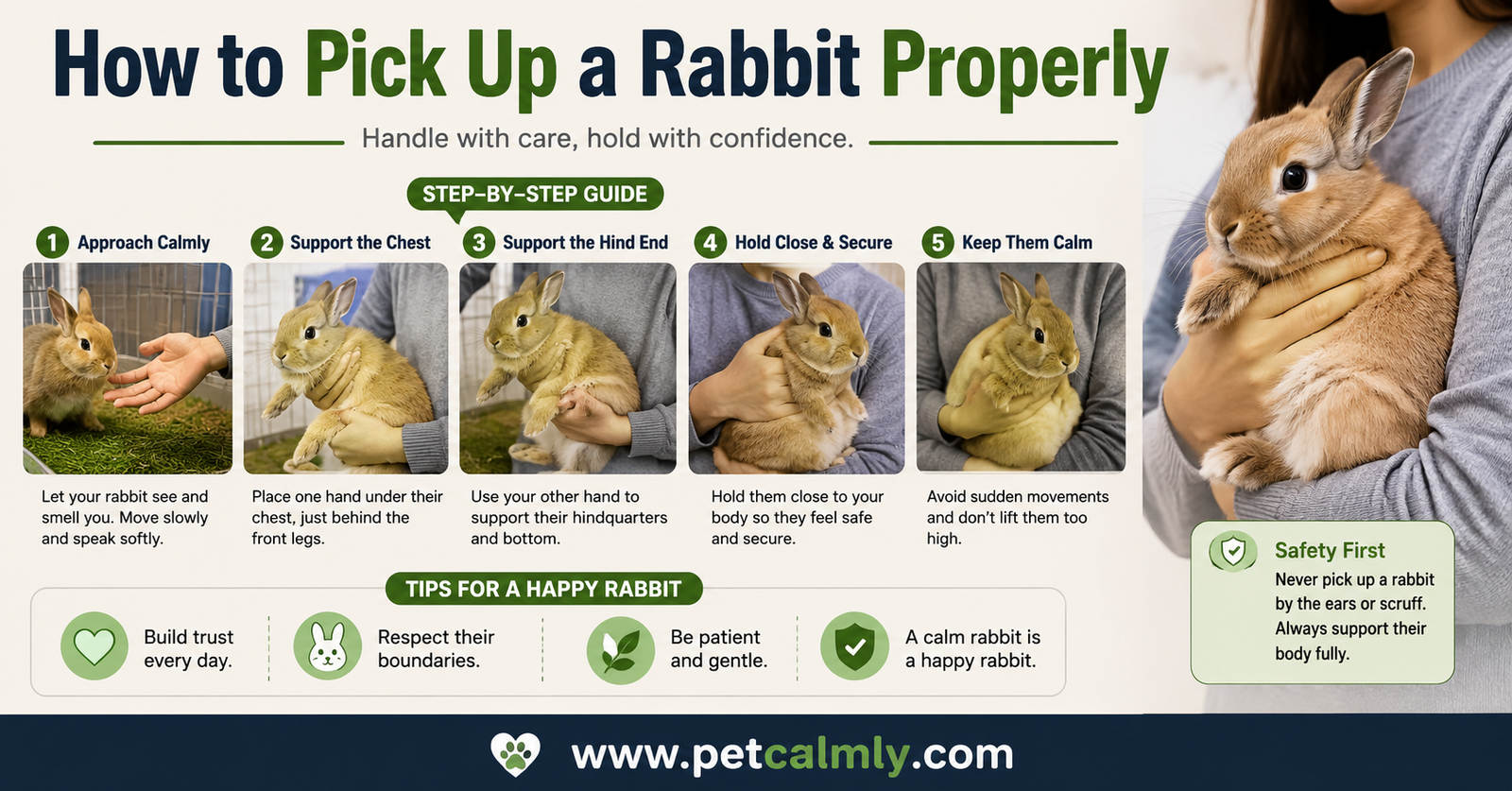
The proper way to pick up a rabbit is to support both its hindquarters and front legs simultaneously, keeping it close to your body with its bottom firmly cradled in your palm. Start by placing one hand under its chest and the other supporting its rear legs, then lift slowly and hold the bunny against your torso so it feels secure and can’t fall backward. This technique prevents spinal injuries, reduces panic, and keeps your rabbit calm during handling. Most rabbits will tolerate brief pickups when done correctly, but remember that many rabbits actually prefer to stay on the ground respecting your bunny’s personality is just as important as mastering the physical technique.
Why Proper Rabbit Handling Matters
If you’re a new rabbit owner, you’ve probably already discovered that your fluffy companion doesn’t automatically enjoy being held like a cat or dog does. That moment when you try to scoop up your rabbit and it bolts, kicks, or seems genuinely distressed can be unsettling. You might wonder: Am I hurting my rabbit? Is there a correct way to do this? Why does my bunny hate being picked up?
Here’s the truth: rabbits are prey animals. In the wild, being grabbed means danger. So when you lift your rabbit off the ground, you’re essentially triggering an ancient survival instinct. Understanding this doesn’t just help you pick up your rabbit safely it changes how you interact with your pet entirely.
Proper rabbit handling isn’t about forcing your bunny into your lap or overcoming its fear. It’s about learning a technique that makes your rabbit feel secure rather than vulnerable, minimizing stress for both of you, and knowing when the best choice is to let your rabbit stay on solid ground.
This guide covers everything you need to know: the correct physical technique, common mistakes that cause stress or injury, signs your rabbit is afraid or in pain, how to build trust over time, and when a vet checkup might be necessary. Whether you have a dwarf rabbit, a medium-sized Dutch bunny, or a large Flemish Giant, these principles apply across all breeds.
Understanding Rabbit Anatomy and Why Handling Technique Matters
Before you even attempt to pick up your rabbit, it’s worth understanding why the technique matters so much. Rabbits have delicate spines that are susceptible to injury, especially in their lower back region. When a rabbit kicks or thrashes—which is their natural panic response when handled incorrectly they can injure their own spine or hind legs. This isn’t your rabbit being stubborn; it’s your rabbit protecting itself the only way it knows how.
Additionally, rabbits have powerful hind legs with sharp claws. An improperly held rabbit can scratch both itself and you while struggling to escape. Their legs are built for explosive jumping and running, not for dangling. When a rabbit’s back legs dangle unsupported, it triggers an instinctive fear response that makes them kick harder, creating a cycle of panic.
The rabbit’s rib cage is also relatively fragile compared to its muscular hind legs. Squeezing too tightly during handling can restrict breathing or cause discomfort. This is why proper support not firm gripping, but support is the key distinction between safe handling and handling that causes stress or injury.
Understanding your rabbit’s anatomy and instincts isn’t just about technique; it’s about building genuine trust and reducing unnecessary fear.
The Proper Technique: Step-by-Step Instructions for Picking Up Your Rabbit
Step 1: Position Yourself and Approach Calmly
Before you even touch your rabbit, set up for success. Approach slowly and speak in a calm, quiet voice. Avoid sudden movements or loud noises. Your rabbit should see you coming and have a chance to settle into a calm state, rather than being startled.
If your rabbit is already anxious or in a stressful situation (like at the vet’s office), consider whether the pickup is truly necessary right now. Sometimes waiting a few minutes for your bunny to settle is better than forcing a rushed, tense handling.
Position yourself so you can support both the front and back of your rabbit at once. You’ll need to be close enough that your rabbit won’t fall.
Step 2: Secure the Front End First
Place one hand gently under your rabbit’s chest, just behind the front legs. Your hand should be open and supporting, not clutching. Your fingers should wrap around the sides of the ribcage—not squeezing, but cradling. Think of your hand as a shelf that supports the weight rather than a cage that contains it.
At this stage, your rabbit might try to hop away. That’s normal. Keep your hand firm but gentle, and avoid grabbing. A grab triggers the flight response. Support feels different to a rabbit’s nervous system than a grab does.
Step 3: Support the Hindquarters Completely
This is the critical step that many people get wrong. As you move your second hand under your rabbit’s rear legs, you must ensure full support of the back end. Place your palm flat under the bunny’s hind legs, supporting the entire hindquarter area. Your rabbit should feel like it’s sitting in a secure, cupped position—not balanced precariously or unsupported.
Some people make the mistake of leaving the back legs dangling. When you do this, your rabbit’s weight isn’t evenly distributed, which feels unstable and triggers panic. The rabbit then kicks and thrashes to find solid support, injuring itself in the process.
Step 4: Lift Smoothly and Bring Close to Your Body
Once you have full support under both the front and back, lift your rabbit slowly and deliberately. Avoid jerky or sudden movements. As you lift, bring your rabbit directly toward your torso so you can cradle it against your body. Your rabbit’s back should be against your chest or belly, and it should be able to feel your body supporting it.
Holding your rabbit at arm’s length or away from your body makes the bunny feel unsecured and vulnerable. Bringing it close provides the security rabbits seek when nestled in a burrow with their family.
Step 5: Hold and Maintain Connection
Once your rabbit is in your arms, continue providing firm (not tight) support. Keep both hands in place—don’t shift to one-handed carrying. Your rabbit should feel fully supported and unable to fall. Some rabbits will relax and snuggle; others will remain vigilant but calm. Both responses are normal.
Talk to your rabbit in a quiet, soothing voice while holding it. This reinforces the idea that handling is safe and calm.
Step 6: Know When to Set Your Rabbit Down
Most rabbits shouldn’t be held for extended periods, especially if they show signs of stress. Keep pickups brief—a few minutes is usually plenty. When setting your rabbit down, reverse the process: lower it gently to solid ground, keep supporting the back legs until all four feet are firmly on the surface, and then slowly release your hands.
Never plop your rabbit down suddenly or release support before all four feet are planted. This causes insecurity and teaches your rabbit that being picked up ends with an unpleasant, abrupt landing.
Different Holding Positions for Different Situations
While the basic technique remains the same, you might need to adjust your position based on what you’re doing or where you are.
The Standard Carry (For Short Distances and Comfort)
This is the position described above: supporting front and back, rabbit against your torso. Use this for moving your rabbit from one room to another, during play sessions when you want to hold your bunny briefly, or when you want to calm a stressed rabbit.
The Football Hold (For Bathing or Grooming)
If you need to bathe your rabbit or do detailed grooming, cradle it like a football: support the front legs with one hand, and support the hindquarters with the other, but position your rabbit’s back along your forearm rather than against your chest. This gives you better access to the bunny’s body and allows you to control the distance from water, grooming tools, or other elements.
The Lap Position (For Bonding and Calm Rabbits)
Some rabbits—especially those raised from a young age with lots of handling—enjoy sitting in your lap. If your rabbit is relaxed and stays put, you can let it rest on your legs while you sit on the floor or in a chair. Keep one hand nearby to prevent a fall, and don’t assume your rabbit won’t suddenly jump down.
The Veterinary Hold (For Health Checks or Injections)
At the vet’s office, you might see professionals use a hold where they support the rabbit’s weight while gently restraining movement. This is typically done only by trained professionals during necessary medical care. You don’t need to master this hold for home handling.
7 Common Mistakes That Cause Stress or Injury
Understanding what not to do is just as important as knowing the right technique.
Mistake #1: Unsupported Back Legs
The most common error is leaving the rabbit’s hind legs dangling unsupported. This immediately triggers panic because the rabbit feels unstable and unbalanced. The bunny will kick hard, risk spinal injury, and learn that being picked up is frightening. Always ensure both back legs are fully supported.
Mistake #2: Approaching Too Quickly
Approaching your rabbit suddenly or without giving it a chance to notice you creates an ambush feeling. Rabbits are prey animals, so surprise handling feels like an attack. Approach slowly, let your rabbit see you coming, and speak calmly.
Mistake #3: Squeezing Too Tightly
Some people hold rabbits firmly enough to prevent any movement, thinking this makes the rabbit feel secure. Actually, tight squeezing restricts breathing and increases panic. Support is different from restraint. Your grip should be firm enough that your rabbit doesn’t slip, but gentle enough that the bunny can breathe comfortably.
Mistake #4: Holding at Arm’s Length
Holding your rabbit far from your body makes the bunny feel unsupported and vulnerable. Always bring your rabbit close to your torso once it’s lifted.
Mistake #5: Holding for Too Long
Many rabbits tolerate handling for a few minutes, but extended periods cause stress and discomfort. If your rabbit starts struggling, resist kicking, or becomes stiff, it’s time to set it down. Respect your bunny’s limits.
Mistake #6: Rough or Jerky Movements
Sudden jerks, fast lifting, or abrupt direction changes frighten rabbits and can cause injury. All movements should be smooth and deliberate.
Mistake #7: Forcing a Rabbit Into Holding
If your rabbit actively resists, kicking or struggling intensely, forcing the pickup teaches your bunny that resistance doesn’t work and may damage your relationship. Sometimes the kindest thing is to let your rabbit stay on the ground.
Reading Your Rabbit’s Body Language: Signs of Stress vs. Calm Acceptance
One of the most important skills for rabbit owners is learning to read their bunny’s emotional state. Not all rabbits display distress the same way, so paying attention to these signs helps you know when to pick your rabbit up and when to back off.
Signs Your Rabbit Is Calm and Accepting Handling
- Relaxed ears: Ears are in a natural, upright position (not pinned back against the head)
- Soft eyes: Eyes are calm and blink naturally
- Loose body posture: The rabbit isn’t stiff or rigid
- Quiet or gentle tooth purring: Some rabbits make a gentle grinding sound when content
- Not struggling or pulling away: The bunny remains still and settled
- Optional snuggling: The rabbit may lean against you or nuzzle your hand
Signs Your Rabbit Is Stressed or Fearful
- Pinned ears: Ears are flat against the head—a clear signal of fear
- Tense body: The rabbit feels stiff or rigid
- Struggling or thrashing: The bunny is actively trying to escape
- Thumping: Rabbits thump their hind legs when frightened or upset
- Teeth grinding: Unlike the soft grinding of contentment, stressed tooth grinding is loud and forceful
- Wide eyes or dilated pupils: Sign of fear or adrenaline
- Rapid breathing: Indicates stress or anxiety
- Attempting to jump or kick away: Clear signal that the rabbit wants down
If you notice these stress signals, set your rabbit down gently and immediately. Continuing to hold a stressed rabbit damages your bond and increases the likelihood of injury.
Building Trust: How to Make Your Rabbit Enjoy Being Held
Many rabbits don’t naturally love being picked up, but most can learn to tolerate it—and some can even enjoy it—with patience and positive reinforcement.
Start Small and Gradual
Don’t expect your rabbit to leap into your arms immediately. Instead, spend the first few weeks simply building trust through:
- Sitting on the floor near your rabbit and letting it approach you
- Petting your bunny gently without picking it up
- Hand-feeding treats so your rabbit associates your hands with good things
- Talking calmly and moving slowly around your rabbit
Practice Handling Without Lifting
Before you pick up your rabbit, practice touching and handling gently:
- Place your hands on your rabbit’s back and belly, getting it used to your touch
- Support your rabbit’s weight gently without lifting it off the ground
- Let your bunny get accustomed to being held in place without the fear of being moved
Reward Calm Behavior
When your rabbit remains calm during a brief pickup, reward it immediately with:
- A favorite treat
- Gentle pets
- Quiet praise
- Setting it down gently and ending on a positive note
Your rabbit will begin to associate being held with good things happening.
Keep Initial Pickups Very Short
Start with just a few seconds of holding. Literally pick up your rabbit, hold it for 5-10 seconds, and set it down while it’s still calm. Gradually extend the time as your rabbit becomes more comfortable.
Handle During Calm Times
Don’t try to pick up your rabbit when it’s energetic and zooming around or when it’s in alert mode. Wait until your bunny is already relaxed and resting, which makes the transition to being held less jarring.
Respect Individual Personality
Some rabbits are naturally more accepting of handling than others. A rabbit that was socialized with humans from a young age may be more willing to be held than a rabbit that was wild-caught or had limited early human contact. Neither is better or worse—they’re just different personalities. Work within your rabbit’s comfort zone rather than forcing it to match an ideal.
Special Considerations: Handling Different Rabbit Types and Ages
Young Rabbits and Kits
Baby rabbits (under 12 weeks) are fragile and shouldn’t be picked up unnecessarily. If you must handle a young rabbit, use especially gentle support and keep the time minimal. Young rabbits are still developing strength and coordination, making them more vulnerable to injury.
Senior Rabbits
Older rabbits may have arthritis or back pain that makes handling uncomfortable. Be especially careful with senior bunnies, keep pickups very brief, and watch for signs of pain or discomfort. If your older rabbit seems to dread being picked up, talk to your vet—there may be an underlying pain issue.
Large Breed Rabbits (Flemish Giants, Checkered Giants)
Large rabbits need extra support due to their weight. Make sure both your hands are under solid support before lifting. A rabbit that weighs 12-14 pounds needs more robust support than a 4-pound dwarf bunny. Some large rabbits actually don’t like being lifted at all due to their size and the effort it takes. Respect their preference to stay on solid ground.
Dwarf and Mini Rabbits
Small rabbits sometimes feel more vulnerable due to their size, making them more nervous about handling. Use the same technique, but be especially careful not to squeeze. Also be mindful that small rabbits can slip easily, so maintain secure support.
Rabbits With Mobility Issues
If your rabbit has a condition affecting its mobility or balance (like E. cuniculi or arthritis), handling may be uncomfortable. Consult your vet about the best way to handle your bunny’s specific condition. Sometimes limiting pickups and doing floor-level care is the kindest approach.
When to Avoid Picking Up Your Rabbit
There are times when the best decision is to leave your rabbit on the ground, even if you’d like to hold it.
Right After Adoption: In the first week or two with a new rabbit, skip non-essential pickups. Your bunny is already stressed by the environment change. Handling adds to that stress. Wait until your rabbit is settled before starting to practice holding.
During Shedding Season: Some rabbits become extra sensitive during heavy shedding. Their skin is more irritated, and they may be extra grumpy about being held. Keep pickups minimal during these times.
When Your Rabbit Is Sick or Injured: If your rabbit shows signs of illness (hunching, lack of appetite, lethargy) or has a visible injury, minimize handling and get a vet checkup.
When You’re Stressed or Rushed: Rabbits pick up on human anxiety. If you’re stressed, irritated, or in a hurry, your tension transfers to your bunny. Wait until you’re calm to attempt handling.
If Your Rabbit Consistently Resists: Some rabbits simply don’t enjoy being held, and that’s okay. Forcing the issue damages your relationship. If your rabbit absolutely hates being picked up despite months of positive reinforcement, accept that preference and focus on bonding in other ways—like floor-level playtime and treats.
Health and Safety: When to Contact Your Veterinarian
Most rabbits are fine after normal handling, but there are situations where veterinary attention is necessary.
Contact Your Vet If Your Rabbit:
- Seems in pain after being handled: Limping, holding a leg at an odd angle, or showing signs of discomfort
- Has a visible injury: Scratches, cuts, or bleeding from handling
- Shows signs of shock: Extreme lethargy, loss of appetite, or fast breathing lasting more than an hour after handling
- Stopped eating after being handled: Any change in appetite warrants a vet call (rabbits are also susceptible to stress-related gastrointestinal stasis)
- Has behavior changes: Sudden aggression or unusual personality shifts after a handling incident
- Shows signs of back or spinal injury: Inability to move hind legs, loss of bladder control, or dragging of rear legs
Rabbits hide pain well, so if something seems slightly off after handling, it’s worth getting a professional opinion. Early treatment of potential injuries prevents serious complications.
Remember:
Stress itself can cause serious health issues in rabbits. Rabbits have sensitive digestive systems, and severe stress can trigger a condition called gastrointestinal (GI) stasis, where the gut slows down or stops moving. While proper handling shouldn’t cause this, repeatedly frightening your rabbit or forcing unwanted pickups can contribute to stress-related illness. This is another reason why respecting your rabbit’s comfort level is medically important, not just emotionally kind.
Building Long-Term Comfort: Training Your Rabbit to Accept Handling
If you want your rabbit to become more comfortable with being held over time, consistency is key. Here’s a realistic timeline:
Week 1-2: Establishing Trust
Focus on proximity and gentle touch. Sit near your rabbit. Let it hop onto your lap. Feed treats by hand. Your goal is to establish that you’re a source of good things, not danger.
Week 3-4: Gentle Restraint Without Lifting
Practice placing your hands on your rabbit to gently hold it in place (while it’s already on the ground or in your lap) for short periods. Reward calm behavior.
Week 5-8: Brief Pickups and Positioning
Start actual picking up: 5-10 second pickups, immediate rewards, setting down gently while your rabbit is calm. Gradually increase time by a few seconds each time your rabbit remains relaxed.
Week 8+: Gradual Extension
If your rabbit is showing progress, you can extend holding time and introduce different positions. But remember that even a bonded rabbit may never love being held. Acceptance and tolerance are realistic goals for most rabbits.
Individual Variation
Some rabbits reach comfort with holding in weeks; others need months. Some rabbits never become truly comfortable but accept it calmly. A few rabbits especially those with early trauma or certain personality types may always resist. None of these outcomes mean you’re doing something wrong. You’re working within your rabbit’s personality and capacity.
Handling Specific Scenarios
Helping Your Rabbit Get Exercise
You don’t need to carry your rabbit around to give it exercise. Instead, create a safe space where your rabbit can run, jump, and explore freely. Free-roam time on your floor (bunny-proofed, of course) or in a large pen is better exercise than being held.
During Grooming and Nail Trims
Grooming and nail trims require more control, but the same principles apply. Support your rabbit securely, work quickly, and be calm. For nail trims or detailed grooming, the football hold (supporting along your forearm) works well. If your rabbit is extremely resistant, consider asking a groomer or vet tech to handle it while you’re present but not doing the restraining.
During Veterinary Visits
At the vet, your rabbit will likely be handled by professionals during the exam. This is necessary for health, even if your rabbit doesn’t like it. Stay calm during vet visits; your anxiety increases your rabbit’s stress. Follow your vet’s instructions for restraint, and talk to your vet afterward if your rabbit seems traumatized. Negative vet experiences can make future visits much harder.
When Your Rabbit Is Being Chased or Is in Danger
If your rabbit is escaping danger (like a door left open to the outdoors or a dog in the house), safe handling suddenly becomes very important. Use the proper technique even if you’re in a hurry, because an injured rabbit from a panicked grab isn’t safer than a rabbit who needs to be chased down gently.
Frequently Asked Questions
1: How Often Should I Pick Up My Rabbit?
There’s no magic number. Some rabbits do fine with daily brief pickups; others need only occasional handling. Let your rabbit’s personality and comfort level guide you. Most rabbits don’t need to be picked up daily for their health or behavior. If your rabbit seems stressed by frequent handling, reduce the frequency. Bonding happens through floor-level play and interaction too.
2: Why Does My Rabbit Bite When I Try to Pick It Up?
Biting during pickup usually means your rabbit is scared, not aggressive. A frightened rabbit bites as a defense mechanism. Reduce pickup frequency, work on building trust, and make sure your technique is genuinely secure (not loose or uncomfortable). If biting is intense or unprovoked, consult your vet to rule out pain or illness, or work with an animal behaviorist specializing in rabbits.
3: Is It Okay to Pick Up My Rabbit by the Ears?
Absolutely not. Never pick up a rabbit by the ears. Your rabbit’s ears contain sensitive blood vessels and delicate cartilage. Picking up by the ears causes pain, injury, and extreme fear. This method is sometimes used in commercial settings, but it’s traumatic for the rabbit and damages trust. Always use the proper two-handed technique.
4: Why Does My Rabbit Thump Its Back Legs After I Put It Down?
Thumping after being handled usually means your rabbit was stressed during the pickup. Some rabbits also thump to communicate fear or frustration to other rabbits. This is a signal that your rabbit didn’t enjoy being held. Try reducing pickup frequency, shortening the time you hold your rabbit, or improving your technique to make the experience less stressful.
5: Can I Carry My Rabbit Outside Using This Technique?
Outdoors, extra hazards exist (predators, unfamiliar sounds, escape risks), so holding your rabbit outside requires extra caution. Use the proper technique, keep your grip secure, stay alert for escape attempts, and keep outdoor time brief. Many rabbits become extra nervous in unfamiliar outdoor settings, even when properly held. Consider a secure outdoor pen instead of carrying your rabbit around the yard.
6: At What Age Can I Start Picking Up My Rabbit?
Young kits (under 8 weeks) shouldn’t be picked up frequently. Their bones are still developing, and they startle easily. If you must handle a young rabbit, keep it very brief and gentle. After 8-12 weeks, you can begin gentle handling practice following the timeline described above. Don’t wait until your rabbit is full-grown to handle it early socialization helps, but it’s never too late to start building trust.
More Information About Pets, Please Visit Our Website: What Are the Best Pellets for Rabbits
How to Care for a Pet Rabbit Indoors
How to Bond Two Rabbits
Best Pellets for Guinea Pigs
Key Takeaways: The Essentials of Proper Rabbit Handling
- Support is everything: Your rabbit’s front, back, and hindquarters must be fully supported. Unsupported hind legs trigger panic and risk injury.
- Speed matters: Approach calmly and lift slowly. Sudden movements frighten rabbits.
- Proximity provides security: Bring your rabbit close to your body. Distance feels unsafe.
- Keep it brief: Most rabbits tolerate short pickups better than extended holding.
- Read the signs: Learn your rabbit’s body language so you know when to pick it up and when to back off.
- Build trust gradually: Trust developed over weeks of gentle, positive interaction makes handling easier for both you and your rabbit.
- Respect personality: Some rabbits will never love being held, and that’s okay. Work within your individual rabbit’s comfort zone.
- Know your limits: If your rabbit seems injured, ill, or severely distressed after handling, contact your vet.
Conclusion
Learning to pick up your rabbit properly isn’t complicated, but it does require patience, awareness, and a willingness to prioritize your bunny’s emotional and physical wellbeing over the desire to cuddle on your terms.
The good news? Once you master the basic technique supporting front and back, keeping your rabbit close, lifting and moving smoothly most of the puzzle is solved. The rest comes down to practice, reading your rabbit’s signals, and building a relationship of trust over time.
Your rabbit isn’t trying to be difficult when it resists handling. Your bunny is responding to an ancient survival instinct that tells it being grabbed means danger. By using the proper technique, approaching with calm confidence, and respecting your rabbit’s personality and comfort level, you’re not just making pickups easier you’re proving to your rabbit that your hands are safe.
The rabbit that learns to trust you during handling becomes more confident overall. It’ll be easier to groom, easier to examine for health issues, easier to move during emergencies, and more willing to interact with you in general. But perhaps more importantly, you’ll have a deeper relationship with your pet one built on genuine trust rather than force or fear.
Start with the technique described here. Practice when your rabbit is calm. Watch for signs of stress and adjust accordingly. Keep initial attempts brief and rewarding. And remember: every rabbit is different. What works for your friend’s bunny might not work for yours, and that’s completely normal.
Your rabbit is worth the effort it takes to learn the right way to handle it. The bond you build through patient, respectful handling is one of the great joys of rabbit ownership.