Short direct answer
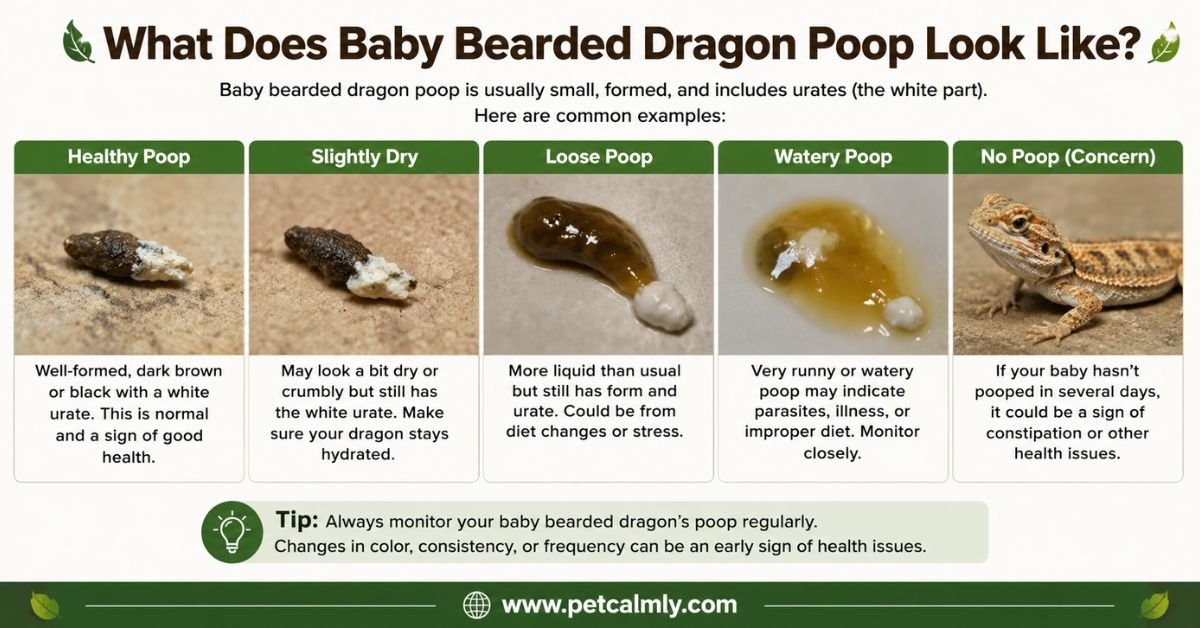
A healthy baby bearded dragon’s poop usually has two distinct parts: a brown or dark brown solid section (the feces) and a white or off-white section called urate, which is the reptile equivalent of urine. The stool should be formed, moist but not runny, and passed regularly. Baby bearded dragons typically poop more often than adults because they eat frequently and grow rapidly.
If the poop becomes very watery, contains blood, has a strong foul odor, appears unusually colored, or your baby dragon stops pooping altogether, it may indicate a dietary issue, dehydration, stress, parasites, or illness that requires attention.
Introduction
Bringing home a baby bearded dragon is exciting, but it also comes with a steep learning curve. Many new owners find themselves checking every meal, every behavior, and yes—every poop.
That might sound strange at first, but experienced reptile keepers know that droppings can reveal a lot about a bearded dragon’s health. In fact, one of the quickest ways to spot potential problems is by paying attention to changes in stool appearance.
If you’ve recently noticed something unusual in your baby dragon’s enclosure, you’re probably wondering whether it’s normal or a sign of trouble.
The good news is that healthy baby bearded dragon poop is fairly predictable once you know what to look for.
This guide explains:
- What normal baby bearded dragon poop looks like
- How often babies should poop
- What different colors and textures mean
- Warning signs that deserve attention
- Common mistakes that affect digestion
- Practical steps to keep your dragon healthy
By the end, you’ll know exactly what is normal and when it’s time to be concerned.
Understanding the Two Parts of Bearded Dragon Poop
The Brown Portion
The brown section is the actual fecal matter.
Healthy feces are usually:
- Medium brown to dark brown
- Well-formed
- Slightly moist
- Easy to identify as a solid piece
Because baby bearded dragons eat large amounts of insects, their stool can sometimes be darker than adult dragons.
Small variations are normal depending on:
- Diet
- Hydration
- Supplement use
- Growth rate
The White Portion (Urate)
The white section often surprises new reptile owners.
Unlike mammals, bearded dragons do not produce liquid urine in the same way. Instead, waste from the kidneys is expelled as a chalky white substance called urate.
Healthy urate should be:
- White or slightly cream-colored
- Soft but formed
- Attached to or near the feces
A bright white urate generally indicates adequate hydration.
In Short
Normal baby bearded dragon poop contains:
✓ Brown feces
✓ White urate
✓ Mild odor
✓ Formed consistency
✓ Regular frequency
What Should Healthy Baby Bearded Dragon Poop Look Like?
A healthy dropping often resembles a small brown log with a white cap attached to one end.
Many owners describe it as looking like:
- Brown stool with white toothpaste attached
- A small brown pellet with a chalky white tip
- A compact stool with two clearly visible sections
The exact size depends on:
- Age
- Food intake
- Growth stage
A rapidly growing baby that eats dozens of insects daily may produce surprisingly large droppings for its size.
How Often Should a Baby Bearded Dragon Poop?
Typical Frequency
Baby bearded dragons usually poop more frequently than juveniles or adults.
General guidelines:
| Age | Typical Frequency |
|---|---|
| Baby (0–4 months) | 1–3 times daily |
| Juvenile (4–12 months) | Every day or every other day |
| Adult | Several times weekly |
Some healthy babies poop after almost every feeding session.
Others may skip a day occasionally.
Both can be normal if appetite and behavior remain healthy.
Why Babies Poop More Often
Baby bearded dragons:
- Eat heavily
- Digest quickly
- Grow rapidly
- Burn significant energy
Their digestive systems process food at a much faster rate than adults.
Baby Bearded Dragon Poop Color Guide
Color changes often cause panic among new owners. Fortunately, many are harmless.
Brown Poop
This is the most common healthy color.
It generally indicates:
- Normal digestion
- Appropriate diet
- Healthy gut function
Dark Brown or Nearly Black
Sometimes normal.
Possible causes include:
- High insect consumption
- Recent feeding
- Certain feeder insects
However, very black, tar-like stool should be evaluated by a veterinarian.
Green Poop
Green stool can result from:
- Large amounts of leafy greens
- Certain vegetables
- Temporary digestive changes
If green stool continues for several days and appetite decreases, further investigation may be needed.
Yellow Poop
Yellow stool may be linked to:
- Dietary imbalance
- Excess supplements
- Digestive irritation
- Parasites in some cases
Persistent yellow droppings deserve attention.
Red-Tinted Stool
Not always blood.
Sometimes red vegetables can alter stool color.
Examples include:
- Bell peppers
- Certain fruits
If you suspect actual blood, contact a reptile veterinarian promptly.
White Chalky Urate
Healthy.
Usually indicates adequate hydration.
Yellow or Orange Urate
May suggest mild dehydration.
Owners often see this after:
- Low water intake
- Dry enclosure conditions
- Missed hydration opportunities
Increasing hydration often helps.
What Does Watery Baby Bearded Dragon Poop Mean?
Occasional loose stool isn’t always an emergency.
Several harmless factors can cause temporary diarrhea.
These include:
- Stress from relocation
- New foods
- Increased water intake
- Minor dietary changes
However, repeated watery stool deserves closer attention.
Common Causes of Runny Stool
Parasites
Intestinal parasites are a frequent cause of chronic diarrhea.
Signs may include:
- Foul-smelling stool
- Weight loss
- Reduced appetite
- Lethargy
A fecal examination by a reptile veterinarian is often necessary.
Excess Fruit
Many new owners accidentally overfeed fruit.
Too much fruit can cause:
- Loose stool
- Digestive upset
- Excess sugar intake
Baby dragons should receive fruit only occasionally.
Incorrect Temperatures
Digestion depends heavily on heat.
If basking temperatures are too low:
- Food may not digest properly
- Stool consistency may change
- Appetite may decline
Stress
A newly adopted dragon may experience temporary digestive upset due to:
- Travel
- New surroundings
- Handling stress
- Environmental changes
What Does Healthy Urate Look Like?
Urate often tells owners more about hydration than the stool itself.
Healthy urate should be:
- White
- Soft
- Slightly moist
- Easy to pass
Signs of Dehydration
Watch for urate that appears:
- Yellow
- Orange
- Hard
- Crumbly
These changes often indicate your dragon needs more hydration.
Why Does Baby Bearded Dragon Poop Smell So Bad?
A mild odor is normal.
Extremely foul-smelling stool is not.
Strong odors may indicate:
- Parasites
- Bacterial imbalance
- Digestive problems
- Spoiled food consumption
If unusually strong smells continue for multiple bowel movements, veterinary testing may be appropriate.
Common Poop Problems New Owners Mistake for Illness
Sometimes perfectly healthy dragons produce stool that worries beginners.
1: Larger Poops Than Expected
Baby dragons often eat enormous quantities relative to their size.
Large droppings can be completely normal.
2: Temporary Color Changes
A different vegetable or feeder insect can temporarily alter appearance.
One unusual poop rarely indicates disease.
Look for patterns rather than isolated incidents.
3: Missed Day of Pooping
Missing a single day is often harmless.
Pay attention to:
- Appetite
- Activity level
- Hydration
- Basking behavior
These factors provide additional context.
Signs Your Baby Bearded Dragon’s Poop May Signal a Health Problem
Watch for These Warning Signs
Contact a reptile veterinarian if you notice:
- Blood in stool
- Persistent diarrhea
- Black tar-like feces
- Mucus-covered stool
- Severe foul odor
- Complete loss of appetite
- Rapid weight loss
- Swollen abdomen
- Straining without results
These signs warrant professional evaluation.
Daily Care Habits That Support Healthy Digestion
Proper husbandry is often the biggest factor behind healthy droppings.
Maintain Correct Temperatures
Aim for appropriate basking temperatures recommended for baby bearded dragons.
Proper heat allows:
- Efficient digestion
- Nutrient absorption
- Healthy metabolism
Offer Balanced Nutrition
A growing baby typically needs:
- Mostly insects
- Small amounts of vegetables
- Calcium supplementation
- Vitamin support when recommended
Ensure Adequate Hydration
Hydration sources include:
- Fresh vegetables
- Drinking water
- Occasional supervised soaking
- Proper humidity levels
Keep the Enclosure Clean
Dirty habitats can increase exposure to harmful bacteria and parasites.
Remove waste promptly.
Clean surfaces regularly.
A Simple Poop Monitoring Routine
Many experienced reptile keepers routinely monitor droppings.
Try this checklist:
Daily
- Observe stool consistency
- Check color
- Monitor appetite
- Note activity levels
Weekly
- Track body weight
- Review feeding patterns
- Look for recurring changes
Monthly
- Perform enclosure deep cleaning
- Assess overall health trends
Small observations often help catch problems early.
4 Common Beginner Mistakes
1: Feeding Oversized Insects
Large feeders can contribute to digestive issues.
Choose appropriately sized prey.
2: Ignoring Temperature Gradients
Many digestive problems trace back to incorrect heating rather than disease.
3: Overfeeding Fruit
Fruit should remain an occasional treat.
4: Assuming Every Change Is an Emergency
One abnormal poop rarely tells the whole story.
Look for repeated patterns before assuming illness.
Quick Comparison Table: Normal vs Concerning Poop
| Feature | Usually Normal | Potential Concern |
| Color | Brown with white urate | Black, bloody, persistent yellow |
| Texture | Formed and moist | Very watery or mucus-covered |
| Odor | Mild | Extremely foul |
| Frequency | Daily to multiple times daily | Long-term absence or severe diarrhea |
| Urate | White | Orange, yellow, hard, gritty |
| Behavior | Active and eating | Lethargic and refusing food |
When Should You Worry?
Most Importantly
You should become concerned when poop changes occur alongside behavioral changes.
A single odd bowel movement is often harmless.
Multiple symptoms together are more significant.
Seek veterinary advice if your baby bearded dragon has:
- Blood in stool
- Ongoing diarrhea
- Weight loss
- Refusal to eat
- Severe lethargy
- Dehydration signs
- Repeated straining
Young dragons can decline more quickly than adults, so early intervention matters.
What Should Pet Owners Do?
If your baby bearded dragon’s poop looks unusual:
Step 1
Review recent dietary changes.
Step 2
Verify enclosure temperatures.
Step 3
Check hydration levels.
Step 4
Monitor behavior and appetite.
Step 5
Take photos of unusual stool.
Veterinarians often find photos extremely helpful.
Step 6
Schedule a reptile veterinary visit if abnormal stool persists.
Frequently Asked Questions
1: Is it normal for a baby bearded dragon to poop every day?
Yes. Most baby bearded dragons poop daily, and some may poop multiple times per day due to their rapid growth and high food intake.
2: What color should baby bearded dragon poop be?
Healthy stool is usually brown or dark brown with a separate white urate portion attached or nearby.
3: Why is my baby bearded dragon’s poop runny?
Temporary runny stool may occur from stress or dietary changes. Persistent diarrhea can indicate parasites, improper temperatures, or digestive issues.
4: What does yellow urate mean in a baby bearded dragon?
Yellow or orange urate often suggests dehydration. Increasing hydration and reviewing enclosure conditions may help.
5: Should I worry if my baby bearded dragon skips a day without pooping?
Not necessarily. A healthy dragon with a good appetite and normal behavior may occasionally miss a day. Continued absence of stool should be monitored.
6: Can parasites change the appearance of bearded dragon poop?
Yes. Parasites commonly cause diarrhea, strong odors, mucus, appetite loss, and weight loss. A fecal exam is often needed for diagnosis.
More Information About Pets, Please Visit Our Website: How Often Should a Bearded Dragon Poop
Conclusion
Healthy baby bearded dragon poop usually consists of a brown fecal portion and a white urate section, passed regularly and with a formed consistency. While occasional variations happen, stool remains one of the best indicators of your dragon’s overall health.
Rather than focusing on a single unusual dropping, watch for patterns. Appetite, activity level, hydration, growth, and stool quality all work together to paint a clearer picture of your pet’s well-being.
As you gain experience, you’ll quickly learn what is normal for your own baby dragon. A few minutes spent observing daily habits can help you catch potential issues early and provide the best possible care for your growing reptile.
For more reptile care guidance, consider exploring related feeding guides, habitat setup articles, hydration tips, and wellness resources to build a complete foundation for healthy bearded dragon ownership.