Short direct answer
Rabbits can safely eat a wide variety of vegetables including romaine lettuce, kale, spinach, cilantro, parsley, bell peppers, carrots, zucchini, and many other leafy greens and vegetables. The key is offering vegetables as part of a balanced diet (about 10-15% of daily calories), introducing new vegetables gradually, and avoiding toxic varieties like iceberg lettuce, avocado, potato, onion, and rhubarb. A healthy rabbit diet should include unlimited timothy hay, a measured amount of quality pellets, and a rotating selection of fresh vegetables daily.
Why Vegetables Matter for Your Rabbit’s Health
Rabbits are herbivores, and while they thrive primarily on hay (which should make up 80-90% of their diet), vegetables play an important role in their nutrition. Fresh vegetables provide essential vitamins, minerals, and fiber plus they add enrichment and mental stimulation to your rabbit’s day. Rabbits actually enjoy foraging through different textures and tastes, so offering variety keeps them engaged and satisfied.
That said, not all vegetables are created equal for rabbit digestion. Some are too high in calcium or oxalates, others can cause digestive upset, and a few are genuinely toxic. The rabbit’s digestive system is sensitive and designed for continuous grazing on fibrous plants, so knowing which vegetables are safe and how much to offer is essential for keeping your bunny healthy.
The Complete Rabbit Safe Vegetables List
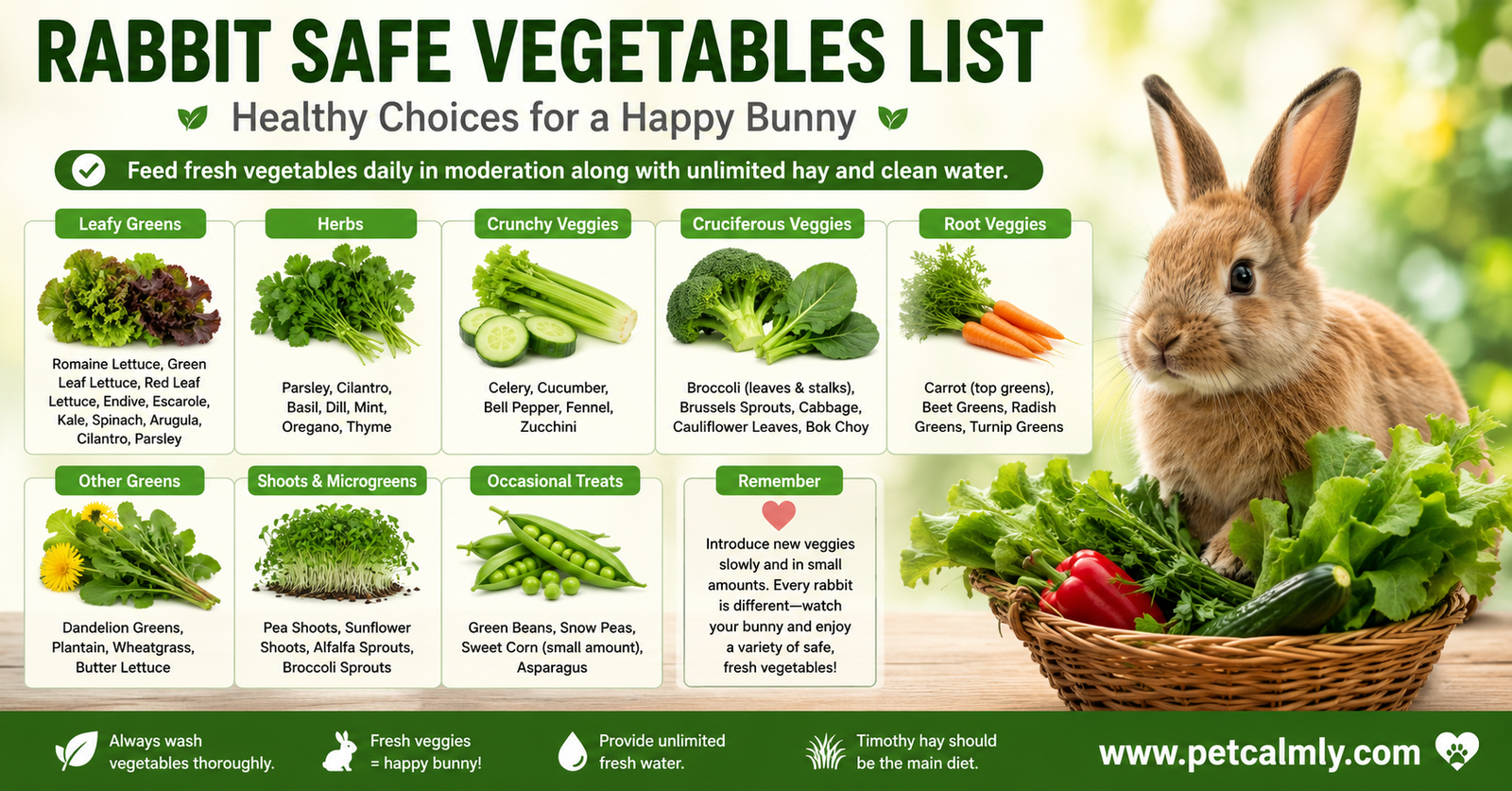
Here’s a comprehensive guide to vegetables rabbits can safely eat. This list is organized by category to make it easier to plan your rabbit’s daily diet and ensure variety.
Leafy Greens (Best for Daily Feeding)
Leafy greens should be your rabbit’s primary vegetable source. Aim to offer a mix of 2-3 different greens daily, and rotate through them to provide nutritional variety.
- Romaine lettuce – High in fiber, low in calcium. A rabbit staple and excellent choice for daily feeding.
- Buttercrunch lettuce – Mild flavor, digestible, and safe for rabbits of all ages.
- Red leaf lettuce – Similar nutritional profile to romaine and widely available.
- Arugula – Slightly peppery, high in beneficial nutrients, used as an occasional addition to greens mix.
- Bok choy – Moderate calcium, crunchy texture rabbits enjoy.
- Kale – High in vitamin K and beneficial antioxidants, though slightly higher in calcium so offer in moderation (2-3 times per week rather than daily).
- Spinach – Nutritious but high in oxalates, so use sparingly (no more than 2-3 times weekly).
- Swiss chard – Similar to spinach in oxalate content; offer occasionally, not daily.
- Cilantro – Fresh herbs are excellent; cilantro aids digestion and adds flavor.
- Parsley – Another digestive-friendly herb; rabbits typically enjoy it.
- Dill – Both leaves and fronds are safe and digestible.
- Mint – Fresh mint is safe and can aid digestion in small amounts.
- Basil – Safe in small quantities; most rabbits enjoy the flavor.
- Radicchio – Slightly bitter but nutritious and digestible for rabbits.
- Escarole – Similar profile to romaine; good rotation option.
- Endive – Slightly bitter greens that provide nutritional variety.
- Dandelion greens – Excellent nutritional profile (if gathered from pesticide-free areas) or purchased from pet stores.
- Carrot tops – The leafy green part of carrots is actually more nutritious than the root and safer for regular feeding.
Root Vegetables & Stems (Limited Portions)
These are higher in natural sugars and should be offered in small quantities as occasional treats rather than daily staples.
- Carrots – The root is safe but high in sugar; offer thin slices or small pieces as treats, not daily vegetables.
- Parsnips – High in sugar; very small portions only.
- Radish – Low sugar, safe in small amounts.
- Beets – High in sugar and can stain; occasional treat only.
- Celery – Low calorie, crunchy texture, but use in moderation due to stringiness.
- Celery leaves – Safe and actually preferable to the stalk.
Broccoli & Cruciferous Vegetables (Occasional Offerings)
These should not be a staple because they can cause gas and bloating in some rabbits, but they’re safe in small amounts.
- Broccoli – Small florets occasionally, as some rabbits tolerate it better than others.
- Cauliflower – Similar to broccoli; use sparingly and observe your rabbit’s digestion.
- Cabbage – Red and green cabbage are safe but may cause bloating; offer occasionally.
- Brussels sprouts – High in beneficial compounds but can upset digestion; small amounts only.
Peppers & Colorful Vegetables (Nutrient-Dense)
These bright vegetables add nutritional variety and appeal to rabbits’ natural foraging instincts.
- Bell peppers (any color) – High in vitamin C, low in calcium, excellent choice for variety.
- Sweet pepper – Slightly different flavor from bell pepper; safe and enjoyable.
- Zucchini – Low calorie, high water content, very digestible.
- Cucumber – Mostly water but hydrating and safe; rabbits enjoy the crunch.
- Pumpkin – High in fiber and low in sugar compared to other vegetables; good option.
- Squash – Summer squash varieties are safe; winter squash should be limited due to sugar content.
Herbs & Specialty Greens
Fresh herbs not only add flavor but often provide digestive benefits.
- Oregano – Safe in small amounts; some rabbits enjoy the flavor.
- Thyme – Small quantities safe; aids digestion.
- Rosemary – Tiny amounts safe; strong flavor so use sparingly.
- Lettuce varieties (beyond the basic types) – Including oak leaf lettuce, green leaf, and others not mentioned above.
- Chickweed – If foraged from pesticide-free areas; or available as a dried herb.
- Plantain leaves – Similar to dandelion greens; nutritious if pesticide-free.
How to Introduce New Vegetables Safely to Your Rabbit
Even though a vegetable is technically safe, introducing it incorrectly can cause digestive upset. Here’s how rabbit experts recommend adding new foods to your bunny’s diet.
The Slow Introduction Method
Never switch to new vegetables all at once. Rabbit digestive systems are sensitive and benefit from gradual changes. Follow this timeline:
- Day 1-3: Introduce one new vegetable in a small quantity (about 1 teaspoon to 1 tablespoon depending on your rabbit’s size). Continue offering your rabbit’s regular vegetables.
- Day 4-7: If your rabbit has shown no signs of digestive upset (diarrhea, soft stool, or reduced appetite), increase the portion slightly while maintaining regular vegetables.
- Week 2+: If tolerated well, include the new vegetable as a regular rotation option.
Watch for Digestive Responses
Every rabbit’s digestive system is unique. Some tolerate a wide variety of vegetables without issue, while others develop soft stools or gas from certain vegetables particularly cruciferous ones like broccoli or cabbage.
Signs your rabbit isn’t tolerating a new vegetable:
- Softer-than-normal stool
- Reduced appetite or refusal to eat hay
- Decreased activity level
- Visible gas or bloating
- Changes in poop size or frequency
If you notice any of these signs, remove the new vegetable immediately and return to previously tolerated options. Wait a few days before trying a different new vegetable.
Temperature & Freshness Matter
Always offer vegetables at room temperature, never chilled straight from the refrigerator. Cold vegetables can shock a rabbit’s sensitive digestive system. Remove them from the fridge about 30 minutes before feeding, or run them under room-temperature water.
Wash all vegetables thoroughly under clean running water to remove pesticide residues. Organic produce is ideal, but conventionally grown vegetables are acceptable if washed well. Never offer wilted, moldy, or spoiled vegetables rabbits are picky eaters and should be.
How Much Vegetables Should Your Rabbit Eat Daily?
Portion size matters more than most new rabbit owners realize. Too many vegetables even safe ones can contribute to obesity and digestive problems. The ideal approach is to think of vegetables as a supplement to hay, not a replacement.
The Daily Vegetable Portion Guide
- Small rabbits (under 5 lbs): 1-2 cups of fresh vegetables daily, loosely packed
- Medium rabbits (5-8 lbs): 2-3 cups of fresh vegetables daily, loosely packed
- Large rabbits (over 8 lbs): 3-4 cups of fresh vegetables daily, loosely packed
These portions should include a mix of leafy greens and smaller amounts of other vegetables. A good daily mix might look like:
- 1-2 cups mixed leafy greens (romaine, buttercrunch, cilantro, parsley)
- 1 cup lower-calorie vegetables (bell pepper, zucchini, cucumber)
- ½ cup high-nutrient but slightly higher-sugar vegetables (carrots, broccoli)
Adjust Based on Your Individual Rabbit
Your rabbit’s age, size, and metabolism all influence how much they can handle. An active young rabbit may tolerate vegetables better than a senior rabbit with a more sensitive digestive system. Similarly, some rabbits naturally regulate their food intake better than others.
Pay attention to your rabbit’s weight and body condition. A healthy rabbit should have ribs you can feel gently through their fur without pressing hard. If your rabbit is gaining weight or experiencing digestive issues, reduce vegetable portions slightly and increase hay time.
Vegetables Your Rabbit Should Absolutely Avoid
Some vegetables are toxic to rabbits or pose serious health risks. Knowing which ones to eliminate from your shopping list protects your bunny from potentially life-threatening complications.
Genuinely Toxic Vegetables
Never offer these vegetables to your rabbit under any circumstances:
- Avocado – Contains persin, which is toxic to rabbits and can cause serious illness.
- Onion and garlic – Destroy red blood cells and cause anemia; highly toxic.
- Potato – Raw potatoes contain solanine (a toxic alkaloid), and cooked potatoes are too high in carbohydrates.
- Rhubarb leaves – Contain oxalates in dangerous concentrations; the stalk is also unsafe.
- Raw beans – Contain toxins; cooking doesn’t make them appropriate for rabbits.
- Tomato leaves and stems – The green parts contain toxic alkaloids (only ripe red tomato fruit is safe, offered rarely).
- Iceberg lettuce – Not toxic, but offers almost no nutritional value and should be replaced with darker greens.
Vegetables to Avoid or Severely Limit
While not immediately toxic, these pose risks when offered regularly or in large amounts:
- Corn – Too starchy and can cause digestive upset; avoid entirely.
- Peas (in large quantities) – High in sugar and starch; tiny amounts occasionally are fine, but not a regular vegetable.
- Beans – High in carbohydrates and can cause bloating; avoid.
- Brassicas in excess (broccoli, cauliflower, cabbage) – Can cause gas, bloating, and digestive upset if overfed.
- Nuts and seeds – Not vegetables, but often stored near produce; never feed to rabbits as they’re choking hazards and too high in fat.
Raw vs. Cooked Vegetables: What’s Actually Best for Your Rabbit
One of the most common questions rabbit owners ask is whether they should cook vegetables or offer them raw. The short answer: raw is better, but context matters.
Why Raw Vegetables Are Best
Rabbits have evolved to eat raw plants, and their digestive systems are optimized for uncooked foods. Raw vegetables retain more nutritional value, provide necessary fiber for dental health (chewing raw vegetables naturally wears down rabbit teeth), and offer the texture and mental stimulation rabbits need.
Raw vegetables also maintain their enzymatic activity, which supports digestion. Cooking vegetables can destroy some vitamins and reduces the fiber content available for your rabbit’s specialized digestive process.
When Cooked Might Be Considered (Rarely)
There are very few situations where cooked vegetables are appropriate for rabbits:
- Senior rabbits with dental disease – If an older rabbit has lost teeth or is struggling to chew, very soft cooked vegetables might be more manageable. However, this should be discussed with a veterinarian.
- Temporary digestive recovery – A rabbit recovering from illness might benefit from easy-to-digest cooked vegetables for a short period, but this is a veterinary decision.
For the vast majority of healthy rabbits, cooked vegetables offer no advantage and remove beneficial fiber and nutrients. Always prioritize raw vegetables.
Frozen Vegetables: A Practical Alternative?
Frozen vegetables are safe for rabbits if they’re plain (no added salt, sauce, or preservatives). However, thaw them completely and bring them to room temperature before offering them to your rabbit. The benefit of frozen vegetables is convenience and longer storage, but they don’t provide the same mental enrichment or texture that fresh vegetables do. Fresh is always preferable when available.
6 Common Mistakes Rabbit Owners Make With Vegetables
Even well-intentioned rabbit owners sometimes make mistakes that compromise their bunny’s digestive health or nutritional balance. Here are the most common errors and how to avoid them.
Mistake #1: Using Vegetables as a Replacement for Hay
This is the most significant error. Some new rabbit owners think vegetables can substitute for hay, particularly if their rabbit loves greens. This is dangerous. Hay must remain the foundation of your rabbit’s diet about 80-90% of their daily intake.
Vegetables are supplemental. They provide vitamins and minerals, yes, but they don’t provide the continuous abrasion rabbits need for dental health or the specific type of fiber their cecum requires for optimal digestion.
Mistake #2: Introducing Too Many New Foods at Once
When excited about their new rabbit, owners often load up on different vegetables all at once. This creates two problems: you can’t identify which vegetable caused digestive upset if one occurs, and you overwhelm your rabbit’s digestive system with sudden dietary changes.
Introduce one new vegetable at a time, following the slow introduction method described earlier.
Mistake #3: Overfeeding High-Sugar Vegetables
Carrots, beets, and other root vegetables are tasty to rabbits, but they’re high in natural sugars. Overfeeding these leads to weight gain and dental disease. Root vegetables should be occasional treats (once or twice weekly), offered in small portions, not daily vegetables.
Mistake #4: Offering Wilted or Poorly Stored Vegetables
Rabbits prefer fresh, crisp vegetables. Wilted greens lose nutritional value and can harbor bacteria. Store vegetables properly (refrigerated in a sealed container) and wash them thoroughly before offering.
Mistake #5: Feeding Pesticide-Contaminated Produce
If you’re able to choose organic, especially for vegetables your rabbit eats often, it’s worth the investment. Pesticide residues can accumulate and cause health problems over time. At minimum, wash all produce thoroughly even organic under clean running water.
Mistake #6: Not Varying Vegetables
Some owners find one or two vegetables their rabbit likes and stick exclusively to those. This creates nutritional imbalances and robs your rabbit of the varied micronutrients different vegetables provide. Rotate through 3-5 different vegetable options weekly to ensure comprehensive nutrition.
When Should You Be Concerned About Your Rabbit’s Vegetable Intake?
Most of the time, offering safe vegetables in appropriate portions is straightforward. However, certain situations warrant veterinary attention or dietary adjustments.
Signs Your Rabbit Needs a Veterinary Check
Contact your veterinarian if you notice:
- Persistent diarrhea or soft stools lasting more than a few days – Even after removing suspected problem vegetables
- Loss of appetite – If your rabbit suddenly refuses their vegetables and normal food
- Reduced or absent poop output – This can indicate serious digestive blockage (GI stasis)
- Lethargy or unusual behavior – Changes in activity level or behavior after dietary changes
- Abdominal pain signs – Teeth grinding, hunching, or reluctance to move
- Unexplained weight loss – Rapid weight changes warrant professional evaluation
These aren’t necessarily vegetable-related, but they require prompt veterinary assessment.
Situations Requiring Dietary Adjustments
For rabbits prone to soft stools: Reduce high-water vegetables (cucumber, zucchini) and limit cruciferous vegetables entirely. Stick to hardy leafy greens and timothy hay.
For rabbits with sensitive digestion: Introduce vegetables very slowly and consider keeping to a narrower rotation of consistently well-tolerated vegetables rather than frequently switching.
For overweight rabbits: Increase hay time, reduce portions of all vegetables, and eliminate root vegetables entirely until weight normalizes. High-fiber, low-calorie greens are fine, but quantity still matters.
For senior rabbits: As rabbits age, their digestive capacity sometimes decreases. Softer vegetables and a narrower rotation of familiar foods often work better than frequent variety.
A Practical Daily Feeding Plan for Your Rabbit
Understanding rabbit nutrition in theory is one thing; putting it into practice is another. Here’s a realistic daily feeding plan you can adapt to your specific rabbit.
Morning Feeding (7 AM)
- Unlimited timothy hay (maintain consistent hay supply throughout the day)
- 1-2 cups fresh leafy greens (example: romaine lettuce + cilantro)
- High-quality rabbit pellets (1 tablespoon per 5 lbs of body weight daily)
Midday Check (12 PM)
- Refresh hay supply if needed
- Small serving of lower-calorie vegetables (bell pepper slice, cucumber, or zucchini)
Evening Feeding (6 PM)
- Fresh leafy green serving (rotate to different greens than morning: buttercrunch + parsley)
- Another small vegetable portion (root vegetable, broccoli floret, or different colored pepper)
- Check water supply; rabbits drink more when eating fresh vegetables
Before Bed (10 PM)
- Final hay refresh
- Small handful of additional greens if your rabbit eats them enthusiastically
- Ensure water is fresh and available
This schedule provides variety while maintaining nutritional consistency. Adjust portions based on your rabbit’s size and response.
Frequently Asked Questions
1: Can rabbits eat lettuce every day?
A: Not all lettuce varieties. Iceberg lettuce should be avoided entirely it’s mostly water with minimal nutrition. Romaine, buttercrunch, and other darker lettuce varieties are safe for daily feeding. Most experts recommend rotating through 2-3 different lettuce types weekly and including other leafy greens (cilantro, parsley, bok choy) rather than feeding the same lettuce daily. This provides nutritional variety and prevents potential nutrient imbalances.
2: Is frozen spinach safe for rabbits?
A: Frozen spinach is technically safe, but fresh is significantly better. Spinach is high in oxalates, so it should be offered only 2-3 times weekly regardless of whether it’s fresh or frozen. If you do offer frozen spinach, thaw it completely and bring it to room temperature first. Fresh spinach from your garden or grocery store provides better texture and more nutritional benefit.
3: How often can I give my rabbit carrot?
A: Because carrots are high in natural sugar (about 6% sugar by weight), they should be offered no more than 2-3 times weekly, in small portions. A whole carrot or even half a carrot is too much for most rabbits. Instead, offer thin carrot slices as an occasional treat. The leafy green tops of carrots are actually more nutritious and can be offered more frequently than the orange root.
4: Can rabbits eat vegetables if they have diarrhea?
A: If your rabbit has diarrhea, first consult your veterinarian to identify the cause. If the diarrhea is mild and suspected to be vegetable-related, temporarily reduce vegetable portions and stick exclusively to hardy leafy greens (romaine, buttercrunch) while gradually reintroducing other vegetables. Remove any cruciferous vegetables, high-water vegetables, and root vegetables until digestion normalizes. Most importantly, ensure your rabbit is eating unlimited timothy hay this supports digestive recovery.
5: Are organic vegetables necessary for rabbits?
A: Organic vegetables are ideal, particularly for vegetables your rabbit eats frequently, but they’re not absolutely necessary. Conventional produce is safe if washed thoroughly. If cost is a concern, prioritize organic for vegetables in the “Dirty Dozen” pesticide list, and use conventional for thicker-skinned vegetables. Washing all produce thoroughly under running water significantly reduces pesticide residue regardless of whether it’s organic.
6: What’s the healthiest vegetable for rabbits?
A: Dark leafy greens like romaine lettuce, kale (in moderation), and cilantro are among the healthiest vegetables for rabbits. These provide excellent nutrition with relatively low calorie density and beneficial fiber. Bell peppers are also exceptionally healthy high in vitamin C and beneficial antioxidants with low calorie density. The healthiest approach isn’t finding one “best” vegetable but rotating through multiple nutritious options to provide comprehensive micronutrient coverage.
More Information About Pets, Please Visit Our Website: Rabbit Heat Stroke Signs Rapid Breathing Lethargy
Rabbit Water Bottle vs Bowl
What Are the Best Pellets for Rabbits
Can Rabbits Eat Bananas?
Can Rabbits Eat Strawberries?
How to Care for a Pet Rabbit Indoors
Conclusion
Feeding your rabbit a varied diet that includes safe vegetables doesn’t have to be complicated, though it does require thoughtfulness. The key is remembering that vegetables supplement hay not replace it and that portion size, variety, and introduction methods matter tremendously for digestive health.
Your rabbit safe vegetables list includes numerous options across leafy greens, peppers, cucumbers, and herbs. By rotating through 3-5 different vegetables daily, introducing new foods slowly, and avoiding toxic varieties, you’re providing your rabbit with the nutritional variety and mental enrichment they crave while protecting their sensitive digestive system.
Start with the leafy greens as your foundation, add 1-2 serving of colorful vegetables for nutritional diversity, and watch your rabbit’s individual response. Every rabbit is unique, and the diet that works perfectly for one bunny might need slight adjustments for another. Pay attention to your rabbit’s digestion, energy level, and weight, and adjust portions accordingly.
Most importantly, enjoy the process. Offering fresh vegetables gives you daily opportunities to bond with your rabbit, observe their personality, and ensure they’re thriving. With this rabbit safe vegetables list and the guidelines provided, you have everything you need to make informed feeding decisions that support your bunny’s long-term health.