Short direct answer
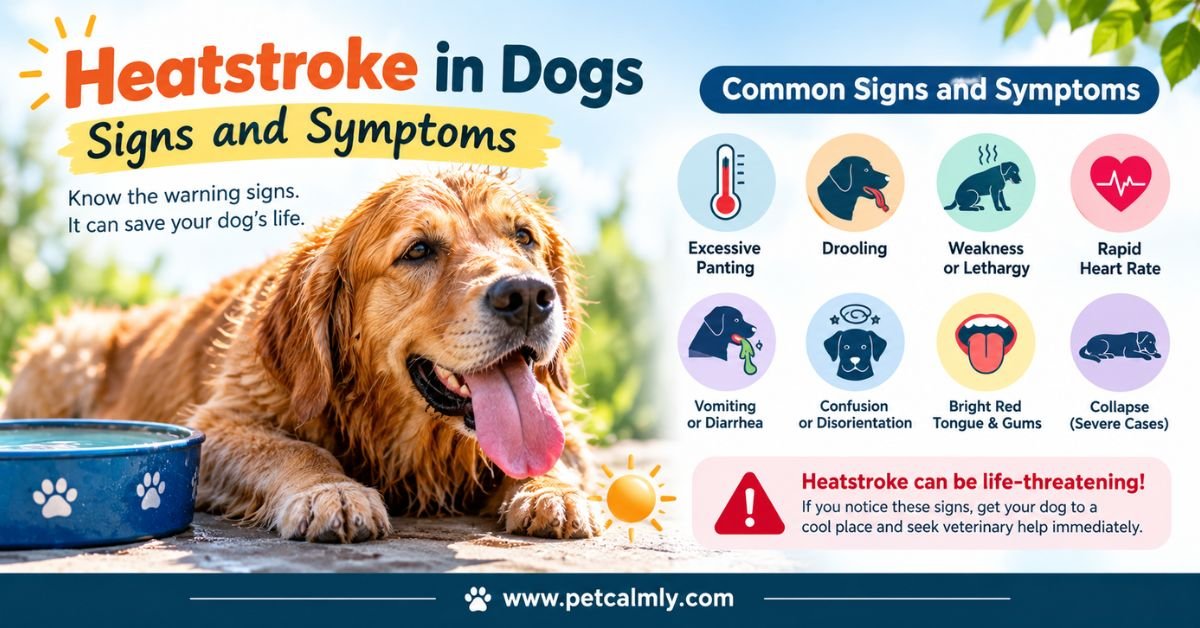
The most common heatstroke in dogs signs and symptoms are heavy, noisy panting, thick drool, bright red or pale gums, weakness, vomiting, and wobbling. Severe cases bring collapse, confusion, or seizures. If you suspect heatstroke, move your dog to shade or air conditioning, start cooling with cool (not ice-cold) water, and call a vet right away. Heatstroke is an emergency, even if your dog seems to perk up.
If you’re reading this because your dog is panting hard right now, here is the short version. Get them out of the heat, start cooling them gently, and phone your vet or an emergency clinic while you do. Then come back and read the rest.
If you’re reading this to be prepared, good. Knowing the heatstroke in dogs signs and symptoms ahead of time is one of the most useful things a summer dog owner can do. Heatstroke moves fast. A dog can go from “a bit tired” to critically ill in a short time, and the early signs are easy to miss.
This guide walks through what to watch for, why it happens, how to cool your dog safely, and when to go straight to the vet. It also covers the mistakes that make things worse, because well-meaning owners make them all the time.
What Is Heatstroke in Dogs?
Heatstroke is a life-threatening condition where a dog’s body temperature rises higher than it can control. It is also called hyperthermia.
A healthy dog’s normal temperature is roughly 101°F to 102.5°F (38.3°C to 39.2°C). Once it climbs above about 104°F (40°C), the body starts to struggle. Around 106°F (41°C) and higher, organs can begin to fail.
Heat exhaustion is the milder stage that often comes first. A dog with heat exhaustion is hot, tired, and panting hard but still responsive. Heatstroke is what happens when that overheating keeps going or hits fast. Cells get damaged, and the brain, kidneys, liver, and gut can all be affected.
Here is the important part. There is no clean line between the two stages that you can spot at home. Treat heat exhaustion as a warning, because it can turn into heatstroke quickly.
Heatstroke is not the same as a dog simply feeling warm after a game of fetch. A normal warm-up settles within minutes of resting in the shade. Heatstroke does not settle on its own.
Heatstroke in Dogs Signs and Symptoms: The Full Checklist
Signs show up in stages. Learning both stages helps you act early, when treatment works best.
Early Signs of Heatstroke in Dogs
These often look subtle. Many owners dismiss them as “just hot weather.”
- Heavy, fast panting that doesn’t ease after a few minutes of rest
- Excessive drooling, often thicker or stringier than usual
- Bright red tongue and gums
- Restlessness, pacing, or trying to find a cooler spot
- Lagging behind on a walk or suddenly refusing to move
- Dry nose or skin that feels very warm, especially the belly and ears
- Lots of water-seeking, or a dog who won’t drink at all
At this stage your dog is usually still aware of you and responds when you call. This is your best window to act.
Advanced Heatstroke Symptoms in Dogs
When overheating continues, the signs get more serious. These are emergency signs.
- Vomiting or diarrhea, sometimes with blood
- Pale, gray, blue-tinged, or dark red gums
- Stumbling, wobbling, or collapse
- Glazed eyes or confusion
- Rapid heartbeat
- Muscle tremors or seizures
- Very little or no urine
- Loss of consciousness
If you see any of these, do not wait to see if they pass. Cool your dog on the way to the vet.
Heatstroke in Dogs Signs and Symptoms Table: Mild vs. Severe
When you’re stressed, a quick comparison helps. This table is a general guide, not a diagnosis.
| What You See | Likely Stage | What To Do |
|---|---|---|
| Heavy panting, seeks shade, still alert | Early overheating | Cool slowly, offer water, call your vet for advice |
| Thick drool, red gums, slow to respond | Moderate overheating | Start cooling now, head to the vet |
| Vomiting, diarrhea, weakness | Likely heatstroke | Cool while traveling, emergency vet visit |
| Pale or blue gums, collapse, seizures | Severe heatstroke | Emergency. Cool and go immediately |
If you are unsure which row fits your dog, choose the more serious one. It is far better to have a vet say “this was a close call” than to wait too long.
Why Dogs Overheat So Easily
People sweat across their whole body. Dogs don’t. They have a few sweat glands in their paw pads, but most of their cooling comes from panting.
Panting works by moving air over the wet surfaces of the tongue and airway. As moisture evaporates, heat leaves the body. It’s a clever system, but it has limits.
When the air is hot and humid, evaporation slows down. The dog pants harder but cools less. Panting also burns energy and creates its own heat, so the effort itself can push body temperature higher.
Fur adds to the problem. A thick coat can trap heat close to the body. A dark coat absorbs more sunlight. Many owners assume shaving a double-coated breed helps, but it can remove the insulation that protects against sun and heat. Check with a groomer or your vet before shaving.
Dogs also can’t tell you they’re too hot. A keen retriever will keep chasing a ball long after their body has had enough. Many cases of heatstroke start with a happy dog who just didn’t know when to stop.
7 Common Causes of Heatstroke in Dogs
Heatstroke is almost always preventable. Most cases come from a short list of situations.
Being left in a parked car. This is the best-known cause and the most dangerous. A car interior heats up much faster than the air outside, and parking in shade or cracking the windows doesn’t make it safe. The AVMA advises never leaving a pet in a parked car.
Exercise in hot weather. Running, hiking, or playing hard in the middle of the day is a classic trigger.
Hot pavement and sand. Heat rises from the ground, and low-to-the-ground dogs absorb it quickly. It can also burn paw pads.
Hot yards without shade or water. A dog left outside with no escape from the sun can overheat even while resting.
Poor ventilation indoors. A stuffy garage, a sunroom, or a house with the AC off during a heat wave can all be risky.
Muzzles and crates in heat. A tight muzzle limits panting. A crate in direct sun traps heat.
Illness that blocks cooling. Conditions like laryngeal paralysis can make it hard for a dog to pant effectively.
Which Dogs Are at Higher Risk?
Any dog can get heatstroke. Some are far more vulnerable.
Flat-faced (brachycephalic) breeds. Bulldogs, pugs, Boston terriers, French bulldogs, and similar breeds have shorter airways. Panting is less efficient for them, so they overheat in conditions other dogs handle easily.
Puppies and senior dogs. Their bodies manage temperature less reliably.
Overweight dogs. Extra body fat acts like insulation.
Thick-coated and dark-coated dogs. Huskies, malamutes, and chow chows hold heat longer.
Dogs with heart, lung, or airway problems. Their bodies have less room to cope.
Dogs not used to the heat. A dog who just moved to a warmer place, or who faces the first hot week of the year, needs time to adjust.
Highly driven working and sporting dogs. Border collies, retrievers, and similar breeds often push past their limits.
If your dog is in more than one of these groups, treat any warm day with extra care.
Normal Panting or Heatstroke? How to Tell the Difference
This is the question that worries most owners, because dogs pant for lots of reasons. Excitement, stress, and exercise all cause normal panting.
Here is how to separate the two.
Normal panting:
- Settles within a few minutes of rest
- Dog stays bright and responsive
- Tongue is a healthy pink
- Dog will drink and lie down comfortably
Concerning panting:
- Gets louder, harsher, or more frantic
- Doesn’t ease after rest and shade
- Comes with drooling, red or pale gums, or restlessness
- Dog seems dull, dizzy, or unwilling to move
A useful habit is to check in on your dog’s “baseline.” Learn what your dog’s panting sounds like on a normal warm day. If it ever sounds different, trust that feeling.
Another quick check is the gum test. Lift your dog’s lip and look at the gums. They should be moist and pink (some dogs have naturally dark gums, so learn what’s normal for yours). Gums that are bright red, pale, gray, or blue are a warning.
What To Do If You See Heatstroke Signs in Your Dog
The goal is simple: cool your dog down safely and get professional help. Do both at the same time if you can.
The First Five Minutes
- Move your dog out of the heat. Go to shade, a cool room, or an air-conditioned car.
- Call your vet or an emergency clinic. Tell them what you’re seeing. They can prepare for your arrival and give advice for your situation.
- Start cooling right away. Don’t wait until you reach the clinic.
- Offer small sips of cool water if your dog is alert and wants it. Never force water.
- Get moving. Head to the vet while you continue cooling on the way.
If you have a helper, one person can drive while the other keeps cooling.
How to Cool a Dog Safely
Use cool or lukewarm water, not ice-cold water. Ice water can make blood vessels at the skin tighten, which can actually slow heat loss from the core.
- Soak your dog’s body with cool water, focusing on the belly, groin, armpits, and paws
- Place wet towels over the body, and rewet them often
- Use a fan or the car’s air conditioning to speed up evaporation
- Don’t wrap your dog tightly in towels, which can trap heat
If you can take a rectal temperature safely and you have a pet thermometer, check it. Many vets suggest stopping active cooling at about 103°F (39.4°C). Dogs can keep cooling after you stop, and over-cooling is a risk too.
Mistakes That Make Heatstroke Worse
These come from kindness, but they can hurt.
- Using ice or ice-cold water. It can backfire, as above.
- Wrapping your dog in a thick, wet blanket. It traps heat.
- Forcing water down the throat. This risks choking or inhaling water.
- Giving human medicine. Aspirin, ibuprofen, and similar drugs can be dangerous for dogs and don’t treat heatstroke.
- Waiting to see if it passes. Time matters.
- Skipping the vet because your dog looks better. Keep reading for why this matters.
When Should You Worry? Go to the Vet Immediately If…
With heatstroke, the safest rule is simple: if you suspect it, call a vet. But some signs mean you should leave right now.
Go to an emergency vet immediately if your dog:
- Collapses or can’t stand
- Has seizures or tremors
- Vomits or has bloody diarrhea
- Has pale, blue, gray, or very dark red gums
- Seems confused or unresponsive
- Was trapped in a hot car or exposed to extreme heat
- Is a flat-faced breed, a puppy, or a senior showing any signs
- Doesn’t improve quickly after cooling begins
Also go if your dog seems better after cooling. This is the part many owners don’t expect. Heatstroke can damage organs even after a dog looks normal. Problems with the kidneys, blood clotting, and the gut may not show up for hours or days. Only a vet can check for them with an exam and bloodwork.
If you’re ever unsure, call. Vets would always rather take a phone call than see a dog who waited too long.
What Happens at the Vet for a Dog With Heatstroke
Knowing what to expect can ease some of the fear.
The vet team will usually check your dog’s temperature, heart rate, breathing, and gum color first. They’ll continue controlled cooling, since the aim is to bring the temperature down steadily without overshooting.
Treatment often includes:
- IV fluids to support circulation and protect the kidneys
- Oxygen if breathing is struggling
- Bloodwork to check organ function and clotting
- Medication for vomiting, seizures, or other complications
- Monitoring for several hours, sometimes overnight or longer
Some dogs go home the same day. Others need to stay for a few days of close monitoring. The outcome depends on how high the temperature got, how long it lasted, and how quickly treatment started. That’s one more reason early action matters.
Please don’t blame yourself if this happens. Heatstroke can catch careful owners off guard, and the best thing you can do now is act.
Recovery and Aftercare After Heatstroke
A dog who has had heatstroke often needs time to recover, even after leaving the clinic.
Your vet will give specific instructions, but you can generally expect to:
- Keep activity very low for the period your vet advises
- Offer fresh water and follow feeding guidance
- Watch for new symptoms, such as vomiting, low appetite, or unusual tiredness
- Attend recheck visits and any follow-up bloodwork
- Keep your dog in a cool, calm space
Some dogs become more sensitive to heat after a serious episode. Ask your vet whether your dog needs extra caution going forward, and plan summer outings around that.
How to Prevent Heatstroke in Dogs
Prevention is where you have the most power. These habits make summer much safer.
Walk Smart in Warm Weather
- Walk early in the morning or late in the evening, when it’s cooler
- Use the 7-second test. Press the back of your hand on the pavement. If you can’t hold it there for seven seconds, it’s too hot for paws
- Choose grass or shaded paths where you can
- Bring water and offer it often
- Shorten the walk for flat-faced breeds, seniors, and puppies
- Pay attention to humidity, not just temperature
Never Leave Your Dog in the Car
Not for “just a minute.” Not with the windows cracked. Not in the shade. If your dog can’t come inside with you, leave them at home.
Make Your Home and Yard Safer
- Provide plenty of shade and fresh water outdoors
- Bring your dog inside during the hottest hours
- Keep fans or air conditioning running in heat waves
- Offer a cooling mat or a shallow kiddie pool, if your dog likes it
- Never leave a dog in a sunroom, garage, or closed room in warm weather
Build a Quick Summer Checklist
- Fresh water available at all times
- Shade and a cool indoor retreat
- Walks scheduled for cooler hours
- Your vet’s number and the nearest emergency clinic saved in your phone
- A towel and water bottle in the car
- Healthy weight maintained
- Gentle brushing to remove dead undercoat
Know Your Dog’s Limits
A dog’s enthusiasm is not a safe guide. Retrievers, herding breeds, and other keen dogs will push on long after they should stop. Take breaks before your dog asks for one.
Real-Life Examples: How Heatstroke Can Sneak Up
These are common scenarios, not personal stories, but they show how easily it happens.
The “quick errand.” An owner leaves a dog in the car for a short grocery stop on a mild afternoon. The line is longer than expected. Even a short wait can turn dangerous in a closed car. By the time the owner returns, the dog is panting heavily, drooling, and wobbly.
The weekend hike. A fit, energetic dog joins a hike on the first hot day of the season. The dog never slows down, so the owner assumes all is well. Halfway up the trail, the dog starts lagging and then lies down. Dogs that aren’t used to the heat can deteriorate even when they look eager.
The backyard afternoon. A thick-coated dog is left outside “to enjoy the sun.” The water bowl tips over. The shade moves. An hour later the dog is restless, drooling, and unable to settle.
In each case, the early warning signs were there. Acting at the first sign makes all the difference.
Frequently Asked Questions
1: How fast can heatstroke happen in dogs?
It can develop in minutes in extreme situations, such as a hot parked car, or over a few hours of exercise and heat exposure. Because timing varies so much, treat any suspicious sign seriously.
2: What temperature is too hot for dogs?
There’s no single number, because humidity, breed, age, coat, and fitness all matter. Many dogs can struggle when it’s warm and humid, even in the 80s°F (high 20s°C). Flat-faced and older dogs can struggle sooner. When in doubt, shorten activity and stay in the shade.
3: Can a dog recover from heatstroke?
Many dogs do recover, especially when treated early. The outlook depends on how high the body temperature got, how long it lasted, and whether organs were affected. Some dogs have lasting problems. Your vet can explain what to expect.
4: What should I do if my dog is panting heavily and drooling?
Move them to a cool spot, start gentle cooling with cool water, and call your vet. Heavy panting plus drooling can be an early heatstroke sign, so it’s worth a phone call even if your dog seems fine.
5: Can I give my dog ice water to cool down?
Offering small sips of cool water is fine. But pouring ice-cold water over a dog, or using ice packs directly, isn’t recommended. Cool or lukewarm water is safer for cooling the body.
6: Should I take my dog to the vet if they seem fine after cooling down?
Yes. Even if your dog looks normal, organ damage and clotting problems can appear later. A vet check, and sometimes bloodwork, is the safest way to be sure.
More Information About Pets, Please Visit Our Website: Why Is My Dog Panting and Pacing at Night?
How to Tell If Your Dog Has a Fever
Signs Your Dog Is Dehydrated
How to Care for Dogs in Hot Weather
Why Is My Dog Breathing Fast?
Why Is My Dog Panting So Much?
Dog Shivering or Trembling
Conclusion
Understanding heatstroke in dogs signs and symptoms gives you a real advantage. You can spot the early warnings, cool your dog safely, and get help before things turn critical.
Remember the basics. Heavy panting that won’t settle, thick drool, red or pale gums, weakness, and vomiting are all reasons to act. Cool gently, call your vet, and never wait to see if it passes. Prevention matters just as much: cooler walks, shade, water, and never leaving your dog in a car.
Your dog depends on you to notice what they can’t tell you. Staying calm and informed is one of the best things you can do for them.