Short Direct Answer
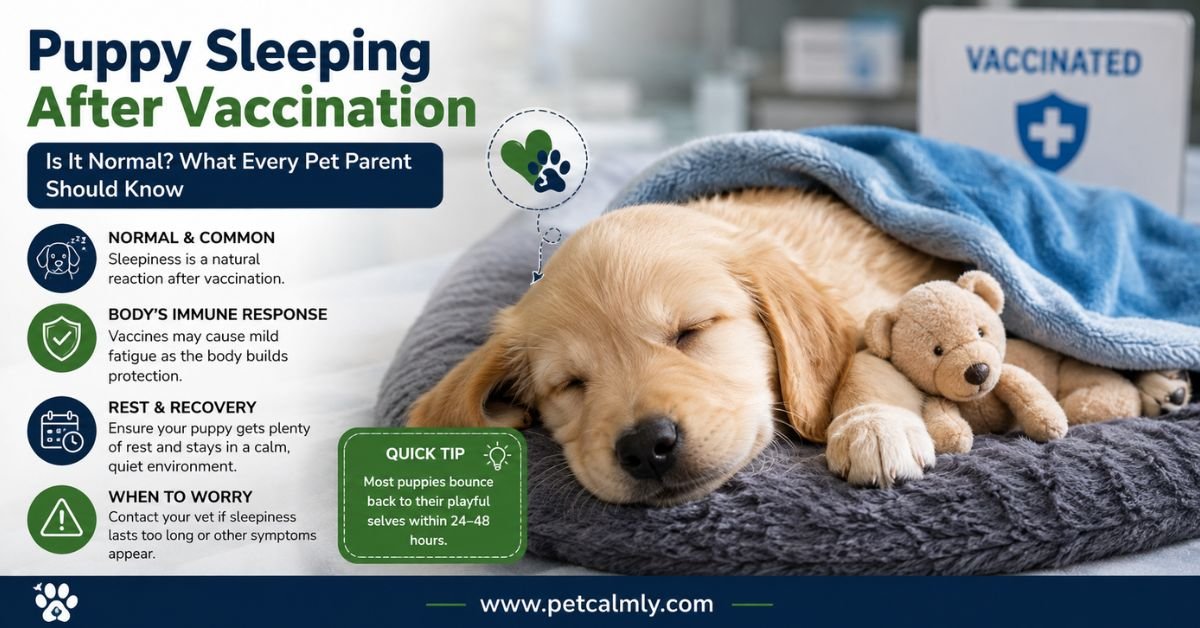
Yes, it’s completely normal for puppies to sleep more and seem lethargic after vaccination. Most puppies return to their usual energy levels within 24 to 48 hours. This drowsiness happens because their immune system is working hard to build protection against disease. While most vaccine reactions are mild and harmless, knowing what to watch for can help you feel confident that your puppy is recovering normally.
Why Puppy Sleepiness After Shots Worries Pet Parents
Bringing your puppy home for their first vet visit is exciting and then your pup comes back from vaccination looking like they’d rather sleep than play. You watch them sprawl across the living room floor, barely lifting their head when you call. Suddenly, questions flood in: Is this normal? Did the vaccine make them sick? Should I call the vet back?
This reaction worries countless new puppy owners. Some rush back to their veterinarian. Others scroll through pet forums at 2 AM, searching for reassurance. The truth is simpler than you might think: sleepiness after vaccination is a sign that your puppy’s immune system is doing exactly what it should.
Understanding what to expect helps you stay calm and know the difference between normal vaccine recovery and something that actually needs veterinary attention. This guide walks you through what happens during and after vaccination, what behavior changes are normal, and the specific signs that warrant a call to your vet.
How Vaccines Work (And Why Your Puppy Gets Tired)
Before you can understand why your puppy sleeps after vaccination, it’s worth knowing what the vaccine actually does inside their body.
Vaccines contain a small amount of disease material either a weakened or inactivated virus or bacteria. When your vet administers the vaccine, they’re essentially introducing a “practice run” for your puppy’s immune system. The body recognizes this foreign material, mounts a protective response, and learns to remember that particular threat.
This immune response takes real energy. Think of it like your puppy’s body running a training exercise: their white blood cells are mobilizing, antibodies are being produced, and inflammatory signals are moving through their system. All of this activity is happening at the cellular level, invisible to you but not invisible to your puppy’s energy reserves.
The fatigue you see is your puppy’s body conserving energy to focus on that critical immune work. It’s not a bug it’s a feature. A sleeping puppy is a puppy whose body can fully dedicate resources to building immunity.
Additionally, the stress of the vet visit itself plays a role. New environments, handling by strangers, and the overall novelty of the experience can exhaust young puppies. Add in the physical stimulus of the injection, and you have multiple reasons why your pup might want nothing more than a long nap.
What’s Normal After Puppy Vaccination: Behavior Changes to Expect
Understanding what “normal” looks like helps you relax and recognize when something might actually be off.
Typical Sleeping Behavior After Shots
Most puppies sleep noticeably more in the 24 to 48 hours following vaccination. Some puppies will sleep nearly the entire first day after their appointment, waking only for food, water, and quick bathroom breaks. Others show moderate drowsiness they’ll sleep during their usual nap times but stay alert enough to play if you initiate it.
The amount of extra sleep varies between individual puppies. Some factors that influence this:
Age and size: Younger puppies (8 to 12 weeks old) tend to be more affected than older puppies. Smaller breed puppies may show more noticeable lethargy than larger breeds, though this isn’t a hard rule.
Sensitivity to handling: Puppies that stress easily from vet visits may sleep longer as they recover emotionally.
Vaccine type: Different vaccines produce different immune responses. Some are more stimulating to the immune system than others.
Number of vaccines: Multi-vaccine appointments (which are common for puppy series) create a larger combined immune stimulus than single vaccines.
The key question isn’t “Is my puppy sleeping too much?” but rather “Is my puppy returning to normal energy levels within 24 to 48 hours?” This timeline is the medical baseline for normal vaccine recovery.
Other Mild Changes You Might Notice
Beyond sleepiness, mild temporary changes are normal:
Reduced appetite: Your puppy might eat less at their regular meals or show less interest in treats for a few hours after vaccination. This usually resolves quickly as they recover.
Slightly calmer demeanor: Puppies who are normally bouncing off walls might be noticeably calmer the day of their vaccine. This is the fatigue at work and typically reverses within a day.
Mild discomfort at injection site: The spot where they received the injection might be slightly tender. You might notice your puppy avoiding pressure on that spot or being a bit sensitive if you touch the area. This is very mild and doesn’t usually cause significant limping or pain.
Slightly softer stool: Some puppies have softer stools for a day after vaccination, though diarrhea isn’t common and isn’t expected.
Mild fever: A slightly elevated body temperature in the first few hours after vaccination is part of the normal immune response, though most owners won’t notice this unless they take their puppy’s temperature (which most don’t).
All of these are gentle, temporary shifts not dramatic changes. Your puppy should remain alert enough to eat, drink, eliminate normally, and respond to you, even if they’re clearly tired.
The Vaccination Schedule: What to Expect at Each Stage
Understanding when and why puppies get vaccinated helps you prepare for multiple rounds of post-vaccine drowsiness.
Puppy Vaccination Series Basics
Most puppies receive their first vaccines around 6 to 8 weeks of age. Veterinarians then recommend booster shots every 3 to 4 weeks until the puppy is about 16 weeks old. This creates a series typically three or four vaccine appointments in the first four months of your puppy’s life.
Each appointment usually includes multiple vaccines administered together:
- Core vaccines (recommended for all puppies): Protection against distemper, parvovirus, and rabies
- Non-core vaccines (depending on your region and lifestyle): Protection against bordatella, leptospirosis, and others
This means your puppy receives several injections in one visit, which explains why post-vaccination sleep might be more noticeable than you’d expect from a single shot.
What Changes with Each Booster
Your puppy’s immune response may shift as they progress through the series:
First vaccine visit: Puppies show the most dramatic sleepiness. Their immune system hasn’t encountered these antigens before, so the response is robust. First-time lethargy is often the most noticeable.
Second and third booster visits: Your puppy’s immune system recognizes the vaccine material more quickly because they’ve seen it before. The response is still strong (which is the point of boosters), but the sleepiness might be slightly less extreme. The recovery timeline remains similar: 24 to 48 hours.
Rabies booster at 12 to 16 weeks: The rabies vaccine sometimes gets its own appointment (rather than being combined with other vaccines). When administered alone or with fewer concurrent vaccines, post-vaccine sleepiness may be milder.
Knowing this progression helps you anticipate and prepare. By the second or third appointment, you’ll recognize the pattern and feel more confident that your puppy is simply recovering from the normal immune work.
When Sleepiness After Vaccination Becomes Concerning
The challenge for new puppy owners is knowing when normal recovery becomes something that needs veterinary attention. Here’s how to tell the difference.
Signs That Your Puppy Is Recovering Normally
- Wakes up when called or stimulated
- Eats and drinks normally within a few hours (may skip one meal but returns to appetite afterward)
- Eliminates urine and stool normally
- Remains alert and aware, even if tired
- Shows no signs of physical distress
- Returns to playfulness within 24 to 48 hours
- No fever (body temperature is around 101 to 102.5°F, or 38.3 to 39.2°C—normal for puppies)
If your puppy checks these boxes, they’re recovering as expected. The sleepiness might frustrate you when you want to play, but it’s actually a positive sign.
Warning Signs That Require Veterinary Attention
Contact your veterinarian if you notice any of these:
Extreme lethargy that lasts beyond 48 hours: If your puppy is still deeply lethargic on day three after vaccination and shows no improvement, that’s outside the normal range. This can indicate an adverse vaccine reaction, infection, or another medical issue.
Refusal to eat for more than 12 hours: Missing one meal after vaccination is normal. Skipping food consistently for 12+ hours or refusing all offers of food and water isn’t normal.
Vomiting: Mild nausea might cause a puppy to skip a meal, but actual vomiting (or repeated vomiting) isn’t expected. This can indicate a more significant reaction.
Difficulty breathing or facial swelling: These are signs of an allergic reaction and constitute a veterinary emergency. Call your vet immediately or go to an emergency clinic if this occurs during non-business hours.
Severe swelling, hardness, or heat at the injection site: While mild tenderness is normal, a large lump that grows, becomes hot to the touch, or seems painful requires veterinary evaluation. Injection site reactions are usually mild, but severe reactions need professional assessment.
Diarrhea or frequent loose stools: Soft stool for a day is mild. Ongoing or severe diarrhea, especially with blood or mucus, isn’t part of normal vaccine recovery.
Fever above 103°F (39.4°C): A very high fever can indicate an infection or severe vaccine reaction.
Behavior changes beyond sleepiness: Anxiety, tremoring, limping on the injection-site leg, or signs of pain deserve evaluation.
Seizures or collapse: These are rare but serious and require immediate emergency care.
Symptoms that don’t improve after 48 hours: If your puppy seems to be getting worse rather than better by day three, professional guidance is necessary.
The general rule: If you’re concerned enough to be reading this section, trust that instinct and call your vet’s office. Most clinics have phone lines where you can ask quick questions. They’d rather answer your concerns than have you worry in silence.
What to Do While Your Puppy Recovers From Vaccination
You can’t speed up your puppy’s immune response, but you can create the ideal environment for recovery.
Rest and Comfort
Allow your puppy to sleep as much as they need. This isn’t the time for training sessions, play dates, or trips to the dog park. Keep activities low-key and follow your puppy’s lead.
Create a quiet, comfortable space where your puppy can rest undisturbed. A crate with soft bedding, a playpen, or a designated room works well. Let them retreat to this space when they want rest, and don’t force interaction.
If you have children or other pets, explain that the puppy needs rest time and should be left alone while sleeping. This prevents overstimulation and allows your puppy’s body to focus on recovery.
Maintaining Hydration and Nutrition
Encourage your puppy to drink water, but don’t force it. Most puppies will seek water when they need it, even if they’re skipping meals temporarily. Make sure fresh water is easily accessible.
Offer food at regular meal times, but don’t be alarmed if your puppy refuses. Skip a missed meal and try again at the next scheduled feeding. When your puppy’s appetite returns, it often returns fully. If your puppy skips multiple consecutive meals or shows no interest in food after 12 hours, contact your vet.
Some puppies prefer a bland diet during recovery. If your puppy is eating but seems picky, you might offer:
- Plain boiled chicken (no seasoning)
- Plain white rice
- Plain sweet potato
- Bone broth (unseasoned, safe for puppies)
These are temporary comfort foods, not permanent dietary changes. Resume normal puppy food once your puppy’s appetite normalizes.
Avoid treats that require effort or chewing while your puppy recovers. Stick to easily digestible options if you offer treats at all.
Activity Restrictions After Vaccination
This is important: Keep your puppy calm and restrict strenuous activity for at least 24 to 48 hours after vaccination.
This means:
- No play dates with other puppies
- No training sessions with high-energy commands
- No long walks or exploratory outings (brief bathroom breaks are fine)
- No swimming (this is general advice avoid water immersion for a few days)
- No rough play with children
- No new experiences or overstimulation (no car rides to new places unless necessary)
The reason is practical: Your puppy’s immune system is already working hard. Strenuous activity diverts energy away from that important work and delays recovery. Additionally, if your puppy does have a rare adverse reaction, you want them calm and monitored, not overexerted.
This restriction is usually just for the first day or two. Most puppies are back to normal puppy energy levels by day three, and by then, normal activity resumes.
Monitoring and Taking Temperatures
You don’t need to obsessively monitor your puppy, but gentle observation helps you catch any genuine concerns early.
Check in on your puppy periodically. When they’re awake:
- Do they respond when you approach?
- Do they show interest in drinking water?
- Are they comfortable, or do they seem to be in pain?
- Is their breathing normal and easy?
If you have a pet thermometer, checking your puppy’s temperature can provide reassurance. Normal puppy body temperature is 101 to 102.5°F (38.3 to 39.2°C)—higher than adult dogs, which is completely normal. A reading above 103°F (39.4°C) warrants a vet call.
Most puppy owners don’t own thermometers, and that’s fine. Use the checklist of normal signs outlined earlier. If your puppy is waking up, eating, drinking, and showing no signs of distress, they’re almost certainly fine, regardless of exact temperature.
6 Common Mistakes New Puppy Owners Make After Vaccination
Knowing what to avoid helps ensure your puppy recovers smoothly.
Mistake #1: Worrying That Sleepiness Means Something Is Wrong
This is the biggest source of anxiety for new owners. Sleepiness after vaccination isn’t a symptom of a problem it’s evidence that the vaccine is working. Your puppy’s immune system is responding, which is exactly what you want.
Fighting the urge to constantly wake your puppy or panic about their decreased activity helps. Let them sleep. Recognize that you’re actually watching the vaccination do its job.
Mistake #2: Skipping Follow-Up Vaccinations Because of This Reaction
Some owners have such anxiety about the sleepiness that they consider skipping booster shots. This isn’t the right solution.
The mild lethargy your puppy experiences is temporary and harmless. The diseases vaccines protect against—distemper, parvovirus, rabies are serious, sometimes fatal, and entirely preventable through vaccination. The tiny bit of sleepiness is a very small price for immunity.
If your puppy showed a severe reaction (facial swelling, extreme lethargy beyond 48 hours, collapse, or seizures), discuss with your vet whether to adjust the vaccine protocol. But mild sleepiness doesn’t warrant skipping essential vaccines.
Mistake #3: Introducing New Foods During Recovery
Your puppy’s digestive system is busy responding to vaccination. Introducing new proteins, treats, or table foods during recovery can upset their stomach and make you second-guess whether the vaccine caused the issue.
Stick to your regular puppy food and water. Once recovery is complete and your puppy is back to normal, you can introduce new foods if desired (though ideally, one new food at a time, over several days, to monitor for any reactions).
Mistake #4: Not Restricting Activity
The impulse to cheer up your sleepy puppy by playing more is understandable—and counterproductive. Overexertion while your puppy’s immune system is working can prolong recovery and increase the chance of complications.
Keep the first 24 to 48 hours low-key. You’ll have plenty of time for vigorous play once your puppy’s energy returns.
Mistake #5: Applying Heat or Ice to Injection Sites
If you notice mild swelling or tenderness at the injection site, resist the urge to apply heating pads, ice packs, or topical treatments. These can intensify mild reactions rather than help.
Leave the injection site alone. Mild swelling or tenderness resolves on its own within a few days. If it’s severe or worsening, your vet needs to see it—not have it masked with home treatment.
Mistake #6: Delaying Vaccination Because You’re Anxious
Some owners postpone scheduled vaccines because they dread seeing their puppy sleepy afterward. This actually increases risk. Young puppies without full immunity are vulnerable to serious diseases. Delaying vaccines leaves your puppy unprotected during this critical window.
Keep scheduled vaccination appointments. The sleepiness is brief and harmless. The diseases vaccines prevent are not. n
Preventing Excessive Stress Around Vaccination
Some of your puppy’s post-vaccine lethargy comes from the stress of the vet visit itself. While you can’t eliminate that stress entirely, you can minimize it.
Before the Appointment
Take your puppy to the vet’s office before they actually need vaccines, just to visit. Let them explore the waiting room, meet the staff, and have a positive experience without the trauma of being poked with a needle. This builds familiarity and reduces fear.
Exercise your puppy lightly before the appointment. A tired puppy is often a calmer puppy during stressful experiences.
Don’t make a big deal out of the appointment in your attitude or tone. Puppies pick up on our anxiety. Keep things casual and normal.
During the Appointment
If you’re extremely anxious, your puppy senses it. Take a deep breath and stay calm. Keep your voice light and reassuring.
Some vets allow you to hold your puppy during vaccines; others prefer you to let them handle it. Follow your vet’s preference. If you’re holding your puppy, stay calm and don’t tense up when the needle goes in.
After vaccines are administered, praise your puppy quietly and offer a treat if your vet approves. Some puppies settle faster if given a small reward after the experience.
After the Appointment
The drive home should be quiet and calm. No exciting car rides to celebrate. Keep everything low-key.
Once home, allow your puppy to rest. Don’t immediately try to make up for the stressful experience with extra play or attention. Let them recover both emotionally and physically.
Vaccine Side Effects vs. Normal Recovery: A Clear Comparison
It helps to understand the spectrum of normal vaccine responses and true adverse reactions.
Normal Vaccine Response (Expected)
Timing: Hours to 48 hours after vaccination
Symptoms: Sleepiness, mild reduced appetite, mild tenderness at injection site
Duration: Resolves within 24 to 48 hours
Intervention needed: Rest and monitoring only
This is what you’ll see in the vast majority of vaccinated puppies. It’s so common that if your puppy doesn’t show this response, they’re not abnormal some puppies show minimal visible response while still building immunity.
Mild Adverse Reaction (Uncommon but Not Emergency)
Timing: Hours to 48 hours after vaccination
Symptoms: More pronounced lethargy, loss of appetite for several meals, mild vomiting (one or two episodes), mild diarrhea
Duration: Typically resolves within 48 hours with supportive care
Intervention needed: Veterinary consultation (call your vet, may not need emergency visit)
If your puppy seems to be having a more pronounced reaction than the typical sleepiness, contact your vet’s office. They can assess whether your puppy needs to be seen or whether you should simply monitor at home and call back if symptoms worsen.
Serious Adverse Reaction (Rare, Requires Emergency Care)
Timing: Minutes to hours after vaccination
Symptoms: Facial swelling, difficulty breathing, collapse, seizures, severe vomiting, severe bleeding at injection site, extreme fever (over 104°F / 40°C)
Duration: Does not improve without intervention
Intervention needed: Immediate veterinary emergency care
True vaccine emergencies are rare. Severe reactions occur in fewer than 1% of vaccinated puppies. If you see these signs, don’t wait seek emergency veterinary care immediately.
Frequently Asked Questions
1. How long should my puppy sleep after their vaccine?
Most puppies sleep noticeably more for 24 to 48 hours after vaccination. The exact amount varies between puppies. Some sleep nearly the entire first day; others show mild sleepiness during normal nap times. What matters is that your puppy returns to their normal energy level by day three. If your puppy is still extremely lethargic on day three or beyond, contact your vet.
2. Is it normal for my puppy to refuse food after vaccination?
Yes, it’s normal for puppies to skip one meal or show reduced appetite for a few hours after vaccination. This usually resolves as they recover. Offer food at the next scheduled meal. If your puppy hasn’t eaten anything for 12+ hours, contact your vet. If your puppy is drinking water normally, they’re not in immediate danger during a brief eating pause.
3. Can I take my puppy to the dog park after vaccination?
No, you should restrict strenuous activity and social interaction for at least 24 to 48 hours after vaccination. This means no dog parks, play dates, or vigorous play. Your puppy’s immune system is working hard, and their body needs to dedicate energy to that process. Strenuous activity can prolong recovery and, in rare cases, increase the risk of complications. Resume normal activities once your puppy’s energy returns.
4. Should I be worried if my puppy sleeps more after each vaccine in the series?
No. It’s normal to see sleepiness after each booster vaccination in the series. Your puppy’s immune system is designed to respond robustly each time it encounters the vaccine material. Most puppies show similar or slightly decreased lethargy with each booster, not increased. By the final boosters, you might notice even less dramatic sleepiness as your puppy’s immune system becomes increasingly familiar with the vaccine.
5. When should I call the vet about post-vaccine sleepiness?
Call your vet if your puppy shows extreme lethargy lasting beyond 48 hours, refuses to eat for more than 12 hours, vomits repeatedly, has severe diarrhea, shows signs of breathing difficulty, has significant swelling at the injection site, develops a very high fever (over 103°F / 39.4°C), or seems to be getting worse rather than better. For any concern that makes you unsure, a quick call to your vet’s office is always appropriate. They can answer questions without requiring an in-person visit if it’s not urgent.
6. Can I give my puppy anything to help with post-vaccine sleepiness or discomfort?
Don’t give your puppy medications or supplements without consulting your vet first, even over-the-counter options. The best medicine is rest, hydration, and a calm environment. Your puppy’s body knows how to process the vaccine response; interference often does more harm than good. If your puppy seems to be in significant pain at the injection site or is extremely uncomfortable, that’s a sign to call your vet it might indicate a reaction that needs professional assessment.
More Information About Pets, Please Visit Our Website: How to Clean a Puppy Without Bathing
Why Is My Dog Not Eating But Acting Normal?
How to Tell If Your Dog Has a Fever
Conclusion
If you take nothing else from this article, understand this: Your puppy sleeping after vaccination is a sign of a healthy immune response, not a sign of danger.
The fatigue is temporary. It typically lasts 24 to 48 hours. Your puppy will wake up hungry, bouncy, and ready to explore the world again. The vaccine will have triggered an immune response that protects your puppy from serious, potentially fatal diseases.
Yes, you might feel anxious watching your normally energetic puppy sprawl across the floor, barely opening their eyes. That anxiety is completely understandable. But it’s not necessary. Your puppy is doing exactly what their body should be doing: mounting a protective immune response that will keep them healthy for years to come.
The sleepiness is the price of protection. And it’s a very small price indeed.