Short direct answer
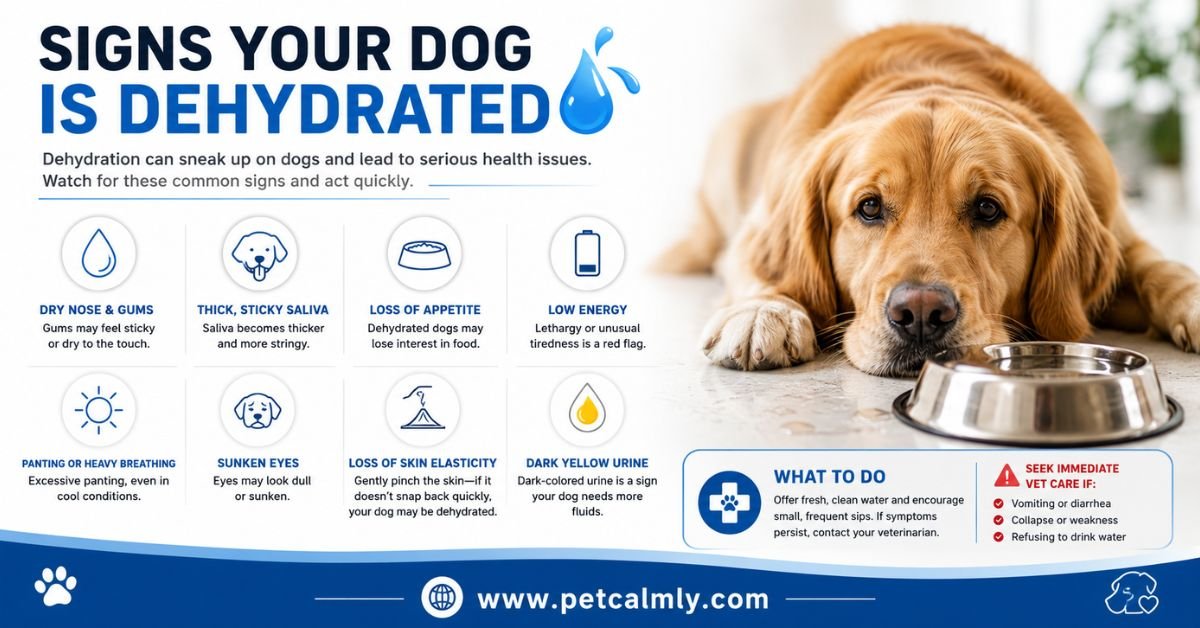
The most common signs your dog is dehydrated include dry or sticky gums, excessive panting, loss of skin elasticity, sunken eyes, lethargy, reduced appetite, and dark yellow urine. Mild dehydration can often improve with access to fresh water and rest, but severe dehydration can quickly become life-threatening. If your dog is weak, vomiting repeatedly, collapses, refuses water, or shows signs of shock, contact your veterinarian immediately for emergency care.
Signs Your Dog Is Dehydrated: How to Recognize Early Symptoms Before They Become an Emergency
Keeping your dog hydrated seems simple, yet dehydration is one of the most overlooked health problems pet owners face. Many owners assume their dog will naturally drink enough water throughout the day. In reality, illness, hot weather, vigorous exercise, stress, or even picky drinking habits can cause a dog to lose fluids faster than they replace them.
The challenge is that dehydration often develops gradually. Early symptoms can be subtle and easy to mistake for tiredness or normal aging. By the time obvious warning signs appear, your dog’s body may already be struggling to maintain normal circulation and organ function.
Learning how to recognize dehydration early allows you to respond before it becomes dangerous. In this guide, you’ll discover what dehydration looks like, why it happens, how to check your dog’s hydration at home, and when it’s time to seek veterinary care.
Whether you have an energetic puppy, a senior companion, or an active working dog, understanding these warning signs can help keep your pet healthy and safe.
Why Hydration Matters for Dogs
Water does far more than quench your dog’s thirst. Every organ depends on adequate hydration to function properly.
Water helps your dog’s body:
- Regulate body temperature
- Carry oxygen and nutrients through the bloodstream
- Support healthy digestion
- Lubricate joints
- Remove waste products through urine
- Protect organs and tissues
- Maintain normal blood pressure
- Keep muscles working efficiently
Even mild dehydration can affect your dog’s energy, mood, and physical performance. As fluid loss increases, the heart must work harder to circulate blood, making dehydration progressively more dangerous.
What Is Dehydration in Dogs?
Dehydration occurs when a dog loses more water and electrolytes than it takes in. Electrolytes such as sodium, potassium, and chloride help muscles, nerves, and organs function correctly.
When these fluids become depleted, the body begins conserving water by reducing normal functions. Blood becomes more concentrated, circulation slows, and organs receive less oxygen and fewer nutrients.
This imbalance can develop because your dog:
- Isn’t drinking enough water
- Is losing excessive fluids
- Has an illness that increases fluid loss
- Cannot keep fluids down because of vomiting
Without treatment, dehydration can progress into heatstroke, kidney damage, low blood pressure, or shock.
What Causes Dehydration in Dogs?
Understanding the cause often helps determine how serious the situation may be.
Hot Weather and Heat Exposure
Summer temperatures are among the leading causes of dehydration.
Dogs cool themselves primarily by panting rather than sweating. While panting helps reduce body temperature, it also causes significant water loss.
Risk increases when dogs:
- Spend hours outdoors
- Sit in direct sunlight
- Walk on hot afternoons
- Stay in poorly ventilated spaces
- Travel in warm vehicles
Flat-faced breeds, senior dogs, overweight dogs, and puppies are especially vulnerable.
Vigorous Exercise
Running, hiking, agility training, and extended play sessions increase fluid loss.
Many enthusiastic dogs keep playing long after they become thirsty. Owners may not notice dehydration developing until the activity ends.
Always provide frequent water breaks during exercise, especially on warm days.
Vomiting and Diarrhea
Digestive illness can remove large amounts of water from the body within hours.
A dog experiencing repeated vomiting or diarrhea can become moderately dehydrated surprisingly quickly, particularly if they refuse food and water afterward.
This situation deserves close monitoring because dehydration can worsen even after digestive symptoms begin improving.
Fever and Infection
Dogs with infections often develop elevated body temperatures and reduced appetites.
Fever increases water loss while making dogs less interested in drinking.
Common infections affecting hydration include:
- Respiratory infections
- Gastrointestinal illness
- Urinary tract infections
- Tick-borne diseases
Chronic Health Conditions
Some medical conditions increase a dog’s risk of dehydration every day.
Examples include:
- Kidney disease
- Diabetes
- Hormonal disorders
- Certain liver diseases
These dogs may urinate more frequently, causing ongoing fluid loss that requires careful management.
Medications
Certain medications increase urine production or reduce appetite.
Dogs taking diuretics or medications causing vomiting may require closer hydration monitoring under veterinary guidance.
Early Signs Your Dog Is Dehydrated
One of the biggest mistakes owners make is waiting until dehydration becomes obvious.
The earliest symptoms are often mild and easily overlooked.
Your Dog Seems Less Energetic
Many dehydrated dogs simply appear “off.”
Instead of greeting you enthusiastically or asking to play, they may:
- Sleep more than usual
- Lose interest in toys
- Walk more slowly
- Tire easily during walks
- Rest frequently
While many illnesses cause fatigue, dehydration commonly contributes to reduced energy levels.
Excessive Panting That Doesn’t Match Activity
Panting after exercise is normal.
However, excessive panting while resting or long after activity has ended may indicate your dog is struggling to regulate body temperature or compensate for fluid loss.
If heavy panting continues despite access to shade and water, investigate further.
Dry or Sticky Gums
Healthy dog gums should feel moist and slippery.
One of the earliest physical signs of dehydration is gums becoming:
- Sticky
- Dry
- Tacky
- Less glossy than usual
This simple observation often provides valuable information about hydration status.
Increased Thirst
Many dehydrated dogs begin drinking noticeably more water.
You may observe your dog:
- Emptying the bowl quickly
- Drinking for longer periods
- Returning repeatedly to the water bowl
While increased thirst helps replace lost fluids, excessive drinking can also signal underlying medical conditions, especially if it continues after recovery.
Reduced Appetite
Dogs often lose interest in food before showing severe dehydration.
Eating dry kibble may become less appealing when they’re already lacking fluids.
Some dogs continue accepting treats while refusing regular meals, making appetite changes easy to overlook.
Warm Nose Isn’t a Reliable Indicator
Many people believe a warm, dry nose means a dog is dehydrated.
In reality, nose temperature changes throughout the day due to sleep, weather, activity, and normal body processes.
Instead of relying on your dog’s nose, pay closer attention to:
- Gum moisture
- Skin elasticity
- Energy level
- Drinking habits
- Urination frequency
These indicators provide a much clearer picture of hydration.
Physical Signs Your Dog Is Dehydrated
As dehydration becomes more significant, the body begins showing clearer warning signs.
Loss of Skin Elasticity
One of the most useful home checks is the skin tent test.
Gently lift the loose skin between your dog’s shoulder blades and release it.
A well-hydrated dog’s skin returns almost immediately.
If the skin stays raised for several seconds or returns slowly, dehydration may be present.
Keep in mind that senior dogs naturally have less elastic skin, so this test should always be interpreted alongside other symptoms.
Sunken or Dull Eyes
Healthy dogs usually have bright, alert eyes.
Moderate dehydration may cause the eyes to appear:
- Slightly sunken
- Less shiny
- Tired
- Dull
Combined with lethargy and dry gums, this symptom deserves prompt attention.
Thick Saliva
Instead of producing thin, watery saliva, dehydrated dogs may develop:
- Thick saliva
- Rope-like drool
- Sticky mucus around the mouth
This happens because the body reduces moisture production to conserve fluids.
Dark Yellow Urine
Hydrated dogs typically produce pale yellow urine.
When dehydrated, urine often becomes:
- Dark yellow
- More concentrated
- Stronger smelling
You may also notice your dog urinates less often than usual.
Faster Heart Rate
As blood volume decreases, the heart works harder to maintain circulation.
Some dogs develop:
- Rapid heartbeat
- Increased breathing rate
- Weakness after minimal activity
These changes suggest dehydration may be becoming more serious.
Behavioral Signs Your Dog Is Dehydrated
Physical symptoms are only part of the picture. Many dogs show behavioral changes before owners notice obvious physical signs.
Your Dog Becomes Quiet or Withdrawn
A normally social dog may suddenly prefer to lie alone or avoid interaction.
You might notice they:
- Ignore family members
- Skip playtime
- Sleep more than usual
- Show little excitement for walks
- Seem mentally sluggish
This change often reflects the body’s effort to conserve energy when fluid levels are low.
Reluctance to Exercise
Dogs experiencing dehydration frequently slow down during activities they usually enjoy.
For example, a dog that normally runs enthusiastically at the park may begin stopping often, seeking shade, or turning back toward home much earlier than usual.
Rather than interpreting this as laziness, consider whether dehydration, overheating, or an underlying illness could be contributing.
Restlessness or Discomfort
Some dogs become unusually restless instead of sleepy.
They may:
- Pace around the house
- Frequently change sleeping positions
- Pant while resting
- Search for cool surfaces
- Lie on tile floors or near fans
These behaviors can indicate your dog is trying to cool down or cope with the physical effects of dehydration.
Key Takeaways So Far
Recognizing dehydration early gives your dog the best chance of a quick recovery. Watch for combinations of symptoms rather than relying on a single sign.
Early warning signs include:
- Dry or sticky gums
- Increased thirst
- Mild lethargy
- Excessive panting
- Reduced appetite
- Less interest in play
- Darker urine
- Thick saliva
More concerning signs include:
- Sunken eyes
- Slow skin elasticity
- Rapid heart rate
- Significant weakness
- Difficulty standing
- Confusion or collapse
If your dog shows several of these symptoms especially after hot weather, exercise, vomiting, or diarrhea it’s important to assess hydration promptly and seek veterinary advice if symptoms are moderate or severe.
How to Check if Your Dog Is Dehydrated at Home
Spotting the signs your dog is dehydrated is only the first step. The next is assessing how serious the problem may be. While no home check can replace a veterinary examination, a few simple observations can help you decide whether your dog needs immediate medical attention.
Always look at several signs together rather than relying on a single test. A tired dog with normal gums and bright eyes may simply need rest, while a dog with sticky gums, sunken eyes, and vomiting requires much more urgent care.
Perform the Skin Tent Test Correctly
The skin tent test is one of the easiest ways to estimate hydration at home.
How to do it
- Have your dog stand comfortably.
- Gently lift a small fold of loose skin between the shoulder blades or over the back.
- Hold it for one to two seconds.
- Release the skin and watch how quickly it returns to its normal position.
What the results may mean
| Skin Response | Possible Meaning |
|---|---|
| Returns immediately | Usually well hydrated |
| Returns slowly | Mild to moderate dehydration |
| Remains tented for several seconds | Possible severe dehydration requiring prompt veterinary care |
Keep these limitations in mind
The skin tent test isn’t perfect.
Results may be less reliable in:
- Senior dogs with naturally looser skin
- Very thin dogs
- Overweight dogs
- Certain breeds with naturally loose skin, such as Bloodhounds or Shar-Peis
Because of these differences, always combine this test with other observations.
Check Your Dog’s Gums
Your dog’s gums reveal a surprising amount about overall hydration.
Lift the upper lip gently and examine the gums.
Healthy gums should be:
- Moist
- Smooth
- Glossy
- Light pink (unless naturally pigmented)
Dry, sticky, or tacky gums often suggest dehydration.
Try the Capillary Refill Test
Veterinarians commonly use this quick circulation check.
Steps
- Press your finger gently against the gum.
- The area will briefly turn white.
- Remove your finger.
- Count how long it takes for the pink color to return.
Normal result
The color should return within about one to two seconds.
Delayed refill
If it takes longer, poor circulation or dehydration could be contributing.
This test becomes especially valuable if your dog also seems weak or lethargic.
Observe Your Dog’s Eyes
Healthy dogs usually have:
- Bright eyes
- Moist appearance
- Alert expression
As dehydration worsens, you may notice:
- Eyes appearing slightly sunken
- Dull expression
- Reduced blinking
- Dry appearance around the eyes
Eye changes alone don’t confirm dehydration, but they add useful information when combined with other symptoms.
Monitor Drinking Habits
Pay attention to how much water your dog normally drinks.
Signs that deserve attention include:
- Drinking much more than usual
- Refusing water completely
- Drinking repeatedly but still appearing thirsty
- Difficulty swallowing water
- Vomiting immediately after drinking
Dogs recovering from exercise or warm weather often drink heavily for a short period. However, excessive thirst that continues for hours or days may indicate an underlying health problem rather than simple dehydration.
Watch Urination
Changes in urination often mirror hydration status.
A well-hydrated dog generally produces pale yellow urine several times a day.
Possible dehydration signs include:
- Dark yellow urine
- Smaller amounts of urine
- Longer gaps between bathroom breaks
- Strong urine odor
Keep in mind that medications and certain diseases can also change urination patterns.
Assess Your Dog’s Energy Level
Hydration affects every organ, so even mild dehydration often changes behavior.
Ask yourself:
- Is my dog slower than normal?
- Does my dog seem unusually sleepy?
- Is my dog avoiding walks?
- Does my dog stop playing quickly?
- Does my dog seem mentally less responsive?
Comparing your dog’s behavior to its usual personality often provides valuable clues.
Dehydration Severity Chart
The following table offers a general guide. Only a veterinarian can accurately determine dehydration severity.
| Severity | Common Signs | Recommended Action |
|---|---|---|
| Mild | Slight thirst, mild panting, sticky gums, slight tiredness | Encourage water intake and monitor closely |
| Moderate | Slow skin return, dark urine, dry gums, noticeable lethargy, reduced appetite | Contact your veterinarian the same day |
| Severe | Collapse, weakness, sunken eyes, inability to stand, persistent vomiting, rapid heartbeat | Seek emergency veterinary care immediately |
Remember that dehydration can worsen quickly, particularly in puppies and sick dogs.
Puppies Are More Vulnerable to Dehydration
Young puppies have smaller fluid reserves than adult dogs.
This means dehydration can develop surprisingly fast.
Common causes include:
- Diarrhea
- Vomiting
- Parasites
- Heat exposure
- Weaning stress
- Poor nursing
- Viral infections
Signs of dehydration in puppies
Watch for:
- Constant sleeping
- Weakness
- Crying more than usual
- Dry mouth
- Poor nursing
- Reduced appetite
- Lack of interest in play
Never assume a puppy will simply “bounce back.”
Even moderate dehydration can become dangerous within a short time.
Senior Dogs Face Different Risks
Older dogs may become dehydrated for reasons unrelated to hot weather.
Common contributing factors include:
- Reduced sense of thirst
- Arthritis making it painful to reach the water bowl
- Kidney disease
- Diabetes
- Dental pain
- Cognitive decline
- Medication side effects
Owners sometimes mistake dehydration for normal aging because both can cause tiredness and reduced activity.
If your senior dog suddenly seems less energetic, hydration should always be considered.
Can Certain Dog Breeds Dehydrate More Easily?
Yes. While any dog can become dehydrated, some breeds require closer monitoring.
Higher-risk groups include:
Flat-faced breeds
Dogs with shortened airways often pant more heavily, increasing fluid loss.
Examples include:
- Bulldogs
- Pugs
- Boston Terriers
- French Bulldogs
Thick-coated breeds
Heavy coats can make staying cool more difficult.
Examples include:
- Siberian Huskies
- Alaskan Malamutes
- Chow Chows
Highly active breeds
Working and sporting dogs naturally lose more fluids through exercise.
Examples include:
- Border Collies
- Labrador Retrievers
- Australian Shepherds
- German Shorthaired Pointers
5 Common Mistakes Pet Owners Make
Many dehydration cases become worse because the early warning signs are missed or misunderstood.
Here are some common mistakes to avoid.
1: Assuming Panting Always Means Heat
Dogs pant after exercise, but excessive panting can also indicate:
- Fever
- Pain
- Anxiety
- Heart disease
- Heatstroke
- Dehydration
If panting seems unusual for the situation, investigate further.
2: Waiting Until the Dog Stops Drinking
Some dehydrated dogs continue drinking water throughout the illness.
Unfortunately, drinking alone doesn’t always replace fluids being lost through vomiting, diarrhea, or excessive panting.
3: Depending on the Nose Test
A dry nose is one of the biggest pet care myths.
Many perfectly healthy dogs have warm noses after sleeping.
Instead of focusing on the nose, evaluate:
- Gums
- Eyes
- Skin elasticity
- Urination
- Behavior
These indicators are far more reliable.
4: Offering Only One Large Drink
A very thirsty dog may gulp large amounts of water quickly.
This sometimes triggers vomiting, especially after strenuous activity.
Instead, allow your dog to drink calmly and naturally. If your veterinarian has recommended controlled water intake after illness, follow their guidance carefully.
5: Ignoring Vomiting or Diarrhea
Some owners focus only on replacing lost water.
However, repeated vomiting or diarrhea often signals an underlying condition that also requires treatment.
Without addressing the cause, dehydration can continue despite increased drinking.
What Should You Do if Your Dog Is Mildly Dehydrated?
If your dog is alert, able to drink, and has only mild symptoms, you can often begin supportive care while monitoring closely.
Move Your Dog to a Cool, Quiet Area
If heat contributed to dehydration:
- Bring your dog indoors or into the shade.
- Turn on a fan or air conditioning if available.
- Avoid further exercise until your dog has fully recovered.
Gradual cooling is safer than using ice-cold water, which may be uncomfortable for some dogs.
Provide Fresh Water
Ensure clean, cool drinking water is always available.
Many dogs prefer fresh water that has been recently replaced, especially after outdoor activity.
Avoid forcing water into your dog’s mouth, as this may cause choking or aspiration.
Encourage Small, Frequent Drinks
Dogs that have been exercising heavily may drink too quickly.
Allow them to drink at their own pace or encourage small amounts over several minutes if they seem prone to gulping and vomiting.
Offer Moisture Through Food
If your dog is willing to eat, adding moisture can help increase fluid intake.
Options include:
- Wet dog food
- Water mixed into kibble
- Veterinary-approved recovery diets
- Low-sodium broth recommended by your veterinarian
Avoid foods that are high in salt, seasoning, onions, garlic, or other ingredients that are unsafe for dogs.
Continue Monitoring
Over the next several hours, watch for improvements in:
- Energy level
- Gum moisture
- Panting
- Appetite
- Urination
- General behavior
If symptoms fail to improve or if they worsen contact your veterinarian promptly.
When Is Dehydration an Emergency?
Most mild cases of dehydration improve once the underlying cause is addressed and your dog drinks enough fluids. However, dehydration can become life-threatening if it progresses or develops alongside another illness.
The body relies on water to maintain healthy blood circulation, regulate temperature, transport nutrients, and support vital organs. As dehydration worsens, blood volume decreases, making it harder for the heart to deliver oxygen throughout the body. Without prompt treatment, this can lead to organ damage, shock, or even death.
If you’re ever unsure whether your dog’s condition is serious, it’s safest to contact your veterinarian. Early treatment is usually simpler, less stressful, and more effective than waiting until symptoms become severe.
Signs Your Dog Needs Emergency Veterinary Care
Some symptoms should never be monitored at home. They require immediate veterinary attention.
Contact an Emergency Veterinarian Immediately If Your Dog:
- Collapses or cannot stand
- Is extremely weak or unresponsive
- Refuses water for several hours while appearing ill
- Vomits repeatedly and cannot keep water down
- Has severe or persistent diarrhea
- Shows pale, white, or blue gums
- Has rapid or difficult breathing
- Has a very fast or weak heartbeat
- Appears confused or disoriented
- Experiences seizures
- Has sunken eyes along with extreme lethargy
- Is suspected of having heatstroke
- Is a young puppy with vomiting or diarrhea
- Is a senior dog with worsening weakness
- Has a known medical condition such as kidney disease or diabetes and suddenly becomes dehydrated
Never delay veterinary care if these signs are present. Severe dehydration can worsen much faster than many owners expect.
How Veterinarians Diagnose Dehydration
Your veterinarian doesn’t rely on a single test. Instead, they’ll evaluate your dog’s overall condition to determine both the severity of dehydration and its underlying cause.
A physical examination often includes checking:
- Gum moisture
- Capillary refill time
- Skin elasticity
- Heart rate
- Respiratory rate
- Body temperature
- Body weight
- Eye appearance
- Mental alertness
Depending on your dog’s symptoms, additional diagnostic tests may include:
- Blood tests to evaluate electrolyte levels and organ function
- Urinalysis to assess hydration and kidney health
- Fecal testing for intestinal parasites
- X-rays or ultrasound if an obstruction or internal illness is suspected
- Tests for infectious diseases when appropriate
Finding the cause is just as important as replacing lost fluids. For example, dehydration caused by vomiting from a swallowed toy requires very different treatment than dehydration caused by diabetes.
How Dehydration Is Treated
Treatment depends on how dehydrated your dog is and what caused the problem.
Mild Dehydration
Dogs with mild dehydration that are alert and drinking on their own may only need:
- Rest
- Fresh water
- A cool environment
- Temporary dietary adjustments
- Treatment for the underlying illness if necessary
Your veterinarian may recommend monitoring your dog closely over the next 24 hours.
Moderate Dehydration
Dogs with moderate dehydration often require more active treatment.
This may include:
- Subcutaneous fluids (fluids given under the skin)
- Anti-nausea medication
- Treatment for diarrhea or infection
- Blood testing
- Close observation
Many dogs improve quickly once fluids are restored.
Severe Dehydration
Severely dehydrated dogs usually require hospitalization.
Treatment often involves:
- Intravenous (IV) fluids
- Electrolyte replacement
- Oxygen therapy if needed
- Continuous monitoring
- Treatment of the underlying disease
- Pain management when appropriate
Recovery depends on how quickly treatment begins and whether other medical conditions are involved.
How Long Does It Take a Dog to Recover?
Recovery varies depending on the cause and severity of dehydration.
Here’s a general timeline:
| Severity | Typical Recovery Time* |
|---|---|
| Mild dehydration | Several hours to one day |
| Moderate dehydration | One to three days |
| Severe dehydration | Several days or longer, depending on the underlying illness |
*These are general estimates. Every dog recovers differently.
For example:
- A healthy dog that became mildly dehydrated after a long summer hike may recover within hours.
- A puppy recovering from severe diarrhea may require several days of treatment and monitoring.
- A senior dog with kidney disease may need ongoing hydration management.
How to Prevent Dehydration in Dogs
Prevention is always easier than treatment.
Small daily habits can greatly reduce your dog’s risk of dehydration.
Always Provide Fresh Water
Clean drinking water should be available at all times.
Refresh the water bowl regularly, especially during warm weather, as many dogs prefer cool, fresh water.
If you have multiple dogs or a large home, placing water bowls in several locations can encourage more frequent drinking.
Increase Water During Hot Weather
Dogs naturally need more fluids in summer.
During hot days:
- Refill water bowls more often.
- Bring water on walks.
- Offer water during play sessions.
- Schedule exercise during cooler morning or evening hours.
- Provide shaded resting areas outdoors.
Never leave a dog in a parked vehicle, even for a short time.
Monitor Water Intake During Exercise
Active dogs may become so focused on playing that they ignore their thirst.
Take regular breaks during:
- Hiking
- Running
- Fetch
- Agility training
- Long walks
Offering water every 15–30 minutes during strenuous activity can help prevent dehydration.
Feed a Balanced Diet
Nutrition also contributes to healthy hydration.
Some dogs naturally consume more water when eating wet food, while others do well with dry food as long as fresh water is always available.
If your veterinarian recommends a specific diet for kidney disease, diabetes, or urinary health, follow those feeding guidelines carefully.
Watch Sick Dogs Closely
Any illness that causes vomiting, diarrhea, fever, or poor appetite increases dehydration risk.
Monitor:
- Water intake
- Gum moisture
- Urination
- Energy level
- Appetite
Early intervention often prevents more serious complications.
Help Senior Dogs Stay Hydrated
Older dogs sometimes drink less because of arthritis, cognitive changes, or reduced thirst.
Simple adjustments may help:
- Raise the water bowl if bending is uncomfortable.
- Place bowls on every level of the home.
- Refresh water several times a day.
- Speak with your veterinarian if water intake changes suddenly.
A Quick Daily Hydration Checklist
Use this simple checklist to help monitor your dog’s hydration.
✅ Fresh, clean water is always available.
✅ My dog’s gums feel moist, not sticky.
✅ Urine is light yellow.
✅ My dog drinks normally.
✅ Energy levels are typical.
✅ Eyes look bright and alert.
✅ Skin quickly returns after a gentle skin tent test.
✅ No vomiting or diarrhea is present.
If you notice several boxes are no longer true, assess your dog more closely and contact your veterinarian if symptoms persist.
Frequently Asked Questions
1. How can I tell if my dog is dehydrated without going to the vet?
You can check for common signs such as sticky gums, slow skin elasticity, dark urine, excessive panting, sunken eyes, and unusual lethargy. While these home observations are helpful, only a veterinarian can accurately determine the severity of dehydration and identify the underlying cause.
2. Can a dehydrated dog recover by drinking water?
Yes, mild dehydration often improves if the dog is alert, able to drink normally, and the underlying cause is minor. However, if your dog is vomiting, has severe diarrhea, refuses water, or becomes weak, professional veterinary treatment is needed.
3. How much water should my dog drink each day?
A healthy dog generally drinks about 50–70 milliliters of water per kilogram of body weight each day, although individual needs vary based on diet, activity level, weather, age, and overall health.
4. Is panting always a sign of dehydration?
No. Panting is a normal way for dogs to regulate body temperature after exercise or in warm weather. However, excessive panting especially when combined with dry gums, lethargy, or increased thirst can indicate dehydration or another medical problem.
5. Are puppies more likely to become dehydrated?
Yes. Puppies have smaller fluid reserves and can become dehydrated much faster than healthy adult dogs. Vomiting, diarrhea, parasites, and heat exposure are common causes that require prompt attention.
6. Can wet food help prevent dehydration?
Wet food contains significantly more moisture than dry kibble and can contribute to your dog’s daily water intake. However, it should never replace constant access to fresh, clean drinking water.
More Information About Pets, Please Visit Our Website: Dog Immune System Booster
Best Cat Vitamins for Indoor Cats
Conclusion
Recognizing the signs your dog is dehydrated can make a meaningful difference to your pet’s health. Early symptoms such as sticky gums, increased thirst, excessive panting, dark urine, and lower energy are your dog’s way of signaling that something isn’t right.
In many cases, mild dehydration improves with rest, fresh water, and careful monitoring. However, dehydration should never be dismissed, especially if it’s linked to vomiting, diarrhea, heat exposure, or an underlying illness. Puppies, senior dogs, and pets with chronic medical conditions are particularly vulnerable and may require veterinary care sooner than healthy adult dogs.
By making hydration checks part of your routine, providing fresh water at all times, and responding quickly to early warning signs, you can reduce the risk of serious complications and help your dog stay active, comfortable, and healthy throughout the year.
Remember, if your dog’s symptoms are severe, worsen rapidly, or leave you feeling uncertain, contacting your veterinarian is always the safest choice. Acting early is one of the most effective ways to protect your canine companion.