Short direct answer
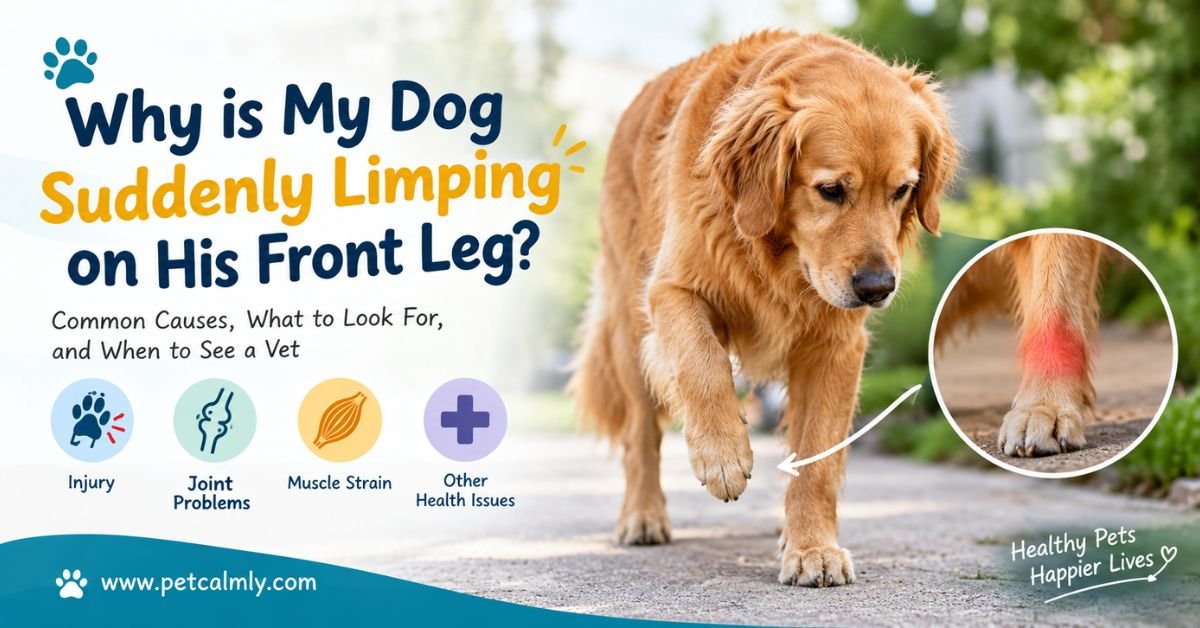
Why is my dog suddenly limping on his front leg? In most cases, something is irritating the paw, the toes, the wrist, the elbow, or the shoulder. Common culprits include a thorn or cut pad, a torn nail, a bruise, a muscle strain, or an insect sting. Mild limping that fades within a day can be watched at home. Limping that lasts longer than 24 hours, comes with swelling or crying out, or means your dog won’t put the paw down at all needs a vet visit.
Why a Sudden Front Leg Limp Feels So Scary
One minute your dog is racing around the yard. The next, he’s holding one paw up, hopping on three legs, or bobbing his head with every step. Your stomach drops, and your mind jumps straight to the worst: a broken bone, a torn ligament, a huge vet bill.
Take a breath. Sudden limping is one of the most common reasons dogs end up at the vet, and a large share of cases turn out to be minor things like a sore pad or a strained muscle. But limping is also your dog’s only way of telling you something hurts, and dogs are experts at hiding pain. So it deserves your attention.
This guide walks you through what is likely going on, how to check your dog safely at home, which signs mean you should stop reading and call a vet, and what to do while you wait. It’s written for regular pet owners, not veterinarians, so everything is explained in plain English. It is general education and not a diagnosis. Only a vet who can examine your dog can tell you exactly what’s wrong.
The Most Common Causes of a Sudden Limp in the Front Leg
The front leg is a long chain of parts: paw pad, toes, nails, wrist (carpus), lower leg bones, elbow, upper arm, and shoulder. Pain at any link can make a dog limp. Since dogs carry roughly 60% of their body weight on the front end, even small problems up front tend to show up quickly.
Here are the causes veterinarians see most often, roughly from the simplest to the most serious.
1: Paw and Pad Problems
This is the first place to look, and the most common answer. A thorn, burr, splinter, grass awn (a sharp, barbed seed), small stone, or piece of glass can lodge between the toes or in the pad. Hot pavement can burn pads. Ice-melt chemicals and rough trails can cause sore, cracked skin.
Dogs with a paw problem often lick or chew the foot, flinch when you touch between the toes, or limp more on hard ground than on grass.
2: Torn, Broken, or Ingrown Nails
A nail that snags on carpet, a crate, or a root can crack or tear below the quick. It hurts a lot and may bleed. Dewclaws, the extra nail higher up on the inside of the front leg, are especially easy to catch and tear. Overgrown nails can also change how a dog’s foot lands, which strains the toes over time.
3: Muscle Strain or Sprain
Think of the dog who sprinted after a squirrel, skidded on a wood floor, or played too hard at the dog park. Soft tissue injuries, meaning muscles, tendons, and ligaments, often cause a sudden limp that is worst right after the activity and may improve with rest. Weekend warriors who sit still all week and then go on a long hike are classic candidates.
4: Insect Stings, Bites, and Foreign Objects
A bee sting, spider bite, or a grass awn working its way under the skin can cause swelling and tenderness in one paw. Look for puffiness, redness, or a small bump. If your dog’s face is swelling or he seems to be struggling to breathe, that is an emergency, not a limp.
5: Wrist, Elbow, and Shoulder Injuries
Deeper joint injuries are harder to spot at home. A dog may carry the leg up, take short steps, or swing the leg outward. Possible issues include sprains, dislocations, ligament injuries, and inflammation of tendons. A condition called biceps tendinopathy, for example, affects the shoulder and is more common in middle-aged and larger dogs.
6: Arthritis and Joint Wear
Sudden limping in an older dog can be an arthritis flare, even if he seemed fine yesterday. Cold weather, extra exercise, or a slip can set off pain in a joint that has been quietly aching for months. Many owners say they only noticed arthritis after a sudden bad day. Look for stiffness after resting, reluctance to jump, or trouble with stairs.
7: Growing Pains and Developmental Conditions in Young Dogs
Fast-growing puppies and young large breeds can develop conditions that cause limping on one or both front legs. Elbow dysplasia, where the elbow joint forms abnormally, is one of the best known. Panosteitis, sometimes called growing pains, causes pain in the long bones and may shift from one leg to another. These need a vet diagnosis, often with X-rays, because early management can protect the joint long term.
8: Fractures and Serious Trauma
A fall, a jump from a car or couch, a collision, or being stepped on can break a bone or damage a joint. A dog with a fracture usually won’t touch the leg to the ground, may cry out, and often has visible swelling or an odd angle. Treat this as urgent.
Infection, Tick-Borne Illness, and Less Common Causes
An infected wound or abscess can make a limb hot, swollen, and painful. Some tick-borne illnesses, such as Lyme disease, can cause shifting leg lameness along with fever and low energy. In rare cases, persistent limping with swelling on a bone, especially in older large-breed dogs, can be a sign of bone cancer. This is uncommon, but it is one reason a limp that doesn’t improve should never be ignored for weeks.
Quick Clues: What Your Dog’s Limp May Be Telling You
No chart replaces an exam, but the pattern of the limp offers useful hints. Use this table to describe things clearly to your vet.
| What you notice | What it may point to |
|---|---|
| Limp started right after running or play, improves with rest | Muscle strain or mild sprain |
| Licking or chewing one paw, limp worse on pavement | Pad injury, foreign object, burn |
| Bleeding or flinching at one toe | Torn nail or toe injury |
| Swollen, warm, puffy paw or leg | Sting, bite, infection, or injury |
| Won’t put the leg down at all | Fracture, dislocation, severe pain |
| Stiff after naps, better after warming up | Arthritis |
| Limp shifts from leg to leg, with fever or tiredness | Possible tick-borne illness |
| Young large-breed pup, limp comes and goes | Growing pains or elbow problem |
| Leg held out or short steps with head bobbing | Shoulder or elbow pain |
How to Check Your Dog’s Front Leg at Home, Step by Step
Before you touch anything, know this: a hurting dog can bite, even a gentle one who adores you. Move slowly, speak softly, and stop if he tenses, growls, or pulls away. If you have a helper, have them hold his head and offer treats.
- Watch him walk first. Have him walk on a flat, non-slippery surface. Note which leg, whether it’s constant or on and off, and whether his head bobs. A head that dips down when the sore leg lands is a common sign of front leg lameness.
- Look at the paw. Gently spread the toes and check between them and around each pad. Look for thorns, cuts, redness, swelling, bleeding, or a cracked nail.
- Inspect each nail and the dewclaw. A split nail can look small but hurt a lot.
- Feel the leg from the toes upward. Run your fingers lightly down the lower leg, over the wrist, and up to the elbow. Notice heat, swelling, or flinching. Compare to the other leg.
- Gently bend and straighten the wrist and elbow. Only go as far as he allows. Never force a joint if it hurts.
- Check the shoulder and chest area. Notice if he pulls away or yelps when you touch the shoulder or when the leg is moved forward and back.
- Take a short video. Record him walking toward you, away from you, and from the side. Vets find these clips very helpful because limps sometimes disappear in the clinic when dogs get excited.
Write down what you find, when it started, and what he was doing beforehand. That short note can save a lot of guesswork.
When Should You Worry? Signs You Need a Vet Right Away
The goal here is not to scare you but to help you decide quickly. Please contact an emergency vet or your regular vet urgently if you see any of the following:
- Your dog will not put any weight on the leg
- The leg looks bent at a strange angle, dangles, or is visibly swollen
- There is heavy bleeding, an open wound, or exposed bone
- He cries out, snaps, or shakes when the leg is touched
- The limp followed a fall, a car accident, or a fight with another animal
- His gums look pale, or he is panting hard, collapsing, or struggling to breathe
- Swelling around the face, hives, or vomiting after a suspected sting or bite
- He has a fever, will not eat, or seems unusually quiet and tired
- The paw is hot, oozing, or smells bad
Book a regular vet visit within a day or two if:
- The limp lasts more than 24 hours, even if it seems mild
- It improves and then keeps coming back
- He is a puppy or a senior dog
- The limp is getting worse rather than better
- You can’t find anything and he is still favoring the leg
If you are ever unsure, a call to your vet’s office is free in many clinics and the staff can help you decide how urgent it is. When in doubt, it is safer to have your dog seen than to wait.
What to Do While You Wait: Safe First Steps at Home
If your dog is walking, only mildly lame, and none of the emergency signs above apply, these steps are generally considered reasonable while you monitor him or wait for an appointment.
Rest Is the Main Treatment
Keep him calm. That means leash walks only for toilet breaks, no running, no ball chasing, no stairs if you can avoid them, and no rough play with other dogs. Many owners find this is the hardest part because the dog often feels better before the leg has healed. Crating or using a small room for a day or two can help.
Remove Anything Small and Obvious
If you see a thorn or burr sitting on the surface of the paw and he lets you, you can gently pull it out with clean tweezers. Do not dig. If something is deep, broken off, or he objects, leave it for the vet.
Clean Minor Scrapes
Rinse a small scrape with lukewarm water or saline and pat it dry. Don’t use hydrogen peroxide or alcohol, which can irritate tissue. Keep him from licking, using a clean sock or a cone if needed.
Cold or Warm Compress, Used Carefully
For a fresh strain or swelling in the first day or so, a cold pack wrapped in a thin towel for about 10 minutes at a time is a commonly recommended approach. Never place ice directly on skin. Ask your vet what they prefer if the injury is older or involves a joint.
Never Give Human Pain Medicine
This is one of the most important safety rules in this article. Ibuprofen, naproxen, and acetaminophen can be toxic to dogs and can cause stomach ulcers, kidney damage, or liver damage. Do not give them, and do not give leftover prescriptions meant for another pet. Only a veterinarian should choose and dose pain medication for your dog.
Common Mistakes Owners Make With a Limping Dog
Most of these come from good intentions. Knowing them in advance can save your dog a lot of discomfort.
- Waiting too long. “He seems better, so I’ll skip the appointment” is understandable. But dogs can mask pain, and some injuries, like ligament tears, can feel better for a few days and then flare badly.
- Letting him run once he looks okay. A dog who limps less after a day or two may still be healing. Easing back into activity slowly prevents a second injury.
- Using human painkillers. As covered above, it is dangerous.
- Massaging or stretching the leg. If there’s a fracture or torn ligament, this could make it worse.
- Assuming it’s just old age. Senior dogs deserve a proper check. Arthritis is very treatable these days, and not every limp in an older dog is arthritis.
- Ignoring the other leg. Dogs who favor one leg can put extra strain on the other. If both front legs look off, mention it.
- Skipping the video. Some dogs walk perfectly in the exam room, thanks to adrenaline, and the vet never sees the limp you saw.
What to Expect at the Vet
Knowing what happens at the appointment can make it feel less stressful.
The history. Your vet will ask when the limp started, what your dog was doing, and whether it has happened before. Your notes and video will help here.
The orthopedic exam. The vet watches him walk and trot, then feels each part of the leg, gently flexing and extending the joints to find the sore spot. Some dogs need mild sedation for a thorough exam if they are too painful or anxious.
Imaging. X-rays are the most common next step and help check for fractures, joint changes, arthritis, and some tumors. Soft tissue injuries may not show clearly on regular X-rays, so a vet may recommend further imaging or a referral to a specialist in tougher cases.
Bloodwork or other tests. If a tick-borne disease or infection is suspected, your vet may recommend blood tests.
Treatment. Depending on the cause, it may include rest, prescribed anti-inflammatory medication made for dogs, wound care, nail repair, a brace or splint, physical rehabilitation, or surgery in more serious cases. Your vet will explain the options and the expected recovery time for your dog’s specific problem.
Limping by Age and Breed: What Changes
A dog’s age and size change what is most likely.
Puppies and adolescents. Growth-related conditions such as elbow dysplasia or panosteitis are more likely, especially in large and giant breeds like Labrador Retrievers, German Shepherds, Rottweilers, and Golden Retrievers. Puppies also get plenty of simple strains, but they should still be checked if the limp persists, since bones and growth plates are still developing.
Active adult dogs. Soft tissue injuries, torn nails, and paw wounds are the usual suspects, particularly in dogs who hike, run, or play hard. Sporting and working breeds often fall into this group.
Senior dogs. Arthritis becomes more common, and older dogs can have flare-ups after a long walk or a slippery fall. Persistent or worsening limps in seniors should always be examined, since other causes, including tumors, can look similar.
Small breeds. Some small dogs are prone to kneecap problems in the back legs, but front leg limping in toy breeds is often from jumping off furniture. A small dog landing wrong from a sofa can sprain a wrist or even break a bone.
Real-Life Scenarios That Might Sound Familiar
These are common, everyday examples of how front leg limping plays out. They are illustrations, not individual case reports.
The dog park sprint. A two-year-old Lab chases a ball, yelps once, then holds up his front paw. Ten minutes later he walks fine but is a little stiff by evening. This is a typical pattern for a strain. Rest and a vet check if it lasts beyond a day is a sensible plan.
The quiet licker. A beagle starts limping after a walk in tall grass and keeps licking the same paw. Between two toes, there’s a small red bump and a tiny seed stuck in the skin. This is a grass awn, which can burrow deeper over time, so a vet should remove it.
The senior on a cold morning. A ten-year-old Golden Retriever is hesitant to get up and limps on his right front leg after a chilly morning walk. By afternoon he looks better. This could be arthritis, and a vet can discuss safe pain management and joint support.
The sudden screamer. A small terrier jumps off a bed, cries out, and holds a front leg off the floor. This is an urgent visit situation, since a break or dislocation is possible.
How to Help Your Dog Recover Safely
Once your vet has diagnosed the problem and made a plan, your role is mainly about patience and consistency.
- Follow the rest instructions exactly. If your vet says leash walks only for two weeks, that means two weeks, even if he acts like a puppy on day five.
- Give medication exactly as prescribed. Do not stop early or change the dose.
- Make the house easier. Rugs or yoga mats over slippery floors, a ramp or steps to the couch, and a soft, supportive bed all reduce strain.
- Keep his weight in check. Extra weight puts more load on the joints. Ask your vet what ideal body condition looks like for your dog.
- Ease back slowly. Add a few minutes of walking at a time, and watch for limping after exercise and the next morning.
- Ask about rehab. Canine physical therapy, such as underwater treadmill work or gentle strengthening, helps many dogs recover from joint and soft tissue problems.
- Keep his mind busy. A lick mat, a food puzzle, or short scent games can help a restless dog cope with restricted activity.
How to Prevent Front Leg Injuries and Limping
You can’t prevent every limp, but you can reduce the odds.
- Trim nails regularly so they don’t snag or change his gait
- Check paws after hikes, beach trips, or walks in tall grass
- Avoid hot pavement in summer, and rinse off salt and ice melt in winter
- Warm up with a short walk before high-energy play
- Keep him at a healthy weight
- Don’t let him jump from high furniture or out of cars, especially smaller dogs and large breeds with joint risks
- Add traction, such as rugs on slippery floors
- Build fitness gradually, rather than one long weekend adventure after a quiet week
- Keep up with tick prevention recommended by your vet, especially in tick-prone areas
- Book regular wellness checks, which can catch early joint changes
Conclusion
A sudden limp in a front leg is stressful, but most dogs get through it well, especially when owners act early and calmly. Check the paw, keep him quiet, watch how the limp changes, and don’t be shy about calling your vet. You know your dog better than anyone. If something looks off, you are probably right.
The best approach is a simple one: look for obvious causes, rest him, and get him examined if the limp lasts a day, returns, or comes with any red-flag signs. That small step could mean the difference between a quick recovery and a long-term problem.
More Information About Pets, Please Visit Our Website: Dog Gums Bleeding When Chewing Bone?
Dog Eye Discharge Causes Treatment
Why Does My Dog Eat Grass and Then Vomit?
Why Does My Dog Fart So Much and Stink?
How to Check Dog Heart Rate at Home
How to Tell if Your Dog Has Worms or Parasites
Frequently Asked Questions
1: Why is my dog limping on his front leg but not crying?
Many dogs stay quiet even when they are in real pain. Silence doesn’t mean the injury is minor. Dogs instinctively hide discomfort, so limping, licking, restlessness, or holding the leg up can be the only clues. If it lasts more than a day, get it checked.
2: Can a dog’s limp heal on its own?
Sometimes. Mild strains and small paw irritations often settle within a day or two with rest. But if the limp lasts longer than 24 to 48 hours, keeps returning, or gets worse, a vet should look at it, since hidden problems like ligament damage, arthritis, or infection don’t resolve on their own.
3: How can I tell if my dog’s leg is sprained or broken?
You can’t be sure without X-rays. A dog with a possible break usually refuses to use the leg at all, may cry out, and often has swelling or an odd shape to the limb. A sprain may allow some weight bearing. Because the two can look similar, treat any severe or unclear case as urgent.
4: Can I give my dog ibuprofen or aspirin for limping?
No. Ibuprofen and naproxen are unsafe for dogs, and acetaminophen can also be harmful. Even aspirin can cause serious side effects without veterinary guidance. Your vet can prescribe dog-specific pain relief at the right dose.
5: How long should I wait before taking my limping dog to the vet?
Go right away for severe pain, a leg that can’t bear weight, trauma, or swelling. For a mild limp with no red flags, many vets suggest watching for up to 24 hours with strict rest. If there’s no clear improvement by then, book an appointment.
6: Why does my dog limp after waking up or after exercise?
Stiffness after rest or exertion often points to arthritis or an old injury that flares up. It’s especially common in older or large-breed dogs. It may look mild, but joint pain tends to get worse without treatment, so it’s worth a vet visit to discuss management options.