Short direct answer
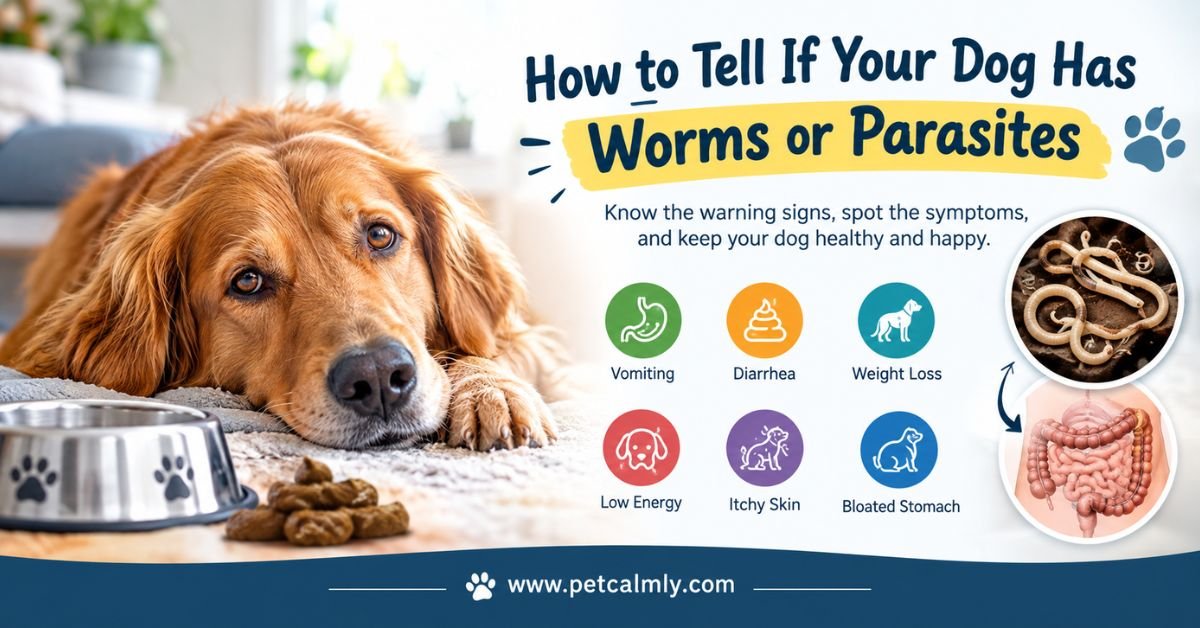
How to tell if your dog has worms or parasites: watch for diarrhea, vomiting, weight loss despite a normal appetite, a swollen belly, a dull coat, and scooting. You may also see worms or rice-like segments in the stool or around the tail. Many dogs show no signs at all, so a fecal test from your vet is the only reliable confirmation. If you suspect parasites, book a vet visit and bring a fresh stool sample.
Why This Question Worries So Many Dog Owners
Maybe you spotted something odd in your dog’s poop. Maybe your pup is scooting across the carpet, or your puppy has a round belly that looks a little too round. Then you did what most of us do and typed your worry into a search bar.
First, take a breath. Intestinal worms and other parasites are very common in dogs. They are not a sign that you’ve failed as an owner. Even well-cared-for dogs pick them up from soil, fleas, mosquitoes, or their own mother’s milk.
Second, parasites are treatable. Most cases clear up well once your vet identifies the culprit and prescribes the right medication. The real danger comes from guessing, waiting too long, or using the wrong product.
This guide walks you through what to look for, what different worms look like, and how vets confirm an infection. You’ll also learn when it’s an emergency and what to do today. We’ll also cover how to protect your family, because some dog parasites can affect people too.
What Are Worms and Parasites in Dogs?
A parasite is any organism that lives on or inside your dog and feeds off its body. Vets usually split them into two groups.
Internal parasites live inside your dog. These include intestinal worms (roundworms, hookworms, whipworms, tapeworms), heartworms in the heart and lungs, and tiny single-celled organisms like giardia and coccidia. Technically, giardia and coccidia aren’t worms. Still, they cause similar symptoms, so they belong in this conversation.
External parasites live on the skin and coat. Fleas, ticks, and mites are the usual suspects. They matter here because some of them carry internal parasites. Fleas, for example, are how dogs get the most common type of tapeworm.
Here’s why this matters. Many parasites hide. A dog can carry worms for weeks with no visible signs. That’s why “my dog seems fine” doesn’t always mean “my dog is parasite-free.”
10 Signs Your Dog Has Worms: The Symptoms to Watch For
Symptoms vary by parasite type, your dog’s age, and how heavy the infection is. Puppies and senior dogs usually show signs sooner and more severely. Healthy adult dogs may show nothing for a long time.
Common signs of worms in dogs
- Diarrhea, sometimes with mucus or blood
- Vomiting, occasionally with visible worms
- Weight loss even though your dog eats well
- A bloated, “pot-bellied” belly, especially in puppies
- A dull, dry, or thinning coat
- Scooting or licking the rear end
- Increased appetite with no weight gain
- Low energy or reduced interest in play
- Coughing, which may point to heartworm or migrating larvae
- Pale gums, which can signal blood loss and anemia
No single sign proves worms. Diarrhea can come from a food change, stress, or a dozen other issues. What matters is the pattern. If two or three of these signs show up together, or one lingers for more than a couple of days, a vet visit makes sense.
Signs of parasites that people often overlook
Some hints are easy to miss. Your dog might become picky about food, seem unusually sleepy after short walks, or have a dull coat that doesn’t improve with better grooming.
Mild, on-and-off soft stool is another one. Whipworms, for instance, cause exactly this kind of up-and-down digestive trouble. Owners often assume it’s “just a sensitive stomach” for months.
How to Tell If Your Dog Has Worms by Looking at Their Stool
Checking your dog’s poop isn’t glamorous. It is one of the most useful things you can do at home, though. Here’s what you might see.
Roundworms
Roundworms look like off-white or tan strands, similar to cooked spaghetti. They can be a few inches long. You may spot them in stool or vomit. Seeing one is a clear sign to call your vet.
Tapeworm segments
Tapeworms rarely show up as a whole worm. Instead, you’ll find small, flat segments that resemble grains of white or cream-colored rice. They may be stuck to the fur near your dog’s tail or on their bedding. Fresh segments sometimes wiggle. Dried ones look like sesame seeds.
Hookworms, whipworms, and heartworms
These are the sneaky ones. Hookworms are tiny and almost never visible. Whipworm eggs can only be seen under a microscope. Heartworms live in the heart and lungs, so you’ll never see them in poop at all. For these three, symptoms and lab tests do the detective work, not your eyes.
Quick note on “worms” that aren’t worms
Not everything wriggly in a stool is a parasite. Maggots can appear in old stool that sat outside. Dried grass or undigested food can also resemble worm pieces. If you’re unsure, take a clear photo, collect a sample, and ask your vet. They’d much rather see a false alarm than miss a real one.
Types of Worms and Parasites in Dogs: A Quick Comparison
Each parasite has its own habits. This table gives you a fast overview. Use it to understand, not to self-diagnose.
| Parasite | How dogs get it | What you might notice | Can people catch it? |
|---|---|---|---|
| Roundworms | Mother’s milk, contaminated soil, eating infected animals | Pot belly, vomiting, dull coat, visible worms | Yes |
| Hookworms | Skin contact with larvae, mother’s milk, swallowing larvae | Dark or bloody stool, pale gums, weakness | Yes (skin) |
| Whipworms | Swallowing eggs from soil | Chronic or on-off diarrhea, weight loss | Rare |
| Tapeworms | Swallowing infected fleas or eating rodents | Rice-like segments, scooting | Rare |
| Heartworms | Mosquito bites | Cough, tiring easily, later heart strain | No |
| Giardia | Contaminated water or surfaces | Soft, smelly, greasy stool | Possible |
| Coccidia | Contaminated environment, mostly puppies | Watery diarrhea, dehydration | Dog species only |
Notice how different the clues are. That’s exactly why a fecal test matters. Two parasites can look nearly identical from the outside while needing completely different treatments.
How Do Dogs Get Worms and Parasites?
Understanding the “how” makes prevention far easier. Dogs pick up parasites in surprisingly ordinary ways.
From their mother. Puppies can be infected before birth or through nursing. This is why even puppies from clean, loving homes often need early deworming.
From soil and grass. Many worm eggs survive in soil for a long time. A dog sniffing, licking paws, or eating dirt at the park can swallow them.
From other animals’ feces. Dogs investigate poop. It’s gross to us, but it’s a normal canine habit. Eating feces is also a major way parasites spread.
From fleas. If your dog swallows a flea while grooming, tapeworm larvae inside that flea can grow into adult tapeworms. This is the most common tapeworm route.
From mosquitoes. A single bite from an infected mosquito can transmit heartworm larvae.
From wildlife and prey. Hunting or scavenging rodents, rabbits, or birds can introduce worms.
From contaminated water. Puddles, ponds, and shared bowls can carry giardia and other microscopic parasites.
So if you’re wondering “where did my dog even get this?”, the honest answer is usually “everyday life.” Don’t blame yourself.
Puppies vs. Adult Dogs: Who Is Most at Risk?
Why puppies get worms so easily
Puppies are born with immature immune systems. They also explore the world with their mouths. Combine those two facts, and you can see why nearly every puppy needs a deworming plan.
A heavy roundworm load can make a puppy look stuffed after a meal, with thin legs and a swollen belly. A hookworm infection can be dangerous because the worms feed on blood. Tiny puppies can become seriously anemic fast.
Vets commonly start puppies on deworming at around two weeks of age and repeat it on a schedule. Your veterinarian will set the exact timing based on your puppy’s age, weight, and local parasite risks. Never guess the dose for a puppy.
Adult and senior dogs
Adult dogs aren’t off the hook. They can be reinfected through soil, fleas, and wildlife. Senior dogs and dogs with chronic illness may struggle more to cope with a parasite burden.
An adult dog with a strong immune system can carry parasites quietly. Sadly, this is why many owners are surprised by a positive fecal test.
A Real-World Example: When “Just a Sensitive Stomach” Isn’t
Picture a three-year-old Labrador who has had soft stool every few weeks for months. His owner has switched foods twice. He eats well, plays hard, and looks healthy. Then one day there’s a bit of mucus in his stool.
The first fecal test comes back negative. The vet suggests a repeat sample a few weeks later, and that one reveals whipworm eggs. A short course of medication, repeated as instructed, clears the problem.
This scenario is illustrative, but it’s very typical. Some parasites shed eggs only now and then, so one negative test doesn’t always close the case. If symptoms continue, ask your vet about retesting. Persistence pays off.
How Vets Diagnose Worms and Parasites in Dogs
You can’t confirm a parasite by symptoms alone, and neither can your vet. They rely on testing.
Fecal flotation and other stool tests
The classic test is a fecal flotation. Your vet mixes a stool sample with a special solution so parasite eggs float to the top. They then examine the sample under a microscope.
Some clinics also use fecal antigen tests or PCR tests. These can detect parasites that are easy to miss, like giardia or whipworms.
Blood tests for heartworm
Heartworm lives in the heart, not the gut, so a stool test won’t find it. Vets use a simple blood test instead. Annual testing is a standard recommendation even for dogs on prevention.
How to collect a good stool sample
A good sample makes a big difference.
- Use a clean bag or container.
- Collect poop as fresh as possible, ideally the same day.
- Scoop about a tablespoon-sized amount, unless your vet asks for more.
- Keep it cool in the fridge if you can’t drop it off right away.
- Label it with your dog’s name and the date.
If you saw worms or segments, mention it. Take a photo too. That detail helps.
Is It an Emergency? When Should You Worry?
Most worm infections are not emergencies. Still, some situations need fast veterinary care.
Call your vet the same day if you notice:
- Vomiting that keeps happening
- Diarrhea lasting more than 24 to 48 hours
- Blood in the stool or black, tarry stool
- A bloated belly in a puppy that also seems tired
- Pale or white gums
- A puppy who stops eating or nursing
- Weight loss that you can see
Go to an emergency vet right away if:
- Your dog collapses or is extremely weak
- Your dog has trouble breathing or coughs up blood
- Your puppy is limp, very pale, and unresponsive
- Vomiting and diarrhea come with signs of dehydration, like sunken eyes or very dry gums
Pale gums deserve special attention. They can mean significant blood loss, which is a known risk with heavy hookworm infections. A swollen, painful belly with repeated unproductive retching is also an emergency, but that is usually a separate condition. Don’t wait to find out which it is.
When in doubt, call. A quick phone call to your clinic costs nothing and can save a lot of stress.
What To Do If You Think Your Dog Has Worms
Here’s a calm, practical plan.
- Stay calm and observe. Note symptoms, appetite, energy, and stool changes. Write down when they started.
- Collect a fresh stool sample. Keep it clean and cool.
- Take photos. A picture of worms, segments, or odd stool helps your vet.
- Call your veterinarian. Describe what you’ve seen and ask if they want a sample or an exam.
- Wash your hands and clean up. Pick up waste promptly to prevent reinfection and protect your family.
- Follow the treatment plan exactly. Finish the full course, even if your dog looks better.
- Schedule any follow-up testing. Some parasites need a repeat dose or a recheck.
Mistakes that make things worse
- Buying random dewormers. Different products target different worms. The wrong one may do nothing.
- Guessing doses. Overdosing can harm your dog, especially puppies and small breeds.
- Stopping treatment early. Parasites have life cycles. A missed second dose can let them return.
- Ignoring the environment. Dog waste in the yard keeps the cycle going.
- Skipping flea control. If tapeworm is the problem, fleas must be handled too.
Can You Treat Worms in Dogs at Home?
This is one of the most searched questions, and the answer needs care.
Veterinary-prescribed or vet-recommended dewormers are the safe, effective route. Medications such as pyrantel, fenbendazole, praziquantel, and combination heartworm-and-worm preventives are commonly used. Your vet chooses based on the parasite found.
What about natural remedies?
Home remedies like pumpkin seeds, garlic, diatomaceous earth, apple cider vinegar, or herbal blends are popular online. However, there’s no reliable evidence that they clear worm infections in dogs. Some are risky. Garlic, for example, can be toxic to dogs in larger amounts.
Delaying proper treatment while you try a home remedy gives parasites more time to damage your dog’s health. If you like natural approaches, talk with your vet about supportive options, like good nutrition, and use those alongside real treatment, never instead of it.
Over-the-counter dewormers
Some store-bought products exist. They usually cover only certain roundworms and hookworms. They may not handle tapeworms, whipworms, or protozoa. Ask your vet before using one, particularly for puppies, pregnant dogs, or dogs with other health conditions.
Can Humans Get Worms From Dogs?
Yes, some can. Understanding the risk keeps your household safe without causing panic.
Roundworm larvae can migrate through human tissue if eggs are swallowed. Children are at higher risk because they play in dirt and put hands in their mouths. Hookworm larvae can burrow through skin, causing an itchy, winding rash.
Simple habits cut the risk sharply:
- Wash hands after handling your dog’s waste, soil, or sandboxes.
- Pick up poop promptly. Many eggs need time in soil before they become infective, so quick cleanup helps.
- Keep your dog on regular parasite prevention.
- Teach children not to eat dirt or put their hands in their mouths after playing with pets.
- Wear shoes in areas where dogs defecate.
If someone in your home develops an unexplained skin rash, stomach upset, or vision problems after contact with a dog with parasites, tell their doctor about the exposure.
How to Prevent Worms and Parasites in Dogs
Prevention is easier, cheaper, and kinder than treatment. Most vets recommend a layered approach.
Use year-round parasite prevention
Many monthly preventives protect against heartworm and several intestinal worms at once. Others handle fleas and ticks. Your vet can recommend the right combination for your dog’s size, age, lifestyle, and region. Consistency matters most. A dose skipped here and there leaves gaps.
Keep up with regular fecal tests
Many vets recommend testing at least once a year. Some suggest twice a year for puppies, outdoor dogs, or dogs that mix with many other animals. Routine testing catches quiet infections early.
Control fleas
Fleas are tiny, but they cause big problems. Treat your dog, your home, and your yard if needed. Following your vet’s flea plan helps prevent tapeworm.
Clean up consistently
Remove dog waste from your yard at least every day or two. Wash bowls and bedding regularly. Dispose of waste in sealed bags.
Watch where your dog explores
Avoid letting your dog drink from puddles, eat feces, or scavenge carcasses. Be extra cautious at crowded dog parks and boarding areas, especially with puppies who haven’t finished vaccines or deworming.
Think about diet and hunting habits
Raw or undercooked meat can carry parasites. Dogs that hunt rodents or birds may pick up worms. If your dog does either, tell your vet so they can adjust the prevention plan.
Quick Checklist: Is It Time to Call the Vet?
Tick off any that apply.
- My dog has had diarrhea or soft stool for more than two days
- I’ve seen worms or rice-like segments in stool, vomit, or fur
- My dog is losing weight even though they eat well
- My puppy has a swollen belly and a rough coat
- My dog scoots or licks their rear constantly
- My dog coughs, tires quickly, or seems weak
- My dog’s gums look pale
- My dog hasn’t had a fecal test in over a year
- My dog isn’t on regular parasite prevention
One or more checks means a call is worth making. Several checks, especially pale gums or a sick puppy, means call today.
Frequently Asked Questions
1: How can I tell if my dog has worms without going to the vet?
You can look for clues, like visible worms, rice-like segments, a pot belly, diarrhea, weight loss, or scooting. But you can’t be certain without a fecal test. Many dogs carry worms without showing any signs, so a vet test is the only reliable way to know.
2: What do dog worms look like in poop?
Roundworms look like pale, spaghetti-like strands. Tapeworm segments resemble small grains of rice and may stick to fur near the tail. Hookworms, whipworms, and heartworms usually can’t be seen. A lack of visible worms doesn’t mean your dog is worm-free.
3: Do dogs with worms always have diarrhea?
No. Diarrhea is common, but not universal. Some dogs only show a dull coat, weight changes, mild tiredness, or no symptoms at all. That’s one reason routine fecal testing is so valuable.
4: How long can a dog have worms before showing symptoms?
It varies. Some dogs show signs within weeks, especially puppies. Others carry low-level infections for months without obvious changes. Heartworm, in particular, can be silent for a long time before cough or fatigue appears.
5: Can I use a natural dewormer instead of vet medication?
It isn’t recommended. Natural remedies haven’t been shown to reliably eliminate worms in dogs, and some ingredients can be unsafe. Delaying proper treatment can allow a bigger infestation to develop. Ask your vet for a safe, effective option.
6: Should I be worried if I see a worm in my dog’s stool?
Don’t panic, but do call your vet. Seeing a worm means an infection is present. Take a photo, collect a sample if you can, and follow your vet’s guidance. Treatment is usually simple, and early action protects your dog and your family.
More Information About Pets, Please Visit Our Website: 48 Signs Your Dog Has Cancer
Heatstroke in Dogs Signs and Symptoms
Senior Dog Arthritis Treatment
Dog Shivering or Trembling
Why Does My Dog Cry in His Sleep?
How Much Benadryl to Give a 100 Lb Dog?
How to Stop Reverse Sneezing in Dogs
Dog Constipation
Dog Allergy Symptoms Eyes
Dog Vomiting Yellow Foam Treatment at Home
Dog Yeast Infection Treatment
Conclusion
Learning how to tell if your dog has worms or parasites is really about paying attention. Notice changes in stool, energy, appetite, and body shape. Trust your instincts when something feels off.
Remember the big picture. Parasites are common, treatable, and mostly preventable. A fecal test, a reliable preventive, and good hygiene do most of the work. If you spot warning signs, don’t wait and don’t improvise. A quick call to your vet gets your dog back to feeling like themselves sooner.
You don’t need to be a parasite expert. You only need to be an observant owner who asks for help early. Your dog is lucky to have one.