
Your female dog might be shedding so much due to normal seasonal changes, her breed’s natural coat cycle, hormonal shifts (like heat cycles, pregnancy, or post-spay adjustments), poor diet, stress, allergies, parasites, or skin issues. Most cases are harmless and tied to environment or nutrition, but sudden heavy shedding with other symptoms could signal a health concern needing vet attention.
Seeing clumps of fur on your furniture, clothes, and floors can feel overwhelming. Many pet parents wonder why their female dog seems to lose more hair than expected. It’s a common question because shedding patterns vary widely between dogs, and females sometimes experience extra fluctuations from hormones.
This guide explains the main reasons behind excessive shedding in female dogs, helps you spot what’s normal versus worrisome, and shares practical steps to manage it. You’ll feel more confident caring for your girl’s coat.
Understanding Normal Shedding in Female Dogs
All dogs shed to some degree it’s how they renew their coat and stay comfortable. Shedding removes old or damaged hair so new, healthy strands can grow.
Normal shedding looks even across the body. You might find loose fur during daily brushing or notice more on your vacuum. The coat stays shiny, skin looks healthy (no redness or flakes), and your dog isn’t scratching constantly.
Female dogs can shed a bit differently from males due to reproductive hormones. For example, unspayed females might notice slight increases during heat cycles when estrogen levels shift. Spayed females usually stabilize, but some experience temporary changes right after surgery.
Double-coated breeds (like Labrador Retrievers, German Shepherds, or Huskies) “blow” their undercoat twice a year spring and fall leading to massive fur piles. Single-coated breeds shed more steadily year-round.
There’s no exact “normal” amount since it depends on breed, age, climate, and indoor/outdoor living. What’s heavy for a short-haired Chihuahua might be light for a long-haired Collie.
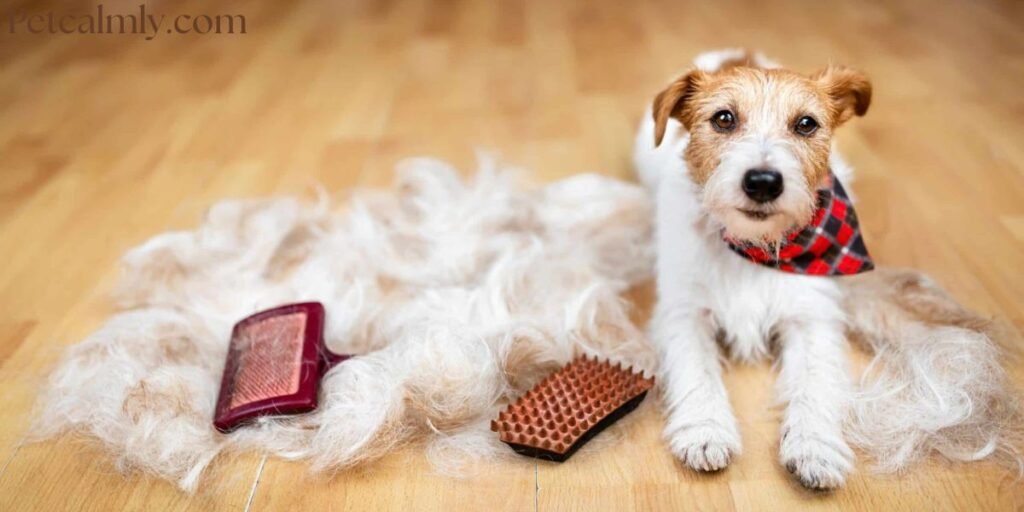
8 Main Reasons Why Female Dogs Shed Excessively
Several everyday factors explain why your female dog is shedding so much right now.
1: Seasonal and Environmental Changes Most dogs shed heavily in spring to lose thick winter undercoats and in fall to prepare for colder weather. Indoor dogs with artificial light and heating might shed year-round or at odd times. Sudden weather swings like a warm spell after cold can trigger extra shedding too.
2: Breed and Genetics Some breeds naturally shed more. Think Golden Retrievers, Siberian Huskies, or Shetland Sheepdogs. Females in these breeds often match or exceed males in fur loss during peak seasons.
3: Hormonal Fluctuations Specific to Females Unspayed females may shed more during estrus (heat) due to hormone surges. Pregnancy demands extra nutrients, sometimes causing temporary coat thinning or out-of-season shedding. After giving birth, moms can lose more fur as their body readjusts. Even spayed females might see brief increases if surgery affected hormone balance temporarily.
4: Diet and Nutrition Issues Poor-quality food lacking essential fatty acids, proteins, vitamins (like biotin or zinc), or minerals often leads to dull coats and heavier shedding. Many experts call imbalanced diets the top cause of avoidable excess shedding.
5: Stress or Anxiety Big life changes like moving, new family members, loud noises, or routine disruptions raise cortisol levels. Stress can push more hairs into the shedding phase at once.
6: Allergies (Food or Environmental) Allergies cause itchy skin, leading dogs to scratch, lick, or bite pulling out fur. Common triggers include pollen, dust mites, certain proteins in food (chicken, beef, grains), or flea saliva.
7: Parasites Like Fleas, Mites, or Ticks These irritate skin, prompting over-grooming and patchy or widespread shedding.
8: Skin Infections or Other Health Problems Bacterial/fungal infections, hypothyroidism, Cushing’s disease, or other endocrine issues disrupt normal hair growth cycles.
Signs That Shedding Is Excessive or Abnormal
Compare your dog’s current shedding to her usual pattern.
Normal: Even distribution, no bald patches, coat feels soft, skin clean, no excessive scratching.
Concerning: Sudden increase outside normal seasons, patchy bald spots, thinning symmetrically (like flanks or belly), red/irritated/flaky skin, strong odor, constant licking/chewing paws or sides, lethargy, weight changes, increased thirst/urination.
If shedding comes with any of these, it’s more than seasonal “coat blow.”

When Should You Be Concerned?
Most shedding is benign, but don’t ignore red flags. Contact your vet promptly if you notice:
- Bald patches or uneven hair loss
- Skin redness, bumps, sores, scaling, or odor
- Intense itching, scratching, or biting at skin
- Dull, brittle, or greasy coat
- Other symptoms like excessive drinking/peeing, weight gain/loss, fatigue, or behavioral changes
- Shedding that doesn’t improve after 4–6 weeks of better grooming/diet
A vet can run tests (skin scrapes, bloodwork, allergy checks) to rule out issues like hypothyroidism (common in middle-aged females) or allergies. Early checks prevent bigger problems.
One owner noticed her spayed Labrador shedding heavily with flaky skin and lethargy. Vet diagnosed hypothyroidism simple medication restored her coat in months.
What Should Pet Owners Do? Practical Steps to Help
You can reduce shedding and support coat health with these steps.
Brush Regularly Brush 3–7 times weekly (daily during heavy seasons). Use an undercoat rake for double coats or slicker brush for others. This removes loose fur before it spreads.
Feed a High-Quality Diet Choose food with animal proteins first, added omega-3/6 fatty acids (fish oil), and balanced nutrients. Supplements like fish oil or biotin help if diet lacks them ask your vet first.
Groom Properly Bathe every 4–8 weeks with moisturizing, oatmeal-based shampoo. Avoid over-bathing, which strips oils. Use conditioner for dry coats.
Control Parasites Keep up monthly flea/tick preventives year-round.
Reduce Stress Provide routine, safe spaces, exercise, and toys. Pheromone diffusers help anxious dogs.
Improve Environment Use air purifiers, wash bedding weekly, vacuum often. Humidifiers combat dry indoor air.
Track Changes Note shedding patterns in a journal. If no improvement in a month, see the vet.
Consistency matters many owners see less fur around the house within weeks of better brushing and diet.
More Information About Pets, Please Visit Our Website: How to Bathe Dogs in Winter: Safe & Warm Tips
Conclusion
Excessive shedding in your female dog often stems from normal causes like seasons, breed, hormones, or diet. Females face unique hormonal influences, but most resolve with simple care.
Monitor for warning signs like bald spots or itching these warrant a vet visit. With regular brushing, premium nutrition, parasite control, and stress management, you can minimize fur everywhere and keep her coat glossy.
Your girl relies on you for comfort. Small daily habits make a big difference in her health and your home’s cleanliness. If unsure, a quick vet chat brings peace of mind.
(Frequently Asked Questions)
1: Is it normal for female dogs to shed more during heat cycles?
Yes, hormonal changes during estrus can increase shedding slightly in unspayed females. It’s usually temporary and evens out after the cycle.
2: Does spaying stop excessive shedding in female dogs?
Spaying often stabilizes shedding by removing heat-related hormone swings, but it won’t eliminate breed or seasonal shedding.
3: Can pregnancy cause my female dog to shed a lot?
Absolutely pregnancy diverts nutrients to puppies, sometimes causing extra shedding or coat changes. It typically improves after whelping with good nutrition.
4: What breed of female dog sheds the most?
Double-coated breeds like Huskies, Malamutes, Golden Retrievers, and Shepherds shed heavily year-round or seasonally females often match this pattern.
5: How can I tell if my dog’s shedding is from allergies?
Allergy-related shedding often pairs with itching, red skin, ear infections, or paw licking. Seasonal patterns or food trials can help pinpoint it vet testing confirms.
6: Will changing my female dog’s food reduce her shedding?
Yes, if the current diet lacks key nutrients like omega fatty acids or protein. Switch gradually to a high-quality formula and add fish oil if recommended by your vet.