
Short direct answer
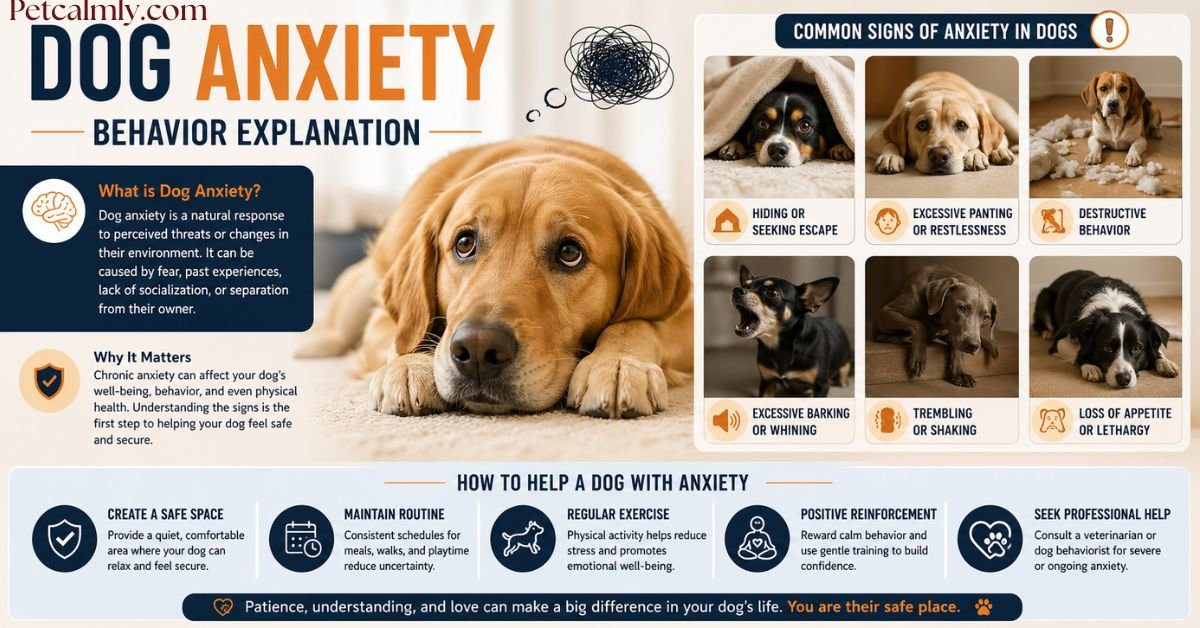
Just like humans, dogs feel occasional fear or nervousness in response to new situations, loud noises, or being left alone. Mild anxiety helps them stay safe and alert. However, when it becomes frequent, intense, or interferes with daily life, it can turn into an anxiety disorder that needs attention. Most dogs experience some form of stress at times, and with the right understanding and care, you can help your pup feel calmer and more confident.
Why Dog Anxiety Matters to Every Pet Parent
Watching your dog tremble during a thunderstorm or destroy the couch when you step out can be heartbreaking. You might wonder if something is wrong with your pet or your training. The truth is, dog anxiety is one of the most common behavioral issues pet owners face today.
Many dogs developed stronger attachment behaviors during the pandemic when owners stayed home more. As routines changed again, signs of separation anxiety surged. Understanding that anxiety is a natural emotional response not disobedience helps you respond with patience instead of frustration. This knowledge strengthens your bond and improves your dog’s quality of life.
What Causes Anxiety in Dogs?
Dogs experience anxiety for many reasons. Some are genetic, while others stem from life experiences or environment.
- Genetics and breed traits:
Certain breeds tend to be more sensitive or prone to nervousness. Herding breeds, for example, may become anxious without enough mental stimulation. - Lack of early socialization:
Puppies not exposed to different people, sounds, places, and other dogs during their critical development window (up to about 16 weeks) may react fearfully later. - Past trauma or negative experiences:
Rescue dogs or those who faced abuse, accidents, or loud events can develop lasting fears. - Separation from owners: Separation anxiety
is especially common. It affects roughly 14–20% of dogs and can feel terrifying for them because they see their human as the source of safety and resources. - Medical issues:
Pain from arthritis, dental problems, gastrointestinal upset, or even canine cognitive dysfunction in senior dogs can manifest as anxious behavior. - Aging and changes:
Senior dogs may become more anxious due to declining senses or health. Sudden household changes — new baby, moved furniture, or a different work schedule — can also trigger stress. - Environmental triggers:
Thunderstorms, fireworks, vacuum cleaners, or unfamiliar visitors often spark fear-based anxiety.
Think of it like this: Imagine suddenly being dropped in a foreign country where you don’t understand the language or customs. Your dog can feel the same way when routines shift without warning.
Common Signs of Dog Anxiety
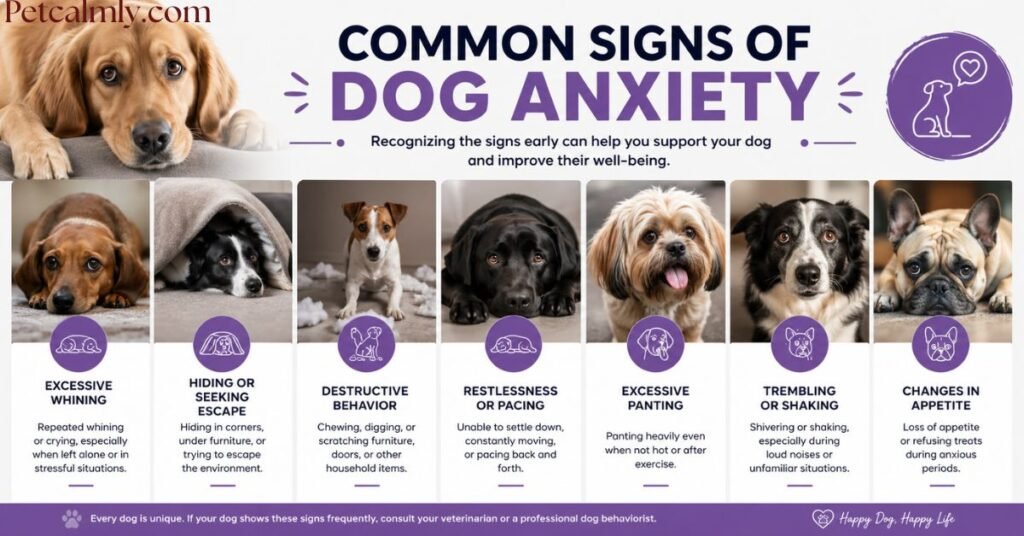
Dogs can’t tell us how they feel, so they show it through body language and behavior. Signs range from subtle to obvious.
Mild signs include:
- Lip licking or yawning when not tired
- Avoiding eye contact or turning the head away
- Ears pinned back
- Whale eye (showing more white than usual)
Moderate to severe signs:
- Pacing or restlessness
- Excessive panting or drooling
- Trembling or shaking
- Whining, barking, or howling
- Destructive chewing (especially doors, windows, or owner belongings)
- House soiling despite being house-trained
- Hiding or trying to escape
- Clinginess or following you everywhere
- Loss of appetite or changes in sleep
One owner shared how her usually calm Labrador began pacing and drooling every time she picked up her keys. What looked like “bad behavior” was actually panic at being left alone. Another noticed her small terrier hiding under the bed during thunderstorms, accompanied by heavy panting and wide eyes.
These behaviors are not spiteful. They are coping mechanisms or distress signals. A dog destroying furniture when alone isn’t angry he’s terrified and trying to escape or self-soothe.
Real-Life Examples of Dog Anxiety Behaviors
Consider Max, a 3-year-old mixed breed. He was fine as a puppy but started barking nonstop and scratching the door after his owner returned to office work. This is classic separation anxiety.
Or Bella, a senior Golden Retriever who began trembling and hiding whenever the vacuum ran. Her anxiety stemmed from age-related hearing changes that made everyday sounds scarier.
Noise phobia is another frequent issue. Many dogs panic during fireworks or storms, leading to pacing, whining, and attempts to burrow into closets or under beds.
These examples show how dog anxiety can appear differently depending on the trigger and the individual dog.
When Should You Be Concerned About Your Dog’s Anxiety?
Occasional nervousness is normal, but watch for these red flags:
- Anxiety occurs frequently or in many different situations
- Behaviors escalate over time
- Your dog injures himself while trying to escape (bloody paws or broken teeth are common in severe cases)
- Normal activities like eating, playing, or sleeping are disrupted
- The anxiety affects your household (constant barking, destroyed items, or soiled floors)
If anxiety interferes with your dog’s quality of life or your relationship, it’s time to act. Untreated chronic stress can lead to other health problems, including weakened immunity and digestive issues.
Rule out medical causes first. A thorough vet exam, including blood work, helps ensure pain or illness isn’t contributing. Once physical issues are cleared, you can focus on behavioral support.
What Should Pet Owners Do? Practical Steps to Help an Anxious Dog
Helping your dog overcome or manage anxiety takes patience, consistency, and often a multi-step approach. Here’s what works best:
- Visit your veterinarian
Start here. They can diagnose underlying conditions and discuss options like medication for moderate to severe cases. - Create a predictable routine
Dogs thrive on consistency. Feed, walk, and play at roughly the same times daily. Predictability reduces uncertainty, which fuels anxiety. - Provide a safe space
Set up a cozy, quiet area with your dog’s bed, familiar blankets (that smell like you), and toys. For some dogs, a covered crate becomes a secure den. - Increase exercise and mental stimulation
A tired dog is calmer. Daily walks, play sessions, puzzle toys, and training games burn off nervous energy and build confidence. - Use desensitization and counter-conditioning
Gradually expose your dog to triggers at low intensity while pairing them with something positive (treats or play). For separation anxiety, practice short absences and slowly increase time away. Never rush this process. - Consider calming aids
- Pheromone diffusers or collars (like Adaptil)
- Calming music or white noise to mask scary sounds
- Natural supplements (L-theanine, chamomile, or vet-approved options)
- Pressure wraps (like ThunderShirts) for some dogs during storms
- Training and behavior modification
Positive reinforcement training teaches relaxation cues. Teach “settle” or “place” commands. Reward calm behavior generously. Avoid punishment it increases fear. - Medication when needed
For severe cases, vets may prescribe anti-anxiety medication or antidepressants. These are tools to reduce fear enough for training to succeed, not a permanent crutch.
Many owners see great improvement by combining environmental changes, training, and short-term medication. Progress takes weeks or months, so celebrate small wins.
Avoid these common mistakes:
- Punishing anxious behavior (it worsens fear)
- Dramatic goodbyes or excited returns (heightens separation stress)
- Leaving dogs alone for long periods too soon during training
- Assuming “he’ll grow out of it”
Building Long-Term Confidence in Your Dog
Prevention is powerful. Well-socialized puppies who experience positive new situations early on tend to be more resilient. Even adult dogs can learn new emotional responses with time.
Enrich your dog’s life with regular outings, playdates (when appropriate), and training classes. A confident dog who understands the world is predictable and safe feels less need to worry.
For noise sensitivities, play thunderstorm recordings at very low volume while offering high-value treats. Slowly increase volume over many sessions. This rewires the emotional response from fear to neutrality or even positivity.
Conclusion
Dog anxiety is normal in moderation, but excessive fear doesn’t have to be your pet’s reality. By recognizing signs early, understanding the causes, and taking consistent, compassionate action, you can significantly reduce your dog’s stress.
Start with a vet visit to rule out medical issues. Then focus on routine, exercise, safe spaces, and gradual training. Many dogs improve dramatically with the right support, leading to happier, more relaxed lives and stronger bonds with their families.
You’re not alone in this. Millions of pet parents help their dogs navigate anxiety every day. With patience and the right strategies, your anxious pup can learn to face the world with more confidence and calm. If your dog’s anxiety feels overwhelming, reach out to a certified veterinary behaviorist or force-free trainer they specialize in these exact challenges.
Your dog trusts you to be their safe haven. By responding with understanding instead of frustration, you repay that trust and give them the peaceful life they deserve.
More Information About Pets, Please Visit Our Website: Understanding Dog Anxiety Disorders
Frequently Asked Questions
1: Is mild anxiety in dogs something to worry about?
Mild, occasional anxiety is a normal part of life for dogs and helps keep them alert. It only becomes concerning when it happens often, lasts long, or stops your dog from enjoying normal activities.
2: Can separation anxiety develop suddenly in adult dogs?
Yes. Life changes like returning to work, moving house, or losing a companion can trigger separation anxiety even in previously confident adult dogs. Early intervention prevents it from getting worse.
3: Do certain dog breeds suffer more from anxiety?
Some breeds are more prone due to genetics, but any dog can develop anxiety. Herding breeds, sporting dogs, and sensitive companion breeds often show higher rates, but individual personality and experiences matter more.
4: Will medication cure my dog’s anxiety?
Medication doesn’t “cure” anxiety but can reduce fear levels so behavior modification training works better. It is usually most effective when combined with training and environmental changes.
5: How long does it take to treat dog anxiety?
Improvement timelines vary. Some dogs respond in a few weeks with simple changes, while severe cases can take several months of consistent training and possibly medication. Patience and consistency are key.
6: Can I help my dog with anxiety using only natural methods?
Many dogs improve with natural approaches like increased exercise, routine, calming music, pheromone products, and desensitization training. Severe cases may still benefit from veterinary guidance or short-term medication.