
Short direct answer
Yes, dog anxiety is completely normal. Just like humans, dogs experience fear, stress, and worry. Most dogs feel anxious at some point in their lives during thunderstorms, vet visits, or when left alone. The real question is whether your dog’s anxiety is occasional and manageable, or frequent and affecting their quality of life.
Why This Question Matters More Than You Think
Picture this: You grab your keys to head out, and your dog immediately starts pacing, whining, and staring at you with those heartbreaking eyes. Or maybe a thunderstorm sends your otherwise calm Lab hiding under the bed, trembling for hours.
If you’ve been there, you’ve probably asked yourself: Is this normal? Should I be worried? Am I doing something wrong?
You’re not alone. Dog anxiety is one of the most searched pet health topics and for good reason. It affects millions of dogs worldwide, across every breed, age, and size. Understanding what’s normal, what’s a red flag, and what you can actually do about it can make a huge difference in your dog’s daily happiness.
This guide will walk you through everything causes, signs, when to seek help, and simple steps you can take starting today.
What Is Dog Anxiety, Exactly?
Anxiety in dogs is an emotional response to real or perceived threats. It’s the body’s natural alarm system designed to protect your dog from danger.
When a dog senses something scary or uncertain, their brain releases stress hormones like cortisol and adrenaline. Their heart rate increases, muscles tense up, and they become alert or defensive. In short bursts, this is healthy and normal.
The problem starts when anxiety becomes chronic meaning it happens constantly, over small things, or without an obvious trigger.
Think of it like this: If you felt terrified every time a car drove past your house, that would interfere with your daily life. The same applies to dogs.
The Most 5 Common Types of Dog Anxiety
Not all anxiety looks the same. Here are the main categories:
1. Separation Anxiety
This is the most common form. Your dog feels extreme distress when left alone even for short periods. Signs include destructive behavior, excessive barking, or accidents inside the house, even in a fully house-trained dog.
Some dogs start showing stress signals before you even leave the moment you pick up your keys or put on your shoes.
2. Fear-Based Anxiety
This is triggered by specific things: loud noises (fireworks, thunder), strangers, other animals, new environments, or even unusual objects. A dog afraid of vacuum cleaners, for instance, might try to hide or bark aggressively every time it comes out.
3. Generalized Anxiety
Some dogs seem anxious all the time, without a clear trigger. They may be constantly hypervigilant always scanning the environment, startling easily, or unable to fully relax. This type often has a genetic or early-life component.
4. Age-Related Anxiety
Older dogs can develop anxiety due to cognitive dysfunction syndrome (similar to dementia in humans). They become confused, disoriented at night, or clingy in ways they weren’t before.
5. Social Anxiety
Dogs that weren’t properly socialized as puppies may feel overwhelmed or frightened around new people, children, or other dogs. This isn’t aggression it’s fear wearing an aggressive mask.
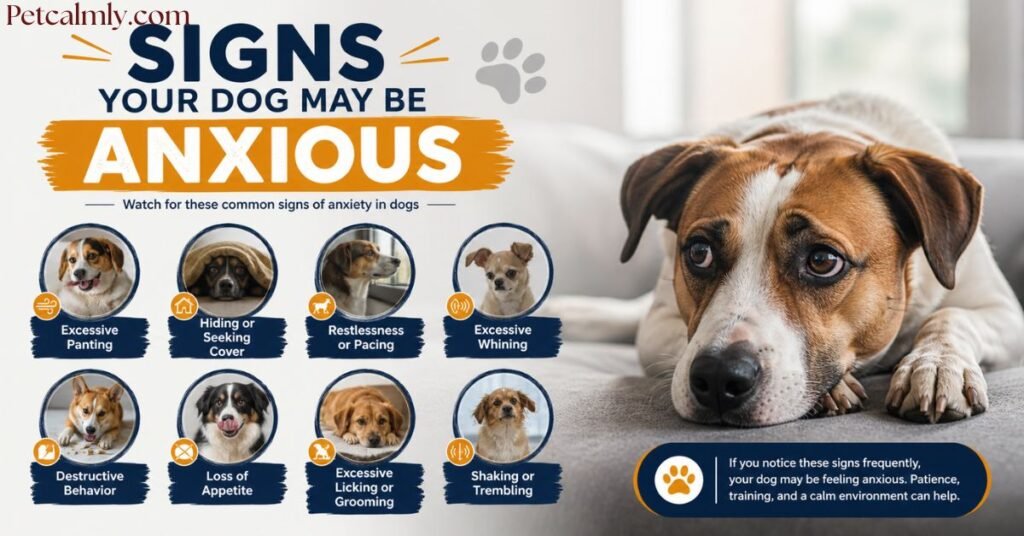
Signs Your Dog May Be Anxious
Dogs can’t tell us they’re stressed, but their bodies say a lot. Here are the key signs to watch for:
Behavioral signs:
- Excessive barking or whining, especially when alone
- Destructive chewing or scratching (doors, furniture, themselves)
- Trying to escape digging under fences, scratching at windows
- Pacing or restlessness, unable to settle
- Hiding in corners, under beds, or in closets
- Aggression that seems out of character
Physical signs:
- Trembling or shaking (not from cold)
- Excessive panting when not hot or exercised
- Drooling more than usual
- Yawning repeatedly in stressful situations
- Ears pinned back, tail tucked low
- Dilated pupils or whale eye (showing the whites of the eyes)
- Loss of appetite during stressful events
- Accidents indoors despite being house-trained
Subtle signs many owners miss:
- Lip licking or nose licking
- Excessive yawning in new situations
- Sudden “zoomies” in high-stress contexts
- Freezing in place
- Shedding more than usual (stress-shedding is real)
If you see a cluster of these signs especially regularly your dog is likely experiencing some level of anxiety.
Why Do Some Dogs Get More Anxious Than Others?
Great question. Anxiety isn’t random. There are real, identifiable reasons some dogs struggle more than others.
Genetics and Breed
Some breeds are simply wired to be more sensitive. Border Collies, German Shepherds, Vizslas, and Bichon Frises are commonly associated with higher anxiety levels. Working breeds bred to be always alert may struggle to “switch off.” That said, any dog of any breed can develop anxiety.
Early Life Experiences
A puppy’s first 3–14 weeks of life are a critical socialization window. Dogs that weren’t exposed to a variety of people, sounds, environments, and experiences during this period are more likely to develop fear-based anxiety later.
Dogs that experienced trauma, abuse, or neglect especially from shelters or difficult backgrounds often carry those fears into adulthood.
Major Life Changes
Dogs are creatures of habit. Moving to a new home, a new baby arriving, losing a companion animal, or a change in their owner’s schedule can all trigger anxiety. Even something as simple as switching your work schedule can unsettle a dog who relied on routine.
Medical Conditions
Sometimes anxiety isn’t purely emotional it has a physical root. Thyroid issues, chronic pain, neurological conditions, and hormonal imbalances can all create or worsen anxious behavior. This is why a vet check is so important when anxiety appears suddenly.
Lack of Exercise or Mental Stimulation
An under-stimulated dog is often an anxious dog. When dogs don’t have healthy outlets for their energy and intelligence, that energy can turn into stress, hyperactivity, or destructive behavior.
Real-Life Example: Meet Bella
Bella is a 3-year-old rescue Beagle. Her owner, Sara, noticed that every time she left for work, she’d return to chewed cushions, a frantic dog, and complaints from neighbors about barking.
At first, Sara thought Bella was just “badly behaved.” But after speaking to a vet and a dog behaviorist, she learned that Bella had classic separation anxiety likely stemming from her unstable early life in a shelter.
With a structured routine, puzzle feeders to keep Bella busy when alone, short practice departures, and a calming supplement recommended by her vet, Bella improved significantly over 8 weeks.
The point? Anxiety is manageable. And it’s not your dog’s fault or yours.
When Should You Be Concerned?
Occasional anxiety is normal. Consistent, intense anxiety is not something to brush off.
You should speak to a veterinarian or a certified animal behaviorist if:
- Your dog’s anxiety is daily or near-daily
- Anxiety leads to self-harm — excessive licking, chewing at paws or tail until raw, or scratching until they bleed
- Your dog shows aggression as a result of fear — growling, snapping, or biting
- Your dog can’t function — won’t eat, drink, exercise, or interact normally
- Anxiety appears suddenly with no obvious trigger (may signal a health issue)
- The anxiety is worsening over time despite your efforts
- You feel unsafe around your dog due to fear-based reactivity
These situations deserve professional attention not because your dog is “broken,” but because they need more targeted support than home management alone can provide.
What Should You Do If Your Dog Has Anxiety?
Here’s where many owners feel lost. The good news: there are solid, proven strategies. Some you can start today.
1: Rule Out Medical Causes
Before assuming the cause is purely behavioral, book a vet appointment. Sudden-onset anxiety especially warrants bloodwork and a physical exam. Pain is a hugely underrated driver of anxious behavior in dogs.
2: Create a Predictable Routine
Dogs thrive on consistency. Feeding, walks, playtime, and sleep at predictable times each day creates a sense of safety. Even something as simple as a consistent bedtime routine can reduce nighttime restlessness.
3: Increase Physical and Mental Exercise
A tired dog is a calmer dog but it’s not just about physical exertion. Mental stimulation matters enormously. Puzzle feeders, sniff walks (letting your dog lead and sniff freely), training sessions, and enrichment toys engage the brain and reduce stress hormones.
4: Practice Desensitization and Counter-Conditioning
This is the gold standard for fear-based anxiety. It involves slowly, gradually exposing your dog to their trigger at a very low level far enough away to not cause panic while pairing it with something positive (treats, praise).
For example: If your dog fears thunder, play a very quiet recording of thunder while giving high-value treats. Over many sessions, gradually increase the volume. The goal is to change the emotional response from “threat” to “oh, good things happen when I hear this.”
This takes time. Rushing the process can backfire. A professional dog trainer experienced in positive reinforcement can guide you.
5: Use Calming Tools and Aids
Several tools can help in the short term or alongside training:
- Anxiety wraps (like Thundershirts): Apply gentle, constant pressure similar to swaddling a baby
- Dog-appeasing pheromone (DAP) diffusers or sprays: Mimic the calming scent mother dogs emit to their puppies
- Calming supplements: Products with L-theanine, valerian root, or melatonin may help mild anxiety (always check with your vet first)
- White noise machines: Helpful for noise-sensitive dogs
- Snuffle mats and Kongs: Licking and foraging behaviors are naturally calming for dogs
6: Talk to Your Vet About Medication
Medication is not a failure. For dogs with moderate to severe anxiety, anti-anxiety medication can be life-changing making them calm enough to actually benefit from behavioral training.
Options include daily medications like fluoxetine or clomipramine (for chronic anxiety), and situational medications like trazodone or alprazolam (for events like fireworks or vet visits). Your vet will help you find the right fit.
7: Consider a Certified Behaviorist
For severe or complex cases especially those involving aggression a board-certified veterinary behaviorist or a certified applied animal behaviorist (CAAB) offers the highest level of expertise. They can design a customized behavior modification plan alongside your vet.
What NOT to Do When Your Dog Is Anxious
A few common mistakes that can make anxiety worse:
Don’t punish anxious behavior.
Punishing a dog for trembling, barking from fear, or having accidents during panic only adds more stress to an already overwhelmed nervous system. It teaches them that being scared leads to bad outcomes worsening anxiety long-term.
Don’t force them into their fear.
Flooding forcing a dog to face their fear all at once is not a training strategy. It’s traumatic. Always work at your dog’s pace.
Don’t reinforce panicked behavior with excessive coddling.
Comforting your dog gently is fine research shows you cannot “reward” fear. But engaging in frantic, highly emotional responses to their anxiety can accidentally heighten the drama for them.
Don’t assume they’ll “grow out of it.”
Untreated anxiety rarely improves on its own. Without intervention, it often gets worse.
Conclusion
Yes, dog anxiety is normal to a point. Almost every dog experiences some form of stress or fear during their life. What matters is the frequency, severity, and impact on their daily well-being.
The key takeaways:
- Anxiety is not a character flaw. It’s often rooted in genetics, early experiences, or health factors beyond your dog’s control.
- Recognizing the signs early gives you the best chance to help before anxiety becomes entrenched.
- You have real tools routine, exercise, training, calming aids, and professional support.
- A vet is your first call for any anxiety that’s sudden, severe, or worsening.
Your dog doesn’t have to live in fear. With patience, the right approach, and support when needed, most anxious dogs can lead genuinely happy, calm lives. You’re already taking the right step just by learning about it.
More Information About Pets, Please Visit Our Website: Dog Anxiety Behavior Explanation
Frequently Asked Questions
1: Is it normal for dogs to be anxious every day?
Mild, situational nervousness can be normal like wariness around a stranger or discomfort during a vet visit. But daily anxiety that interferes with eating, sleeping, or normal behavior is not something to ignore. Daily anxiety usually means your dog needs structured support, whether through training, environmental changes, or veterinary help.
2: Can anxiety in dogs get worse with age?
Yes, it can. Older dogs may develop age-related cognitive decline that causes confusion and anxiety especially at night. Chronic anxiety that goes untreated in younger dogs can also deepen over time. The good news is that anxiety can be managed at any age with the right approach.
3: What breeds are most prone to anxiety?
While any dog can develop anxiety, some breeds are more predisposed. These include German Shepherds, Border Collies, Vizslas, Labrador Retrievers, Cocker Spaniels, and Bichon Frises. High-energy working breeds that crave mental stimulation and human connection are particularly susceptible to separation anxiety.
4: Should I get a second dog to help my anxious dog?
Sometimes yes, but not always. If your dog’s anxiety is primarily about being alone, a companion dog might help but it can also result in two anxious dogs. It’s best to address your existing dog’s anxiety first through training and behavioral support before adding another pet to the household.
5: Can diet affect my dog’s anxiety levels?
Emerging research suggests that gut health and diet can influence mood and behavior in dogs, much like in humans. Some dogs may benefit from a high-quality diet with adequate protein and omega-3 fatty acids. Speak to your vet about whether a dietary adjustment or supplement (like fish oil or a probiotic) could support your dog’s nervous system health.
6: Is dog anxiety more common in rescue dogs?
Rescue dogs can be more prone to anxiety particularly separation anxiety and fear-based anxiety due to histories of abandonment, instability, or limited early socialization. However, many rescue dogs with anxious histories go on to become very confident and calm with the right care, patience, and a stable home environment.