Short direct answer
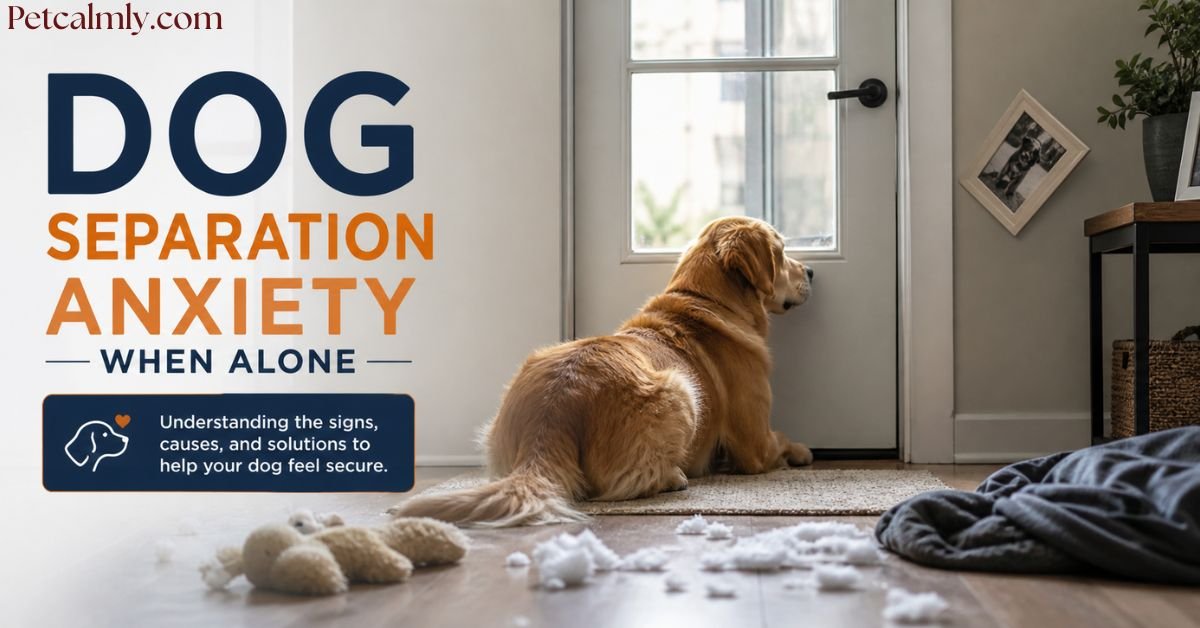
Dog separation anxiety happens when a dog becomes extremely stressed after being left alone. It causes behaviors like barking, destructive chewing, and house accidents even in otherwise well-trained dogs. The good news: with patience, gradual training, and the right approach, most dogs improve significantly. Some may also need vet support.
Why This Is One of the Most Common Struggles Dog Owners Face
Picture this: you grab your keys, say goodbye to your dog, and within minutes your neighbors can hear howling through the walls. You come home to a chewed-up couch and a puddle near the door even though your dog is perfectly behaved when you’re around.
If this sounds familiar, you’re not alone. Dog separation anxiety is one of the top reasons pet owners visit vets and seek behavioral help. It affects dogs of all breeds, ages, and sizes.
What makes it so difficult is that the problem only appears when you’re not there. Many owners feel helpless because they can’t correct the behavior in the moment. And some feel guilty like they’ve somehow failed their dog.
But separation anxiety isn’t about bad ownership. It’s about a dog who is emotionally overwhelmed when left alone. Understanding why this happens is the first step to helping your dog feel safe again.
What Is Dog Separation Anxiety? (A Clear Definition)
Separation anxiety in dogs is a behavioral condition in which a dog experiences intense fear or panic when separated from their owner or primary caregiver.
It’s not just about being bored or spoiled. It’s a genuine stress response similar to a panic attack in humans. The dog’s nervous system goes into overdrive the moment they realize you’re leaving.
There are two types worth knowing:
True separation anxiety The dog panics specifically because of your absence. They are attached to you, and the distress starts when you leave.
Isolation distress The dog doesn’t like being alone at all, but may calm down if any person is present a family member, a dog sitter, even a stranger. This is slightly different but equally important to address.
Both types need attention. Both can be improved with the right plan.
What Causes Separation Anxiety in Dogs?
There’s rarely a single reason. Usually, it’s a mix of factors:
1. A Sudden Change in Routine
Dogs are creatures of habit. When something shifts a new job, a baby in the house, moving to a new home, or a change in who’s home during the day dogs can struggle to adjust.
During COVID-19 lockdowns, millions of dogs got used to their owners being home 24/7. When people returned to offices, a surge in separation anxiety cases followed. This became so common it was nicknamed “COVID puppy anxiety.”
2. Rescue or Shelter History
Many rescue dogs have experienced abandonment, rehoming, or trauma. Being alone can trigger deep-seated fear that someone won’t come back. Even months after adoption, a dog may still carry this anxiety.
3. Lack of Early Socialization
Puppies who were never taught to be comfortable alone often grow into anxious adult dogs. If a puppy was always with its litter, mother, or owners and never spent time alone it may never have developed independence.
4. Genetics and Breed Tendencies
Some breeds are naturally more prone to anxiety. Velcro dog breeds those bred to work closely with humans often struggle more with being alone.
Breeds commonly affected include:
- Labrador Retrievers
- Border Collies
- German Shepherds
- Cavalier King Charles Spaniels
- Vizslas
- Bichon Frises
That said, any dog of any breed can develop separation anxiety.
5. A Traumatic Event While Alone
Sometimes one bad experience a thunderstorm, a loud noise, a stranger knocking while the dog was home alone is enough to create a lasting fear of solitude.
6. Excessive Attachment
Dogs who are never apart from their owners sleeping together, following them room to room, constant physical contact may have a harder time when that contact is suddenly removed. This doesn’t mean bonding is bad. It means some dogs need to also learn that being apart is safe.
Recognizing the Signs: How Dogs Show Separation Anxiety
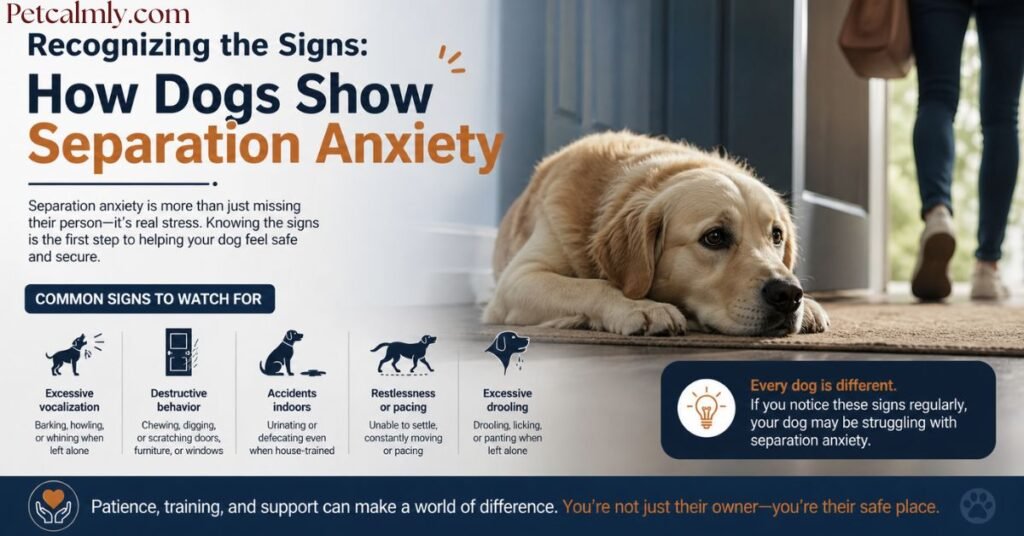
Some signs are obvious. Others are subtle and easy to miss especially if you’re not home to observe them.
Classic Signs of Separation Anxiety
Before you leave:
- Pacing, whining, or trembling as you prepare to go out
- Following you from room to room more than usual
- Refusing to eat or play when they sense you’re leaving
While you’re gone:
- Barking, howling, or whimpering often non-stop
- Destructive chewing (especially around doors, windows, or your belongings)
- Scratching at doors or walls
- Urinating or defecating indoors, even in housetrained dogs
- Trying to escape from crates, rooms, or the yard
- Excessive drooling or panting
When you return:
- Frantic, over-the-top greeting (jumping, spinning, crying)
- Calming down only after extended contact
Subtle Signs You Might Miss
- Not eating while you’re away (even if food is available)
- Hiding or refusing to move from a certain spot
- Self-soothing behaviors like licking paws excessively
- Lethargy or depression for long periods after you leave
A pet camera is one of the best tools for catching these behaviors. Apps like Furbo or even a basic webcam can show you what’s really happening when you’re not home.
The Difference Between Boredom and True Anxiety
Not every dog who barks or chews is anxious. Some dogs are just understimulated.
A bored dog typically:
- Misbehaves after long periods (not immediately when you leave)
- Is destructive with items it finds interesting (trash, toys, pillows)
- Calms quickly when given exercise or enrichment
An anxious dog typically:
- Shows distress immediately after you leave often within the first 15–30 minutes
- Focuses destruction near exits (doors, windows)
- Cannot be soothed by food puzzles or toys alone during episodes
The key difference? Boredom responds well to more exercise and mental stimulation. True separation anxiety needs a desensitization training approach and sometimes professional support.
When Should You Be Concerned?
Most dogs show some mild discomfort when left alone. That’s normal. But certain signs mean you should take action sooner rather than later.
Seek help if your dog:
- Injures themselves trying to escape (broken teeth, bloody paws)
- Has stopped eating for more than a day or two
- Shows anxiety symptoms that are getting worse, not better
- Is distressed even during very short absences (under 10 minutes)
- Has started showing signs of aggression when you try to leave
A veterinarian can rule out medical causes like pain, thyroid problems, or cognitive issues in older dogs that can mimic or worsen anxiety. They can also refer you to a certified veterinary behaviorist or a credentialed animal behavior consultant.
Don’t feel embarrassed to ask for help early. Separation anxiety tends to escalate if left untreated.
What Should Pet Owners Do? Practical Steps That Actually Work
There’s no overnight fix. But there is a clear roadmap. Here’s what works broken into manageable steps.
1: Establish a Calm Departure Routine
Stop making a big deal of leaving. Long goodbyes, emotional hugs, and sad voices actually make anxiety worse. They signal to your dog that something big is happening.
Instead, leave quietly. No dramatic farewells. When you return, wait for your dog to calm down before giving affection even if it takes a few minutes. This teaches them that comings and goings are no big deal.
2: Practice Short Departures (Desensitization)
This is the cornerstone of separation anxiety treatment.
Start by leaving for just 30 seconds. Come back before your dog has a chance to panic. Gradually over days or weeks increase the time you’re away.
The goal is to keep your dog under their anxiety threshold every single time. If they’re panicking, you’ve gone too far too fast.
Think of it like learning to swim. You don’t start in the deep end. You build up slowly, and with each successful session, your dog learns: “They always come back. I’m safe.”
3: Build Independence at Home
Before tackling alone time, work on small separations inside your home.
Close a door between you. Go to a different room. Practice having your dog stay on their mat while you sit elsewhere. These micro-separations build emotional independence without the added stress of full departures.
4: Tire Them Out Before You Leave
A tired dog is a calmer dog.
A long walk, a game of fetch, or a training session before you go can make a significant difference. Physical exercise burns anxious energy and promotes calmer resting behavior.
Mental stimulation helps too hide treats around the house, give a food puzzle, or do 10 minutes of nose work before you head out.
5: Create a Positive Association With Alone Time
Give your dog something wonderful that only appears when you leave a frozen Kong filled with peanut butter and kibble, a bully stick, a snuffle mat with hidden treats.
Over time, your dog starts to associate your departure with good things. It won’t cure anxiety on its own, but it helps shift the emotional response.
6: Consider a Dog Sitter, Doggy Daycare, or Dog Walker
If your dog truly cannot be left alone right now and you have to go to work arrange coverage. Pushing a dog through hours of panic every day is counterproductive and unkind.
A dog walker who visits midday, a trusted neighbor, or doggy daycare can bridge the gap while you work on training at home.
7: Talk to Your Vet About Medication
For moderate to severe cases, behavioral medication can be a game-changer — not as a permanent fix, but as a tool that makes training possible.
Medications like fluoxetine (Prozac for dogs) or clomipramine are commonly prescribed for separation anxiety. Anti-anxiety supplements and products like Adaptil (a synthetic calming pheromone diffuser) may also help mild cases.
Medication isn’t “the easy way out.” Think of it like a cast for a broken leg it supports healing while the real work happens underneath.
8: Work With a Professional
If your efforts at home aren’t helping, consider working with a:
- Certified Professional Dog Trainer (CPDT-KA)
- Certified Applied Animal Behaviorist (CAAB)
- Board-Certified Veterinary Behaviorist (DACVB)
Online separation anxiety specialists have also become popular. Programs like those taught using the Malena DeMartini method can be followed with remote coaching helpful if you can’t find local support.
Common Mistakes That Make Separation Anxiety Worse
Even well-meaning owners accidentally make things harder. Avoid these:
Punishing anxious behavior.
Scolding your dog for chewing or accidents done out of anxiety is not only ineffective it increases fear and makes the problem worse.
Crating a panicking dog.
If your dog isn’t already comfortable in a crate, forcing them into one during separation anxiety can cause injury and worsen distress. Crate training, done slowly and positively, can eventually help but it’s not a quick fix.
Going too fast with training.
If every departure session ends in panic, your dog is not learning that alone time is safe. Slow down.
Getting a second dog to “solve” the problem.
A companion can sometimes help isolation distress, but true separation anxiety is about the owner’s absence. A second dog rarely resolves it and adds another pet to your responsibility.
Conclusion
Dog separation anxiety when alone is one of the most emotionally taxing issues for both dogs and their owners. But it is also one of the most treatable with the right approach.
The key things to remember:
- Separation anxiety is a real emotional condition, not misbehavior
- It has clear signs: distress that starts when you leave, not hours later
- Desensitization training starting with very short departures is the gold standard treatment
- Tired, mentally stimulated dogs cope better
- Medication can help in moderate to severe cases
- Punishment never helps it always makes things worse
- Professional support is available and worth seeking for stubborn cases
Your dog isn’t trying to punish you for leaving. They’re scared. And with consistent, compassionate training, you can help them feel safe even when you’re not there.
More Information About Pets, Please Visit Our Website: Is Dog Anxiety Normal Or Not
Frequently Asked Questions
1: How do I know if my dog has separation anxiety or is just being naughty?
True separation anxiety starts almost immediately after you leave usually within 15 to 30 minutes. Destructive behavior tends to focus near exits like doors or windows. A naughty or bored dog typically waits longer to misbehave and isn’t selective about what they destroy. A pet camera can help you observe what’s happening right after you leave.
2: Can separation anxiety in dogs be cured completely?
Many dogs improve dramatically with proper training, and some recover fully. Others may always need some management strategies like enrichment before departures, or occasional medication during high-stress periods. The goal is to reduce distress to a level that allows both you and your dog to live comfortably.
3: How long does it take to treat dog separation anxiety?
It depends on the severity. Mild cases can improve in a few weeks. Moderate to severe separation anxiety may take several months of consistent work. The key is going at your dog’s pace not rushing the desensitization process. Progress is usually steady when you follow the steps correctly.
4: Should I crate my dog with separation anxiety?
Only if your dog is already comfortable in their crate and sees it as a safe space. For dogs who haven’t been crate trained, forcing them in during anxiety episodes can worsen the problem and cause injury. If you want to use a crate, work on crate training first as a separate, positive process.
5: What breeds are most affected by separation anxiety?
Breeds bred to work closely with humans tend to be more prone including Labrador Retrievers, Vizslas, Border Collies, German Shepherds, and Cavalier King Charles Spaniels. However, any dog can develop separation anxiety regardless of breed, especially after a major life change or traumatic experience.
6: Can I leave the TV or radio on to help my anxious dog?
It can help some dogs feel less alone, especially if they associate the sounds with your presence. White noise or calming dog music (specifically designed music for dogs, like “Through a Dog’s Ear”) may be more effective than regular TV. It’s a useful supporting tool, but won’t replace proper desensitization training for dogs with true separation anxiety.