Short direct answer
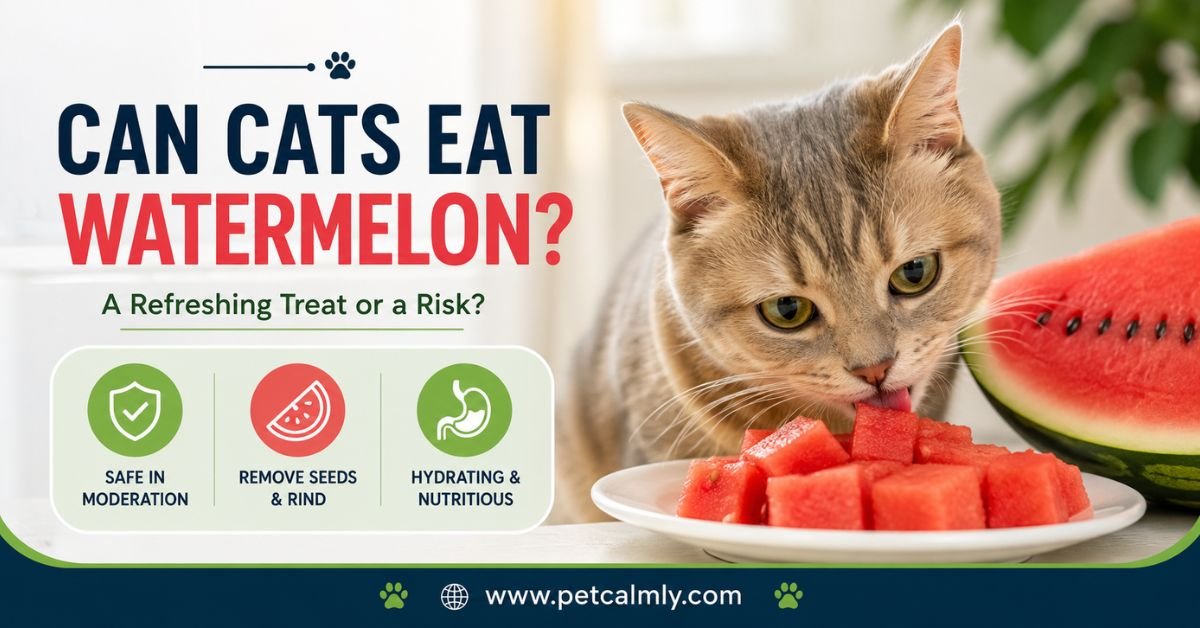
Yes, cats can eat watermelon in small amounts as an occasional treat, provided it is seedless and the rind has been removed. Watermelon is non-toxic to cats and contains plenty of water, which may help with hydration. However, because cats are obligate carnivores, watermelon should never replace a balanced, meat-based diet. Too much watermelon may upset your cat’s stomach or add unnecessary sugar to their diet.
If you’re offering watermelon for the first time, start with one or two small, bite-sized pieces and watch for any signs of digestive upset, such as vomiting or diarrhea.
Can Cats Eat Watermelon Safely?
Many cat owners have experienced the same curious moment. You’re enjoying a slice of juicy watermelon on a warm afternoon when your cat suddenly walks over, sniffs it, or even tries to steal a bite.
That often leads to one simple question:
Can cats eat watermelon safely?
The good news is that watermelon is considered safe for most healthy cats when served properly. Unlike grapes, raisins, onions, garlic, or chocolate, watermelon is not poisonous to cats.
However, “safe” doesn’t necessarily mean “healthy in large amounts.”
Cats have very different nutritional needs from humans. Their bodies are designed to thrive on animal protein, not fruit. While watermelon contains beneficial nutrients and lots of water, it offers little nutritional value compared to the meat your cat naturally requires.
Knowing how much watermelon is safe, which parts should never be fed, and when to avoid it altogether can help you treat your cat without putting their health at risk.
In this guide, you’ll learn everything you need to know before sharing this refreshing fruit with your feline friend.
Is Watermelon Safe for Cats?
Yes, plain watermelon flesh is generally safe for cats when offered as an occasional treat.
Veterinary nutrition experts agree that healthy cats can enjoy tiny portions of certain fruits, including watermelon, as long as they don’t contain harmful seeds, pits, or peels.
Watermelon is:
- Non-toxic to cats
- Naturally high in water
- Low in fat
- Low in calories
- Easy to chew when ripe
Still, moderation is essential.
Cats don’t need fruit in their diet because they obtain almost all of their nutrients from animal-based foods. Unlike people, cats cannot efficiently use many nutrients found in fruits and vegetables.
Think of watermelon as a rare snack rather than a regular menu item.
A good rule is that treats including watermelon should make up no more than about 10% of your cat’s daily calories, with the remaining diet coming from complete and balanced cat food.
Why Do Some Cats Like Watermelon?
Many people assume cats ignore sweet foods because they lack functional sweet taste receptors.
That’s mostly true.
Unlike humans and dogs, cats cannot taste sweetness the same way. So why do some cats seem fascinated by watermelon?
There are several possible reasons.
The Moisture Is Appealing
Watermelon is made of approximately 92% water.
Some cats are naturally attracted to foods with high moisture content, especially if they don’t drink much water from their bowl.
The juicy texture may be more interesting than the fruit itself.
The Cool Temperature Feels Refreshing
On hot summer days, chilled watermelon can feel pleasant against a cat’s tongue.
Some cats enjoy cold foods simply because they provide relief from warm temperatures.
This doesn’t mean they crave watermelon specifically it may just be the cool sensation they enjoy.
Curiosity Drives Many Cats
Cats investigate unfamiliar smells, textures, and objects.
Your cat may paw at watermelon simply because it’s something new on your plate.
Curiosity doesn’t always mean hunger.
Some cats sniff fruit once and walk away without taking a bite.
Every Cat Has Different Preferences
Just like people, cats have individual personalities.
One cat may eagerly nibble watermelon while another refuses to go anywhere near it.
Neither reaction is unusual.
Nutritional Value of Watermelon for Cats
Although watermelon isn’t nutritionally necessary for cats, it does contain several nutrients that support overall health in humans.
Cats may receive only limited benefits because they eat such small amounts.
| Nutrient | Potential Benefit |
|---|---|
| Water | Supports hydration |
| Vitamin A | Supports vision and immune function |
| Vitamin C | Antioxidant, although cats produce their own vitamin C |
| Potassium | Helps normal muscle and nerve function |
| Magnesium | Supports enzyme activity |
| Fiber | May aid digestion in tiny amounts |
| Lycopene | Antioxidant pigment found in red watermelon |
These nutrients are not harmful, but cats don’t rely on watermelon to obtain them.
Commercial cat foods already provide complete nutrition when formulated according to established feline dietary requirements.
Benefits of Watermelon for Cats
Watermelon shouldn’t be viewed as a health supplement, but it can offer a few small advantages when fed responsibly.
1. Helps Increase Water Intake
Many cats naturally drink less water than they should.
This behavior comes from their desert-dwelling ancestors, who obtained most of their moisture from prey.
Because watermelon contains so much water, a few small cubes may contribute a little extra hydration.
This can be especially appealing during warm weather.
However, watermelon should never replace fresh drinking water.
Always keep clean water available.
2. A Low-Calorie Treat
Compared with many commercial cat treats, watermelon is relatively low in calories.
For overweight cats that enjoy fruit, a tiny cube may be a lighter occasional reward than high-fat snacks.
Even so, portion size remains important because watermelon still contains natural sugars.
3. Adds Variety and Enrichment
Trying safe foods occasionally can provide environmental enrichment.
Offering new textures and scents encourages natural curiosity and exploration.
Some owners enjoy creating “taste tests” using veterinarian-approved fruits and vegetables to discover what their cats enjoy.
If your cat isn’t interested, don’t force it.
4. Easy to Chew
Soft, ripe watermelon requires very little chewing.
Older cats with mild dental discomfort may find tiny pieces easier to eat than crunchy treats.
If your cat has significant dental disease or difficulty eating, consult your veterinarian rather than relying on soft treats.
Risks of Feeding Watermelon to Cats
Although watermelon is considered safe, it isn’t risk-free.
Understanding the possible downsides helps you make informed decisions.
Too Much Sugar
Watermelon contains naturally occurring sugars.
While these sugars are healthier than added sugars, they’re still unnecessary for cats.
Eating large amounts may contribute to:
- Weight gain
- Blood sugar spikes
- Digestive upset
Cats with diabetes or obesity should only eat watermelon if your veterinarian says it’s appropriate.
Digestive Upset
Cats have digestive systems designed for meat.
Eating too much fruit may lead to:
- Vomiting
- Loose stools
- Gas
- Mild stomach discomfort
Introducing any new food gradually helps reduce the chance of stomach upset.
Choking Hazards
Large chunks of watermelon can become difficult to chew.
Always cut watermelon into very small, bite-sized pieces.
Never allow your cat to chew on a large slice.
Seeds Can Cause Problems
While the occasional accidental seed may pass without causing harm, watermelon seeds should always be removed before feeding.
Seeds can create several concerns:
- Choking risk
- Digestive blockage in small cats
- Potential digestive irritation
Seedless watermelon is the safest option.
The Rind Is Difficult to Digest
The green rind is much tougher than the soft flesh.
Cats often struggle to digest it.
Eating rind may cause:
- Vomiting
- Constipation
- Intestinal blockage
- Choking
Never allow your cat to chew on watermelon rind.
Can Cats Eat Watermelon Every Day?
No.
Even if your cat loves watermelon, it shouldn’t become part of their daily routine.
Cats are obligate carnivores, meaning they depend on nutrients found in animal tissues, such as taurine, arachidonic acid, and certain vitamins that fruits cannot provide.
Watermelon should remain an occasional treat, not a regular snack.
A practical guideline is to offer it once or twice a week at most, and only in small amounts.
If your cat shows no interest, there’s no nutritional reason to encourage them to eat it.
How to Prepare Watermelon for Cats Safely
If you’d like to let your cat try watermelon, preparation matters just as much as portion size.
Follow these simple steps:
- Wash the outside of the watermelon before cutting it.
- Choose ripe, fresh watermelon without added sugar or flavorings.
- Remove all seeds, even if there are only a few.
- Cut away the entire green and white rind.
- Slice the pink flesh into tiny, bite-sized cubes.
- Offer one or two small pieces the first time.
- Watch your cat for the next 24 hours for vomiting, diarrhea, or signs of discomfort.
If your cat tolerates it well, watermelon can remain an occasional treat rather than a regular part of their diet.
How Much Watermelon Can Cats Eat?
Knowing how much watermelon is safe is just as important as knowing it’s non-toxic.
Even though watermelon is mostly water, it still contains natural sugar and fiber that cats don’t need in large amounts. Since cats are obligate carnivores, treats should stay a very small part of their diet.
A good rule is to keep all treats including watermelon to no more than 10% of your cat’s daily calorie intake. For most cats, that means only a few tiny pieces at a time.
Recommended Watermelon Serving Sizes for Cats
| Cat | Safe Serving Size | How Often |
|---|---|---|
| Adult healthy cat | 1–2 small cubes (about ½-inch each) | Once or twice a week |
| Large adult cat | Up to 3 small cubes | Once or twice a week |
| Senior cat | 1–2 small soft pieces | Once a week or less |
| Overweight cat | Ask your veterinarian first | Occasional only |
| Diabetic cat | Only with veterinary guidance | Usually best avoided |
Every cat is different. If your cat has digestive sensitivities, even one small bite may be enough.
Can Kittens Eat Watermelon?
Technically, yes, but it’s usually better to wait.
Young kittens have developing digestive systems and very specific nutritional needs. Their growing bodies require food rich in protein, fat, vitamins, and minerals not fruit.
If your kitten is:
- Fully weaned
- Eating complete kitten food
- Healthy with no digestive issues
Then a tiny, seedless piece of watermelon is unlikely to be harmful.
However, watermelon provides very little nutritional benefit for kittens.
Many veterinarians recommend focusing on a balanced kitten diet instead of introducing unnecessary treats during the early growth stage.
If you decide to let your kitten taste watermelon:
- Offer only one tiny piece.
- Remove every seed.
- Remove the rind completely.
- Stop immediately if vomiting or diarrhea develops.
Can Indoor Cats Eat Watermelon?
Yes.
Indoor cats can safely eat watermelon under the same guidelines as outdoor cats.
Because indoor cats often exercise less, owners should pay closer attention to treats and extra calories.
Although watermelon is relatively low in calories, giving it every day can still contribute to unnecessary weight gain over time.
Indoor cats usually benefit more from:
- Interactive play sessions
- Puzzle feeders
- High-protein treats
- Wet food for hydration
Watermelon should simply be an occasional bonus.
Can Senior Cats Eat Watermelon?
Many senior cats can safely enjoy a little watermelon.
Its soft texture makes it easier to chew than crunchy treats, especially for cats with mild dental wear.
However, older cats are also more likely to have health conditions such as:
- Kidney disease
- Diabetes
- Digestive disorders
- Dental disease
If your senior cat has any ongoing medical condition, check with your veterinarian before adding new foods.
A tiny piece is generally enough.
Can Diabetic Cats Eat Watermelon?
This question deserves extra caution.
Although watermelon isn’t extremely high in sugar compared to many fruits, it still contains natural sugars that may affect blood glucose levels.
For cats diagnosed with diabetes:
- Don’t feed watermelon without veterinary approval.
- Stick closely to your cat’s prescribed diet.
- Avoid offering fruit as a regular snack.
Many diabetic cats do better with protein-rich treats instead.
If your veterinarian approves watermelon, the serving should be extremely small and only offered occasionally.
Can Overweight Cats Eat Watermelon?
Possibly—but moderation is still important.
Some owners replace high-calorie commercial treats with tiny watermelon pieces because they’re lower in calories.
While this can reduce calorie intake compared to fatty treats, watermelon shouldn’t become a daily snack.
Weight management is usually more successful through:
- Portion-controlled meals
- Increased playtime
- Veterinary weight-loss plans
- High-protein nutrition
Think of watermelon as an occasional treat, not a weight-loss food.
Can Cats Eat Watermelon Seeds?
No. Watermelon seeds should always be removed before feeding your cat.
Even though swallowing one accidental seed may not cause problems, intentionally feeding seeds isn’t safe.
Why Are Watermelon Seeds Dangerous?
Seeds can create several risks.
Choking Hazard
Small cats may accidentally inhale or choke on hard seeds.
Digestive Blockage
Seeds don’t digest easily.
If enough are swallowed, they could contribute to an intestinal blockage, particularly in kittens or small cats.
Stomach Irritation
Some cats may experience vomiting or stomach discomfort after eating seeds.
To stay safe, always choose seedless watermelon or remove every visible seed before serving.
Can Cats Eat Watermelon Rind?
No.
The rind is the least safe part of the fruit.
Unlike the juicy flesh, the rind is:
- Tough
- Fibrous
- Difficult to chew
- Hard to digest
If a cat chews on watermelon rind, it may lead to:
- Vomiting
- Constipation
- Stomach pain
- Choking
- Intestinal obstruction in severe cases
Some watermelon rinds may also contain traces of pesticides or dirt if they haven’t been washed thoroughly.
Always discard the rind before sharing watermelon with your cat.
Can Cats Eat Frozen Watermelon?
Yes—but only with a few precautions.
A small frozen watermelon cube can be refreshing on a hot day.
However, frozen fruit becomes very hard.
Instead of giving your cat a large frozen chunk, allow it to soften slightly first.
You can also mash thawed watermelon into a soft puree.
Avoid:
- Large frozen cubes
- Watermelon popsicles with added sugar
- Artificial sweeteners
- Flavored frozen desserts
Never give products containing xylitol, as it is highly toxic to pets.
Can Cats Drink Watermelon Juice?
Fresh watermelon juice isn’t toxic, but it isn’t the best choice either.
Juicing removes much of the fruit’s fiber while concentrating its natural sugars.
Cats don’t need fruit juice in their diet.
Avoid:
- Store-bought watermelon juice
- Sweetened juice
- Juice concentrates
- Watermelon-flavored drinks
These products often contain added sugar, preservatives, or artificial ingredients.
Fresh drinking water remains the healthiest beverage for your cat.
Signs Your Cat Didn’t Tolerate Watermelon Well
Most healthy cats experience no problems after eating a tiny amount.
However, every cat reacts differently.
Watch for these signs during the next 24 hours:
- Vomiting
- Diarrhea
- Loss of appetite
- Excessive drooling
- Lethargy
- Abdominal discomfort
- Refusing food
- Repeated gagging
If symptoms are mild and resolve quickly, simply avoid feeding watermelon again.
If symptoms are severe, persistent, or your cat has eaten seeds or rind, contact your veterinarian promptly.
Could a Cat Be Allergic to Watermelon?
Food allergies to watermelon are uncommon in cats.
Most adverse reactions involve digestive upset rather than a true allergy.
Still, monitor your cat after trying any new food.
Possible signs of an allergic reaction include:
- Facial swelling
- Hives
- Itchy skin
- Difficulty breathing
- Severe vomiting
- Collapse (rare but serious)
These symptoms require immediate veterinary attention.
Better Fruit Alternatives for Cats
If your cat enjoys fruit, several options are generally considered safe in small amounts.
| Fruit | Safe? | Notes |
|---|---|---|
| Watermelon | Yes | Remove seeds and rind |
| Blueberries | Yes | Rich in antioxidants; offer a few only |
| Strawberries | Yes | Small amounts occasionally |
| Bananas | Yes | High in sugar, so keep portions tiny |
| Cantaloupe | Yes | Many cats enjoy its aroma |
| Apples | Yes | Remove seeds and core first |
| Pumpkin (technically a fruit) | Yes | Plain cooked pumpkin may support digestion |
Remember that these foods are treats, not dietary essentials.
Fruits Cats Should Never Eat
Some fruits are unsafe and should never be offered.
Avoid feeding your cat:
- Grapes
- Raisins
- Cherries (pits, stems, and leaves)
- Unripe green tomatoes
- Fruit with alcohol
- Fruit containing artificial sweeteners
- Moldy fruit
If your cat accidentally eats a potentially toxic fruit, contact your veterinarian or an animal poison helpline immediately.
5 Common Mistakes Cat Owners Make
Even caring owners sometimes make simple mistakes when introducing new foods.
Avoid these common errors:
1: Feeding Too Much
Cats only need one or two small bites.
Large servings often cause digestive upset.
2: Forgetting to Remove Seeds
Seeds should never be left in watermelon given to cats.
Always double-check before serving.
3: Letting Cats Chew the Rind
Some cats enjoy gnawing on the rind.
Take it away immediately to prevent choking or digestive problems.
4: Offering Watermelon Every Day
Daily fruit treats can add unnecessary sugar and calories.
Keep watermelon as an occasional reward.
5: Assuming Every Cat Likes Fruit
Many cats simply aren’t interested.
That’s perfectly normal.
Never force your cat to eat watermelon if they don’t want it.
Practical Feeding Tips for First-Time Cat Owners
If you’re introducing watermelon for the first time, keep the experience simple and stress-free.
Use this checklist:
Wash the watermelon thoroughly before cutting it.
Remove every seed.
Cut away the entire rind.
Slice the flesh into tiny cubes.
Offer one small piece.
Watch your cat for 24 hours.
Stop feeding if digestive upset develops.
Return to your cat’s normal balanced diet afterward.
Treat watermelon as an occasional enrichment activity rather than a nutritional necessity.
When Should You Worry After Your Cat Eats Watermelon?
Most healthy cats can eat a small amount of seedless watermelon without any problems. In many cases, the only result is a curious sniff or a couple of bites before they lose interest.
However, some situations deserve closer attention.
Contact your veterinarian if your cat:
- Eats a large amount of watermelon in one sitting
- Swallows several seeds
- Chews or swallows pieces of the rind
- Vomits repeatedly after eating watermelon
- Has diarrhea lasting more than 24 hours
- Stops eating or drinking
- Appears unusually tired or weak
- Shows signs of abdominal pain, such as hiding, growling when touched, or a hunched posture
- Has difficulty breathing or facial swelling (possible allergic reaction)
These symptoms don’t always mean watermelon is the direct cause, but they should never be ignored.
If your cat has an existing health condition such as diabetes, kidney disease, inflammatory bowel disease, or pancreatitis—it’s safest to contact your veterinarian before offering watermelon again.
What Should You Do If Your Cat Eats Too Much Watermelon?
Cats sometimes help themselves to food left on the kitchen counter. If your cat eats more watermelon than intended, don’t panic.
Instead, follow these simple steps.
Step 1: Remove the Watermelon
Take away any remaining fruit so your cat can’t continue eating it.
If seeds or rind are present, remove those immediately as well.
Step 2: Observe Your Cat
For the next 24 hours, watch for signs such as:
- Vomiting
- Diarrhea
- Excessive drooling
- Reduced appetite
- Lethargy
- Straining to pass stool
- Repeated attempts to vomit without producing anything
Many cats remain perfectly normal after eating too much fruit, but monitoring helps you catch problems early.
Step 3: Encourage Fresh Water
Always provide clean drinking water.
Although watermelon contains plenty of moisture, fresh water is still essential, especially if your cat develops mild diarrhea.
Step 4: Resume Their Regular Diet
Avoid offering additional treats that day.
Feed your cat their normal, balanced meals and allow their digestive system to settle.
Step 5: Call Your Veterinarian When Needed
Seek veterinary advice immediately if your cat:
- Swallowed large pieces of rind
- Ate many seeds
- Cannot keep food or water down
- Seems painful or distressed
- Shows symptoms that continue or worsen
Early treatment is always safer than waiting for symptoms to become severe.
Watermelon Safety Checklist for Cat Owners
Before sharing watermelon, run through this quick checklist.
| Question | Safe? |
|---|---|
| Is the watermelon fresh? | Yes |
| Have all seeds been removed? | Yes |
| Has the rind been removed completely? | Yes |
| Is the watermelon plain with no sugar or seasoning? | Yes |
| Are the pieces small enough to prevent choking? | Yes |
| Is this only an occasional treat? | Yes |
| Is your cat healthy and eating a complete diet? | Yes |
If you answered “No” to any of these questions, it’s better to wait before offering watermelon.
Safe vs. Unsafe Parts of Watermelon for Cats
This quick comparison can help you remember which parts are safe.
| Part of the Watermelon | Safe for Cats? | Notes |
|---|---|---|
| Pink flesh | Yes | Feed only in small amounts |
| Seedless flesh | Best choice | Safest option |
| Black seeds | No | Choking and digestive risks |
| White rind | No | Difficult to digest |
| Green outer rind | No | Choking and blockage risk |
| Watermelon juice (unsweetened) | Occasionally | Not necessary and higher in natural sugar |
| Sweetened watermelon products | No | Often contain added sugar or artificial ingredients |
| Watermelon candy or flavored snacks | No | Unsafe due to sugar and additives |
Can Watermelon Help a Dehydrated Cat?
Not really.
Because watermelon is about 92% water, some owners wonder whether it can help a dehydrated cat.
While a few bites may add a small amount of moisture, watermelon is not a treatment for dehydration.
If your cat is dehydrated, they may need veterinary care to determine the underlying cause. Dehydration can result from illnesses such as kidney disease, diabetes, vomiting, diarrhea, or heat stress.
Signs of dehydration may include:
- Dry or sticky gums
- Sunken eyes
- Loss of skin elasticity
- Lethargy
- Reduced appetite
If you suspect dehydration, contact your veterinarian instead of relying on watermelon or other home remedies.
What Should Pet Owners Do?
If you’d like to let your cat enjoy watermelon safely, keep these best practices in mind.
Do:
- Offer only ripe, fresh watermelon.
- Remove every seed.
- Cut away the entire rind.
- Serve tiny bite-sized pieces.
- Introduce watermelon gradually.
- Watch your cat after the first serving.
- Keep treats to less than 10% of daily calories.
- Prioritize a complete and balanced cat food.
Don’t:
- Feed watermelon every day.
- Let your cat chew on the rind.
- Offer watermelon with added sugar or seasonings.
- Replace meals with fruit.
- Ignore vomiting or diarrhea after eating watermelon.
- Force a cat that isn’t interested.
Remember, many cats never develop a taste for fruit and that’s perfectly normal.
Frequently Asked Questions
1. Can cats eat watermelon every day?
No. Watermelon should only be an occasional treat. Feeding it daily adds unnecessary sugar to your cat’s diet and may increase the risk of digestive upset.
2. Is watermelon toxic to cats?
No. Plain watermelon flesh is not toxic to cats. The main concerns are the seeds, rind, and feeding too much at once.
3. Why does my cat like watermelon if cats can’t taste sweetness?
Cats lack functional sweet taste receptors, but they may enjoy watermelon because of its high water content, soft texture, cool temperature, or simple curiosity.
4. Can cats eat watermelon seeds by accident?
One accidental seed may pass without causing problems, but seeds should always be removed. They can become a choking hazard or contribute to digestive blockage, especially in smaller cats.
5. Can cats eat yellow watermelon?
Yes. Yellow watermelon is generally safe under the same rules as red watermelon. Remove all seeds and the rind, and only offer small amounts occasionally.
6. What fruits are healthiest for cats?
Cats don’t require fruit to stay healthy. If you want to share fruit occasionally, small amounts of seedless watermelon, blueberries, strawberries, cantaloupe, or peeled apples (without seeds) are generally considered safer choices. Treats should never replace a balanced, meat-based diet.
More Information About Pets, Please Visit Our Website: Why Does My Cat Smell So Good to Me?
What Helps Anxiety in Cats Naturally?
Conclusion
So, can cats eat watermelon? Yes healthy cats can enjoy small amounts of fresh, seedless watermelon as an occasional treat.
The key is to remember that watermelon is exactly that: a treat, not a nutritional necessity. Cats are obligate carnivores, meaning they rely on animal protein for the nutrients they need to thrive. While watermelon can provide extra moisture and a fun change of pace, it shouldn’t become a regular part of your cat’s diet.
To keep your cat safe:
- Serve only the pink flesh.
- Remove every seed and all of the rind.
- Offer one or two small pieces at a time.
- Watch for any signs of digestive upset.
- Stick to a complete, balanced cat food as the foundation of your cat’s nutrition.
When in doubt especially if your cat has diabetes, kidney disease, food sensitivities, or another medical condition ask your veterinarian before introducing new foods.
A little caution goes a long way in helping your feline companion enjoy safe, healthy treats for years to come.