Short direct answer
Leopard geckos can suffer from several common health problems, most of which are linked to husbandry issues like improper temperature, poor diet, stress, or unclean enclosures. The most frequently seen diseases include metabolic bone disease, respiratory infections, impaction, parasites, shedding complications, and dehydration-related issues. These conditions often develop slowly, and early signs can be subtle like reduced appetite, lethargy, or abnormal stool. Most importantly, many leopard gecko diseases are preventable with proper care, but once symptoms appear, prompt attention and sometimes veterinary treatment are essential for recovery.
Introduction
Bringing a leopard gecko home often feels simple at first. They are quiet, low-maintenance, and don’t demand constant attention like dogs or cats. But this simplicity can sometimes create a dangerous assumption—that they are “easy” reptiles that rarely get sick.
In reality, leopard geckos are sensitive to small mistakes in care. A slight temperature imbalance, a poor feeding routine, or an unclean enclosure can slowly lead to serious health issues. Many diseases develop quietly in the background before showing visible signs.
If you’ve noticed changes in your gecko’s behavior—loss of appetite, sluggish movement, unusual stool, or difficulty shedding you’re not alone. These are some of the most common concerns reptile owners face.
This guide breaks down the most common leopard gecko diseases, how to recognize them early, why they happen, and what you can realistically do at home versus when veterinary care is necessary. The goal is simple: help you feel confident, informed, and able to protect your gecko before small problems become serious.
Understanding What Causes Disease in Leopard Geckos
Before jumping into specific illnesses, it helps to understand why these problems happen in the first place.
Most leopard gecko diseases are not random—they are usually linked to husbandry (care conditions).
The most common root causes include:
- Incorrect temperature gradients in the tank
- Lack of proper UVB or calcium supplementation
- Feeding inappropriate insects or gut-loaded prey
- Dirty substrate or poor hygiene
- Chronic stress (handling, noise, overcrowding)
- Dehydration
- Inadequate hiding spaces or humidity imbalance
In other words, most illnesses are preventable not because owners are careless, but because reptiles depend heavily on environmental precision.
Most Common Leopard Gecko Diseases (Complete Breakdown)
Let’s go through the health issues that reptile vets see most often in leopard geckos, including symptoms, causes, and early warning signs.
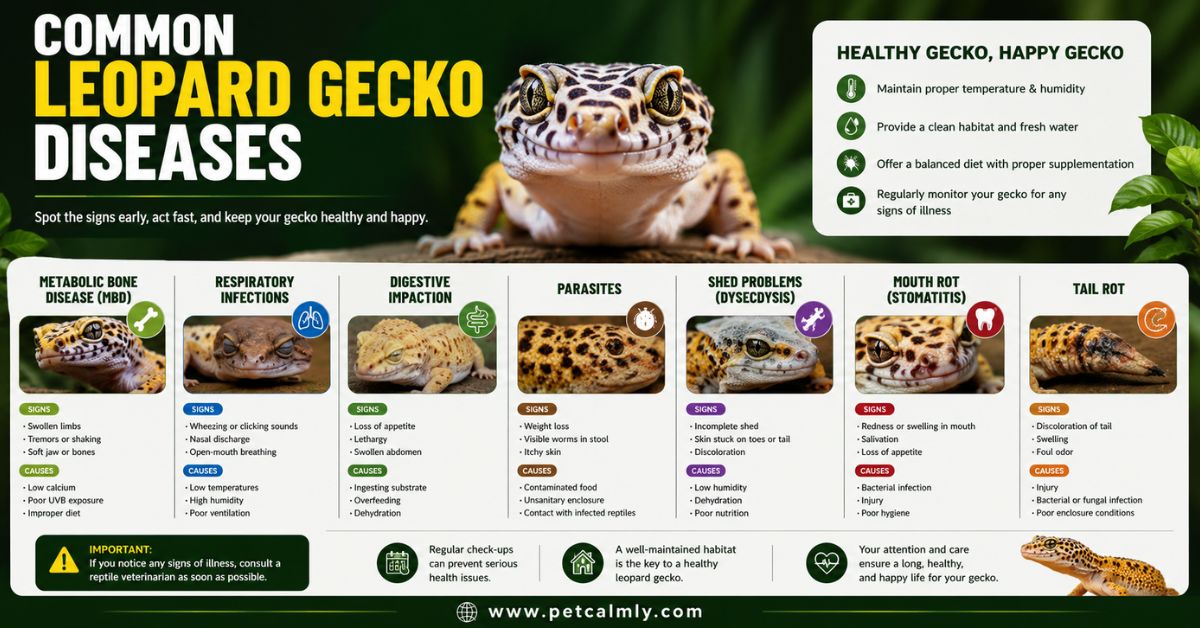
1: Metabolic Bone Disease (MBD)
Quick answer:
Metabolic Bone Disease is a calcium deficiency disorder that weakens bones, causing deformities, tremors, and difficulty moving.
Why it happens:
MBD develops when a gecko doesn’t get enough calcium or cannot properly absorb it due to lack of UVB or vitamin D3 imbalance. Over time, the body starts pulling calcium from the bones.
Common symptoms:
- Soft or rubbery jaw
- Bent or swollen limbs
- Tremors or shaking
- Difficulty lifting body
- Curved spine or deformities
- Loss of appetite
What owners often miss:
Early MBD doesn’t always look dramatic. It may start with slightly weak grip or subtle movement hesitation.
Prevention:
- Calcium powder on feeders
- Proper UVB lighting (if used in setup)
- Balanced diet (gut-loaded insects)
- Correct heat gradient
2: Respiratory Infections
Quick answer:
Respiratory infections occur when bacteria or cold, damp environments affect the lungs, making breathing difficult.
Causes:
- Low tank temperatures
- High humidity in a dry species setup
- Poor ventilation
- Dirty enclosure conditions
Symptoms:
- Wheezing or clicking sounds
- Open-mouth breathing
- Nasal discharge
- Lethargy
- Loss of appetite
Important note:
Leopard geckos should never breathe heavily or open-mouth breathe unless stressed. If you see it repeatedly, it is a red flag.
What helps:
- Immediate temperature correction
- Clean enclosure
- Veterinary antibiotics if advanced
3: Impaction (Digestive Blockage)
Quick answer:
Impaction happens when a gecko cannot pass food or substrate, leading to dangerous digestive blockage.
Causes:
- Loose substrate (sand, gravel)
- Feeding too large insects
- Dehydration
- Low temperatures slowing digestion
Symptoms:
- Swollen belly
- Straining without stool
- Loss of appetite
- Lethargy
- Dragging hind legs in severe cases
Common mistake:
Many beginners still use loose sand despite warnings. This is one of the biggest preventable risks.
Prevention:
- Use safe substrates (paper towel, tile, reptile carpet)
- Provide warm basking area
- Feed appropriately sized insects
4: Parasites (Internal and External)
Quick answer:
Parasites are organisms that live inside or on the gecko, stealing nutrients and weakening health.
Types:
- Internal (worms, protozoa like Cryptosporidium)
- External (mites)
Symptoms:
- Weight loss despite eating
- Diarrhea or foul-smelling stool
- Visible tiny mites on skin
- Restlessness or rubbing behavior
Why it matters:
Parasites can spread quickly in captive environments and severely weaken immunity.
Treatment:
Requires veterinary diagnosis and medication—home remedies are not effective.
5: Shedding Problems (Dysecdysis)
Quick answer:
Shedding problems occur when old skin does not fully come off due to low humidity or dehydration.
Causes:
- Low humidity hides
- Poor hydration
- Stress or illness
- Nutritional deficiency
Symptoms:
- Patchy skin after shedding
- Skin stuck on toes or tail
- White dry flakes remaining
- Irritated behavior
Risk:
Leftover skin on toes can restrict blood flow and cause tissue damage.
Prevention:
- Moist hide box
- Regular hydration
- Proper humidity balance
6: Dehydration
Quick answer:
Dehydration is a common but overlooked issue that affects digestion, shedding, and energy levels.
Signs:
- Sunken eyes
- Wrinkled skin
- Thick saliva or sticky mouth
- Lethargy
- Reduced urination
Causes:
- No water access
- Dry environment
- Illness
Fix:
- Fresh water daily
- Occasional misting of enclosure hides
- Hydrating feeder insects
7: Tail Rot and Injuries
Quick answer:
Tail rot is tissue damage often caused by injury, infection, or poor hygiene.
Symptoms:
- Darkening tail tip
- Dry, shriveled tissue
- Foul smell (advanced cases)
- Loss of tail movement
Why it happens:
The tail is a fat storage organ, so damage here is serious.
Treatment:
Veterinary care is required—amputation is sometimes necessary in severe cases.
8: Egg Binding (Females)
Quick answer:
Egg binding occurs when a female gecko cannot pass eggs, which can become life-threatening.
Symptoms:
- Swollen abdomen
- Straining behavior
- Lack of appetite
- Lethargy
Causes:
- Poor calcium levels
- Stress
- Improper laying environment
Emergency note:
This is a veterinary emergency and should not be delayed.
9: Mouth Rot (Infectious Stomatitis)
Quick answer:
Mouth rot is a bacterial infection affecting gums and mouth tissue.
Symptoms:
- Swollen gums
- Yellow or white pus
- Drooling
- Refusal to eat
Causes:
- Injury inside mouth
- Dirty enclosure
- Weak immune system
Treatment:
Requires antibiotics and sometimes cleaning by a vet.
Common Owner Mistakes That Lead to Disease
Many leopard gecko health problems come from small, repeated care mistakes.
Frequent issues include:
- Using loose sand substrate
- Not checking tank temperatures properly
- Feeding low-quality insects
- Ignoring early symptoms like reduced appetite
- Over-handling a stressed gecko
- Infrequent cleaning of enclosure
Even one of these mistakes can slowly contribute to disease over time.
Early Warning Signs You Should Never Ignore
Leopard geckos hide illness very well. Watch for:
- Sudden loss of appetite
- Staying in hides all day
- Weight loss
- Irregular stool
- Difficulty walking
- Slow or incomplete shedding
- Excess sleeping or inactivity
- Breathing changes
If two or more signs appear together, it’s usually not “just a phase.”
Simple Daily Care Checklist for Prevention
A consistent routine prevents most diseases.
Daily:
- Check water dish
- Observe appetite
- Look for unusual behavior
Weekly:
- Clean waste spots
- Check heating equipment
- Replace uneaten insects
Monthly:
- Deep clean enclosure
- Review diet and supplementation
- Check weight
What Should You Do If Your Gecko Seems Sick?
If you suspect illness, act calmly and follow a safe approach:
Step-by-step:
- Check temperature and setup first
- Review feeding and hydration
- Isolate stress factors
- Observe symptoms for 24–48 hours (if mild)
- Contact a reptile veterinarian if symptoms persist or worsen
Avoid self-medicating or guessing treatments reptile physiology is very specific.
When Should You Worry? (Red Flags)
Seek veterinary help immediately if you notice:
- Open-mouth breathing
- Severe lethargy or collapse
- Refusal to eat for 7–10+ days (especially with weight loss)
- Visible bone deformities
- Bloated or hard abdomen
- Blood in stool
- Tail blackening or necrosis
These are not minor issues and should not be delayed.
Recovery Expectations: What Owners Should Know
Recovery depends heavily on how early the problem is caught.
- Mild issues (early shedding problems, dehydration): often improve within days
- Moderate conditions (minor infections, early MBD): may take weeks
- Severe diseases (advanced parasites, egg binding): require veterinary treatment and longer recovery
Patience matters. Reptiles heal slowly, but they do recover well with proper care.
Conclusion
Understanding common leopard gecko diseases is not about fear it’s about awareness. Most health problems in these reptiles are preventable with correct temperature, clean housing, and balanced nutrition.
If there’s one takeaway, it’s this: small daily care habits make the biggest difference in your gecko’s long-term health. Watching behavior closely and reacting early is often what keeps minor issues from becoming serious illness.
A healthy leopard gecko is active, alert, and consistent in feeding and shedding. When something changes, trust your observation it’s usually the first and most reliable warning system you have.
More Information About Pets, Please Visit Our Website: Leopard Gecko Shedding Tips
Frequently Asked Questions
1. What is the most common disease in leopard geckos?
Metabolic bone disease is one of the most common due to calcium and vitamin D3 imbalance. It develops slowly but can cause serious deformities if ignored.
2. How do I know if my leopard gecko is sick?
Look for appetite loss, lethargy, weight loss, or abnormal stool. Any sudden behavior change lasting more than a few days is a warning sign.
3. Can leopard gecko diseases be prevented?
Yes, most diseases are preventable with proper heating, calcium supplementation, clean habitat, and a balanced diet.
4. Why is my leopard gecko not eating?
Common reasons include stress, incorrect temperatures, shedding cycles, or underlying illness like parasites or infections.
5. Is shedding difficulty a disease?
Not exactly, but repeated shedding problems (dysecdysis) usually indicate dehydration, stress, or environmental imbalance.
6. When should I take my leopard gecko to a vet?
If symptoms include breathing problems, severe lethargy, swelling, or prolonged refusal to eat, a reptile vet visit is necessary.