Short direct answer
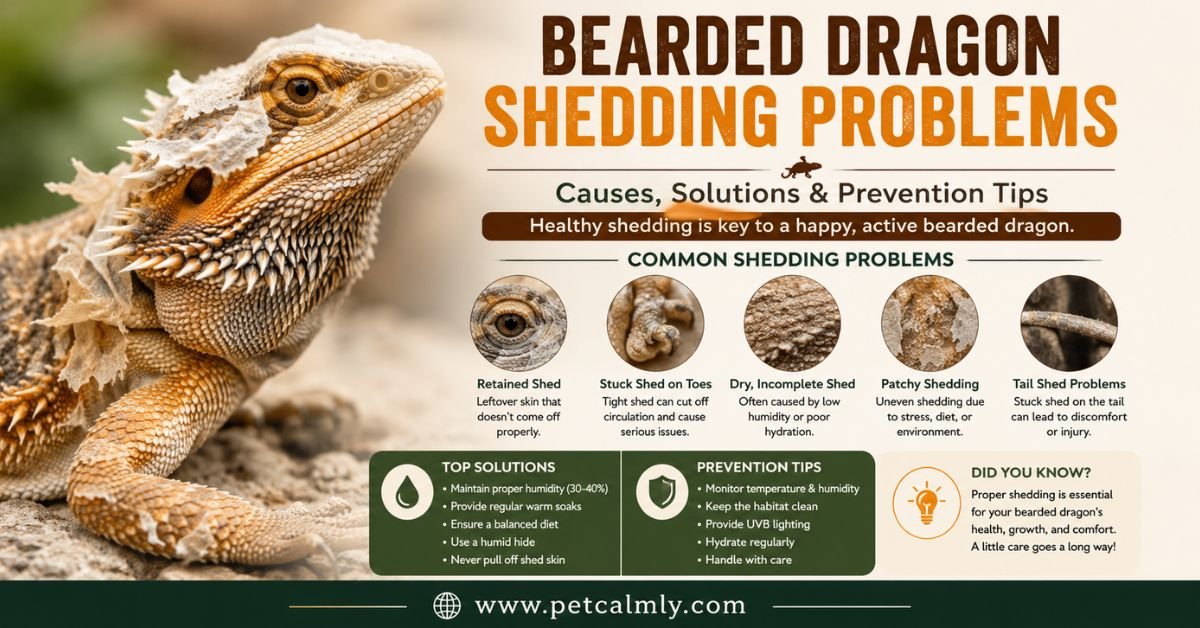
Bearded dragon shedding problems happen when old skin doesn’t come off smoothly or gets stuck in patches. This is usually caused by low humidity, poor hydration, inadequate diet, incorrect temperatures, or stress. In most cases, it’s not dangerous if caught early, but stuck shed especially around toes, tail, or eyes can become serious if ignored. The main goal is to gently improve humidity, hydration, and husbandry conditions while avoiding forceful peeling, which can injure the skin underneath.
Introduction
If you’ve noticed your bearded dragon looking dull, patchy, or uncomfortable during shedding, you’re not alone. Shedding is a completely normal part of a bearded dragon’s life, especially for growing juveniles. But when it doesn’t go smoothly, it can worry even experienced reptile keepers.
A healthy shed should look gradual skin loosens, flakes, and eventually falls off on its own. Problems begin when the shed becomes stuck, uneven, or takes much longer than expected. Sometimes it’s just a minor husbandry issue. Other times, it’s a sign your dragon needs better care conditions.
What makes this stressful for owners is the uncertainty. Is it normal? Is it painful? Should you intervene or leave it alone?
In this guide, we’ll break everything down in a calm, practical way so you can confidently understand what’s happening, why it happens, and how to help your bearded dragon shed comfortably without risking injury.
Understanding Normal Shedding in Bearded Dragons
Before we talk about shedding problems, it helps to understand what “normal” actually looks like.
Bearded dragons don’t shed their entire skin at once like snakes. Instead, they shed in patches. One week it might be the head, another time the legs or tail. Juveniles shed frequently because they grow fast, while adults shed less often and more irregularly.
What normal shedding looks like:
- Skin becomes dull or slightly gray
- Small patches start flaking
- Dragon may rub against objects
- Appetite may slightly decrease
- Shed comes off gradually without assistance
What is NOT normal:
- Thick, tight skin that doesn’t loosen
- Stuck shed on toes, tail tip, or eyes
- Foul smell or discoloration under shed
- Signs of swelling or irritation
- Repeated incomplete sheds in the same areas
Understanding this difference helps prevent unnecessary panic and, more importantly, prevents harmful overhandling.
6 Common Causes of Bearded Dragon Shedding Problems
Shedding issues almost always trace back to environmental or care-related factors. Let’s look at the most common causes in real-world setups.
1: Low Humidity
One of the biggest reasons for stuck shed is insufficient humidity.
Bearded dragons naturally come from arid environments, but that doesn’t mean zero moisture. During shedding, their skin still needs slight humidity to loosen properly.
Low humidity can cause:
- Dry, tight skin that clings to the body
- Incomplete shedding around toes and tail
- Increased discomfort and rubbing behavior
2: Dehydration
Water intake is often overlooked in reptile care. Even if your dragon drinks occasionally, it may still be mildly dehydrated.
Signs linked to shedding issues:
- Wrinkled or tight-looking skin
- Slow or patchy shedding
- Difficulty shedding around limbs
Hydration supports skin elasticity, making shedding smoother and less stressful.
3: Incorrect Temperature Gradient
Temperature plays a major role in skin health and metabolism.
If the basking area is too cold:
- Shedding slows down
- Skin becomes dry and stubborn
If it’s too hot:
- Dehydration increases
- Shed may crack unevenly instead of peeling properly
A stable heat gradient is essential for smooth biological processes, including shedding.
4: Poor Diet and Nutritional Gaps
A bearded dragon’s skin health is directly linked to what it eats.
Low calcium, vitamin A deficiency, or unbalanced feeding can contribute to poor skin regeneration.
Common dietary-related shedding issues:
- Repeated stuck shed cycles
- Dull, brittle-looking skin
- Slower recovery between sheds
A varied diet of leafy greens and properly gut-loaded insects helps maintain healthy skin turnover.
5: Stress and Environmental Disruption
Stress is an underrated but real cause of shedding issues.
Stress triggers:
- Frequent handling during shed
- Loud environments
- Tank changes or relocation
- Presence of other pets nearby
When stressed, a bearded dragon may delay or interrupt shedding altogether.
6: Lack of Rough Surfaces
In the wild, reptiles naturally rub against rocks, bark, and rough terrain to help remove old skin.
In captivity, overly smooth enclosures can make shedding harder.
Without texture:
- Shed doesn’t loosen properly
- Patches stay stuck longer than normal
Symptoms of Shedding Problems You Should Watch For
Spotting early signs makes a big difference. Most serious issues start small.
Early signs:
- Skin looks “tight” for too long
- Uneven patchy shedding
- Excessive rubbing against objects
- Slight irritability or hiding more than usual
Moderate signs:
- Shed stuck on limbs or tail
- White or gray patches that don’t flake
- Reduced appetite during shedding period
Advanced signs (needs attention):
- Swollen toes or tail tips
- Darkened or constricted skin areas
- Eye irritation or retained eye caps
- Foul odor or infection signs under shed
Why Bearded Dragons Rub and Scratch During Shedding
Many owners panic when they see their dragon scratching or rubbing against décor. In most cases, this is completely normal behavior.
They are essentially:
- Loosening old skin
- Trying to relieve itching
- Helping shed separate naturally
However, excessive rubbing or frantic scratching may indicate discomfort due to low humidity or stuck shed.
Think of it like dry skin in humans it’s uncomfortable, but not always dangerous.
4 Common Mistakes Owners Make During Shedding
Even well-meaning care can sometimes make shedding worse.
1: Pulling the Skin Off
This is the most harmful mistake.
Why it’s dangerous:
- New skin underneath may still be healing
- Can cause wounds or infections
- Increases stress significantly
Only remove shed if it is already fully loose and ready to fall.
2: Over-Misting the Tank
Too much moisture can create bacterial or fungal risks.
Balanced humidity is key—especially during shedding, not constant wet conditions.
3: Handling Too Frequently
Many owners want to “check” their dragon often.
But during shedding:
- Skin is sensitive
- Stress levels rise easily
- Shedding may slow down further
4: Ignoring Small Stuck Patches
Tiny stuck areas may look harmless but can become serious if left too long, especially around toes.
Safe Ways to Help a Bearded Dragon Shed Properly
Helping doesn’t mean forcing. It means supporting natural shedding.
1: Warm Bath Method (Gentle Support)
A shallow lukewarm bath can help loosen shed.
Steps:
- Use shallow water (belly height max)
- Keep water warm, not hot
- Soak for 10–15 minutes
- Gently pat dry afterward
Never scrub or peel skin aggressively.
2: Increase Humidity Slightly During Shed
- Light misting of enclosure once or twice daily
- Provide a moist hide (slightly damp substrate area)
- Avoid over-saturating the tank
3: Provide Rough Surfaces
Add safe textures like:
- Natural rocks
- Reptile-safe branches
- Bark decor
These help natural rubbing behavior.
4: Improve Hydration
- Offer fresh water daily
- Provide leafy greens with higher moisture content
- Occasional supervised baths
Step-by-Step Shedding Care Routine
Here’s a simple routine during shedding periods:
Daily checklist:
- Check humidity levels
- Ensure basking temperature is stable
- Offer fresh greens
- Observe shedding progress without excessive handling
Every 2–3 days:
- Provide a short warm bath (if needed)
- Light misting of enclosure (if humidity is low)
- Check for stuck shed on toes and tail
What to avoid:
- Pulling shed
- Changing enclosure setup suddenly
- Overfeeding insects instead of greens
When Should You Worry About Shedding Problems?
Not every shedding issue is urgent, but some signs should never be ignored.
Seek veterinary help if you notice:
- Swollen toes or blackened tail tips
- Shed tightly constricting circulation
- Eye problems or inability to open eyes
- Signs of infection (pus, odor, redness)
- Repeated shedding failure in the same areas
Stuck shed around extremities can sometimes restrict blood flow, which is a medical concern.
Recovery Timeline: How Long Should Shedding Take?
A normal shed cycle varies, but generally:
- Juveniles: frequent, quick patch shedding
- Adults: slower, spread out over days or weeks
Most shedding problems improve within a few days once environmental issues are corrected.
If conditions are right, the shed will naturally loosen without intervention.
Prevention: How to Avoid Shedding Problems in the Future
Prevention is always easier than treatment.
Key long-term habits:
- Maintain stable temperature gradients
- Provide balanced diet with calcium-rich greens
- Keep hydration consistent
- Avoid unnecessary stress during shedding periods
- Add natural textures in enclosure
Think of shedding health as a reflection of overall husbandry quality.
Realistic Example: A Common Owner Situation
Many owners notice something like this:
“My bearded dragon starts shedding fine, but then the skin on the toes just stays stuck for days.”
This usually points to:
- Slightly low humidity
- Lack of rough surfaces
- Mild dehydration
The solution isn’t aggressive intervention it’s small environmental corrections and patience.
Most cases improve once humidity and hydration are gently adjusted.
What Should Pet Owners Do Right Now?
If your bearded dragon is currently having shedding issues:
- Check temperature and humidity first
- Offer hydration support (bath + greens)
- Avoid pulling any skin
- Add a warm bath if needed
- Monitor stuck areas closely
- Adjust environment gradually
Small, calm corrections work better than drastic changes.
Conclusion
Bearded dragon shedding problems can feel worrying at first, especially when skin doesn’t come off smoothly. But in most cases, the issue is linked to simple environmental factors like humidity, hydration, or setup design not serious illness.
What matters most is patience and observation. When you support your dragon with proper care, shedding usually corrects itself naturally within a short time.
Think of shedding not as a problem to “fix quickly,” but as a process to support gently. With consistent care, your bearded dragon can shed comfortably, stay healthy, and continue thriving in its environment.
More Information About Pets, Please Visit Our Website: Common Leopard Gecko Diseases
Frequently Asked Questions
1. Why is my bearded dragon shedding in patches?
This is completely normal. Bearded dragons shed unevenly because they grow or renew skin in sections, not all at once.
2. How long does a bad shed last?
Mild shedding issues usually improve within a few days once humidity and hydration are corrected. Severe cases may take longer.
3. Can I peel stuck shed off my bearded dragon?
No, never force it. Only remove skin that is already loose and falling off naturally to avoid injury.
4. Is it normal for bearded dragons to stop eating during shedding?
Yes, mild appetite loss is common. It usually returns once shedding is complete.
5. What humidity level is best during shedding?
A slightly higher-than-normal humidity level is helpful, but avoid making the enclosure constantly wet or damp.
6. Why does my bearded dragon keep getting stuck shed on toes?
This often happens due to low humidity, dehydration, or lack of textured surfaces for rubbing.