Short direct answer
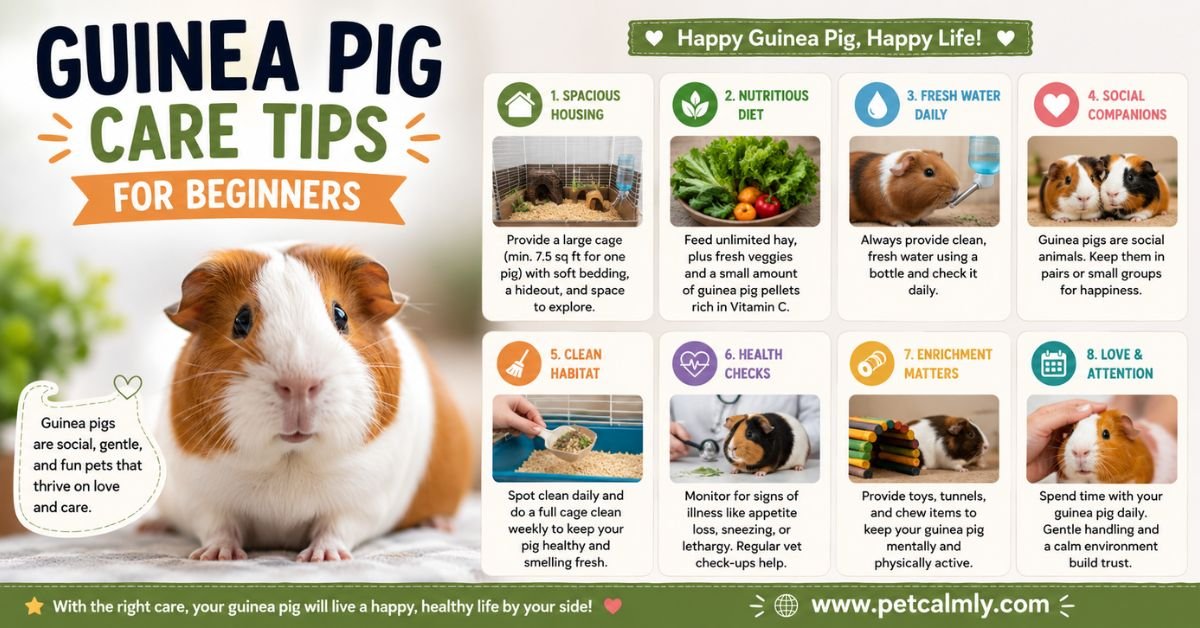
If you’re looking for the best guinea pig care tips for beginners, focus on five essentials: provide a spacious cage, unlimited grass hay, fresh vegetables, constant access to clean water, daily interaction, and regular health checks. Guinea pigs are gentle, social animals that thrive with companionship, routine, and proper nutrition. With the right setup and consistent care, even first-time owners can help their guinea pigs live happy, healthy lives for 5–8 years or longer.
Introduction
Bringing home your first guinea pig is exciting, but it also comes with responsibilities that many new owners don’t expect. These charming little pets depend on their caregivers for nearly every aspect of their well-being from proper nutrition to social interaction and a safe living environment.
Unlike hamsters or some other small pets, guinea pigs are highly social, communicate through a variety of sounds, and require more space than many beginners realize. They also have unique dietary needs, including daily vitamin C, because their bodies cannot produce it naturally.
The good news is that guinea pigs are not difficult to care for once you understand their basic needs. This guide covers everything a beginner should know, including housing, feeding, grooming, health care, handling, common mistakes, and daily routines that help your pet thrive.
Why Guinea Pigs Make Great Pets for Beginners
Guinea pigs are often recommended as first pets because they are:
- Gentle and friendly
- Easy to handle with patience
- Active during the day
- Highly social
- Fun to observe
- Less likely to bite than many small rodents
However, they are not low-maintenance pets. They require daily attention, regular cage cleaning, and a carefully balanced diet.
If you’re prepared for that commitment, they can become affectionate companions that recognize your voice and enjoy interacting with you.
Understanding Basic Guinea Pig Needs
Before buying supplies, understand what every guinea pig needs every single day.
| Need | Why It Matters |
|---|---|
| Unlimited hay | Supports digestion and dental health |
| Fresh water | Prevents dehydration |
| Vitamin C | Prevents deficiency-related illness |
| Large cage | Encourages exercise |
| Daily interaction | Prevents boredom |
| Safe hiding places | Reduces stress |
| Clean bedding | Keeps them healthy |
Meeting these needs consistently is the foundation of good guinea pig care.
Choosing the Right Guinea Pig
Not all guinea pigs have the same personality.
Some are:
- Curious
- Outgoing
- Shy
- Vocal
- Calm
- Energetic
When choosing one, look for signs of good health:
- Bright eyes
- Clean nose
- Smooth breathing
- Healthy coat
- Alert behavior
- Good appetite
Avoid guinea pigs that appear lethargic, have crusty eyes, labored breathing, or obvious weight loss.
Should You Get One or Two Guinea Pigs?
One of the most important guinea pig care tips for beginners is to consider adopting a pair.
Guinea pigs naturally live in groups. Having a compatible companion can help reduce loneliness, encourage natural behaviors, and increase activity.
Pairs that often work well include:
- Two females
- Two neutered males (if properly introduced)
- A neutered male with one or more females
If you choose a single guinea pig, you’ll need to spend much more time providing companionship.
How to Set Up the Perfect Guinea Pig Cage
Many starter cages sold in pet stores are simply too small.
Instead, provide a spacious enclosure that allows room for:
- Running
- Exploring
- Eating
- Sleeping
- Hiding
Include These Essentials
- Hay rack
- Water bottle
- Food bowl
- Hideout
- Tunnel
- Soft bedding
- Chew toys
The more room your guinea pig has, the healthier and happier it will generally be.
Best Bedding for Guinea Pigs
Choosing the right bedding helps prevent respiratory problems and sore feet.
Good options include:
- Paper bedding
- Aspen shavings
- Washable fleece liners
Avoid:
- Cedar shavings
- Pine shavings that aren’t kiln-dried
- Cat litter
- Scented bedding
Spot-clean daily and replace bedding regularly.
Guinea Pig Diet for Beginners
Diet is one of the biggest factors affecting long-term health.
Unlimited Hay
Hay should make up around 80% of your guinea pig’s diet.
Good choices include:
- Timothy hay
- Orchard grass
- Meadow hay
Hay helps:
- Wear down constantly growing teeth
- Support healthy digestion
- Prevent digestive problems
Never allow your guinea pig to run out of hay.
Fresh Vegetables Every Day
Offer a variety of vegetables rich in nutrients.
Good beginner choices include:
- Bell peppers
- Romaine lettuce
- Cilantro
- Cucumber
- Zucchini
- Parsley (in moderation)
Introduce new vegetables gradually.
Pellets
Choose plain, high-quality guinea pig pellets fortified with vitamin C.
Avoid mixes containing:
- Seeds
- Colored bits
- Dried fruit
These encourage selective eating and are often less nutritious.
Fresh Water
Provide clean drinking water at all times.
Replace it daily, even if it looks clean.
Foods Guinea Pigs Should Never Eat
Some foods are dangerous.
Avoid feeding:
- Chocolate
- Onion
- Garlic
- Potatoes
- Avocado
- Rhubarb
- Iceberg lettuce
- Dairy products
- Meat
- Sugary snacks
When unsure, research a food before offering it.
Why Vitamin C Is Essential
Unlike humans who can obtain vitamin C from varied diets, guinea pigs cannot make their own.
Without enough vitamin C they may develop:
- Weakness
- Joint pain
- Poor wound healing
- Appetite loss
Fresh vegetables rich in vitamin C are usually the safest source.
Daily Guinea Pig Care Routine
A simple daily routine helps prevent problems.
Morning:
- Refill hay
- Replace water
- Feed vegetables
- Quick health check
Afternoon:
- Social interaction
- Floor time
- Spot-clean cage
Evening:
- Refresh hay
- Check water
- Observe appetite
- Remove leftover vegetables
Routine makes guinea pigs feel secure.
Weekly Care Checklist
Every week:
- Deep-clean the cage
- Wash bowls and bottles
- Replace bedding
- Check nails
- Inspect teeth
- Weigh your guinea pig
- Examine skin and coat
Small changes can reveal health issues early.
Handling Your Guinea Pig Correctly
Many beginners worry about picking up their guinea pig.
Support both the chest and hindquarters with your hands.
Avoid grabbing from above, which may scare them because it resembles a predator.
Let them become comfortable at their own pace.
Keep handling sessions short at first.
Understanding Guinea Pig Behavior
Learning their body language helps you respond appropriately.
Common behaviors include:
Wheeking
Usually means excitement, especially when food is coming.
Popcorning
Small joyful jumps that often indicate happiness.
Purring
Can signal contentment or mild annoyance depending on posture.
Chattering Teeth
Usually a warning that your guinea pig feels threatened.
Freezing
Often occurs when something unfamiliar causes concern.
Understanding these signals builds trust.
Exercise and Enrichment
Guinea pigs enjoy exploring.
Provide:
- Cardboard tunnels
- Hide houses
- Paper bags filled with hay
- Safe chew toys
- Floor time in a secure area
Rotate toys regularly to keep things interesting.
Grooming Tips for Beginners
Grooming depends on coat length.
Short-haired guinea pigs usually need:
- Weekly brushing
Long-haired guinea pigs may need:
- Daily brushing
- Occasional trimming
Also remember to:
- Trim nails every few weeks
- Check ears
- Inspect teeth
- Look for skin issues
Common Beginner Mistakes to Avoid
Many first-time owners unintentionally make these mistakes:
- Buying a cage that’s too small
- Feeding too many treats
- Not providing unlimited hay
- Ignoring vitamin C needs
- Housing guinea pigs with incompatible animals
- Cleaning the cage too infrequently
- Skipping regular health checks
- Assuming quiet means healthy
Avoiding these mistakes greatly improves your pet’s quality of life.
Signs Your Guinea Pig May Be Sick
Guinea pigs often hide illness until they’re quite unwell.
Watch for:
- Loss of appetite
- Weight loss
- Labored breathing
- Diarrhea
- Lethargy
- Swollen eyes
- Nasal discharge
- Difficulty walking
- Excessive drooling
Even subtle changes deserve attention.
When Should You Worry?
Contact an experienced exotic-animal veterinarian promptly if your guinea pig:
- Stops eating for several hours
- Has difficulty breathing
- Shows severe diarrhea
- Bleeds unexpectedly
- Cannot walk normally
- Appears unusually weak
- Has seizures
- Experiences rapid weight loss
Guinea pigs can deteriorate quickly, so early veterinary care is important.
What Should New Guinea Pig Owners Do?
If you’re just getting started, follow this beginner action plan:
- Buy a spacious cage.
- Stock up on unlimited grass hay.
- Choose quality pellets.
- Learn safe vegetables.
- Prepare hiding spots.
- Schedule an initial veterinary wellness exam.
- Create a daily care routine.
- Spend time building trust through gentle interaction.
- Monitor weight weekly.
- Continue learning about guinea pig behavior.
Small, consistent habits make the biggest difference over time.
Beginner Guinea Pig Care Checklist
✔ Unlimited hay available
✔ Fresh water changed daily
✔ Daily vegetables
✔ Clean bedding
✔ Safe hiding place
✔ Daily interaction
✔ Weekly weight check
✔ Nail trimming as needed
✔ Plenty of exercise
✔ Observation for illness
Frequently Asked Questions
1: How often should I clean my guinea pig’s cage?
Spot-clean every day by removing soiled bedding and leftover food. Perform a thorough cage cleaning at least once a week, or more often if you have multiple guinea pigs or a smaller enclosure.
2: Can guinea pigs live alone?
They can, but many thrive with a compatible guinea pig companion. If you keep a single guinea pig, provide extra daily interaction and enrichment.
3: What is the best food for beginner guinea pig owners?
Unlimited grass hay should form the majority of the diet, supported by quality guinea pig pellets, fresh vegetables, and clean drinking water.
4: How long do guinea pigs live?
With proper nutrition, housing, and veterinary care, many guinea pigs live between 5 and 8 years, while some live even longer.
5: How do I know if my guinea pig is happy?
Happy guinea pigs often popcorn, wheek when they hear food, explore their surroundings, eat well, and rest comfortably in familiar hiding places.
6: How much time should I spend with my guinea pig each day?
Aim for at least 30–60 minutes of gentle interaction, handling, supervised floor time, or enrichment activities. Social guinea pigs often enjoy even more daily engagement.
More Information About Pets, Please Visit Our Website: Guinea Pig Heat Stress Signs
Conclusion
Learning the best guinea pig care tips for beginners isn’t about buying the most expensive supplies it’s about understanding your pet’s natural needs and providing consistent, thoughtful care. A roomy habitat, unlimited hay, fresh vegetables, clean water, social interaction, and regular health checks create the foundation for a healthy life. As you spend time with your guinea pig, you’ll become more familiar with its unique personality and behavior, making it easier to spot changes and strengthen your bond. With patience and the right routine, your first guinea pig can become a rewarding companion for many years.