Short direct answer
To calm an anxious dog, remove the trigger if possible, speak softly, and offer a safe, quiet space. Use gentle physical contact, calming aids like lavender or a pressure wrap, and establish a consistent daily routine. For severe or ongoing anxiety, consult your vet some dogs need professional behavioral support or medication.
Your Dog Is Not “Being Difficult” They’re Scared
Picture this: a thunderstorm rolls in, and your dog who was perfectly happy five minutes ago is now trembling under the bed, panting heavily, and refusing to come out. You feel helpless. You want to fix it, but you don’t know how.
Dog anxiety is one of the most common concerns among pet owners, yet it’s also one of the most misunderstood. Many people mistake anxious behavior for disobedience or stubbornness. In reality, your dog is experiencing real emotional distress just like a person having a panic attack.
The good news? There is a lot you can do. This guide walks you through everything: understanding why dogs get anxious, recognizing the signs, and most importantly what actually works to calm them down.
Why Do Dogs Get Anxious in the First Place?
Dogs are emotional creatures. They pick up on changes in their environment, your mood, their routine, and even the sounds outside your window. Anxiety in dogs usually falls into a few key categories.
1: Separation anxiety
is the most common type. When a dog is deeply bonded to their owner, being left alone even for an hour can feel devastating. They may bark nonstop, destroy furniture, or have accidents indoors. It’s not revenge. It’s panic.
2: Noise anxiety
is another major trigger. Fireworks, thunderstorms, construction sounds, or even a vacuum cleaner can send some dogs into a spiral. Dogs hear frequencies humans cannot, which means certain sounds are physically overwhelming for them.
3: Social anxiety
happens when dogs are uncomfortable around strangers, other dogs, or unfamiliar environments. This is common in dogs that were not properly socialized as puppies.
4: Medical or age-related anxiety
is less obvious but equally important. Older dogs can develop cognitive dysfunction similar to dementia in humans which causes confusion, disorientation, and fear. Pain from arthritis or illness can also cause anxiety-like behavior.
Understanding the root cause is the first step in helping your dog. A treatment that works for separation anxiety may not work for noise phobia.
Signs Your Dog Is Anxious (Don’t Miss These)
Dogs cannot tell you they’re stressed. But their bodies speak loudly if you know what to look for.
Physical signs:
- Excessive panting even when not hot
- Trembling or shaking
- Yawning repeatedly (a calming signal, not tiredness)
- Drooling more than usual
- Ears pinned back flat against the head
- Tail tucked between the legs
Behavioral signs:
- Pacing back and forth
- Hiding or trying to escape
- Destructive chewing (especially near doors or windows)
- Excessive barking or whining
- Urinating or defecating inside, despite being house-trained
- Refusing food or treats they normally love
Subtle signs many owners miss:
- Lip licking without food present
- Whale eye (showing the whites of their eyes)
- Scratching or grooming themselves excessively
- Sudden clinginess or, conversely, trying to be alone
If you notice several of these at once especially during specific situations your dog is likely anxious, not misbehaving.
How to Calm a Dog Down from Anxiety: Practical Methods That Work
There is no single magic fix, but there are proven strategies you can use right now. The key is layering techniques and being consistent.
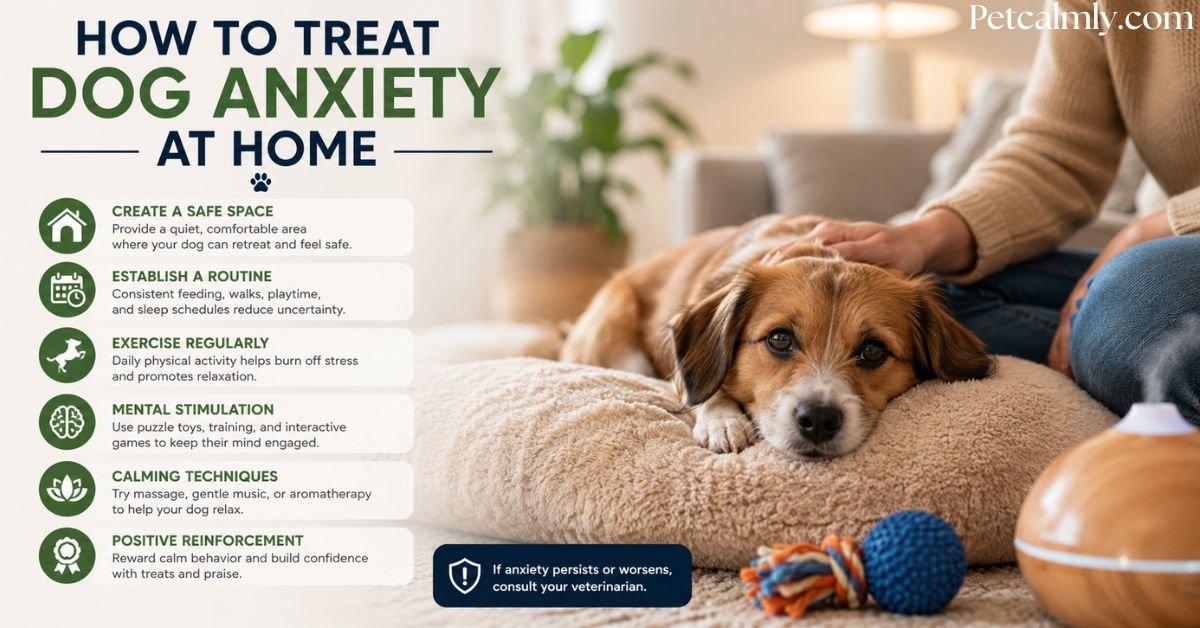
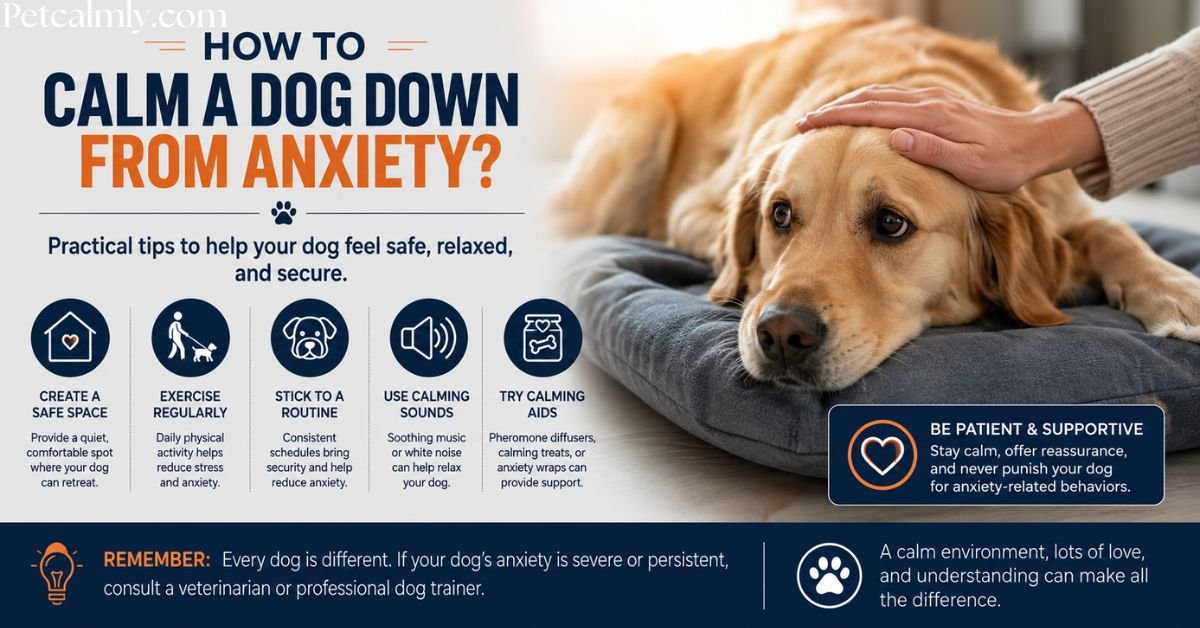
1. Create a Safe Space Immediately
The first thing to do when your dog is anxious is give them somewhere to retreat. Think of it as their personal panic room.
A crate lined with familiar blankets, a quiet room, or even a spot under a table with a cozy bed can work. The space should feel enclosed and safe many dogs instinctively feel calmer in smaller, den-like areas.
If a thunderstorm is coming, move your dog to an interior room away from windows. Close the curtains. Turn on white noise or soft music. This simple step alone can cut their stress significantly.
2. Stay Calm Yourself Your Energy Is Contagious
Dogs are wired to read human body language and emotional states. If you rush over to your trembling dog in a panic, hovering and repeating “It’s okay, it’s okay!” in a stressed voice, you may actually make things worse.
Your dog looks to you as the leader. If you appear calm and unbothered, they receive the signal that there is no real threat.
Instead, move slowly. Use a low, steady voice. Sit near them quietly without making it a big dramatic moment. Think of how a calm parent soothes a frightened child quiet presence matters more than words.
3. Use Gentle Touch and Massage
Physical contact can be deeply reassuring for anxious dogs but technique matters. Avoid patting their head rapidly or grabbing them. Instead:
- Use slow, long strokes along their back
- Gently massage the base of their ears (this stimulates calming nerve pathways)
- Apply light pressure to their shoulders or sides
Some dogs respond remarkably well to the T-Touch technique a specific type of circular massage developed by animal therapist Linda Tellington-Jones. It’s worth looking up if your dog has chronic anxiety.
4. Try a Pressure Wrap or Anxiety Vest
Pressure wraps like the Thundershirt work similarly to how swaddling calms a newborn baby. The gentle, constant pressure around the dog’s torso signals the nervous system to relax.
They don’t work for every dog, but many pet owners swear by them especially for noise anxiety during fireworks or storms. Put it on before the triggering event starts, not after your dog is already in full panic mode.
5. Engage Their Nose with Calming Scents
A dog’s sense of smell is up to 100,000 times more powerful than a human’s. Certain scents can genuinely affect their mood.
Lavender is the most researched. Studies have shown that lavender aromatherapy can reduce stress behavior in dogs during car travel and vet visits. Use a dog-safe lavender spray on their bedding never apply essential oils directly to their skin.
Dog appeasing pheromone (DAP) products like Adaptil mimic the calming pheromone that mother dogs produce for their puppies. Available as a collar, diffuser, or spray, they can help reduce anxiety in some dogs, particularly in new environments or during travel.
6. Redirect with Mental Stimulation
Anxiety often involves an overactive, spinning mind. Giving your dog something to focus on can interrupt the anxiety loop.
Try a lick mat spread with peanut butter or Greek yogurt. Licking has a natural calming effect on dogs it activates the parasympathetic nervous system (the “rest and digest” state). A frozen Kong stuffed with food can keep an anxious dog busy and mentally engaged for 20–30 minutes.
Puzzle feeders, sniff mats, or even a simple game of “find the treat” scattered around the floor can shift your dog’s brain from panic mode to problem-solving mode. It sounds too simple to work but it genuinely does.
7. Exercise Before the Trigger
If you know something anxiety-inducing is coming a fireworks show, a car ride, a visit to the vet tire your dog out beforehand.
A well-exercised dog has lower baseline stress. Their nervous system is more settled. A long walk, a vigorous game of fetch, or a swim can reduce anxiety symptoms noticeably when timed well.
This works especially well for high-energy breeds like Border Collies, Huskies, or German Shepherds, where pent-up energy amplifies anxious behavior.
8. Desensitization and Counter-Conditioning
This is a longer-term strategy, but it is one of the most effective tools for reducing anxiety permanently.
Desensitization means slowly exposing your dog to their anxiety trigger at a low level so low that they don’t react and gradually increasing exposure over time. Counter-conditioning means pairing that trigger with something your dog loves, like treats or play.
For example: if your dog is afraid of strangers, start by having a stranger stand far away while you feed your dog high-value treats. Over many sessions, the stranger moves closer. Eventually, the dog begins associating strangers with good things instead of fear.
This takes weeks or months, but it addresses the root problem rather than just managing symptoms. A certified dog trainer or veterinary behaviorist can guide you through this process.
Natural and Vet-Approved Calming Aids
Beyond behavioral techniques, there are safe products and supplements that can support a calming routine.
1: Melatonin
is widely used for noise phobias in dogs. Many vets recommend it for thunderstorm or fireworks anxiety. Always confirm the correct dose with your vet based on your dog’s weight and make sure the product contains no xylitol, which is toxic to dogs.
2: L-Theanine
(found in products like Composure or Zylkene) is an amino acid that supports relaxation without sedation. It’s gentle and suitable for mild to moderate anxiety.
3: Valerian root and chamomile
appear in many natural calming chews. They have mild sedative effects and are generally considered safe for dogs in appropriate amounts.
4: Prescription medications
like Trazodone, Fluoxetine (Prozac), or Alprazolam are available for dogs with severe anxiety. These are not a last resort they are legitimate, effective tools that significantly improve quality of life for dogs with clinical anxiety disorders. Your vet can help you decide if medication is appropriate.
Building a Routine: The Underrated Anxiety Remedy
One of the most powerful things you can do for an anxious dog costs nothing: structure.
Dogs thrive on predictability. Knowing when they eat, walk, play, and sleep reduces background anxiety enormously. Think about how unsettling it would feel to never know when your next meal is coming or whether you’d be left alone for two hours or ten hours. That uncertainty is genuinely distressing for dogs.
Set consistent times for walks, meals, and bedtime. Even on weekends. Even on vacation if possible.
When changes are unavoidable a new home, a new baby, a change in work schedule introduce them gradually. Give your dog extra attention during transition periods. Keep as many elements of the old routine intact as you can.
When Should You Be Concerned?
Most anxiety is manageable at home with the right approach. But some situations call for professional help.
See your vet if:
- Anxiety is severe, frequent, or worsening over time
- Your dog injures themselves trying to escape or self-soothes (licking a paw raw, for example)
- Anxiety episodes last longer than an hour and don’t respond to any calming technique
- Your dog has stopped eating, lost significant weight, or become withdrawn
- The anxiety came on suddenly with no clear trigger (this may signal a medical cause)
- Your dog is aggressive during anxious episodes snapping, biting, or growling defensively
A sudden change in behavior is always worth investigating medically. Pain, thyroid disorders, neurological issues, and hormonal imbalances can all look like anxiety.
Consider a certified veterinary behaviorist or trainer if:
- You’ve tried multiple techniques without improvement
- Your dog’s anxiety is affecting your household’s daily life
- Separation anxiety is severe the dog cannot be left alone at all
A professional can design a customized behavior modification plan and work with your vet to determine if medication is appropriate alongside training.
What Should Pet Owners Do? A Simple Action Plan
Here’s a practical summary you can follow starting today:
Step 1 — Identify the trigger.
Keep a short log. When did the anxiety happen? What was occurring at the time? This helps you understand patterns.
Step 2 — Create a safe space.
Set up a comfortable, quiet area your dog associates with safety. Add a worn item of your clothing for extra comfort.
Step 3 — Start a consistent routine.
Fix meal times, walk times, and bedtimes. Predictability is calming.
Step 4 — Use calming tools during trigger events.
Try a pressure wrap, lick mat, white noise machine, or calming pheromone diffuser.
Step 5 — Work on desensitization.
Slowly and patiently expose your dog to their trigger at low intensity. Reward calm behavior generously.
Step 6 — Consult your vet if nothing improves.
Don’t wait too long. Anxiety is a welfare issue, and dogs deserve relief from it.
Conclusion
Helping an anxious dog is not about finding one perfect trick. It’s about understanding them, building trust, and making small, consistent changes over time.
Some dogs respond quickly to a pressure wrap and a new routine. Others need months of desensitization training and support from a veterinary behaviorist. Both paths are valid. What matters is that you keep trying because the effort you put in genuinely changes your dog’s quality of life.
You do not need to be a professional trainer to help your anxious dog. You just need patience, consistency, and a little knowledge. And you’re already building that by reading this.
Your dog trusts you completely. With the right tools, you can give them back the sense of safety they deserve.
More Information About Pets, Please Visit Our Website: How to Help a Dog With Separation Anxiety at Night
Frequently Asked Questions
1: How long does it take to calm an anxious dog?
In the moment, basic techniques like a safe space, calming touch, or a lick mat can help within 10–20 minutes. Long-term improvement through desensitization and routine-building typically takes several weeks to a few months of consistent effort.
2: Can I give my dog human anxiety medication?
No never give your dog human medications like Xanax or Benadryl without explicit vet guidance. Many human medications are unsafe for dogs, and dosing is very different. Speak to your vet about dog-specific anxiety medications or supplements.
3: Does ignoring an anxious dog help?
Partially. You should not dramatically comfort an anxious dog in a way that reinforces the fear, but you should not completely ignore them either. A calm, quiet presence without fuss is the ideal response. Sit nearby, act relaxed, and let them settle on their own terms.
4: Is dog anxiety a permanent condition?
Not always. Some anxiety especially situational anxiety can be greatly reduced or eliminated through training and desensitization. Separation anxiety and generalized anxiety can improve significantly with the right approach. Some dogs may need lifelong management, but their quality of life can still be excellent.
5: What foods or supplements help dog anxiety?
L-Theanine, melatonin (dog-safe formulations), chamomile, and valerian root are commonly used. Some dogs also benefit from omega-3 fatty acids for brain and mood support. Always discuss supplements with your vet before starting, especially if your dog is on other medications.
6: Why does my dog get more anxious at night?
Nighttime anxiety is common and can stem from reduced stimulation, unfamiliar nighttime sounds, darkness, or age-related cognitive decline. Try keeping a night light on, using a white noise machine, and ensuring your dog has a comfortable sleep space close to where you sleep. If it’s new or worsening, schedule a vet check to rule out medical causes.