Short direct answer
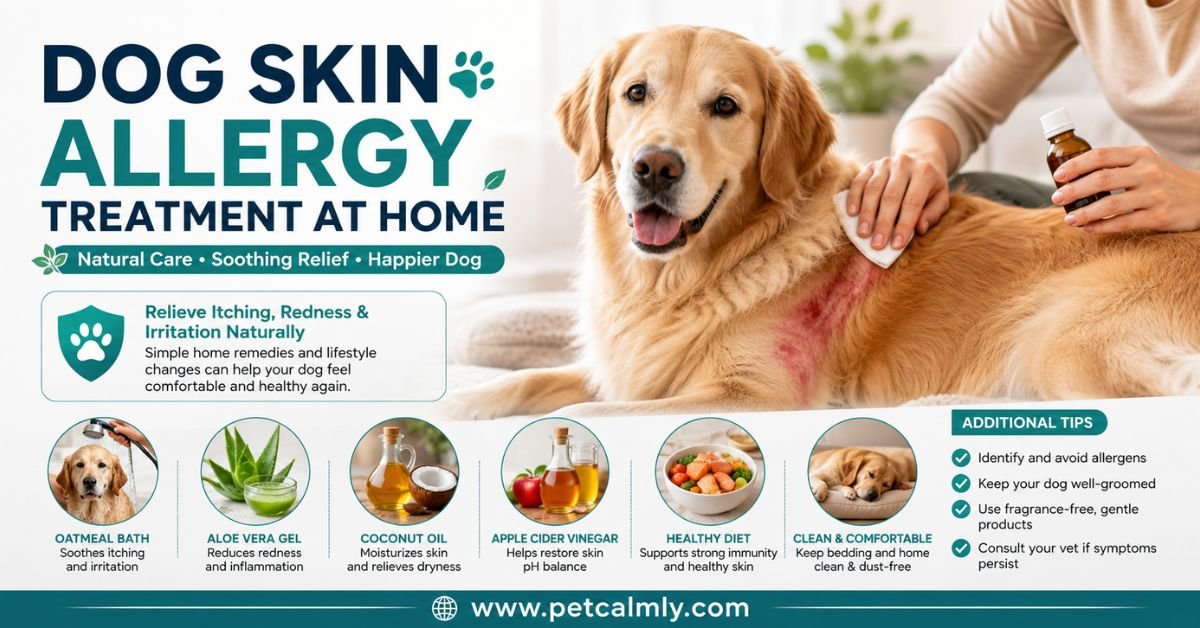
Dog skin allergy treatment at home often starts with identifying and reducing the trigger, soothing irritated skin, and supporting overall skin health. Gentle oatmeal baths, regular paw cleaning, hypoallergenic diets (when appropriate), frequent washing of bedding, and controlling environmental allergens can help many dogs feel more comfortable.
However, if your dog has severe itching, open sores, hair loss, skin infections, swelling, or ongoing symptoms, veterinary care is important because allergies can worsen without proper treatment.
Dog Skin Allergy Treatment at Home: What Every Dog Owner Should Know
Watching your dog scratch constantly can be frustrating and heartbreaking. Many owners notice their dog chewing their paws, rubbing against furniture, licking their belly, or scratching their ears until the skin becomes red and irritated.
The first thought is often, “What can I do right now to help my dog feel better?”
The good news is that many mild allergy symptoms can be managed with safe home-care strategies while you work on identifying the underlying cause. The challenge is that allergies aren’t a single condition. Food sensitivities, environmental allergens, fleas, grass, dust mites, mold, and even household cleaning products can all trigger skin reactions.
In this guide, you’ll learn:
- Common causes of dog skin allergies
- Safe home treatments that may reduce itching
- What mistakes make allergies worse
- When home care is enough
- When veterinary help becomes necessary
- Practical daily routines to support recovery
Most importantly, you’ll understand how to help your dog safely without relying on guesswork.
Understanding Dog Skin Allergies
A skin allergy occurs when a dog’s immune system overreacts to something that is normally harmless.
The result is inflammation, irritation, and itching.
Unlike people who often sneeze during allergies, dogs commonly show their allergy symptoms through their skin.
Common Allergy Triggers in Dogs
Environmental Allergens
These are among the most frequent causes.
Examples include:
- Grass pollen
- Tree pollen
- Weed pollen
- Dust mites
- Mold spores
- Household dust
Many dogs become itchier during certain seasons because environmental allergens increase.
Food Allergies or Sensitivities
Some dogs react to ingredients in their food.
Common triggers may include:
- Beef
- Chicken
- Dairy
- Wheat
- Soy
- Eggs
Food-related allergies often cause year-round symptoms.
Flea Allergy Dermatitis
Some dogs are highly sensitive to flea saliva.
A single flea bite can trigger intense itching that lasts for days.
Contact Allergies
Less common but still possible.
Potential causes include:
- Certain shampoos
- Cleaning products
- Lawn chemicals
- Synthetic fabrics
- Plastic food bowls
Signs Your Dog May Have a Skin Allergy
Common Symptoms
Most allergic dogs display one or more of these signs:
- Constant scratching
- Paw licking
- Face rubbing
- Ear scratching
- Red skin
- Hair loss
- Skin darkening over time
- Belly irritation
- Recurrent ear infections
- Hot spots
Many owners first notice excessive paw chewing before realizing an allergy problem exists.
Behavioral Changes
Dogs dealing with persistent itchiness often become:
- Restless
- Irritable
- Less playful
- Distracted
- Unable to sleep comfortably
Chronic itching affects quality of life more than many people realize.
Best Dog Skin Allergy Treatment at Home
Home treatment works best when symptoms are mild and there are no signs of infection.
Let’s look at practical strategies that often help.
1. Give a Soothing Oatmeal Bath
Quick Answer
An oatmeal bath can temporarily relieve itching and calm inflamed skin.
Oatmeal contains compounds that help soothe irritated skin while supporting the skin barrier.
How to Do It
- Use a dog-safe oatmeal shampoo.
- Wet your dog’s coat thoroughly.
- Massage the shampoo gently into the skin.
- Leave it on for 5 to 10 minutes.
- Rinse thoroughly.
- Dry gently with a towel.
Avoid bathing too frequently because excessive washing may dry the skin further.
For many dogs, once every one to two weeks is reasonable unless advised otherwise by a veterinarian.
2. Clean Paws After Outdoor Walks
Many allergic dogs pick up allergens directly on their paws.
After walks:
- Wipe paws with a damp cloth
- Remove dirt and pollen
- Dry thoroughly between toes
- Check for redness
This simple habit can significantly reduce allergen exposure.
3. Wash Bedding Frequently
Your dog’s bed can collect:
- Dust
- Pollen
- Dander
- Mold spores
Wash bedding weekly using fragrance-free detergent whenever possible.
Many owners overlook this step even though it can make a noticeable difference.
4. Improve Indoor Air Quality
Indoor allergens often contribute to year-round itching.
Helpful measures include:
- Vacuuming regularly
- Dusting frequently
- Using HEPA air filtration
- Reducing indoor humidity if mold is present
A cleaner environment may reduce the overall allergy burden.
5. Keep Flea Prevention Consistent
Even dogs that rarely go outside can encounter fleas.
Because flea allergy dermatitis can cause intense itching, prevention remains essential.
Many cases of “mysterious allergies” actually involve flea sensitivity.
6. Support Skin Health Through Nutrition
Healthy skin starts from within.
Look for dog foods that provide:
- High-quality protein
- Balanced nutrition
- Essential fatty acids
- Skin-supportive nutrients
If food allergies are suspected, consult a veterinarian before making repeated diet changes.
Constantly switching foods can make identifying the real trigger harder.
Can Omega-3 Fatty Acids Help?
In Short
Omega-3 fatty acids may help reduce skin inflammation and support healthier skin.
Many veterinarians recommend omega-3 supplements as part of long-term allergy management.
Potential benefits include:
- Reduced itching
- Improved coat quality
- Better skin barrier support
- Less inflammation
Always follow dosing guidance appropriate for your dog’s size.
Home Remedies That May Provide Temporary Relief
Some natural approaches can help soothe mild irritation.
Cool Compresses
A cool compress may calm itchy areas temporarily.
Apply for:
- 5 to 10 minutes
- Several times daily if needed
Plain Oatmeal Paste
Finely ground oatmeal mixed with water can sometimes soothe localized irritation.
Avoid applying to open wounds.
Hydration
Proper hydration supports healthy skin function.
Ensure fresh water is always available.
Common Home Treatment Mistakes
Many well-meaning owners accidentally worsen allergy symptoms.
Using Human Skin Products
Human lotions, creams, and medications may contain ingredients unsafe for dogs.
Never assume a product safe for people is safe for pets.
Over-Bathing
Too many baths can:
- Strip natural oils
- Dry the skin
- Increase irritation
Moderation is important.
Ignoring Flea Control
Even if fleas aren’t visible, flea allergies remain possible.
Treating Symptoms Without Finding the Cause
Temporary itch relief is helpful, but identifying the trigger remains the long-term goal.
A Simple Daily Routine for Dogs With Skin Allergies
Consistency often helps more than complicated treatments.
Morning
- Check skin condition
- Inspect paws
- Ensure fresh water
- Feed regular diet
After Walks
- Wipe paws
- Remove pollen and debris
- Inspect for redness
Evening
- Check ears
- Brush coat if appropriate
- Monitor scratching behavior
- Wash bedding regularly according to schedule
Small daily habits can add up over time.
Comparing Common Allergy Triggers
| Trigger | Typical Signs | Seasonal or Year-Round |
|---|---|---|
| Grass Pollen | Paw licking, belly rash | Usually seasonal |
| Dust Mites | Constant itching | Year-round |
| Food Allergy | Chronic itching, ear issues | Year-round |
| Flea Allergy | Intense itching near tail | Variable |
| Mold | Persistent skin irritation | Often year-round |
| Contact Allergy | Localized redness | Depends on exposure |
This table can help narrow down possible causes, though diagnosis isn’t always straightforward.
What to Avoid When Your Dog Has Skin Allergies
Avoid These Common Mistakes
- Using essential oils without veterinary guidance
- Applying human anti-itch creams
- Ignoring persistent symptoms
- Repeatedly changing dog foods
- Using harsh shampoos
- Skipping flea prevention
- Waiting too long when symptoms worsen
Many allergic dogs develop secondary infections if irritation continues unchecked.
Breed Tendencies and Skin Allergies
Some breeds seem more prone to allergic skin conditions.
Examples include:
- Labrador Retrievers
- Golden Retrievers
- French Bulldogs
- Boxers
- West Highland White Terriers
- German Shepherds
- Bulldogs
This doesn’t mean every dog from these breeds will develop allergies, but owners may need to be extra attentive.
Mixed-breed dogs can also experience allergies.
Puppies vs Adult Dogs: Are Allergies Different?
Puppies
Young dogs may experience:
- Environmental sensitivities
- Contact reactions
- Early allergy signs
However, many skin issues in puppies are unrelated to allergies.
Adult Dogs
Allergies commonly appear between one and three years of age, though they can develop later.
Adult dogs often show more established patterns of recurring symptoms.
How Long Does Recovery Take?
Recovery depends largely on the cause.
Mild Irritation
Some dogs improve within a few days after allergen removal and skin support.
Seasonal Allergies
Symptoms may fluctuate throughout allergy season.
Chronic Allergies
Long-term management is usually more realistic than expecting a permanent cure.
The goal is often symptom control and improved comfort.
When Should You Worry?
Seek Veterinary Care Promptly If You Notice:
- Open sores
- Bleeding skin
- Severe redness
- Facial swelling
- Trouble breathing
- Pus or discharge
- Bad skin odor
- Significant hair loss
- Constant scratching despite treatment
- Recurring ear infections
These signs may indicate infection, severe allergic reactions, or other medical conditions requiring professional treatment.
Emergency Situations
Immediate veterinary attention is needed if your dog develops:
- Facial swelling
- Difficulty breathing
- Collapse
- Severe allergic reactions
These symptoms should never be treated at home.
What Should Pet Owners Do?
If your dog appears to have skin allergies:
Step 1
Look for patterns.
Ask yourself:
- Does itching worsen after walks?
- Is it seasonal?
- Did symptoms start after a food change?
- Are fleas possible?
Step 2
Reduce allergen exposure.
Focus on:
- Paw cleaning
- Bedding hygiene
- Environmental cleaning
Step 3
Use gentle skin-supportive care.
Examples:
- Oatmeal baths
- Appropriate grooming
- Skin-supportive nutrition
Step 4
Track symptoms.
Keep notes about:
- Itching severity
- Locations affected
- Dietary changes
- Environmental exposures
This information can be valuable if veterinary help becomes necessary.
Step 5
Contact your veterinarian if symptoms persist, worsen, or become severe.
Long-Term Prevention Tips
While allergies cannot always be prevented completely, these habits may help reduce flare-ups.
Prevention Checklist
✓ Maintain flea prevention
✓ Wash bedding weekly
✓ Wipe paws after walks
✓ Use gentle grooming products
✓ Vacuum regularly
✓ Monitor seasonal changes
✓ Feed balanced nutrition
✓ Address symptoms early
The earlier you intervene, the easier allergy management often becomes.
Related Topics Pet Owners Often Explore
If you’re managing a dog with skin allergies, you may also find value in learning about:
- Dog anxiety caused by chronic itching
- Best grooming routines for sensitive skin
- Calming strategies for itchy dogs
- Choosing dog shampoos for skin support
- Healthy diets for skin and coat wellness
- Recognizing early signs of ear infections
These related areas often overlap with allergy management.
Frequently Asked Questions
1: What is the best home remedy for dog skin allergies?
A combination of oatmeal baths, paw cleaning, bedding hygiene, and allergen reduction often provides the safest home support. The best solution depends on the underlying trigger.
2: Can I treat my dog’s skin allergy without going to the vet?
Mild symptoms may improve with home care. However, persistent itching, infections, hair loss, or worsening symptoms should be evaluated by a veterinarian.
3: Why is my dog licking their paws all the time?
Paw licking is commonly linked to environmental allergies, irritation, or skin inflammation. Grass, pollen, and dust are frequent contributors.
4: Are food allergies common in dogs?
Food allergies occur but are less common than environmental allergies. They often cause year-round itching and recurring skin or ear issues.
5: How often should I bathe an allergic dog?
Many dogs benefit from occasional bathing with a gentle dog-safe shampoo. Excessive bathing can dry the skin and worsen irritation.
6: Can dog skin allergies go away on their own?
Some mild reactions improve when the trigger disappears. Chronic allergies usually require ongoing management rather than simply resolving permanently.
More Information About Pets, Please Visit Our Website: Good Mental Health Dogs
Conclusion
Dog skin allergies can turn everyday life into a cycle of scratching, licking, and discomfort. The encouraging news is that many dogs experience meaningful relief when owners focus on simple, consistent home-care habits.
Cleaning paws after walks, maintaining flea prevention, washing bedding regularly, supporting healthy skin through nutrition, and using soothing bathing routines can all make a difference.
At the same time, persistent itching should never be ignored. Allergies often become easier to manage when addressed early, before secondary infections and chronic skin damage develop.
If you’re unsure what’s causing your dog’s symptoms, start by observing patterns, reducing common triggers, and keeping a record of changes. A thoughtful approach helps you make better decisions and gives your dog the best chance of staying comfortable, healthy, and itch-free.